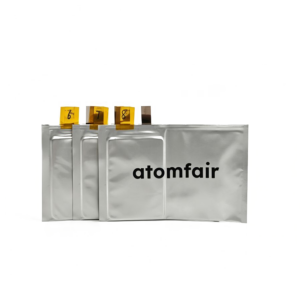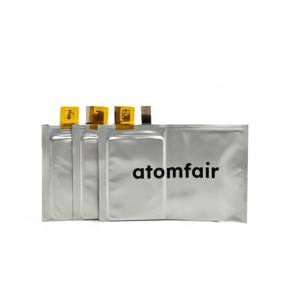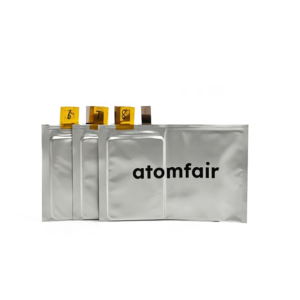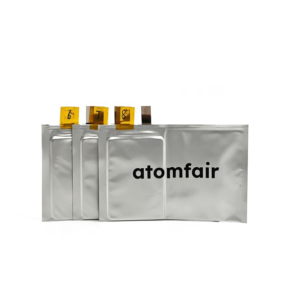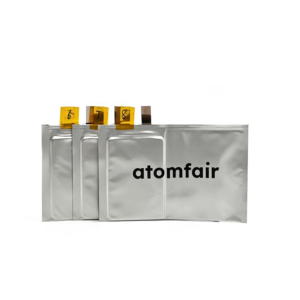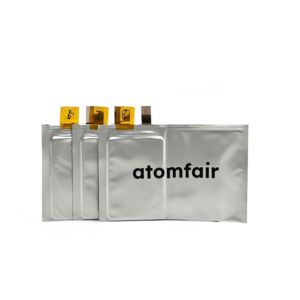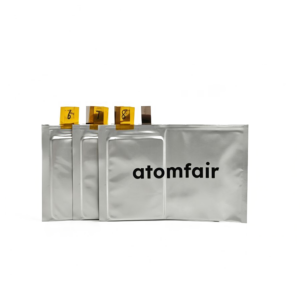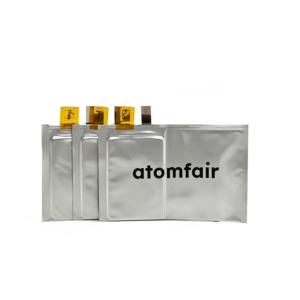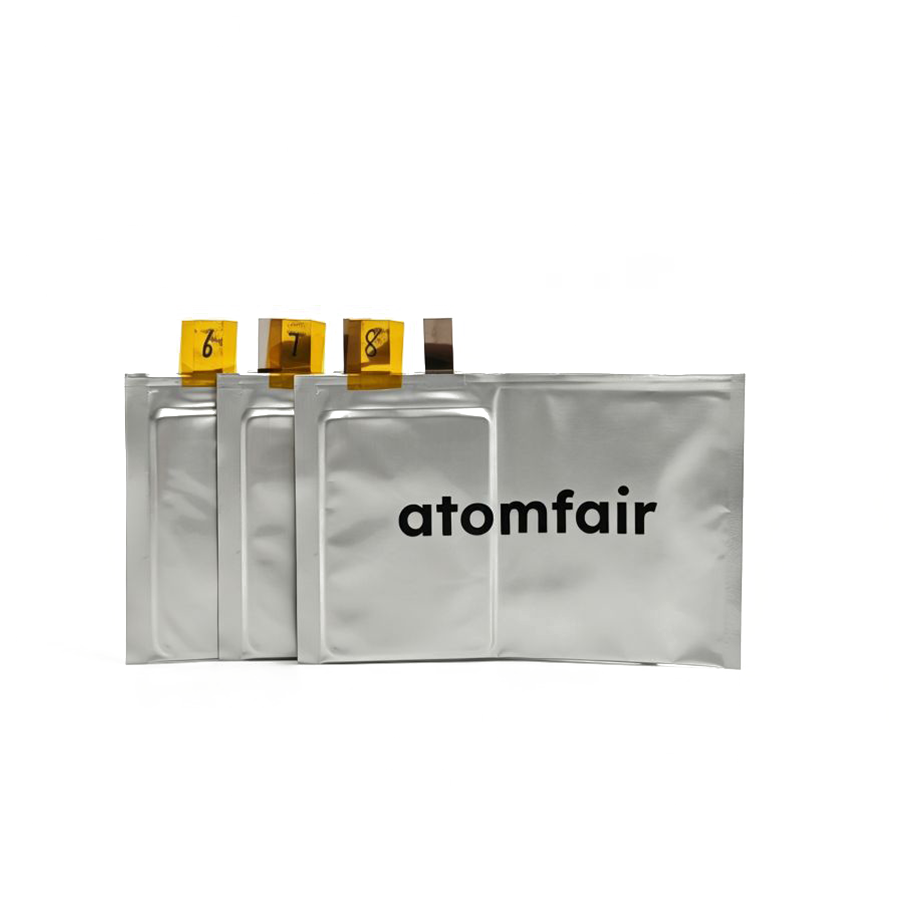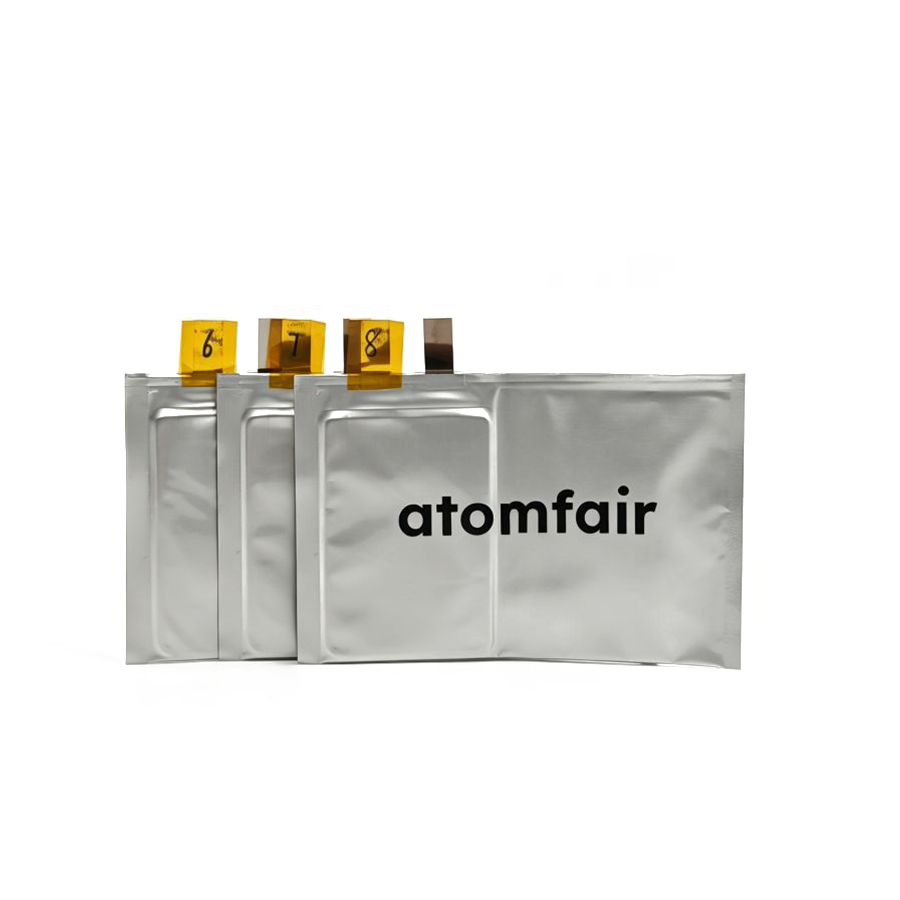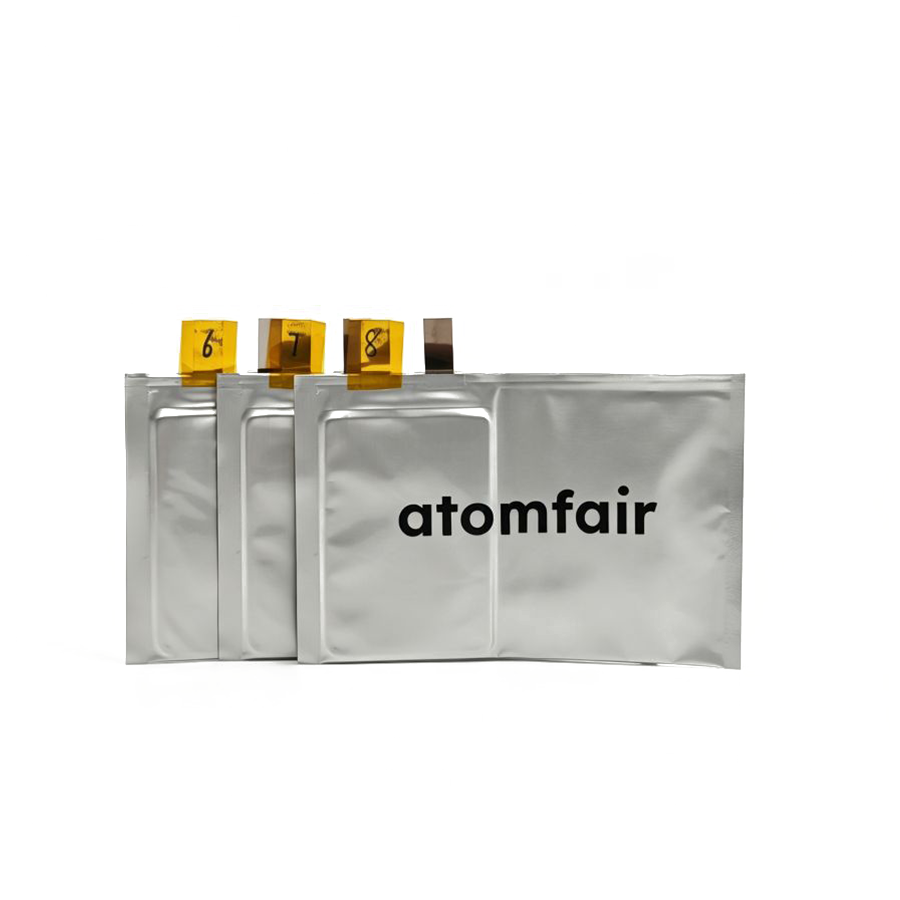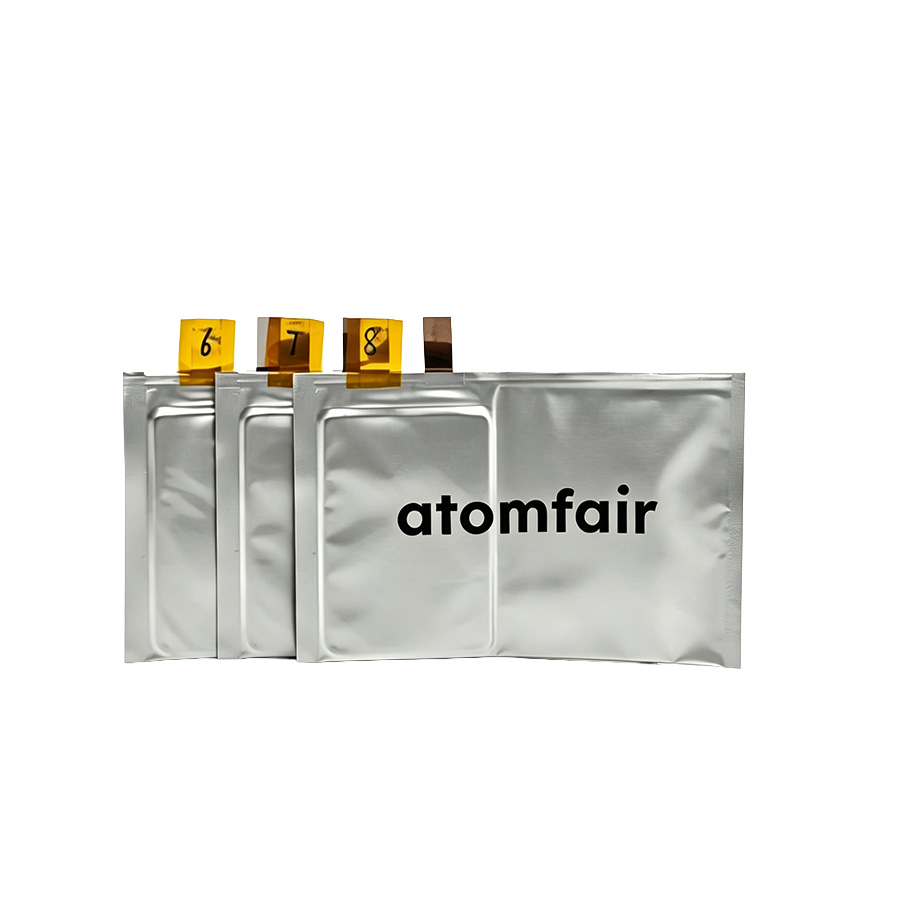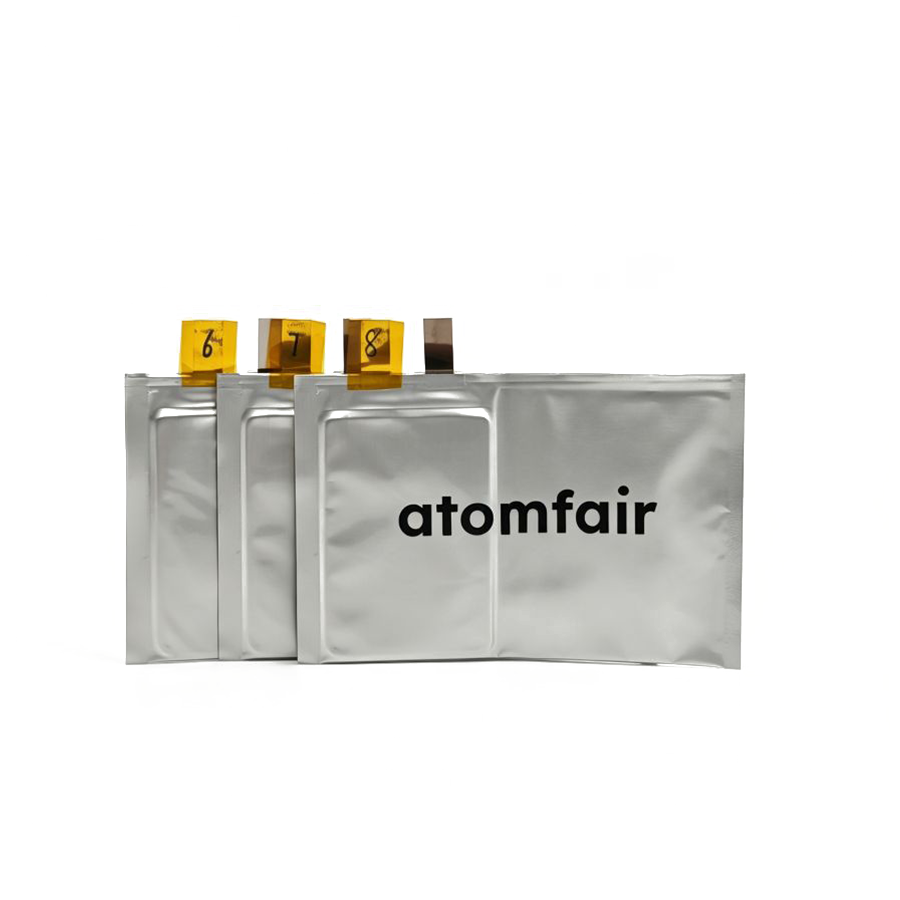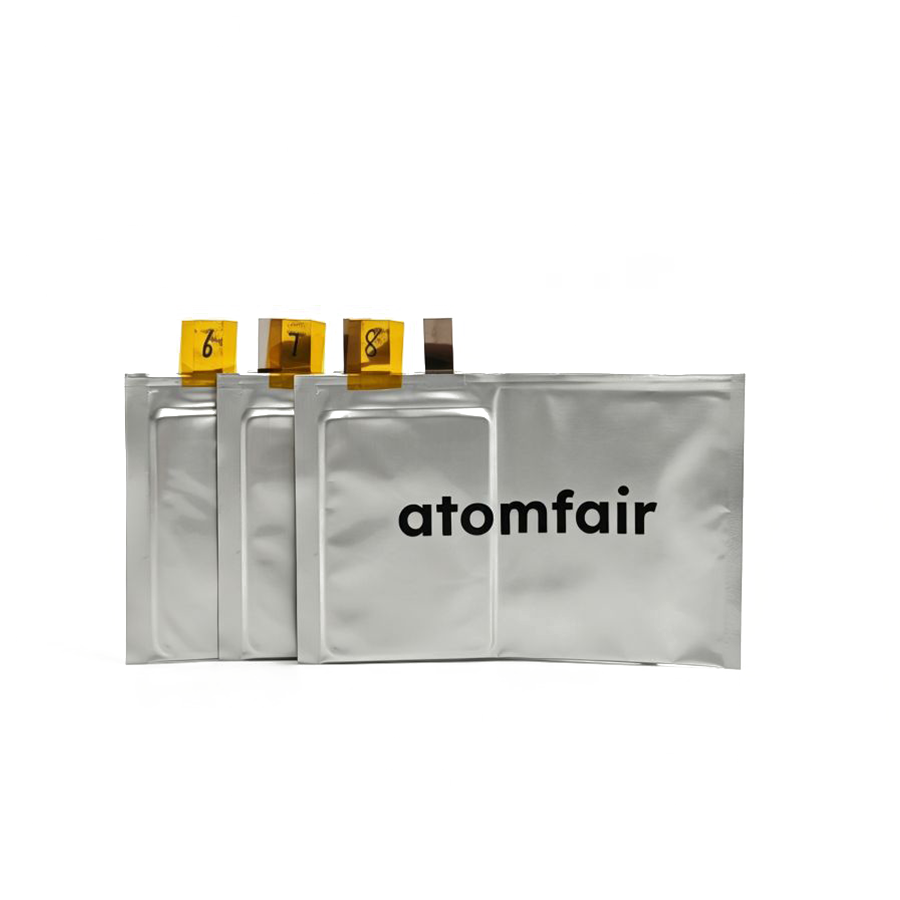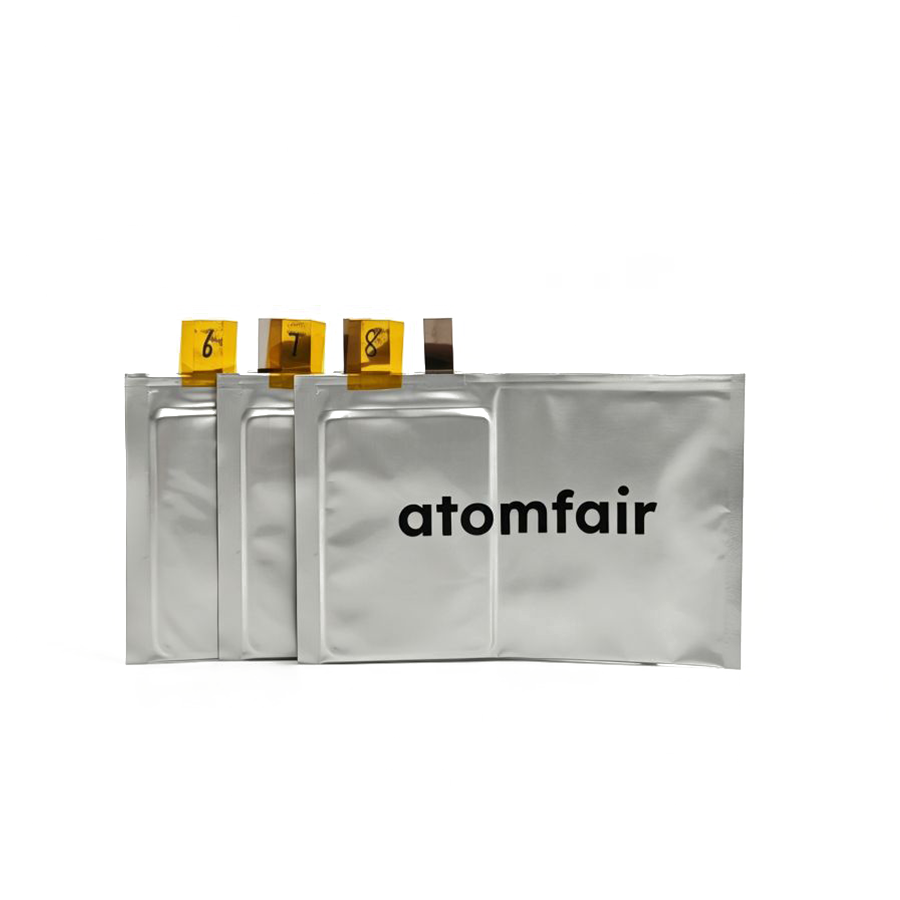
Ni90 Dry Pouch Cell (7.6Ah) – Si/C 1100 Anode |
||||||||||||||||||||||||||||||||||||||||||||||||||||
|
||||||||||||||||||||||||||||||||||||||||||||||||||||
|
||||||||||||
Related Products |
||||||||||||
|
||||||||||||
|
TAILORED SOLUTIONS FOR RESEARCH
Contact our engineering team for technical support or official institutional quotations.
EMAIL: inquiry@atomfair.com
|
||||||||||||
| Manufacturer: Atomfair LLC Brand: ATOMFAIR |
This dry pouch cell must be stored under inert atmosphere to prevent moisture uptake by the silicon-carbon anode and high-nickel cathode. Electrostatic discharge protection and short-circuit prevention are required during all handling.
- Moisture Sensitivity: Moisture exposure degrades the silicon-carbon anode and high-nickel cathode, reducing electrochemical performance.
- Inert Atmosphere Requirement: All handling and storage must be performed in an argon or nitrogen-filled glovebox with less than 0.1 ppm H2O and O2.
- Short Circuit Prevention: Keep terminals insulated and avoid contact with conductive surfaces to prevent catastrophic short circuit.
- Temperature Stability: Store at controlled room temperature (20-25 °C) to minimize structural degradation of the electrode materials.
- Electrostatic Discharge Sensitivity: Use grounded wrist straps and conductive work surfaces to prevent electrostatic discharge damage.
This guide details safe handling and preparation of the dry pouch cell for electrolyte filling in a glovebox environment. Follow these steps to maintain electrode integrity and avoid contamination.
Required Equipment: Argon glovebox with <0.1 ppm H2O and O2, Non-conductive holding fixture, Insulated tweezers, Heat sealer
- Transfer to Glovebox
Transport the dry pouch cell to an argon-filled glovebox using an airtight container to maintain inert atmosphere. - Visually Inspect Cell
Examine the pouch cell for any tears, creases, or exposed tab areas before proceeding with any handling. - Stabilize in Fixture
Place the cell in a non-conductive holding fixture with terminals facing upward to ensure stable access during electrolyte injection. - Inject Electrolyte
Inject the selected electrolyte into the designated filling port under inert atmosphere to avoid moisture contamination. - Seal the Pouch
Apply heat seal to the pouch opening immediately after electrolyte filling to hermetically seal the cell. - Connect to Cycler
Attach the sealed cell terminals to a battery cycler using insulated leads and verify open circuit voltage stability. - Leak Check
Inspect the sealed cell for any electrolyte leakage or swelling before initiating electrochemical cycling.
What performance trade-off arises from the cathode compaction density of 3.4 g/cc and anode compaction density of 1 g/cc in the Ni90 Si/C dry pouch cell?
The cathode compaction density of 3.4 g/cc enables a high areal loading of 20 mg/cm² with 97.4% active material for maximum capacity (203 mAh/g), while the anode compaction density of 1 g/cc creates a porous Si/C1100 matrix (1100 mAh/g) at a lower areal density of 4.5 mg/cm². This asymmetry directly affects the mechanical stability of the 32/33-layer dry structure, requiring cohesive stacking to prevent delamination during cell assembly and electrolyte infiltration.
What electrolyte compatibility constraints exist when using the ATOMFAIR Ni90 Si/C dry pouch cell for solid-state battery research?
The dry pouch cell is electrolyte-free, requiring the researcher to infuse their own solid-state electrolyte formulation. The high-nickel cathode (Ni0.9Mn0.03Co0.07) and Si/C1100 anode are optimized for 97.4% and 90.3% active material respectively, but the electrolyte must uniformly wet the 12 µm PE + 2 µm ceramic separator across the 32/33-layer stack to avoid localized overpotential. The NP ratio of 1.133 must also be maintained to prevent lithium plating at the anode.
What handling and storage requirements are critical for the ATOMFAIR Ni90 dry pouch cell before electrolyte filling?
The dry pouch cell must be stored in a dry, inert environment to prevent moisture adsorption by the Ni0.9Mn0.03Co0.07 cathode and Si/C1100 anode, as the 12 µm PE + 2 µm ceramic separator is not hermetic. No liquid handling is required since the cell is electrolyte-free, but the pouch seal must remain intact to avoid contamination. The 2.3 to 4.2 V voltage window specified assumes clean interfacial contacts, making dry room or glovebox handling mandatory.
A dry multilayer pouch cell combining a high-nickel NMC cathode with a silicon-carbon composite anode, designed as a baseline platform for solid-state electrolyte research; its 7.6 Ah capacity and 32/33 layer stack enable representative multi-layer interfacial studies.
Positive
- High-capacity silicon-carbon anode: The Si/C1100 anode delivers 1100 mAh/g specific capacity, enabling high energy density research and benchmarking against conventional graphite anodes.
- Controlled dry multilayer stack: The 32/33-layer electrolyte-free architecture allows precise isolation of interfacial degradation mechanisms and solid-state electrolyte integration effects without liquid electrolyte interference.
Trade-offs
- Requires electrolyte filling: As a dry pouch cell, the core must be filled with compatible electrolyte by the user, demanding inert atmosphere (e.g., glovebox) handling and electrolyte dispensing infrastructure.
- Moisture-sensitive cathode chemistry: The high-nickel Ni0.9Mn0.03Co0.07 cathode (97.4% active) is prone to moisture-induced degradation, necessitating strict dry room or controlled environment assembly to preserve electrochemical performance.
Every advanced material, component, equipment, and instrument in our catalog is backed by rigorous testing. We maintain strict internal quality management frameworks and align with CE conformity metrics to deliver transparent, reproducible performance data via our public open-science repository.
To request raw batch performance data, submit formal vendor registration paperwork, or execute a fast-turnaround R&D manufacturing loop, contact us at inquiry@atomfair.com.
Item is dispatched under the Atomfair Shipping & Delivery Framework (Free worldwide shipping on orders over $59 USD excl. heavy equipment). Return is governed by the Atomfair Return & Refund Policy (7-day technical return window).