
Chalcogenides
Chalcogenides are functional inorganic materials built around chalcogen elements such as sulfur, selenium, and tellurium. This material class includes sulfides, selenides, tellurides, and multicomponent chalcogenide systems used across semiconductor research, infrared optics, optoelectronics, thermoelectrics, thin-film development, advanced ceramics, energy materials, and fundamental materials science.
Different chalcogenide compositions and structures can offer distinct optical, electrical, thermal, and chemical characteristics. Whether you are sourcing high-purity powders for material synthesis, source materials for thin-film deposition, or crystals and bulk materials for optical, electrical, or thermoelectric research, begin by comparing the material family, supplied form, and intended application.
When selecting a specific material, review the chemical formula, purity, particle size or dimensions, crystal phase, package size, and process compatibility. Matching the material to your equipment, preparation route, and research target will help narrow the selection efficiently.
Show More: Chalcogenide Selection Guide
Browse by Material Family
| Material Family | Typical Research Directions | Key Considerations |
|---|---|---|
| Sulfides | Advanced ceramics, semiconductors, catalysis, energy storage, and solid-state materials | Composition, particle size, crystal phase, and sensitivity to air or moisture |
| Selenides | Optoelectronics, infrared research, thermoelectrics, and semiconductor materials | Purity, elemental ratio, crystal structure, and supplied form |
| Tellurides | Thermoelectrics, infrared detection, optoelectronics, and functional materials | Composition stability, phase structure, impurity control, and dimensions |
| Mixed Chalcogenides | Multicomponent semiconductors, functional thin films, thermoelectrics, and materials screening | Elemental ratio, dopant requirements, uniformity, and process compatibility |
| Layered Chalcogenide Materials | 2D materials, sensing, catalysis, interface studies, and coatings | Bulk, powder, flake, thin-layer, or dispersion form |
| Chalcogenide Glass Materials | Infrared optics, specialty glass, fiber, and photonics research | Composition, thermal-processing needs, impurity control, and dimensions |
Choose by Material Form
| Your Process | Suitable Starting Forms | What to Check Before Purchase |
|---|---|---|
| Synthesis, mixing, pressing, or sintering | Powders and granules | Particle size, purity, flow behavior, and storage conditions |
| Optical, electrical, or structural characterization | Bulk materials and crystals | Dimensions, phase, surface condition, and orientation requirements |
| Sputtering, evaporation, or thin-film work | Targets, evaporation sources, and custom forms | Deposition method, dimensions, density, and composition requirements |
| 2D materials, coatings, or interface studies | Thin layers, flakes, and dispersions | Flake size, thickness, dispersion medium, and substrate compatibility |
| Infrared optics or specialty-glass development | Glass, preforms, and custom shapes | Composition, shape, dimensions, and thermal-processing route |
Key Selection Considerations
Start with the intended use. The same material may require very different specifications for powder synthesis, thin-film deposition, optical testing, or device development. Knowing the next process step makes it easier to select the right form and grade.
Confirm composition and purity. Chemical formula and elemental ratio are fundamental selection points. For projects sensitive to electrical, optical, thermal, or film-quality variation, consider relevant impurity limits in addition to nominal purity.
Check particle size for powder materials. Particle size, distribution, and morphology can affect mixing, sintering, dispersion, reaction activity, and compact density. Materials with the same composition may still behave differently in processing.
Match the supplied form to the process. Powders are often suitable for preparation and synthesis; bulk materials and crystals are useful for characterization and cutting; targets and source materials are intended for compatible thin-film workflows.
Review storage and handling conditions. Some chalcogenide materials may be sensitive to air, moisture, light, or temperature. Refer to the individual product page, SDS, and laboratory safety procedures before use.
Common Application Paths
Semiconductor and optoelectronic research: Compare composition, purity, phase, supplied form, and compatibility with the planned fabrication or characterization route.
Infrared optics and photonics: Consider the material system, impurity control, intended optical study, processing method, and required material form.
Thermoelectric and energy materials: Review composition, phase structure, particle size, doping plan, and the intended pressing, sintering, or film-preparation route.
Thin-film deposition: Select the material form only after confirming the deposition process. Dimensions, composition, density, and custom requirements are common selection points.
Layered materials and surface studies: Choose between bulk, powder, flake, or dispersion forms based on whether the work involves exfoliation, coating, interface control, or catalytic evaluation.
Frequently Asked Questions
What are chalcogenide materials?
Chalcogenides are material systems in which sulfur, selenium, tellurium, or related chalcogen elements are key structural components. Common types include sulfides, selenides, tellurides, and multicomponent chalcogenide materials.
Where should I start if I am purchasing chalcogenides for the first time?
Start with your intended experiment, then choose the material form. Powders and granules are commonly considered for synthesis and sintering, bulk materials and crystals for characterization, and targets or source materials for thin-film work.
Is higher purity always better?
Not always. Higher purity can be important for research that is sensitive to optical, electrical, thermoelectric, or film-quality variation, but the right grade should also match the experimental objective, acceptable impurity level, measurement sensitivity, and budget.
Can powders with different particle sizes be substituted for one another?
Direct substitution is usually not recommended. Particle size and distribution can affect mixing, sintering, reaction rate, dispersion, and compaction. A process may need adjustment even when the chemical composition is the same.
Should I choose powder, granules, bulk material, or crystal form?
Choose by process. Powders and granules are commonly used for preparation, mixing, and sintering. Bulk materials and crystals are useful for characterization, cutting, exfoliation, and direction-sensitive studies. Thin-film workflows require forms compatible with the deposition equipment.
Can chalcogenides be used for thin-film deposition?
Many chalcogenide materials are relevant to thin-film research, but the required form depends on the deposition method. Confirm whether the project uses sputtering, evaporation, or another process, then review material dimensions, composition, and process compatibility.
Do these materials require special storage?
Storage requirements vary by material. Some chalcogenides may be sensitive to air, moisture, light, or temperature. Review the product label, SDS, and storage guidance before handling or long-term storage.
Can I select a package or specification for my experiment?
Choose a package size based on material usage, experiment duration, and storage conditions. For projects with defined requirements for purity, particle size, dimensions, form, or quantity, providing those parameters helps identify the most suitable option.
Showing 1–16 of 107 results
-
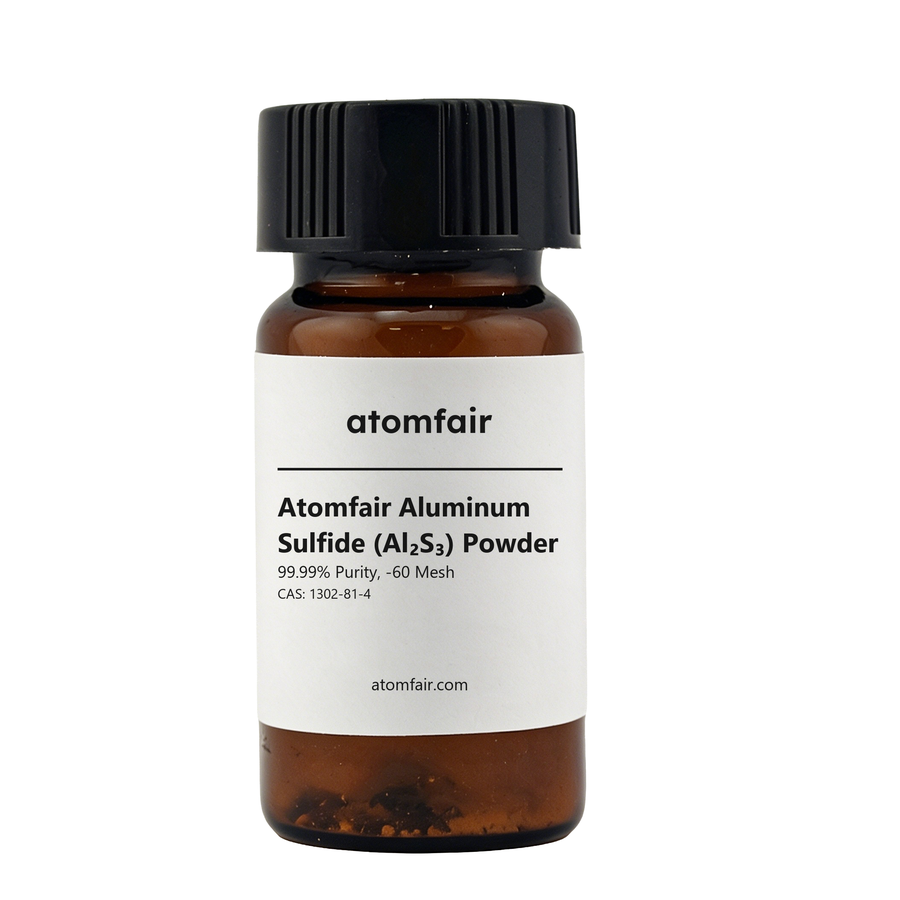
Aluminum Sulfide Al2S3 Powder 99.99% -60 Mesh ATOMFAIR®
Price range: $169.00 through $899.00 -
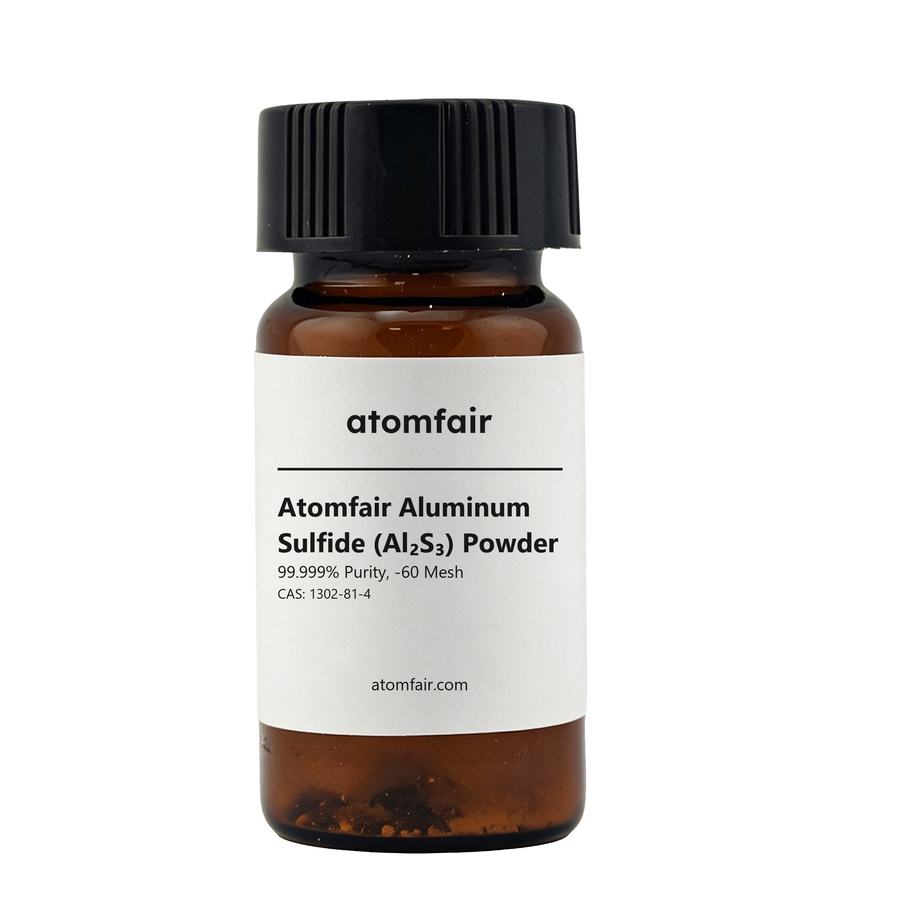
Aluminum Sulfide Powder 99.999% -60 Mesh, ATOMFAIR®
Price range: $249.00 through $1,339.00 -
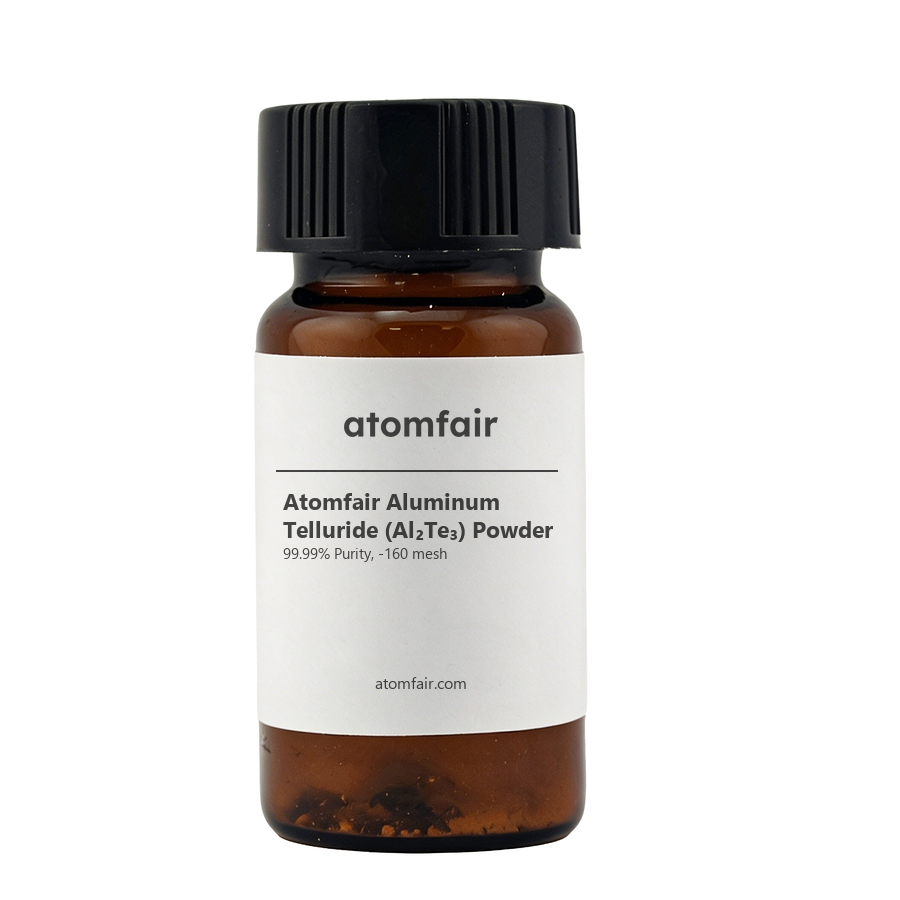
Aluminum Telluride Powder 99.99% -160 Mesh ATOMFAIR®
Price range: $369.00 through $1,039.00 -
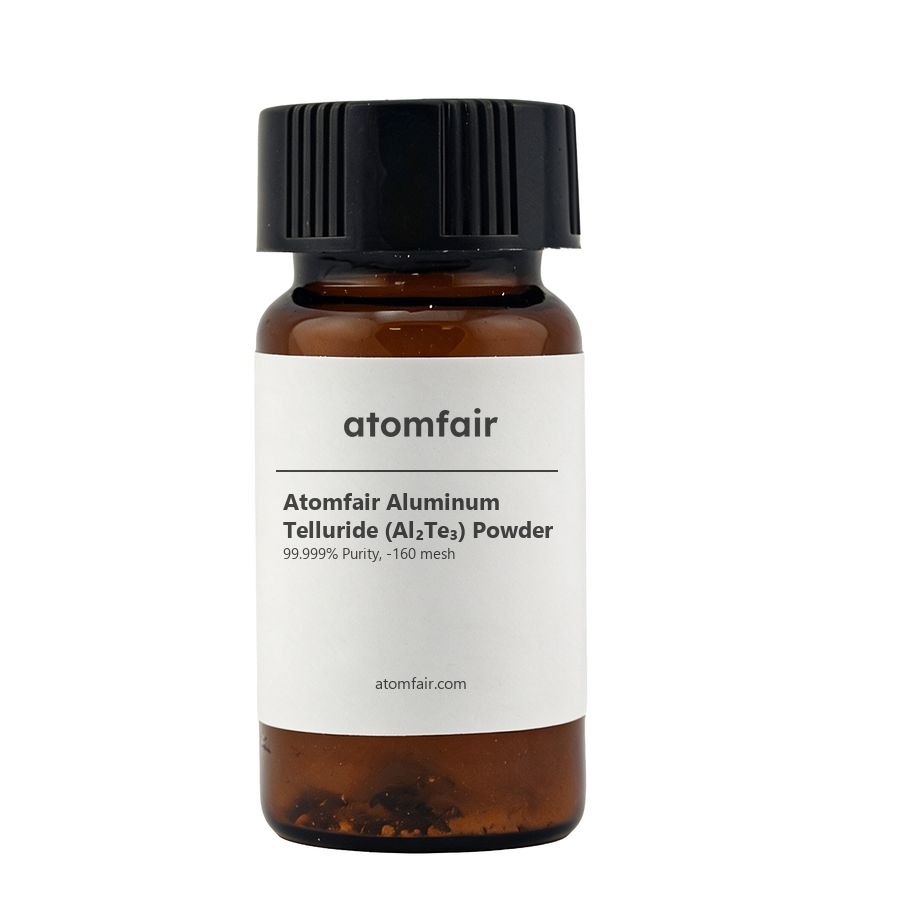
Aluminum Telluride Powder 99.999% -160 Mesh ATOMFAIR®
Price range: $489.00 through $1,359.00 -
Antimony Telluride Powder 99.99% -160 mesh ATOMFAIR®
Price range: $259.00 through $639.00 -
Antimony Telluride Powder 99.999% -100 mesh ATOMFAIR®
Price range: $249.00 through $749.00 -
Antimony Telluride Powder 99.999% -160 mesh ATOMFAIR®
Price range: $329.00 through $819.00 -
Barium Sulfide (BaS) Powder 99.9% -325 Mesh ATOMFAIR®
Price range: $179.00 through $899.00 -
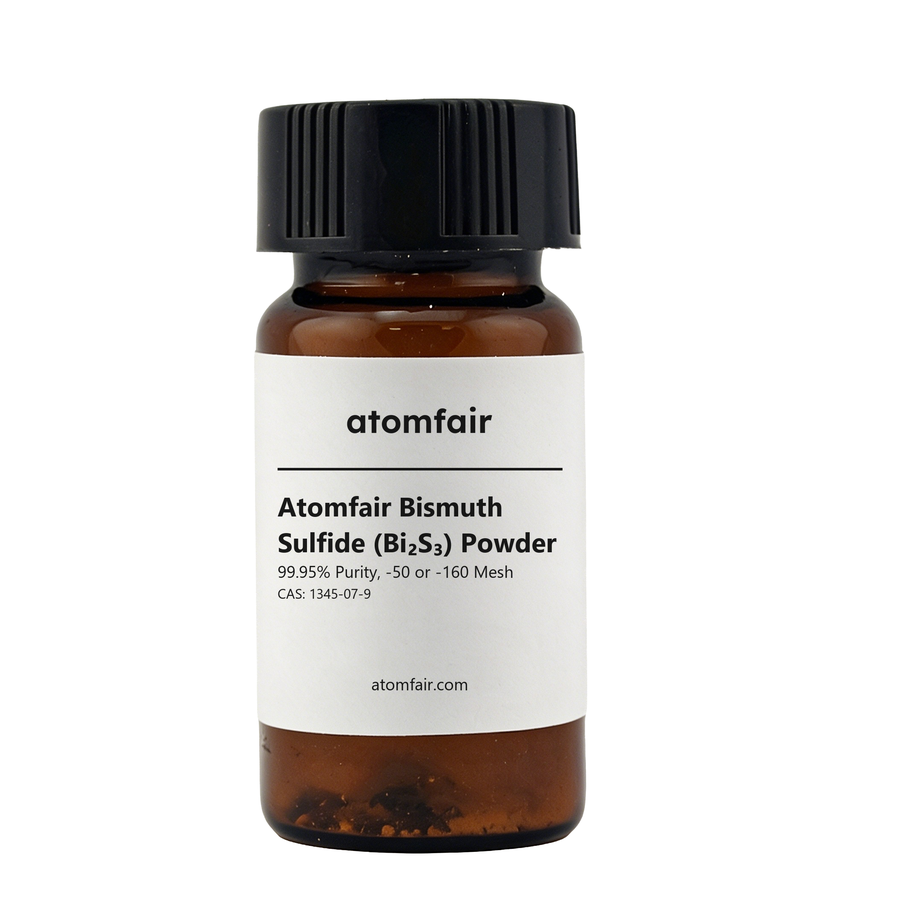
Bismuth Sulfide Bi2S3 Powder 99.95% -160 Mesh ATOMFAIR®
Price range: $399.00 through $2,189.00 -
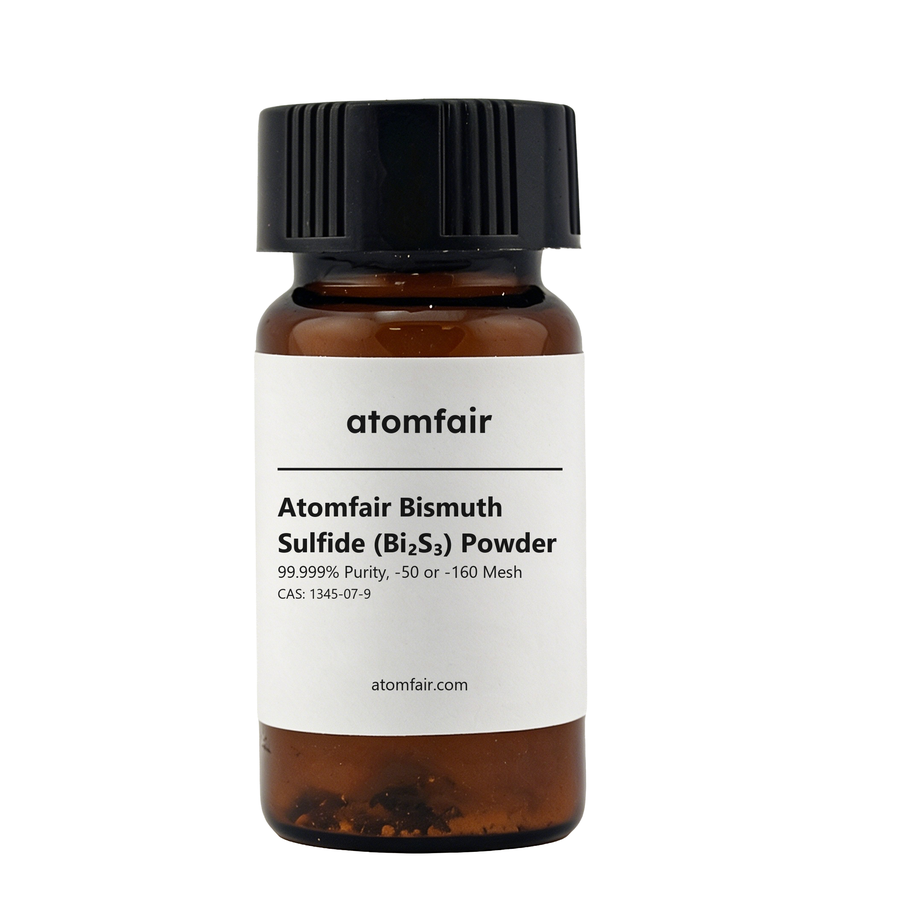
Bismuth Sulfide Bi2S3 Powder 99.999% -160 Mesh ATOMFAIR®
Price range: $209.00 through $1,119.00 -
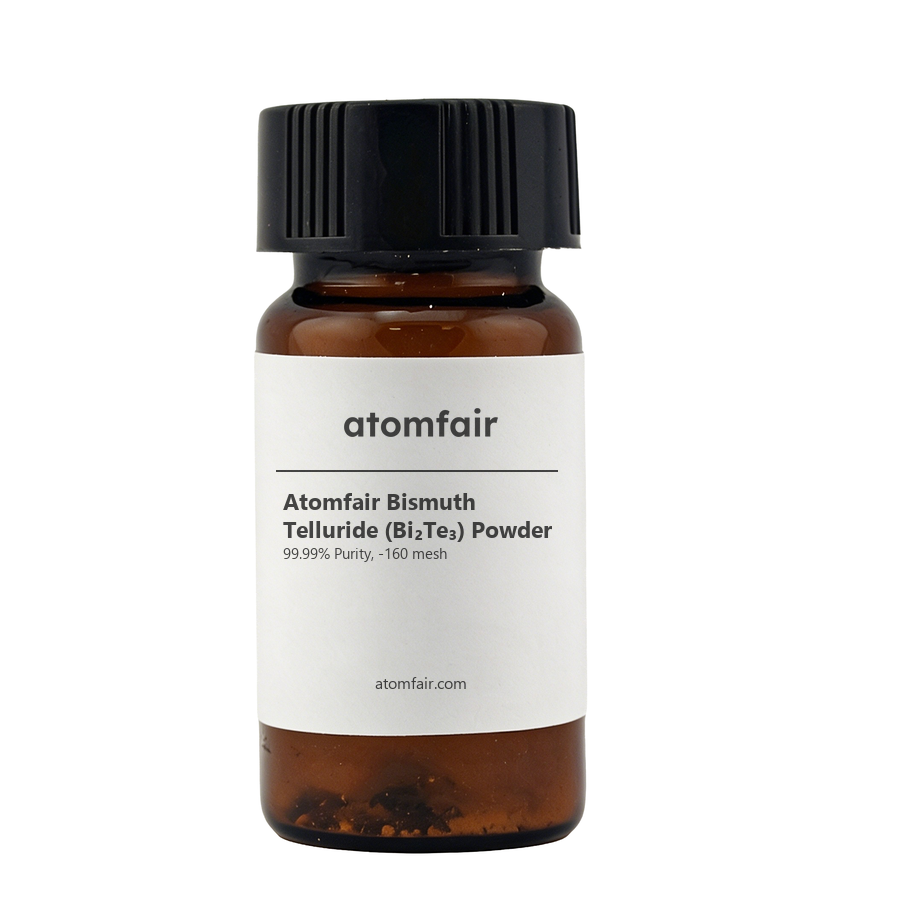
Bismuth Telluride (Bi2Te3) Powder 99.99% -160 Mesh ATOMFAIR®
Price range: $249.00 through $719.00 -
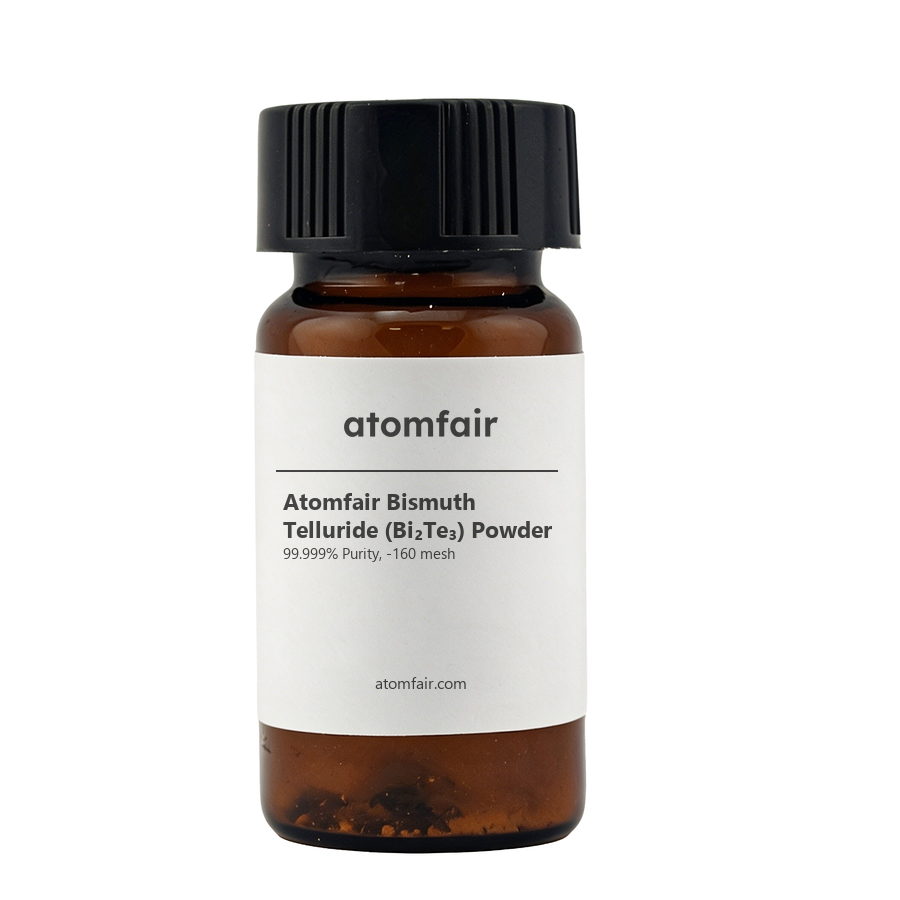
Bismuth Telluride Bi2Te3 Powder 99.999% -160 mesh ATOMFAIR®
Price range: $329.00 through $939.00 -
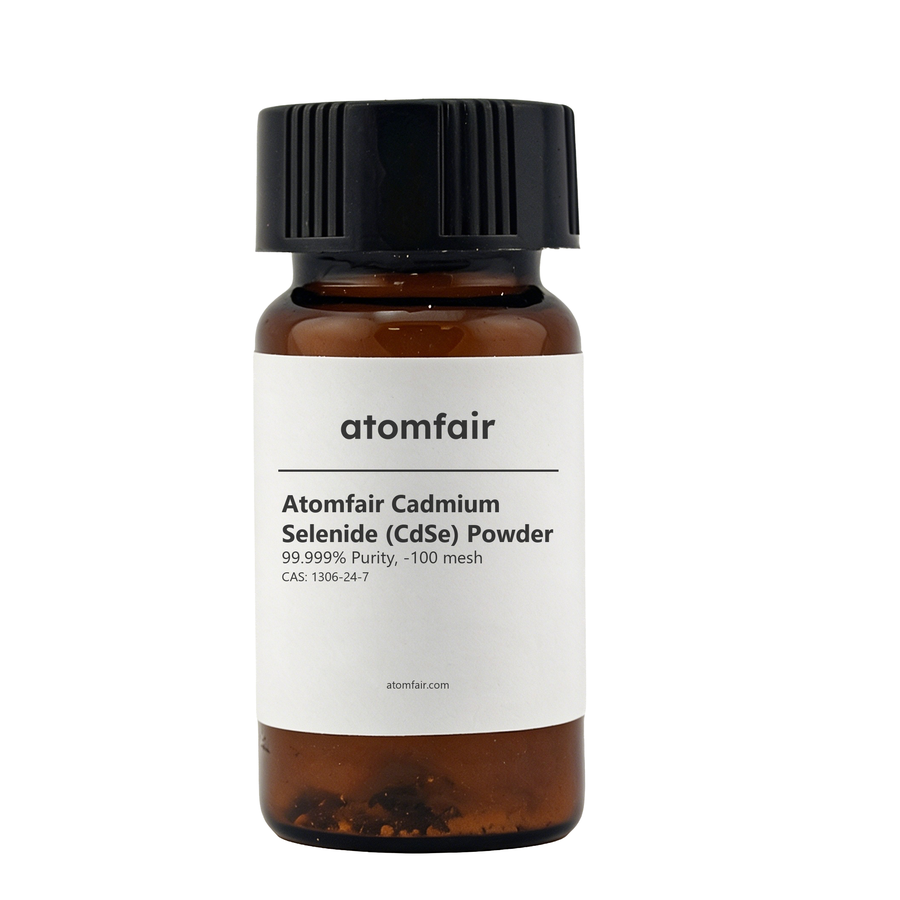
Cadmium Selenide (CdSe) Powder 99.999% -100 mesh ATOMFAIR®
Price range: $569.00 through $1,889.00 -
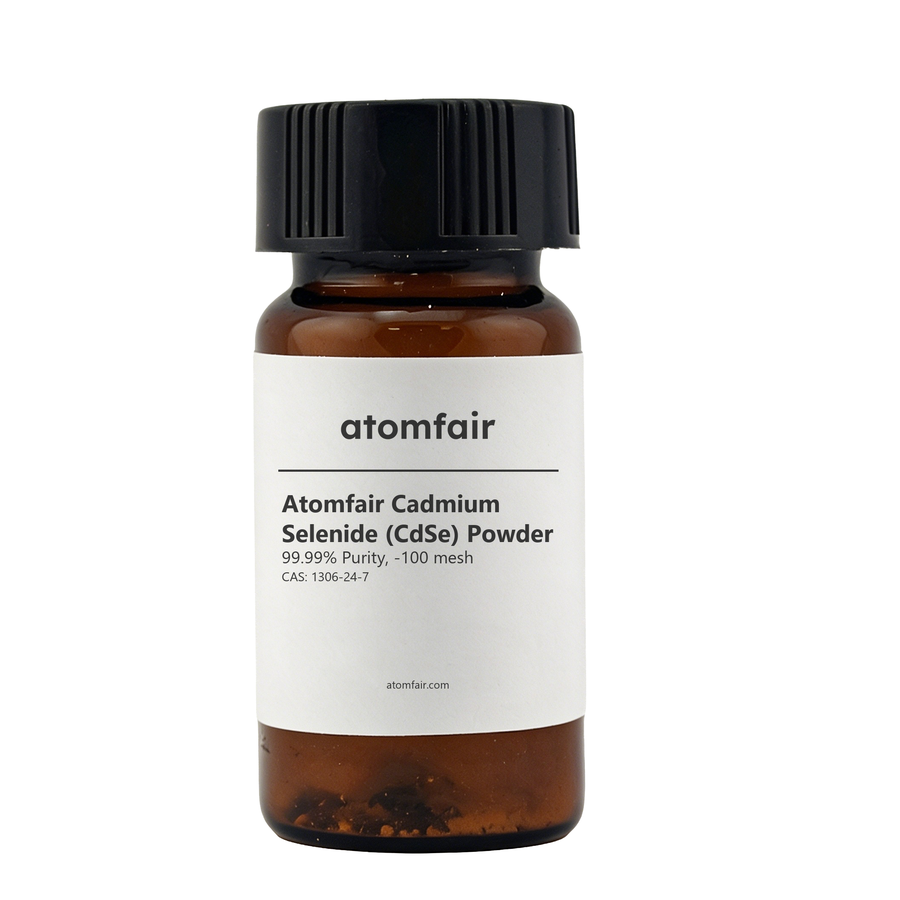
Cadmium Selenide Powder 99.99% -100 mesh 4N ATOMFAIR®
Price range: $229.00 through $759.00 -
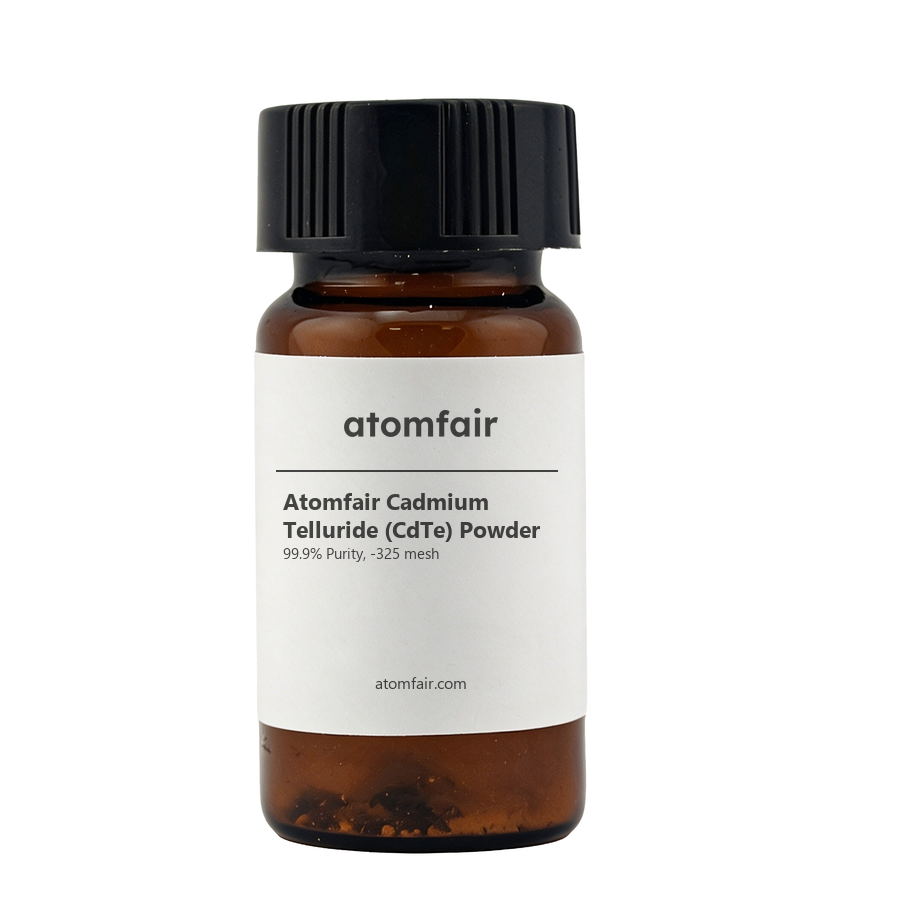
Cadmium Telluride (CdTe) Powder 99.9% -325 Mesh ATOMFAIR®
Price range: $159.00 through $529.00 -
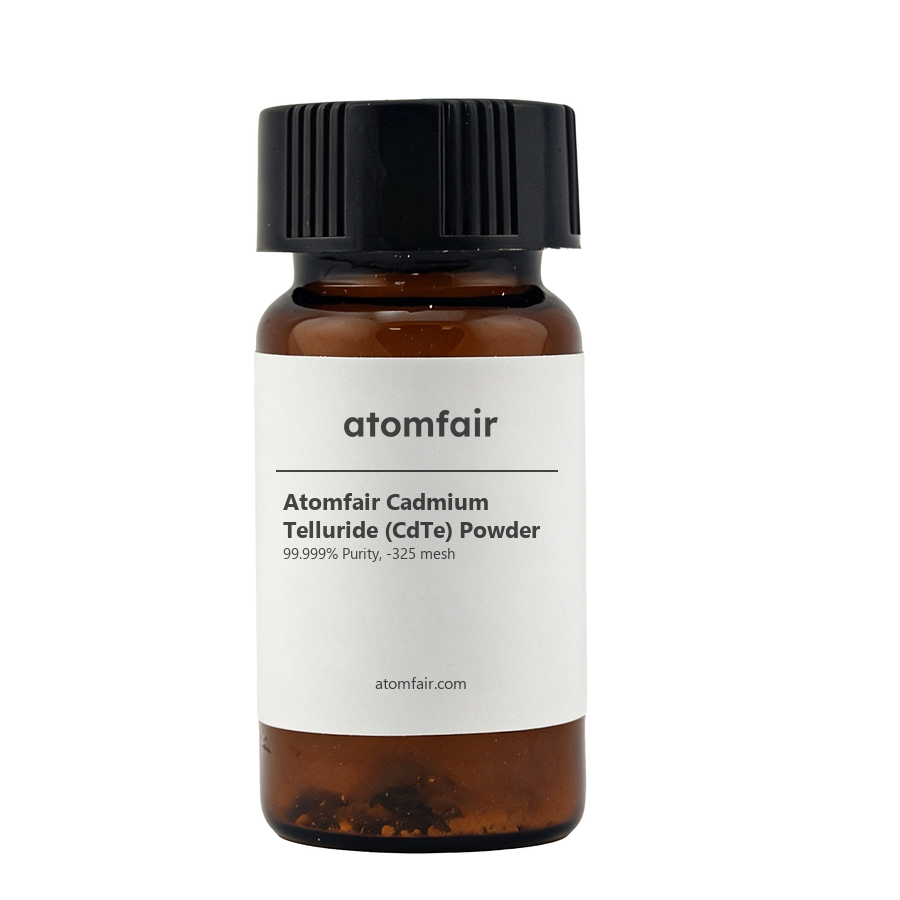
Cadmium Telluride (CdTe) Powder 99.999% -325mesh ATOMFAIR®
Price range: $319.00 through $1,149.00