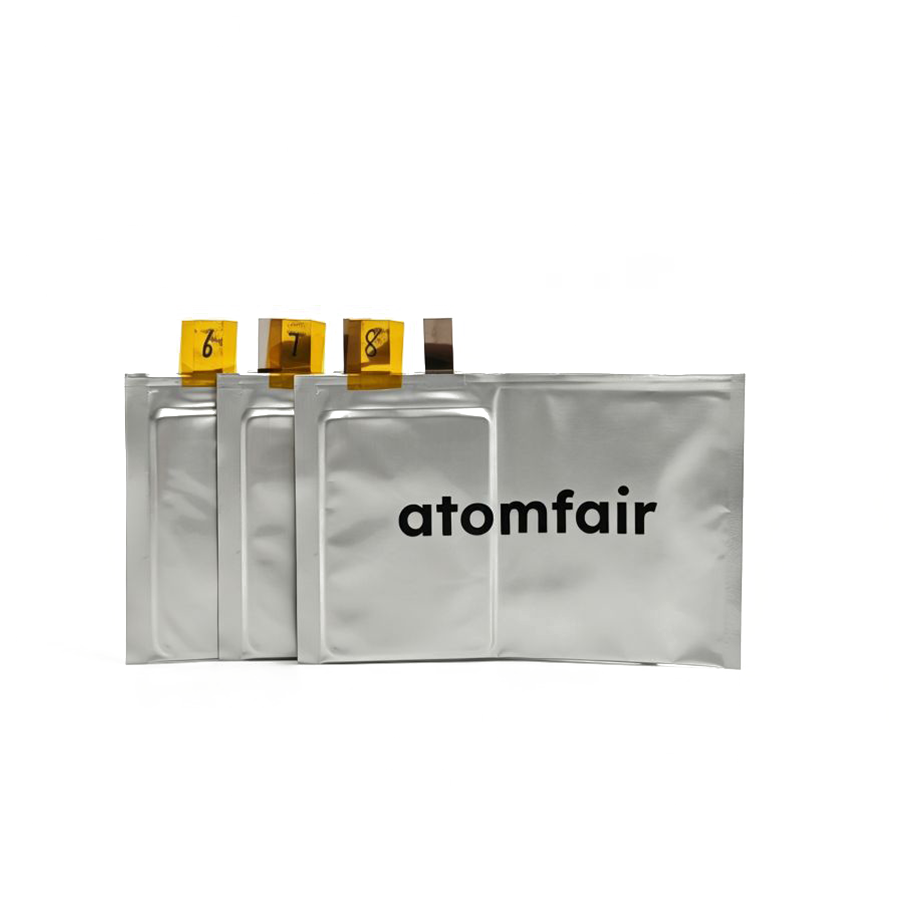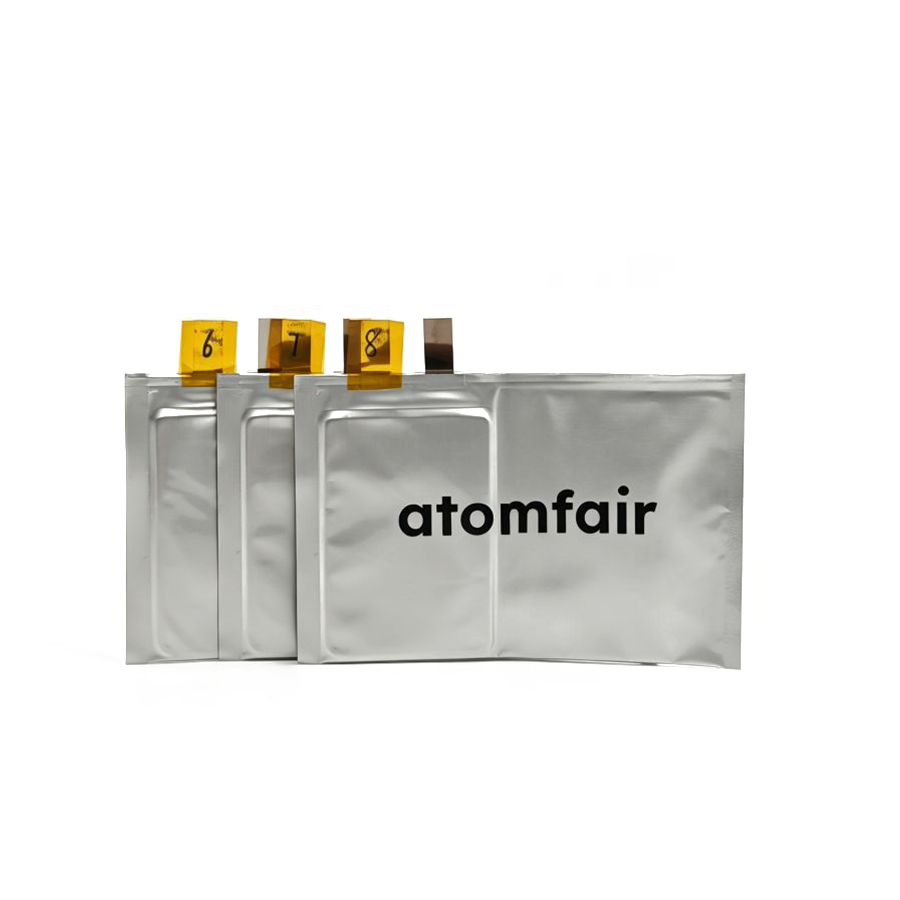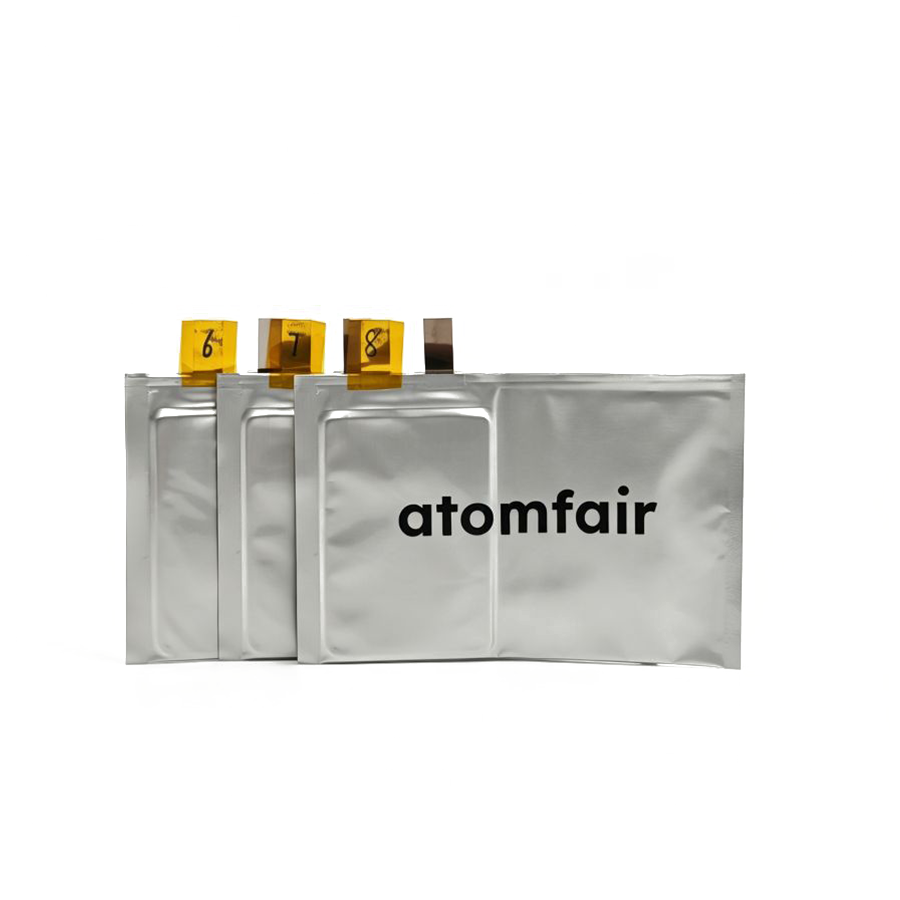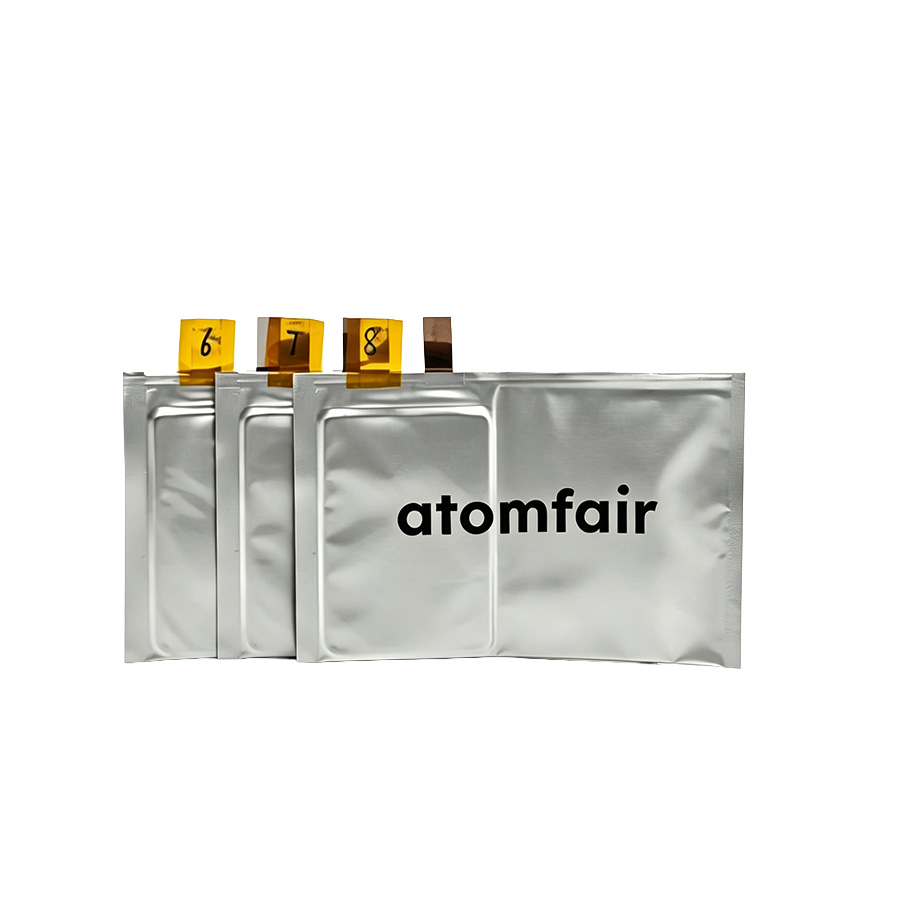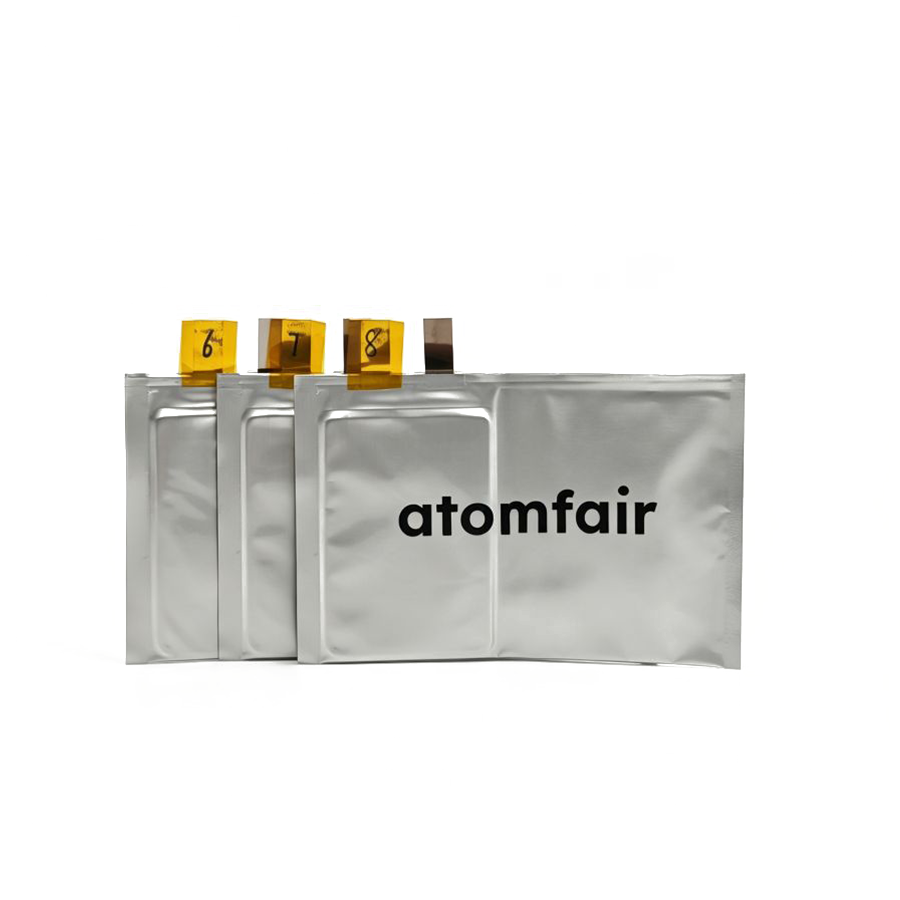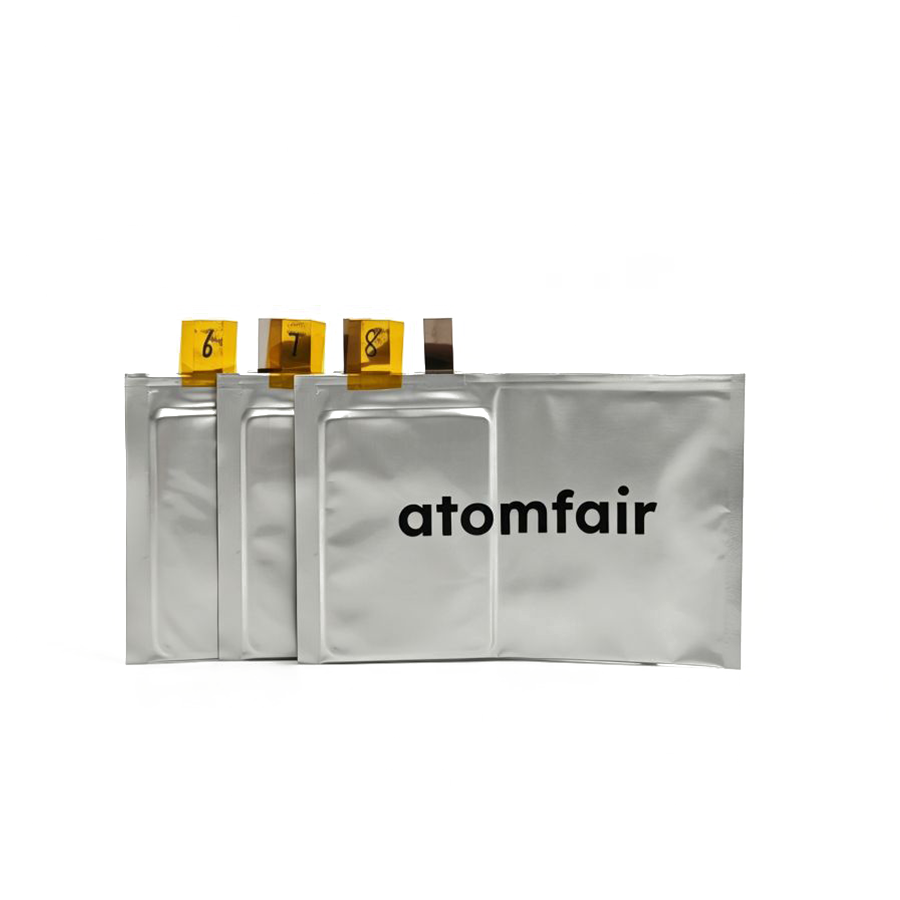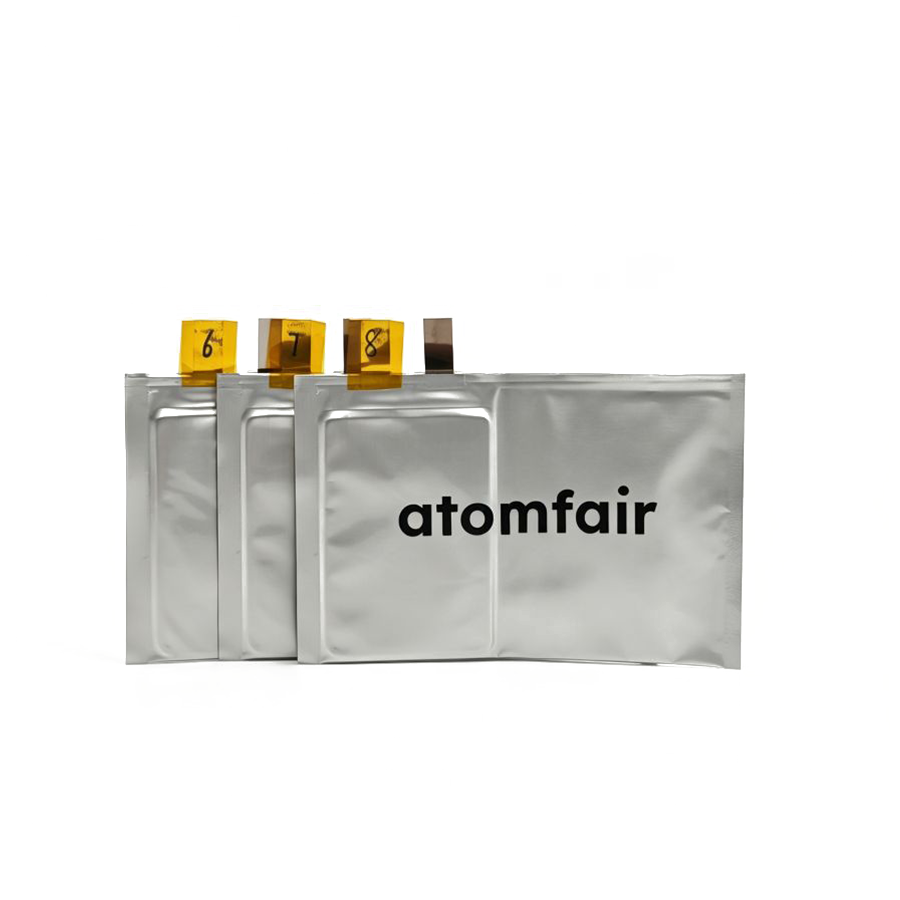
Ni90 Dry Pouch Cell (1Ah) – Anode-Free, Carbon-Coated Copper Foil |
||||||||||||||||||||||||||||||||||||||||||||||||||
|
||||||||||||||||||||||||||||||||||||||||||||||||||
|
||||||||||||
Related Products |
||||||||||||
|
||||||||||||
|
TAILORED SOLUTIONS FOR RESEARCH
Contact our engineering team for technical support or official institutional quotations.
EMAIL: inquiry@atomfair.com
|
||||||||||||
| Manufacturer: Atomfair LLC Brand: ATOMFAIR |
This dry pouch cell requires assembly in an inert atmosphere to prevent moisture-induced degradation of the high-nickel cathode. The cell must be hermetically sealed after solid electrolyte incorporation to maintain electrochemical integrity.
- Inert Atmosphere Assembly: Assemble the cell only in a glovebox or dry room with controlled atmosphere to avoid moisture and oxygen exposure.
- Carbon Coating Integrity: Handle the carbon-coated copper foil with care to prevent scratching or delamination of the coating.
- NP Ratio Maintenance: Preserve the optimized NP ratio layering during assembly to ensure proper electrochemical performance.
- Hermetic Sealing: Seal the pouch cell immediately after solid electrolyte incorporation to prevent air ingress and moisture contamination.
- Electrolyte Compatibility: Verify compatibility of the chosen solid electrolyte with the high-nickel cathode and carbon-coated copper current collector.
How does the 2.5-4.2V operating window affect the capacity retention of the Ni90 (90:7:3) cathode in this dry pouch cell?
The specified voltage range of 2.5-4.2V is standard for high-nickel NMC cathodes. With a specific capacity of 203 mAh/g and compaction density of 3.4 g/cc, cycling to 4.2V maximizes delivered capacity but accelerates interfacial degradation of the 90% Ni matrix. The dry cell architecture isolates pure degradation mechanics without electrolyte interference.
Can this carbon-coated copper dry pouch cell be directly integrated with sulfide-based solid electrolytes for bulk-type solid-state battery testing?
Yes, the dry, electrolyte-free configuration is specifically engineered for solid-state electrolyte investigations. The carbon coating on the copper foil anode (Cu-C) provides a stable current-collector interface compatible with sulfide-based solid electrolytes, as the cell architecture isolates interfacial degradation without pre-filled liquid chemistries.
Are there specific handling or storage conditions required for the Ni90 cathode and carbon-coated copper anode in this dry pouch cell to maintain research-grade performance?
The dry pouch cell is supplied electrolyte-free with a high-nickel NiCoMn (90:7:3) cathode and a Cu-C carbon-coated copper anode, both of which are susceptible to moisture-induced degradation. To preserve the absolute experimental control intended for solid-state electrolyte studies, the cell should be stored in a dry, inert atmosphere and handled only under low-humidity conditions to avoid compromising the pristine current-collector interfaces.
The ATOMFAIR Ni90 Carbon-Coated Copper Dry Pouch Cell delivers a high-nickel cathode with 97.2% active material and 203 mAh/g capacity for precise solid-state electrolyte studies, though the electrolyte-free delivery and undisclosed NP ratio demand additional handling and modeling considerations.
Positive
- High-capacity NiCoMn cathode at 97.2% active material: The 9-series high-nickel cathode (NiCoMn 90:7:3) provides a specific capacity of 203 mAh/g and compaction density of 3.4 g/cc, enabling high energy density in solid-state pouch cell configurations.
- Carbon-coated copper foil anode for optimized interface: The Cu-C carbon-coated copper foil substrate is engineered to improve current-collector contact and isolate interfacial degradation mechanics during solid-state electrolyte validation.
Trade-offs
- Electrolyte-free delivery requires user filling: The dry pouch cell is supplied without electrolyte, necessitating additional handling, filling, and sealing steps by the user, which introduces process variability and infrastructure requirements.
- NP ratio not disclosed in specification: The NP ratio is listed as 'Optimized Baseline Layering' without a numeric value, preventing independent verification of anode-to-cathode capacity balance and limiting certain electrochemical modeling efforts.
Every advanced material, component, equipment, and instrument in our catalog is backed by rigorous testing. We maintain strict internal quality management frameworks and align with CE conformity metrics to deliver transparent, reproducible performance data via our public open-science repository.
To request raw batch performance data, submit formal vendor registration paperwork, or execute a fast-turnaround R&D manufacturing loop, contact us at inquiry@atomfair.com.
Item is dispatched under the Atomfair Shipping & Delivery Framework (Free worldwide shipping on orders over $59 USD excl. heavy equipment). Return is governed by the Atomfair Return & Refund Policy (7-day technical return window).