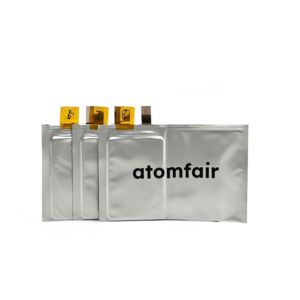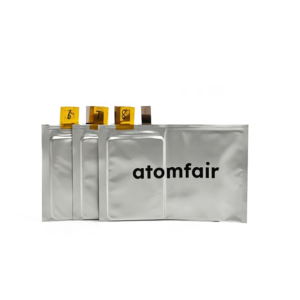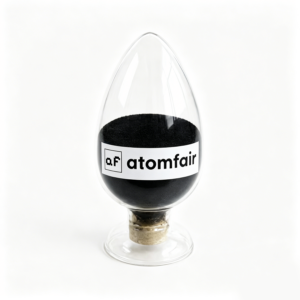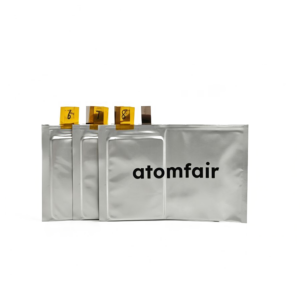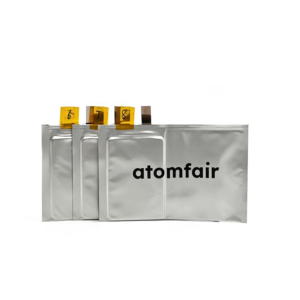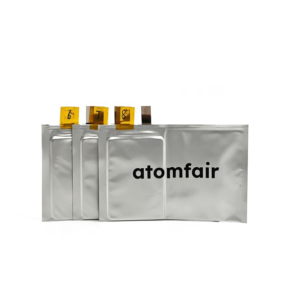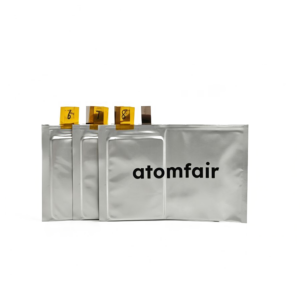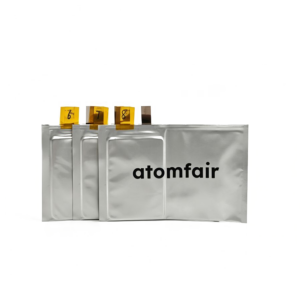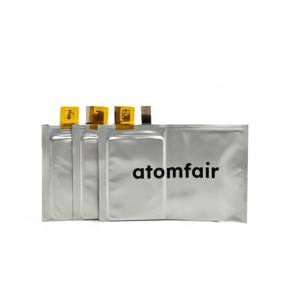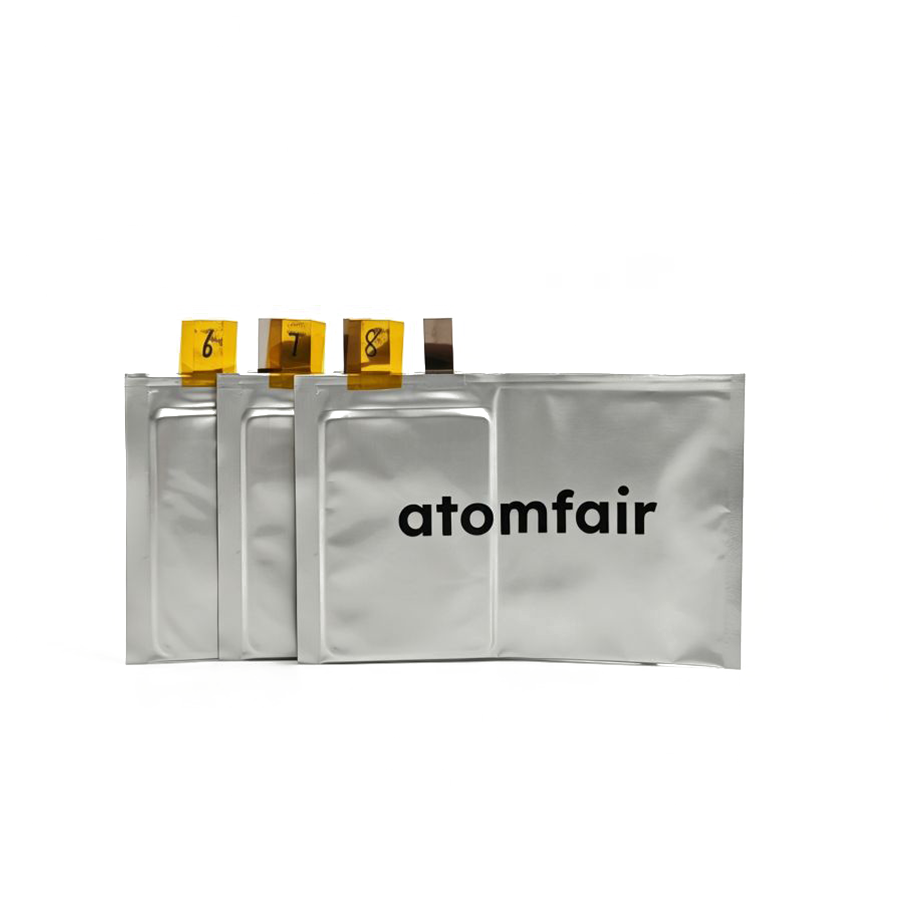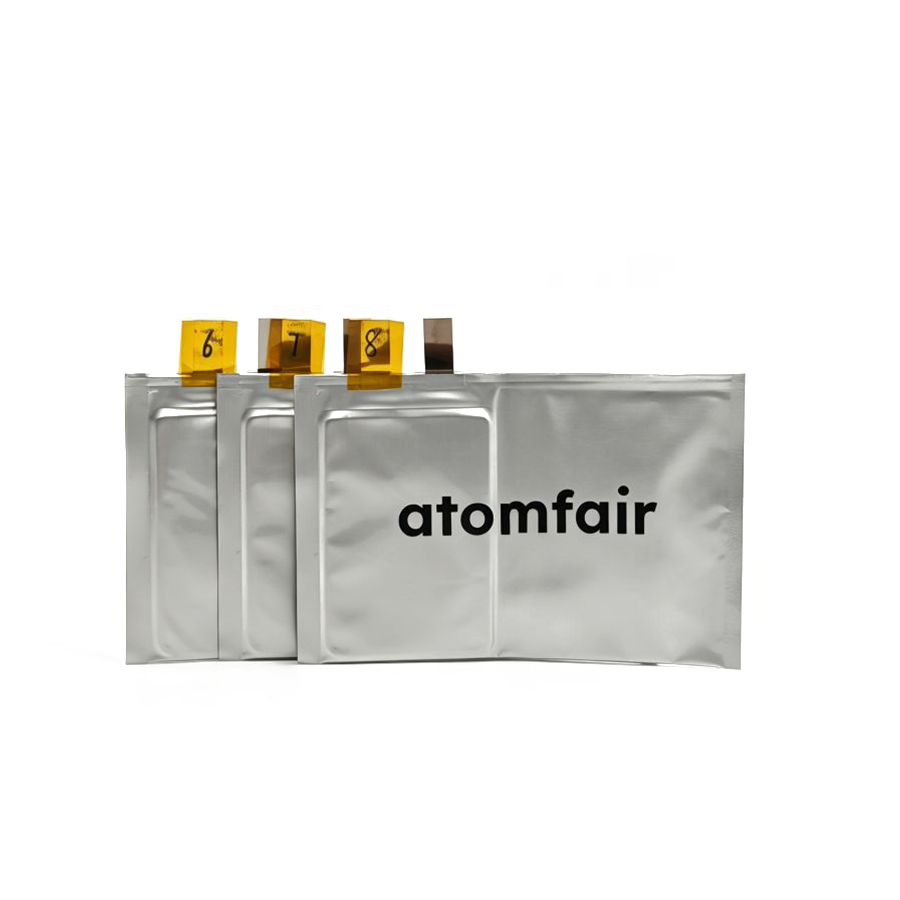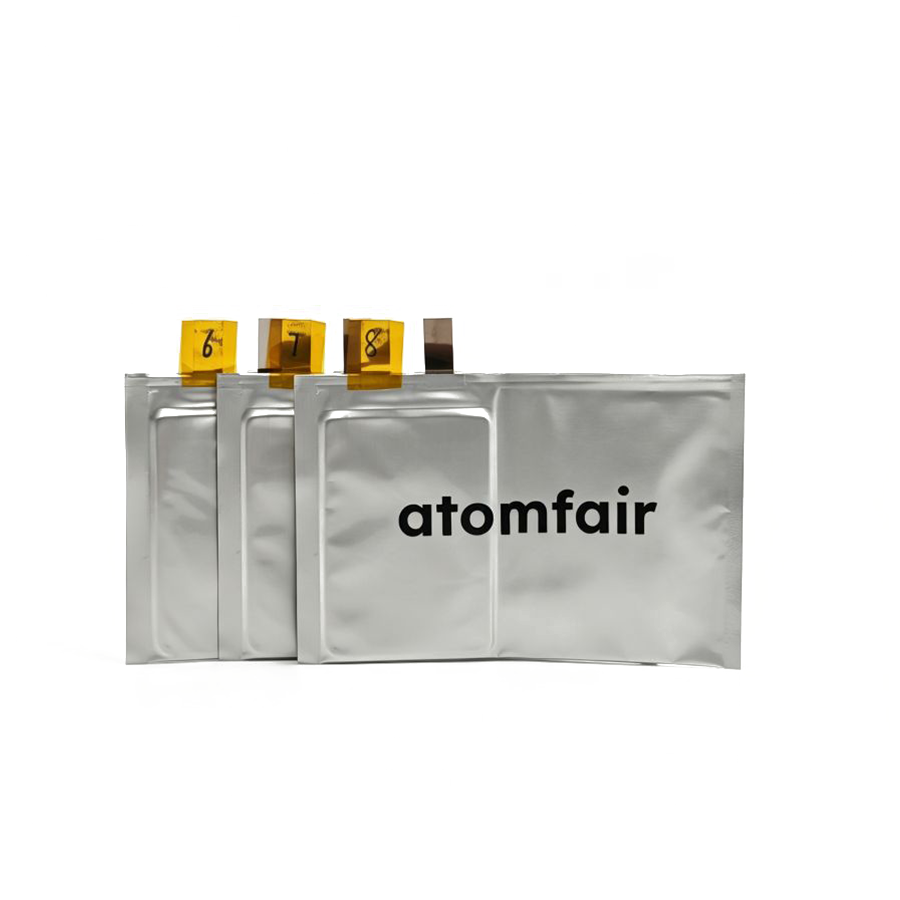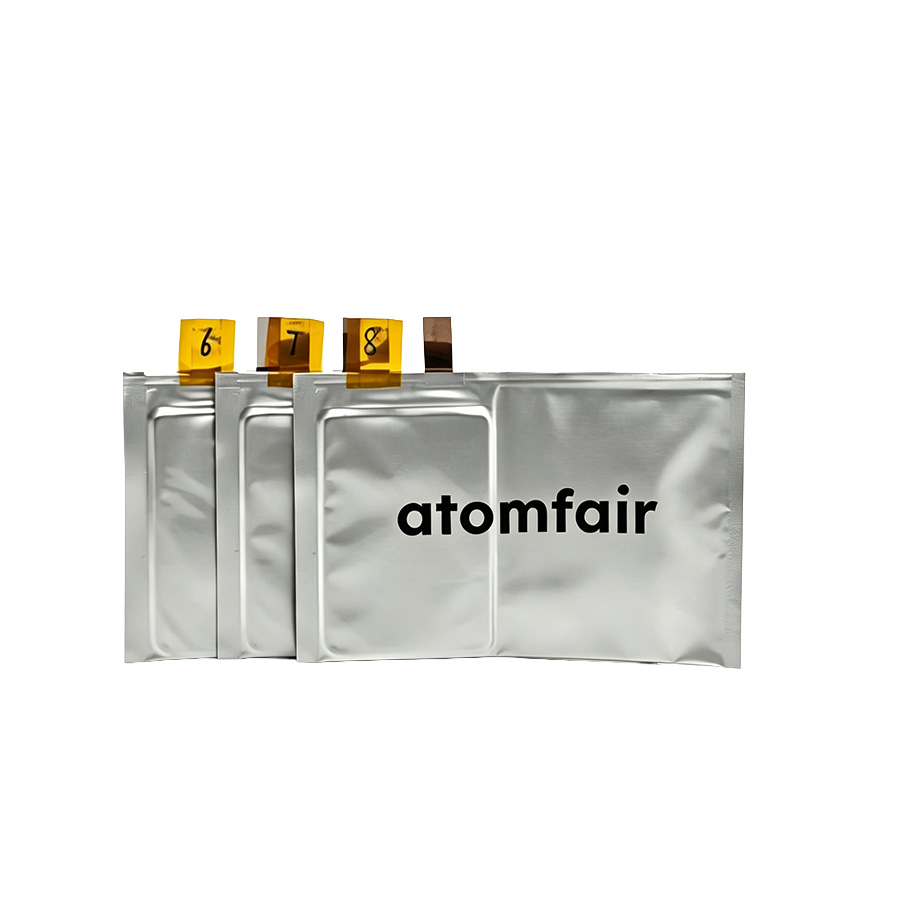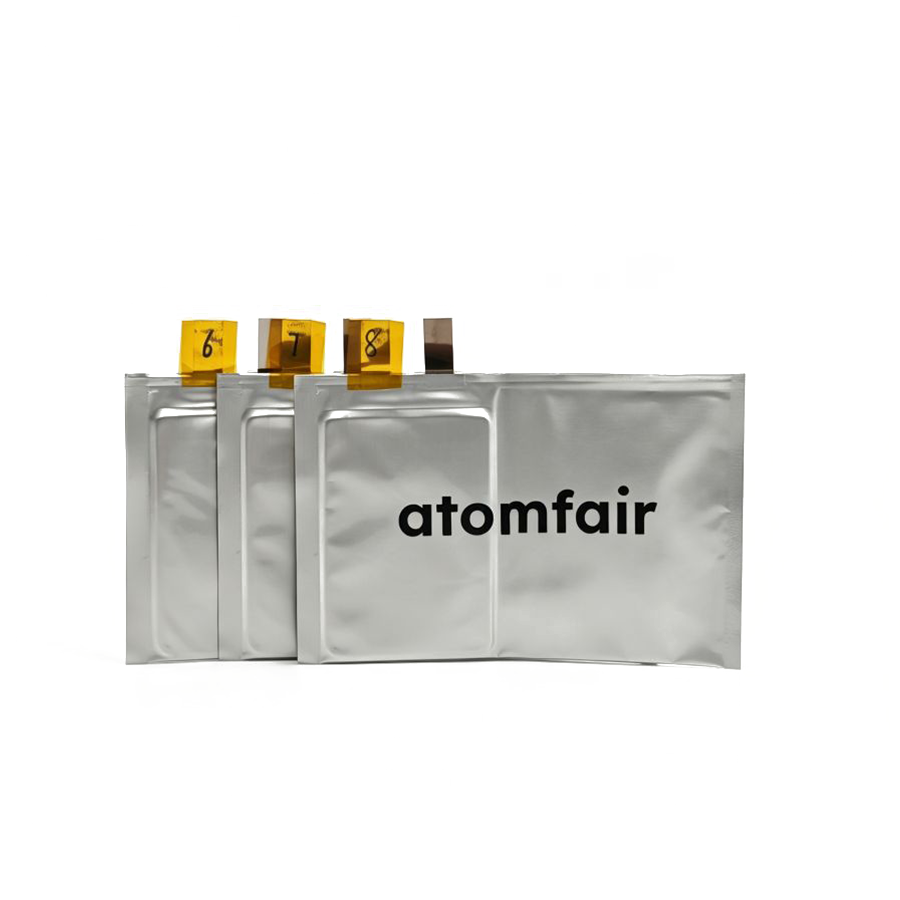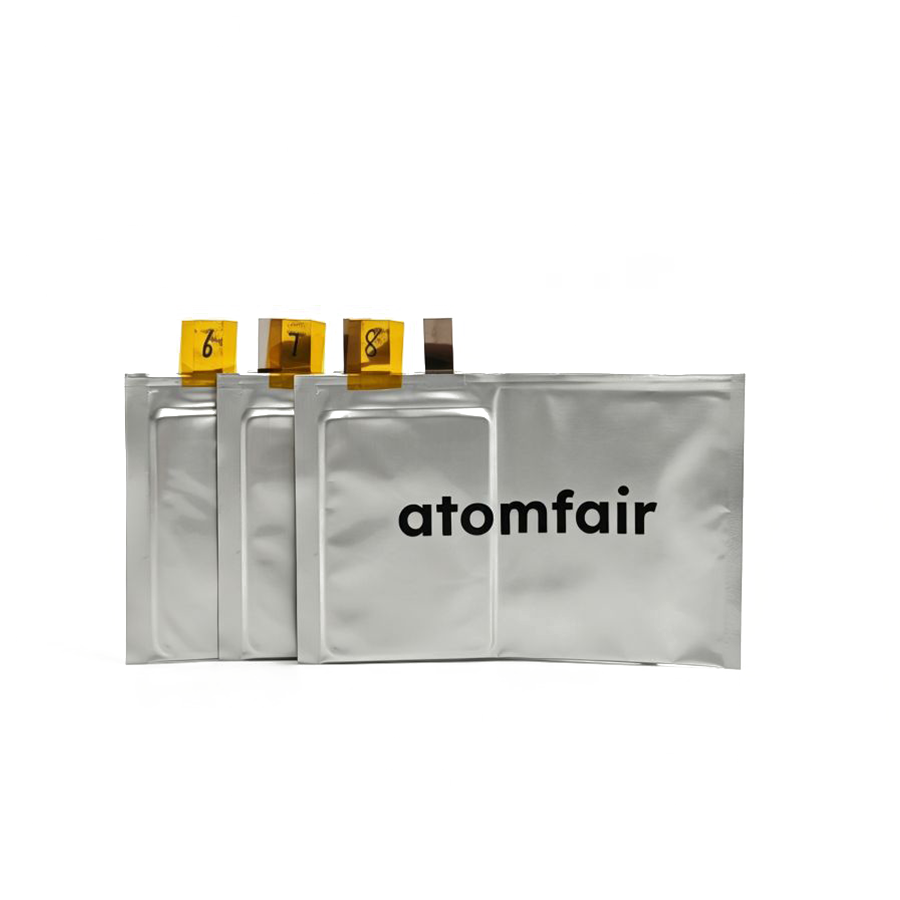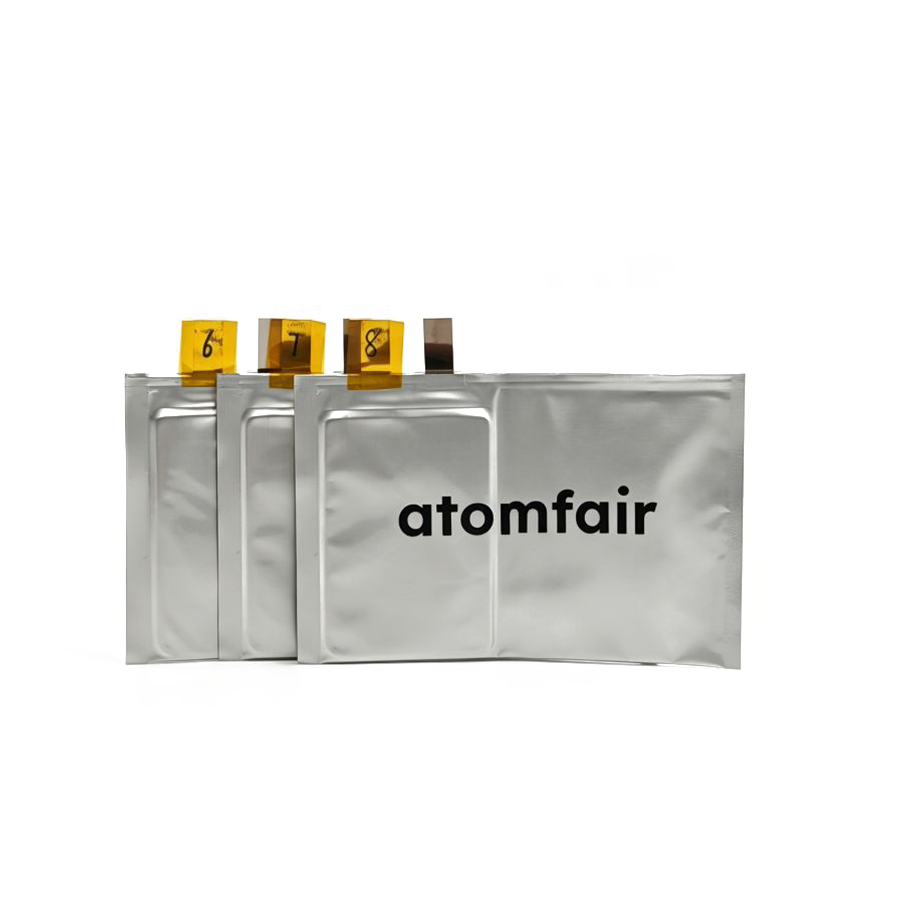
Ni90 Dry Pouch Cell (1Ah) – Si/C 1100 Anode |
||||||||||||||||||||||||||||||||||||||||||||||||||||||||||||||||||||
|
||||||||||||||||||||||||||||||||||||||||||||||||||||||||||||||||||||
This dry pouch cell contains moisture-sensitive electrode materials requiring storage in a low-humidity, inert atmosphere to prevent degradation. The laminated multilayer stack is mechanically fragile and must be handled with care to avoid delamination or damage to the separator coating.
- Moisture Sensitivity: Store in a moisture-free inert atmosphere (e.g., argon glovebox) to prevent oxidation of the high-nickel cathode and moisture absorption by the silicon-carbon anode.
- Mechanical Fragility: Handle the pouch cell gently and avoid bending or puncturing the thin 5/6 multilayer electrode stack to prevent internal short circuits or delamination.
- Separator Integrity: The 12 μm PE separator with 2 μm Al2O3 ceramic coating is brittle and may crack if subjected to sharp creasing or excessive pressure.
- Atmospheric Exposure: Minimize exposure to ambient air to avoid surface contamination of the Ni90 cathode that could compromise electrochemical performance.
This dry pouch cell requires electrolyte filling and formation cycling before electrochemical testing. The following steps outline the safe handling and activation process under inert atmosphere.
Required Equipment: Inert atmosphere glovebox, Electrolyte injection syringe, Heat sealer, Battery cycler or potentiostat
- Electrolyte Injection
Inject the electrolyte formulation into the dry pouch cell using a syringe inside an inert atmosphere glovebox. - Pouch Sealing
Seal the pouch cell completely using a heat sealer to ensure hermetic closure and prevent leakage. - Formation Cycling
Perform the initial formation cycles within the 2.3 V to 4.2 V voltage window using a battery cycler to activate the electrodes. - Swelling Monitoring
Monitor the cell thickness and gas evolution during the first few cycles to evaluate silicon anode volumetric expansion. - Capacity Verification
Verify the nominal capacity of approximately 1.0 Ah after activation to confirm cell integrity and performance baseline.
How does the Ni90/SiC1100 dry pouch cell enable decoupling of silicon swelling effects from electrolyte formulation variables?
The cell's un-functionalized dry architecture and fixed NP ratio of 1.080 establish a constant mechanical baseline, isolating electrolyte-induced swelling for direct measurement. Its 1100 mAh/g SiC1100 anode and 210 mAh/g Ni90 cathode define a high-capacity matrix where volumetric expansion and gas evolution can be tracked without confounding variables from pre-infused electrolyte or non-standard electrode stacks.
What electrolyte compatibility considerations are required for the ATOMFAIR Ni90 SiC1100 dry pouch cell?
This dry cell is shipped without electrolyte, requiring user infusion for activation and is specifically designed for electrolyte screening. The 1.080 NP ratio and SiC1100 anode's high capacity demand electrolyte formulations that accommodate silicon's large volume changes; standard carbonate electrolytes may be used but careful additive selection (e.g., FEC, VC) is advised to stabilize the SEI and manage swelling.
What infrastructure and handling protocols are required to activate the ATOMFAIR Ni90 SiC1100 dry pouch cell?
Electrolyte filling must be performed in an inert atmosphere (argon glovebox, H2O <1 ppm) due to the extreme moisture sensitivity of the dry electrode stack. The un-functionalized cell then requires a controlled formation cycling sequence (typically C/10 for 1–3 cycles) to create a stable SEI and accommodate the SiC1100 anode's initial expansion, with gas volume tracking enabled by the 5/6 laminated pouch design.
This 1 Ah dry pouch cell pairs a 210 mAh/g Ni90 cathode with an 1100 mAh/g SiC1100 anode to serve as a high-fidelity baseline for silicon-compatible electrolyte screening and volumetric swelling modeling. Its un-functionalized dry architecture and optimized NP ratio of 1.080 enable controlled variable elimination, but the cell requires external electrolyte infusion prior to testing and the silicon-carbon anode's expansion demands careful mechanical management.
Positive
- High-fidelity benchmarking baseline: The un-functionalized Ni90 cathode and SiC1100 anode framework provide an absolute baseline for variable elimination in electrolyte formulation screening and gas evolution tracking.
- Optimized NP ratio for silicon expansion: A negative-to-positive capacity ratio of 1.080 is engineered to accommodate silicon anode volumetric swelling, enabling localized swelling growth modeling.
Trade-offs
- Requires external electrolyte infusion: This dry pouch cell is assembled without liquid electrolyte, necessitating user-controlled electrolyte filling and activation before electrochemical testing.
- Silicon anode expansion management needed: The high-capacity SiC1100 anode (1100 mAh/g) undergoes significant volumetric change during cycling, requiring careful cell fixture and pressure control to maintain performance.
Every advanced material, component, equipment, and instrument in our catalog is backed by rigorous testing. We maintain strict internal quality management frameworks and align with CE conformity metrics to deliver transparent, reproducible performance data via our public open-science repository.
To request raw batch performance data, submit formal vendor registration paperwork, or execute a fast-turnaround R&D manufacturing loop, contact us at inquiry@atomfair.com.
Item is dispatched under the Atomfair Shipping & Delivery Framework (Free worldwide shipping on orders over $59 USD excl. heavy equipment). Return is governed by the Atomfair Return & Refund Policy (7-day technical return window).