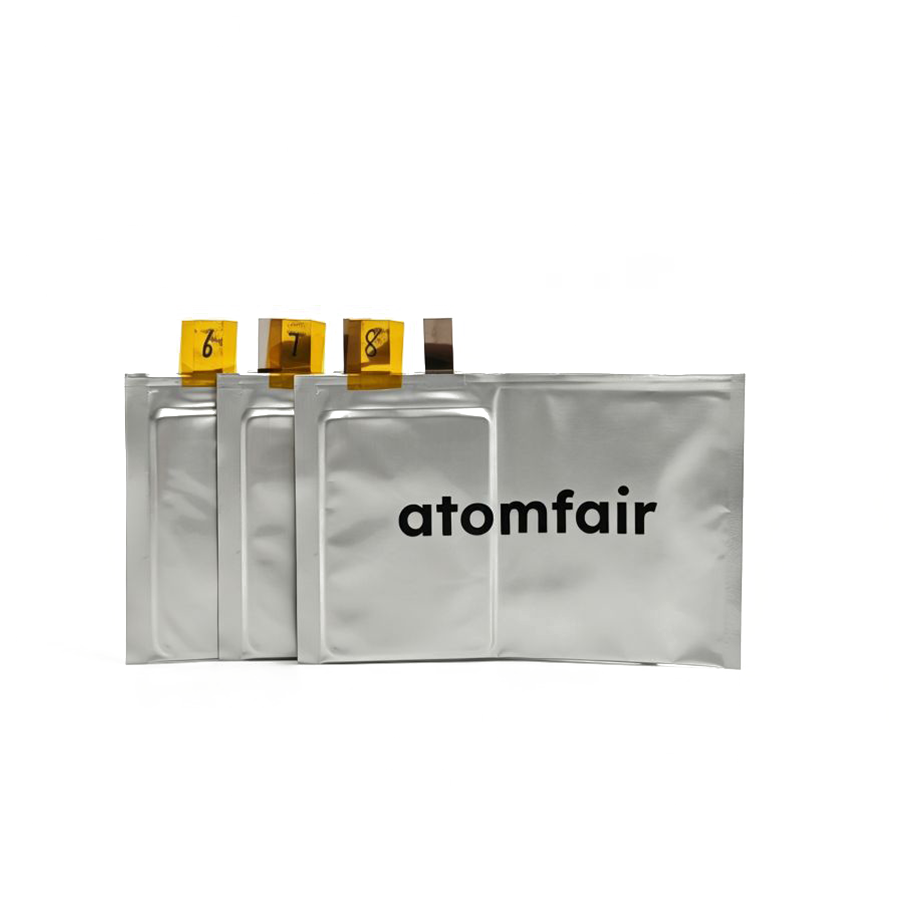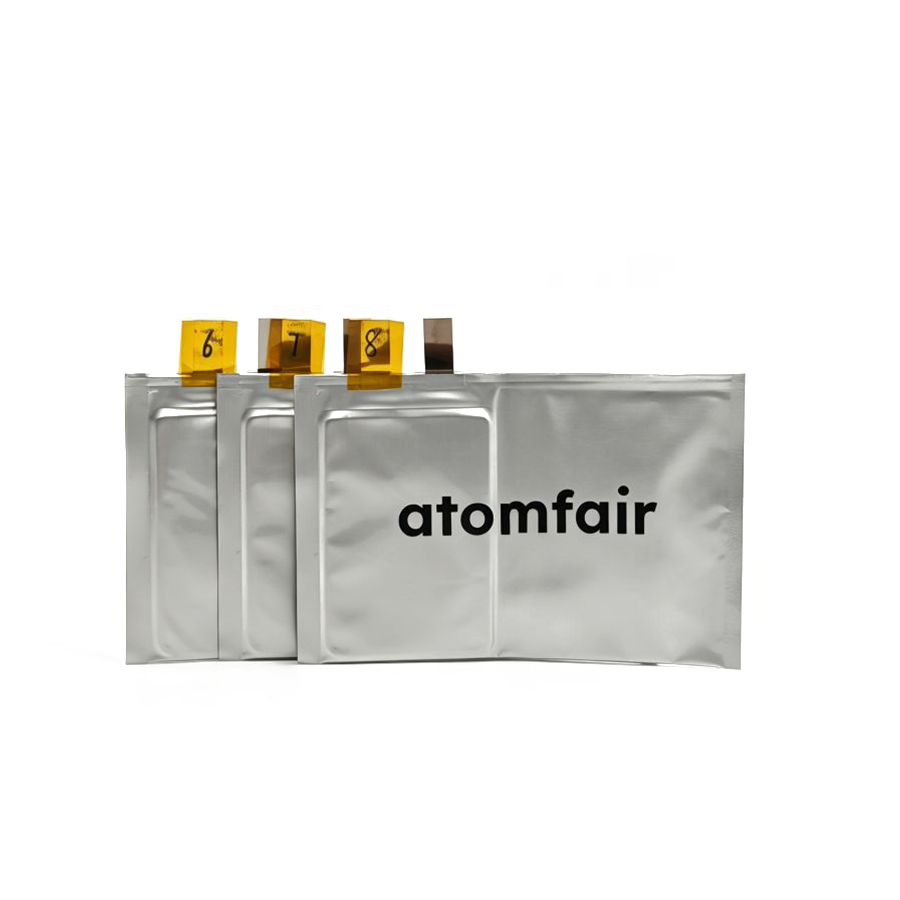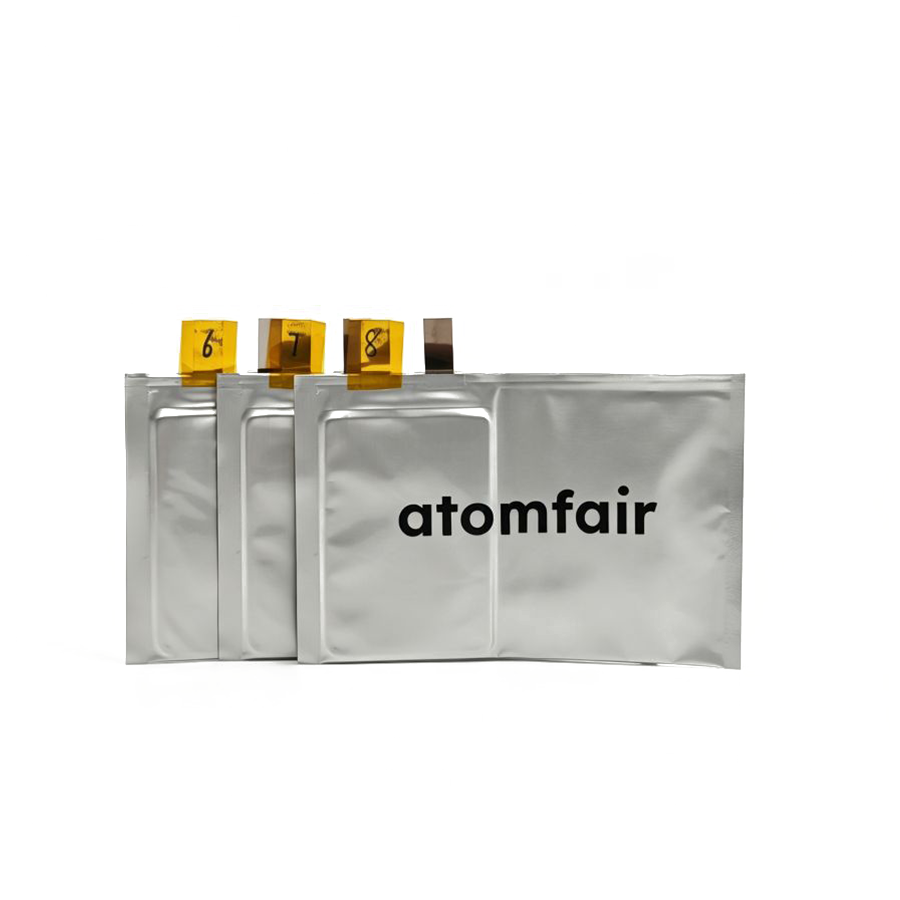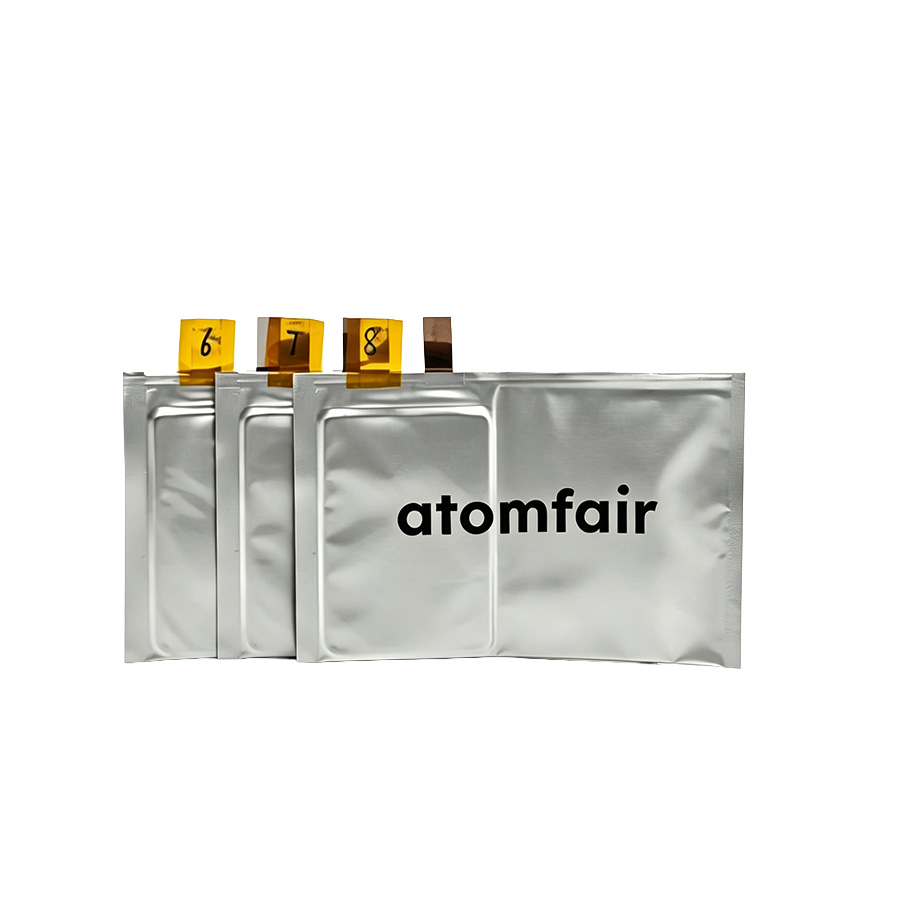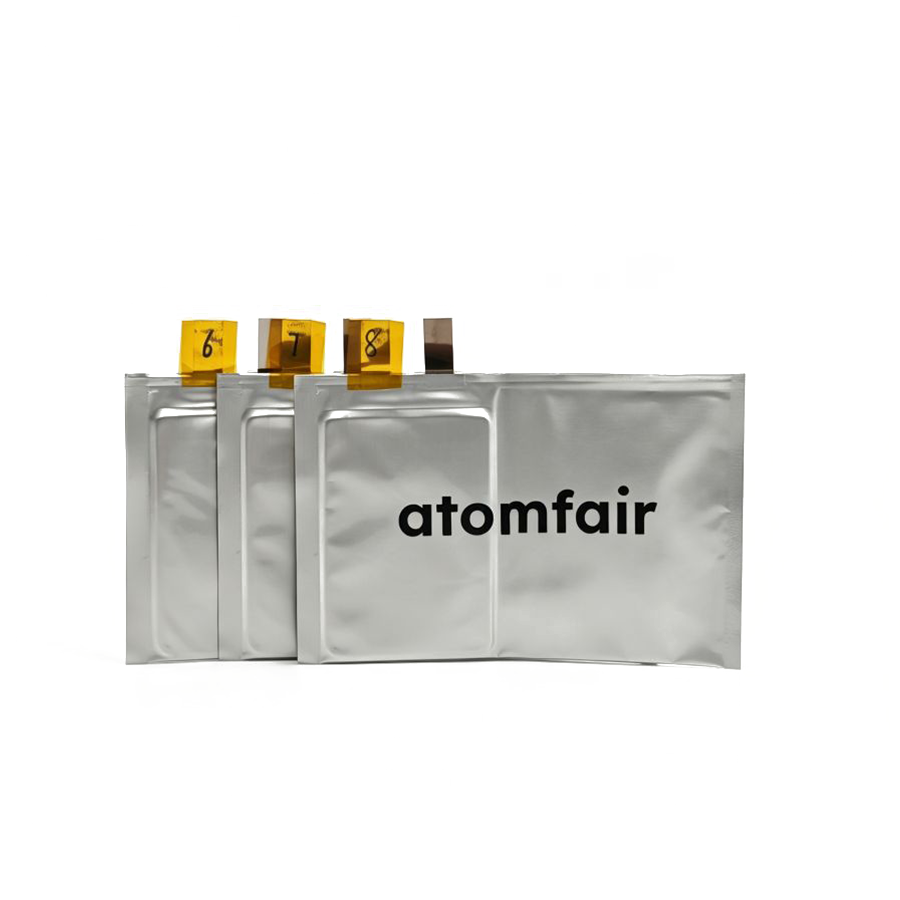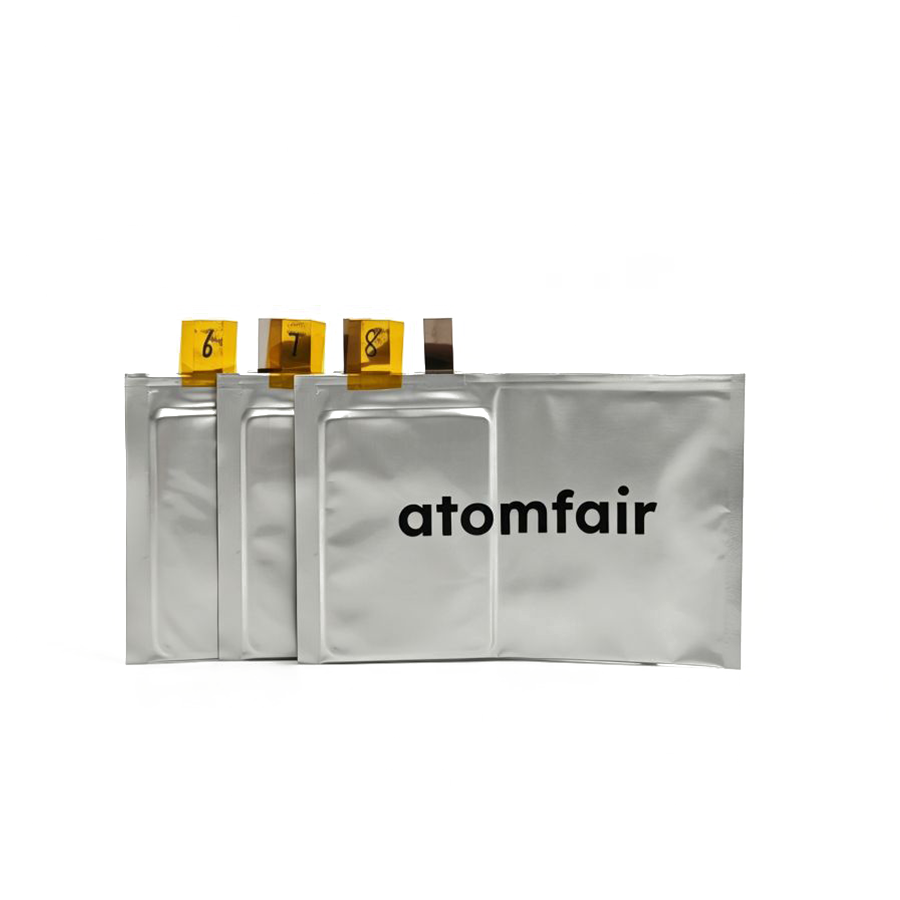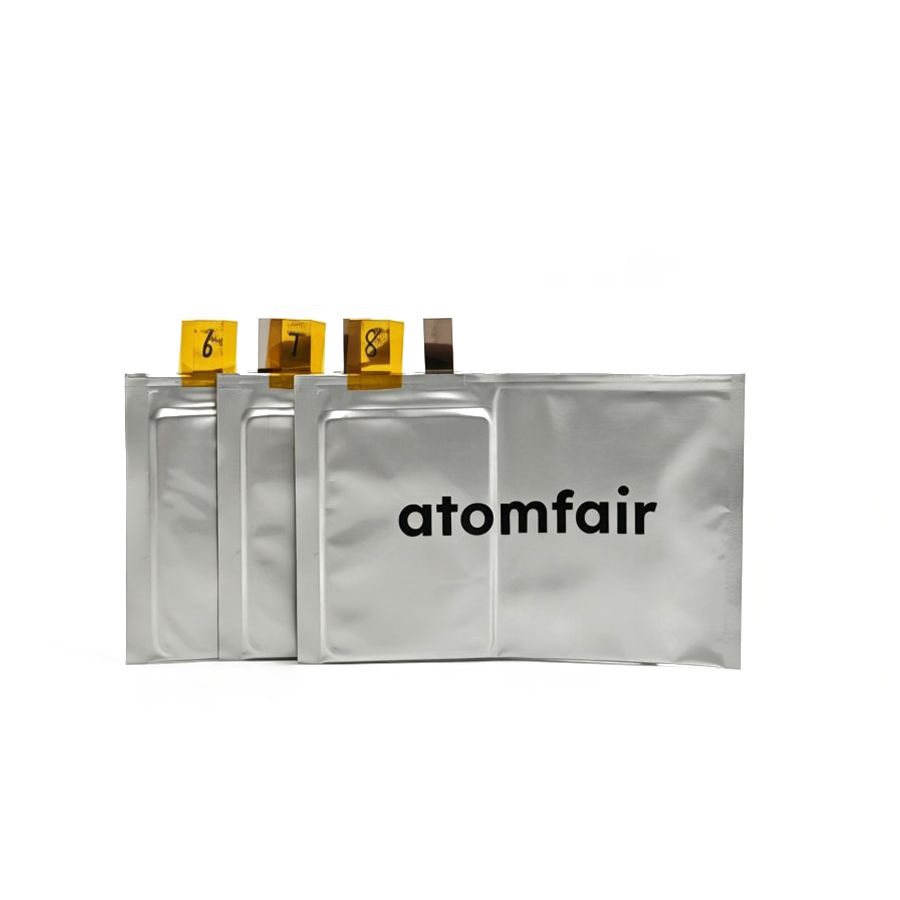
Ni90 Dry Pouch Cell (1.2Ah) – Si/C 1100 Anode |
||||||||||||||||||||||||||||||||||||||||||||||||||||||||||||||||||||
|
||||||||||||||||||||||||||||||||||||||||||||||||||||||||||||||||||||
This dry pouch cell requires electrolyte injection prior to activation. Storage must be in a dry, inert atmosphere to prevent moisture uptake and oxidation of the high-nickel cathode.
- Electrolyte Compatibility: Use only electrolyte formulations compatible with high-nickel cathodes and silicon-carbon anodes to avoid gassing and capacity fade.
- Voltage Limits: Do not exceed 4.2 V or discharge below 2.3 V to prevent cathode degradation and lithium plating.
- Moisture Sensitivity: Exposure to ambient moisture can cause hydrolysis of the cathode and anode, leading to performance loss.
- Mechanical Integrity: Silicon expansion during cycling may induce swelling; ensure cell is constrained to prevent delamination.
- Storage Conditions: Store at ≤25°C in an argon-filled glovebox or vacuum-sealed bag to maintain dry state.
This procedure outlines electrolyte filling and formation cycling for the dry pouch cell. All steps must be performed in a dry room or glovebox to prevent contamination.
Required Equipment: Argon-filled glovebox with moisture < 0.1 ppm, Graduated syringe for electrolyte injection, Heat sealer for port closure, Battery cycler with voltage and temperature monitoring
- Transfer to glovebox
Transfer the dry pouch cell to an argon-filled glovebox with < 0.1 ppm H2O and O2. - Inject electrolyte
Inject the selected electrolyte formulation using a graduated syringe through the pre-cut fill port. - Seal fill port
Seal the fill port using a heat sealer to ensure hermetic closure. - Soak cell
Allow the cell to soak for a minimum of 4 hours to ensure full wetting of the electrodes. - Formation cycle
Connect the cell to a battery cycler and perform an initial formation cycle: charge at 0.1C to 4.2 V, then discharge to 2.3 V. - Monitor safety
Monitor cell voltage and temperature during formation; abort if abnormal swelling or voltage deviation occurs. - Post-formation storage
After formation, store the cell at 25°C for 24 hours before further testing.
Does the NP ratio of 1.133 in the Atomfair Ni90-Si/C1100 cell prioritize silicon swelling containment over full anode capacity utilization?
Yes, the NP ratio of 1.133 is an optimized balancing matrix specifically designed for silicon expansion safety, as stated in the technical specifications. The Si/C1100 anode baseline specific capacity of 1100 mAh/g is deliberately underutilized to maintain a nominal 1.2 Ah cell capacity, ensuring volumetric growth is managed during cycling. This trade-off prioritizes dimensional stability over maximizing capacity delivery from the anode.
What electrolyte compatibility constraints apply to this dry pouch cell for silicon anode gas evolution studies?
The cell is an un-functionalized dry unit supplied without electrolyte, requiring custom filling for gas evolution tracking. The separator features a 12 μm PE base layer with a 2 μm Al2O3 ceramic coating, which may limit wetting with high-viscosity or poorly wetting electrolytes. Researchers must validate electrolyte penetration and chemical compatibility with the ceramic coating to avoid compromised gas evolution measurements.
What activation voltage window and electrode alignment tolerances are required to achieve the nominal 1.2 Ah capacity?
The cell must be activated within the target voltage window of 2.3 V to 4.2 V to reach the 1.2 Ah nominal baseline capacity after proper electrolyte filling. Precise electrode alignment is critical: the cathode footprint of 45.5 mm x 64 mm must be centered within the larger anode footprint of 46.5 mm x 65 mm to prevent edge plating. The 6/7 laminated multi-layer stack requires careful handling during assembly to maintain electrode registry.
This dry pouch cell pairs a 203 mAh/g Ni90 cathode with a 1100 mAh/g Si/C1100 anode in a 6/7 layer stack, enabling high-fidelity benchmarking of silicon-compatible electrolytes and swelling behavior, though it requires end-user electrolyte infusion and careful formulation management.
Positive
- High-capacity Si/C1100 anode: The 1100 mAh/g silicon-carbon composite anode provides an elite capacity horizon for evaluating next-generation electrolyte systems and expansion dynamics.
- Optimized NP ratio and separator: A negative-to-positive capacity ratio of 1.133 combined with a 12 μm PE + 2 μm Al₂O₃ ceramic-coated separator is explicitly designed to accommodate silicon expansion and improve safety during cycling.
Trade-offs
- Dry state requires electrolyte filling: The cell is assembled without liquid electrolyte infusion; the researcher must perform this step, introducing variability and demanding precise wetting protocols.
- Si/C anode demands compatible electrolytes: The high-capacity silicon-carbon anode is sensitive to electrolyte chemistry; improper formulation can exacerbate volumetric swelling and gas evolution, complicating data interpretation.
Every advanced material, component, equipment, and instrument in our catalog is backed by rigorous testing. We maintain strict internal quality management frameworks and align with CE conformity metrics to deliver transparent, reproducible performance data via our public open-science repository.
To request raw batch performance data, submit formal vendor registration paperwork, or execute a fast-turnaround R&D manufacturing loop, contact us at inquiry@atomfair.com.
Item is dispatched under the Atomfair Shipping & Delivery Framework (Free worldwide shipping on orders over $59 USD excl. heavy equipment). Return is governed by the Atomfair Return & Refund Policy (7-day technical return window).