
Specialty Inorganic Compounds
ATOMFAIR’s Specialty Inorganic Compounds category brings together high-purity inorganic salts, functional hydroxides, oxyhydroxides, elemental powders, compound semiconductors, and selected carbon materials for advanced materials research, laboratory development, and institutional procurement.
The category is organized around the specifications that most often determine material suitability, including chemical composition, purity, particle size, crystal phase, hydration state, product form, and intended application. Current coverage includes aluminum hydroxide, aluminum oxyhydroxide, boehmite nanopowders, magnesium hydroxide, zirconium hydroxide, amorphous boron powders, high-purity nitrates, acetates, sulfates, perchlorates, tellurites, tellurates, semiconductor and optoelectronic compounds, selenium, and selected graphite materials.
Whether you are screening a nanoscale powder for dispersion and surface-area studies, selecting a high-purity precursor for synthesis, or sourcing a defined compound for semiconductor, optical, thermoelectric, or ceramic research, this category provides a starting point for comparing material families before reviewing detailed product specifications.
Show More: Compare Inorganic Materials by Chemistry, Form, and Application
1. Browse by Material Family
| Material Family | Typical Catalog Coverage | Questions to Consider |
|---|---|---|
| Aluminum Hydroxide, Oxyhydroxide, and Boehmite | Nano- and micron-scale Al(OH)3, aluminum oxyhydroxide, and boehmite products | Do you need a defined particle size, high specific surface area, a boehmite phase, or a formulation-oriented surface treatment? |
| Magnesium Hydroxide | Nano- and micron-scale Mg(OH)2 grades for flame-retardant and battery-material research | Is the priority particle size, purity, surface area, thermal behavior, or compatibility with a polymer or electrode formulation? |
| Zirconium Hydroxide | 20-30 nm monoclinic Zr(OH)4 powder | Is a defined crystal phase and high-surface-area grade required for catalyst or battery-material research? |
| Amorphous Boron | 86%, 91%, and 95.5% purity grades with D50 particle sizes around 1-2 μm | Which purity, particle-size distribution, impurity limits, and moisture limits are acceptable for your study? |
| High-Purity Inorganic Salts and Precursors | Nitrates, acetates, sulfates, perchlorates, carbonates, tellurites, and tellurates, including hydrated forms | Do you need an anhydrous or hydrated form, a specific counter-ion, a defined purity level, or a precursor for solution or solid-state synthesis? |
| Compound Semiconductors and Functional Inorganic Compounds | Gallium arsenide, zinc arsenide, tantalum arsenide, copper arsenides, cadmium germanium arsenide, lithium niobate, bismuth germanate, and cobalt antimonide | Is the target application semiconductor, optoelectronic, nonlinear optical, scintillation, or thermoelectric research? |
| Elemental and Carbon Materials | Selenium and selected high-purity graphite materials | Do you need an elemental source, a defined graphite geometry, or a separate high-temperature laboratory component? |
2. Key Specification Ranges
The current product range includes several specification categories that can help narrow your selection:
- Purity: Listed grades range from approximately 3N to 7N, depending on the material family. Many specialty salts and compounds are specified at 4N, 4N5, or 5N.
- Particle Size: Hydroxide and oxyhydroxide powders range from approximately 10-20 nm to 100 nm, with additional micron-scale and 20-30 nm grades.
- Specific Surface Area: Selected aluminum oxyhydroxide, boehmite, magnesium hydroxide, and zirconium hydroxide products provide stated surface-area ranges. Confirm batch-specific values before using them as process-control parameters.
- Crystal Phase and Structure: Examples include monoclinic zirconium hydroxide, boehmite, chalcopyrite cadmium germanium arsenide, and defined compound-semiconductor compositions.
- Hydration State: The catalog includes both named hydrates and non-hydrated forms. This distinction can affect molecular-weight calculations, solution preparation, thermal treatment, and precursor conversion.
- Product Form: Powders, crystals, granules, and selected graphite laboratory components are represented. Confirm the required form before ordering.
3. Match the Material Family to Your Research Path
For flame-retardant and smoke-suppression formulation studies: Compare aluminum hydroxide and magnesium hydroxide by particle size, purity, moisture, surface treatment, dispersion behavior, and target processing temperature. Nano grades may support high-surface-area studies, while micron-scale grades may be more appropriate for formulation screening where loading, viscosity, and processing behavior are important.
For catalyst, precursor, and ceramic research: Consider aluminum hydroxide, aluminum oxyhydroxide, boehmite, and zirconium hydroxide according to phase, particle size, surface area, and conversion route. Request the relevant COA and SDS when the material will be calcined, dissolved, coated, or incorporated into a multi-step synthesis.
For energetic, alloy, and ceramic-material research: Amorphous boron grades can be compared by purity, D50 particle size, and reported impurity or moisture values. The appropriate grade depends on the test method and formulation, so use the product specification and batch documentation rather than purity alone.
For semiconductor, optical, and thermoelectric research: The category includes compounds such as GaAs, Zn3As2, TaAs, CdGeAs2, LiNbO3, bismuth germanate, and CoSb3. Confirm the required composition, purity, phase or crystal form, quantity, and laboratory-use conditions before submitting an inquiry.
For high-purity chemical synthesis: Salts and precursors can be selected by cation, anion, hydration state, and purity. Nitrates, acetates, sulfates, perchlorates, carbonates, tellurites, and tellurates may serve different synthesis and solution-preparation pathways even when they contain the same principal element.
4. Buyer Procurement Checklist
Before requesting a quotation or placing an order, confirm:
- Chemical name, formula, and hydration state.
- Purity basis and relevant impurity limits.
- Particle-size definition, such as nominal size, D50, or a stated range.
- Crystal phase, structure, or morphology where relevant.
- Required package size, total quantity, and repeat-order volume.
- Whether the material will be dissolved, calcined, coated, pressed, dispersed, or used as a solid.
- COA, SDS, and institution-specific documentation requirements.
- Handling, shipping, and regulatory requirements for materials containing cadmium, arsenic, tellurium, or other regulated elements.
5. Documentation and Custom Specification Support
Several product pages state that COA and SDS can be provided upon request, while other product pages invite inquiries for official quotations, package options, or custom specifications. For a controlled research program, provide the target composition, purity, particle size, form, quantity, packaging requirements, and delivery timeline when submitting a request. Batch-specific confirmation should be obtained for any parameter that directly affects synthesis yield, dispersion, thermal treatment, or device performance.
Frequently Asked Questions
How do I choose the right specialty inorganic compound?
Start with your intended application, such as flame-retardant materials, battery materials, catalysts, ceramics, semiconductors, or optical research. Then compare chemical composition, purity, particle size, crystal phase, hydration state, product form, and package size.
Can I purchase a small quantity for laboratory testing?
Some products are available in laboratory-scale packages. Package options depend on the material and product specification. If you only need a small quantity for initial testing, include this requirement when requesting a quotation.
Are different purity and particle-size grades available?
Yes. Some material families are available in multiple purity, particle-size, or specific-surface-area grades. Aluminum hydroxide, magnesium hydroxide, and amorphous boron products, for example, may be compared by particle size and purity. Please confirm the available options on the individual product page.
Can I receive a COA or SDS before ordering?
COA, SDS, and other technical documents may be available depending on the product and batch. State your documentation requirements before ordering, especially for university laboratories, corporate R&D teams, and institutional procurement projects.
Can I request custom packaging, quantities, or specifications?
Some products may support custom packaging, quantities, or specification review. Include the target purity, particle size, product form, required quantity, packaging preference, and delivery timeline when submitting an inquiry.
Are these materials suitable for battery, ceramic, or flame-retardant formulations?
Some products are specifically described for battery materials, ceramics, catalysts, flame-retardant formulations, or optical research. Final suitability depends on particle size, dispersion, moisture, processing temperature, formulation design, and compatibility with other materials.
Can I purchase products containing cadmium, arsenic, or tellurium?
These materials may be subject to laboratory-safety, shipping, institutional-approval, and destination-country requirements. Review the SDS and confirm storage, handling, regulatory, and transport conditions before ordering.
Can these products be shipped to my country or region?
Shipping availability depends on the material type, quantity, destination, and applicable regulations. For ordinary powders and inorganic salts, you can usually begin by submitting an inquiry. Products containing regulated elements or hazardous substances may require additional review.
How can I request a quotation?
Provide the product name or link, required quantity, package size, destination country or region, and any COA or SDS requirements. ATOMFAIR can use this information to evaluate pricing, packaging, and delivery options.
Are graphite crucibles and graphite gaskets inorganic compounds?
They are graphite-based laboratory components rather than typical loose inorganic compounds. If you need high-temperature laboratory components, you can review the related products. If you need an inorganic powder, graphite granules or other carbon materials may be more appropriate.
Showing 1–16 of 36 results
-
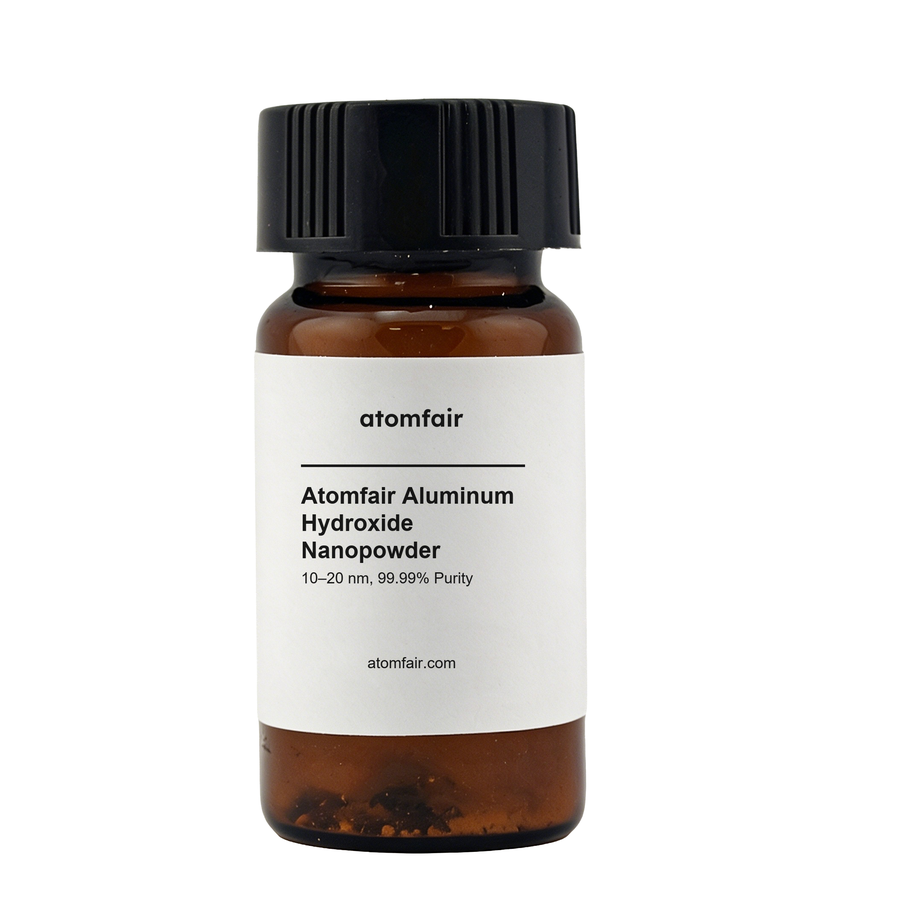
Aluminum Hydroxide Nanopowder 10-20 nm 99.99% ATOMFAIR®
Price range: $249.00 through $1,099.00 -
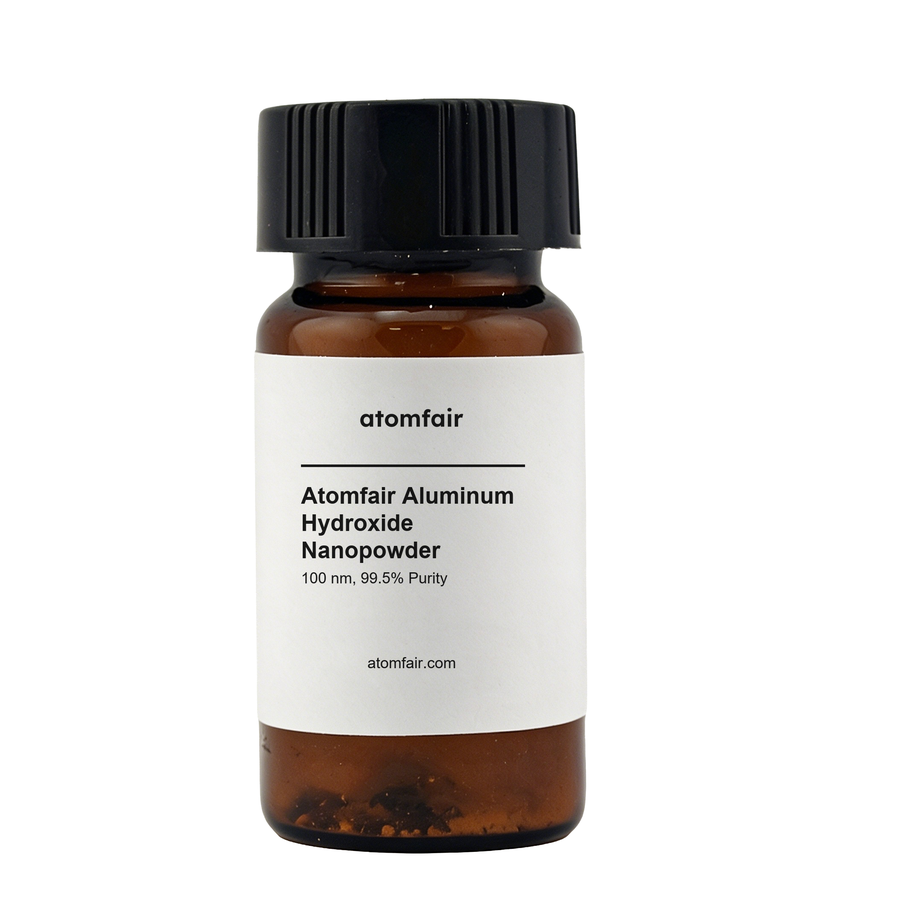
Aluminum Hydroxide Nanopowder 100 nm 99.5% ATOMFAIR®
Price range: $329.00 through $1,799.00 -
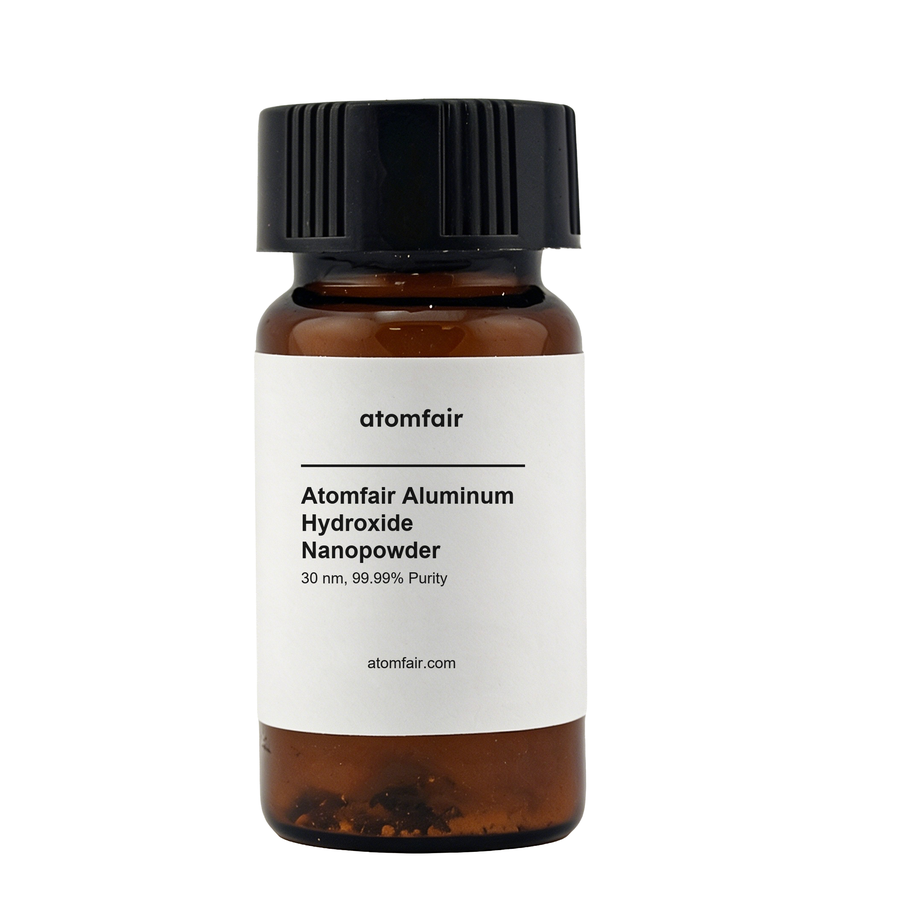
Aluminum Hydroxide Nanopowder 30 nm, 99.99% ATOMFAIR®
Price range: $239.00 through $1,049.00 -
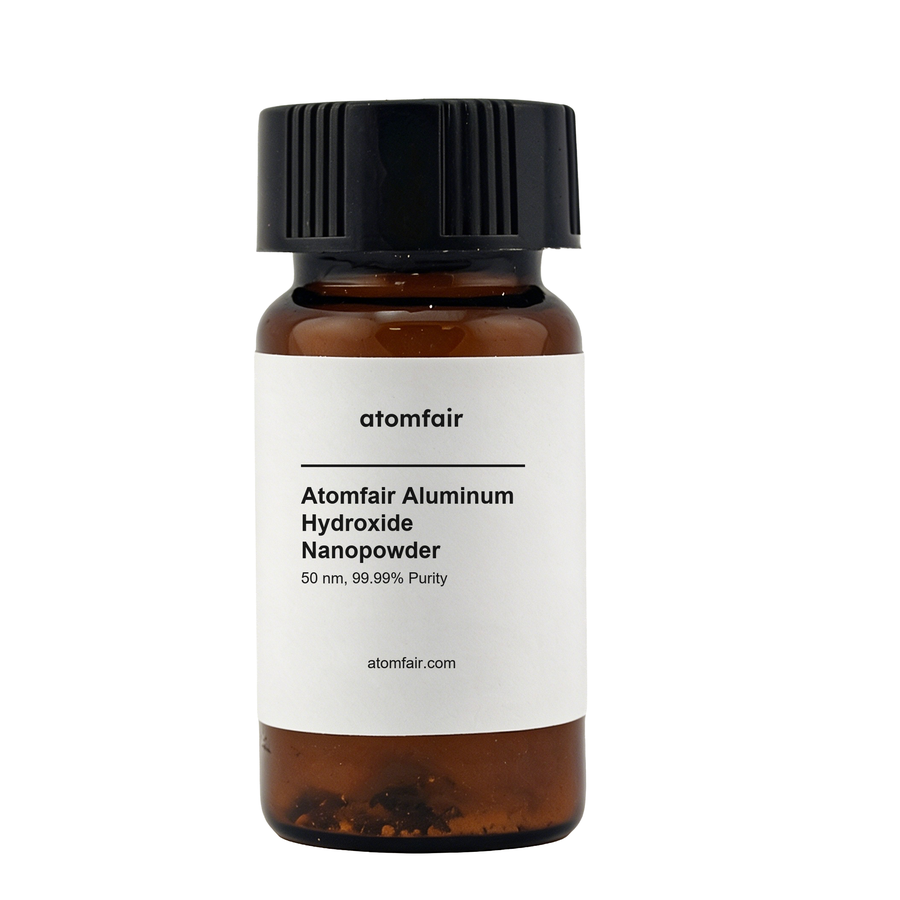
Aluminum Hydroxide Nanopowder 50 nm 99.99% ATOMFAIR®
Price range: $239.00 through $1,049.00 -
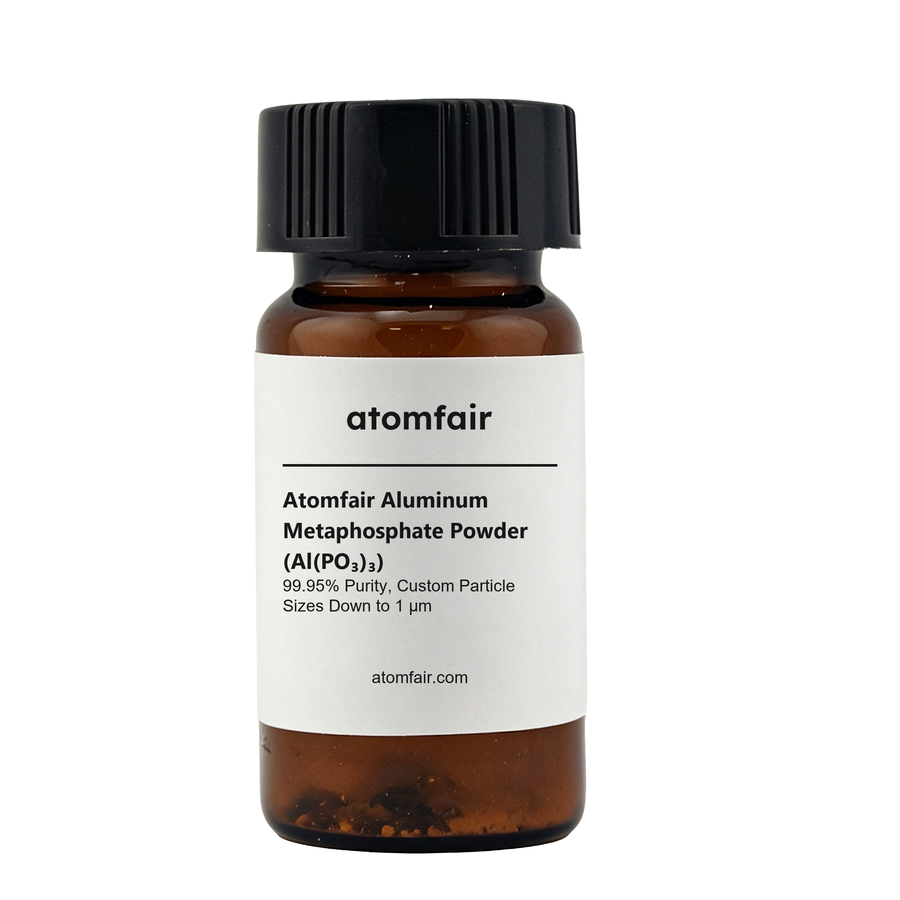
Aluminum Metaphosphate Powder 99.95%, 1 μm ATOMFAIR®
Price range: $329.00 through $1,799.00 -
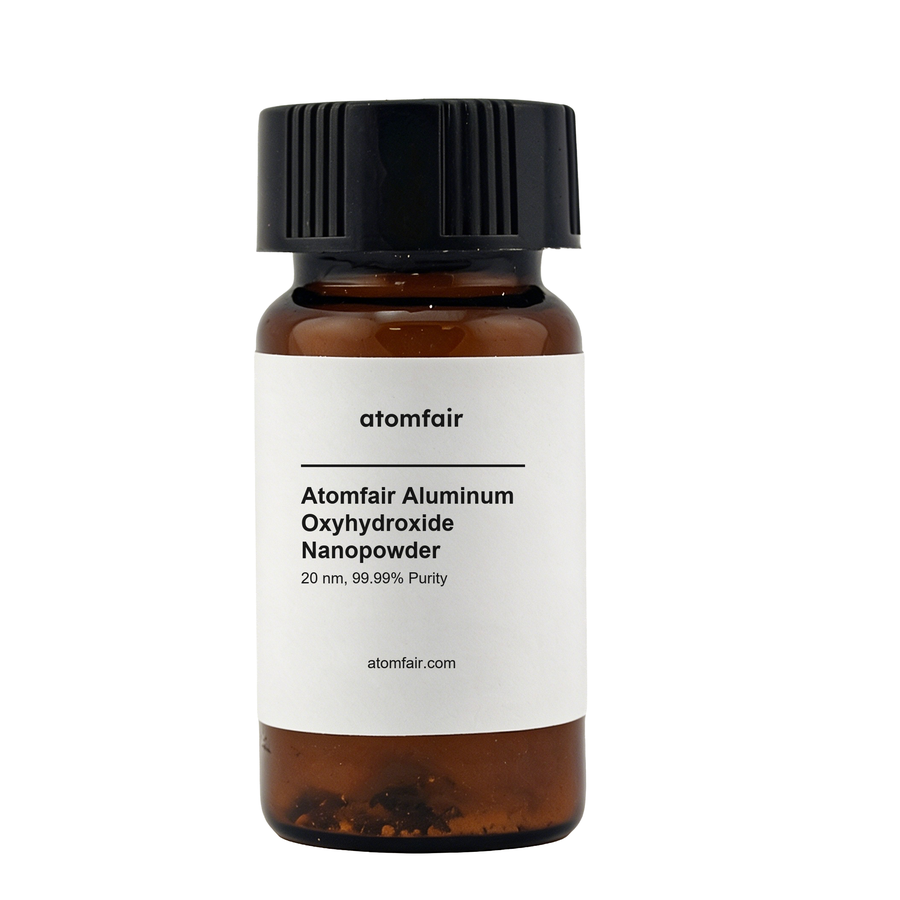
Aluminum Oxyhydroxide Nanopowder 20 nm 99.99% ATOMFAIR®
Price range: $249.00 through $1,099.00 -
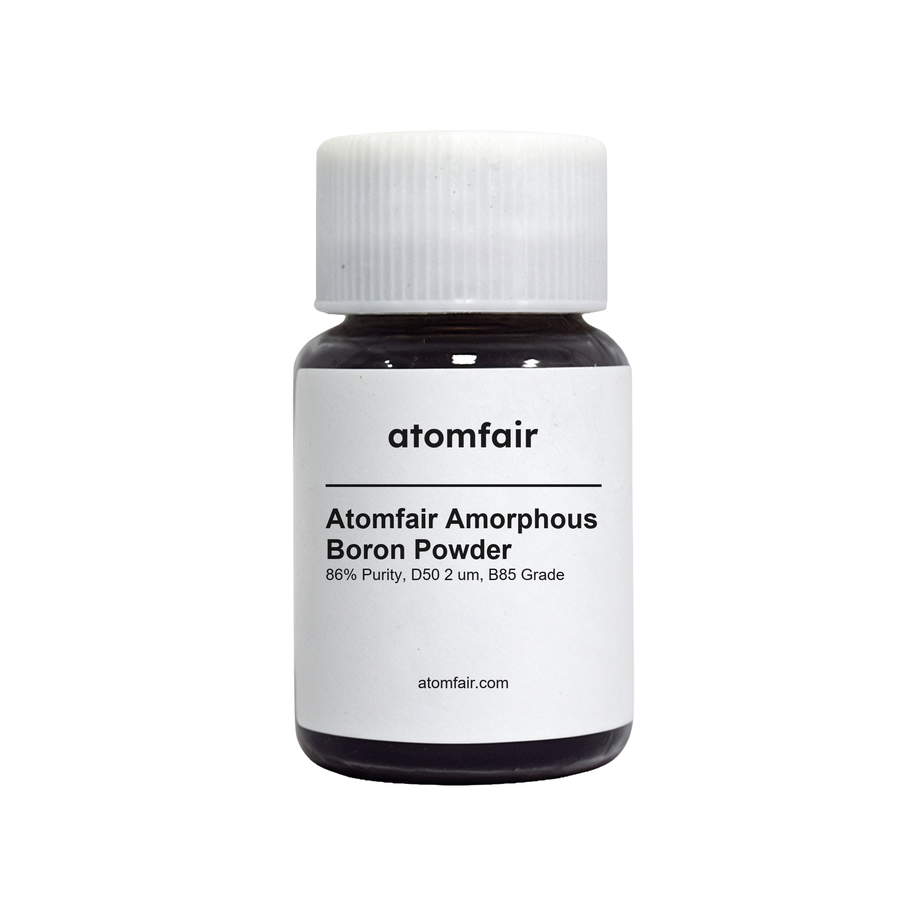
Amorphous Boron (B) Powder, 86% Purity, D50 2 μm
Price range: $219.00 through $849.00 -
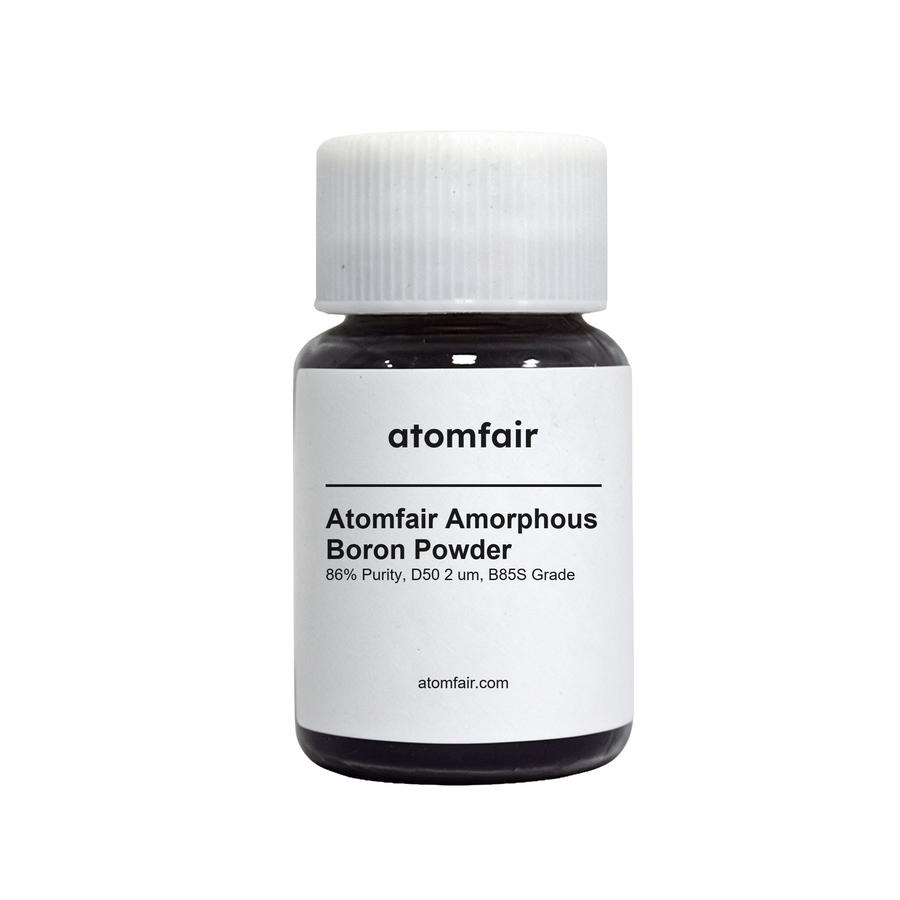
Amorphous Boron (B) Powder, 86% Purity, D50 2 μm
Price range: $219.00 through $849.00 -
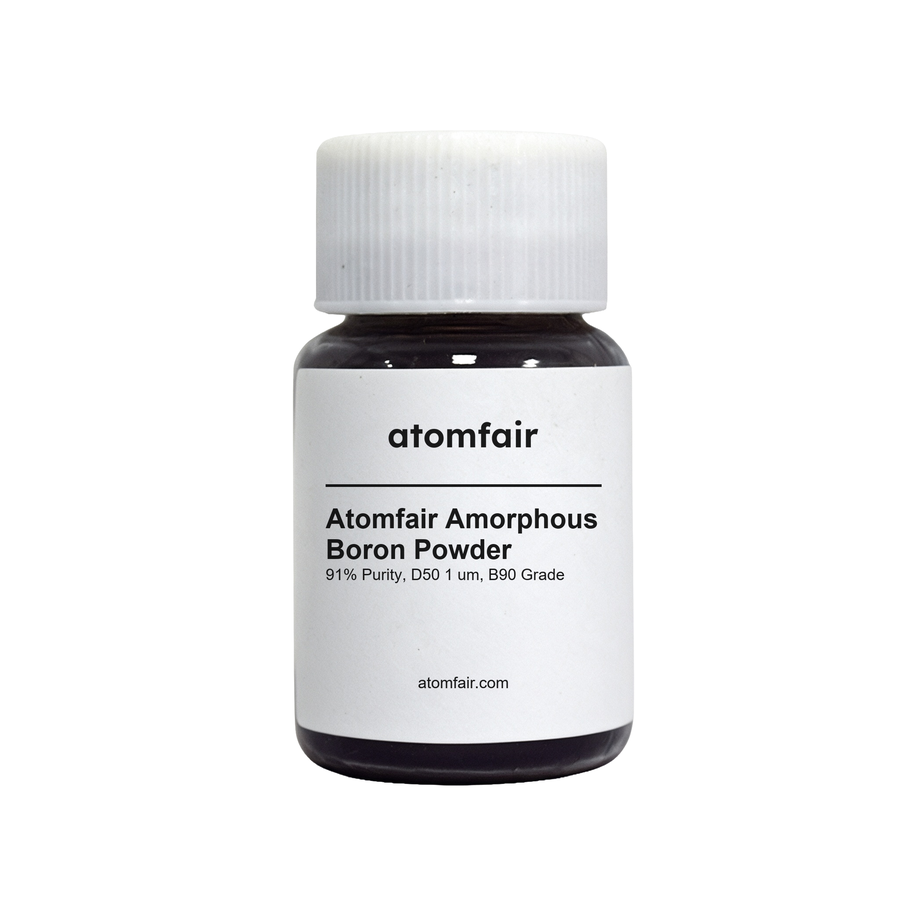
Amorphous Boron (B) Powder, 91% Purity, D50 1 μm
Price range: $249.00 through $999.00 -
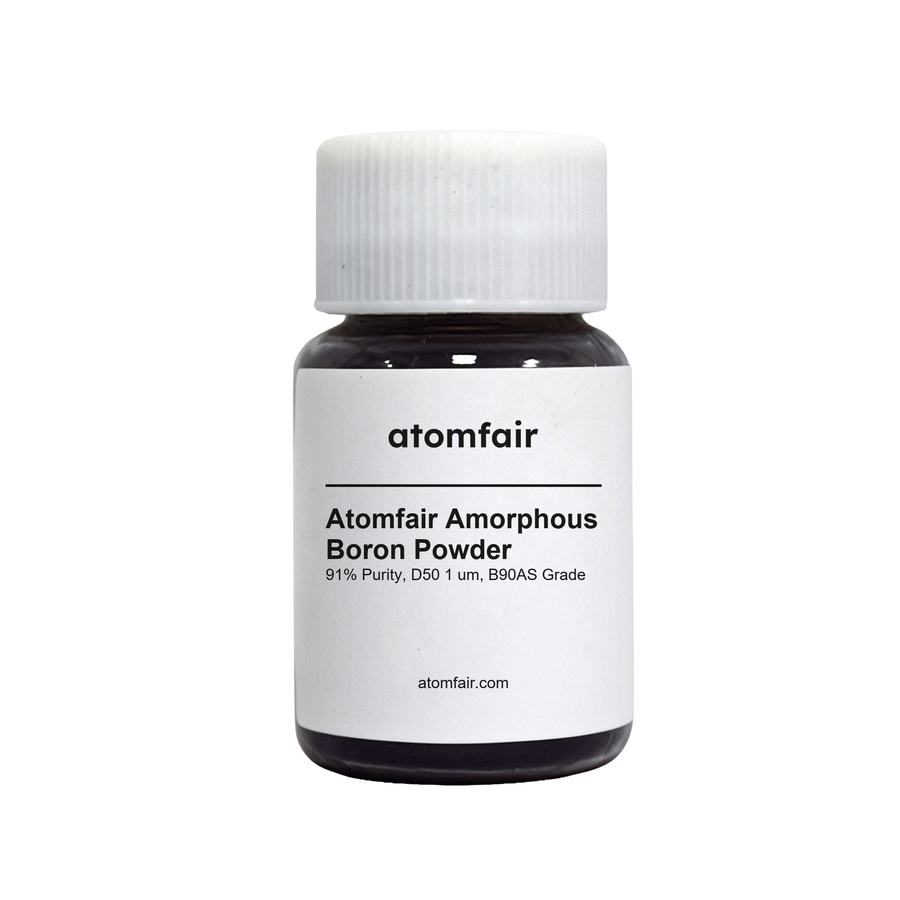
Amorphous Boron (B) Powder, 91% Purity, D50 1 μm
Price range: $249.00 through $999.00 -
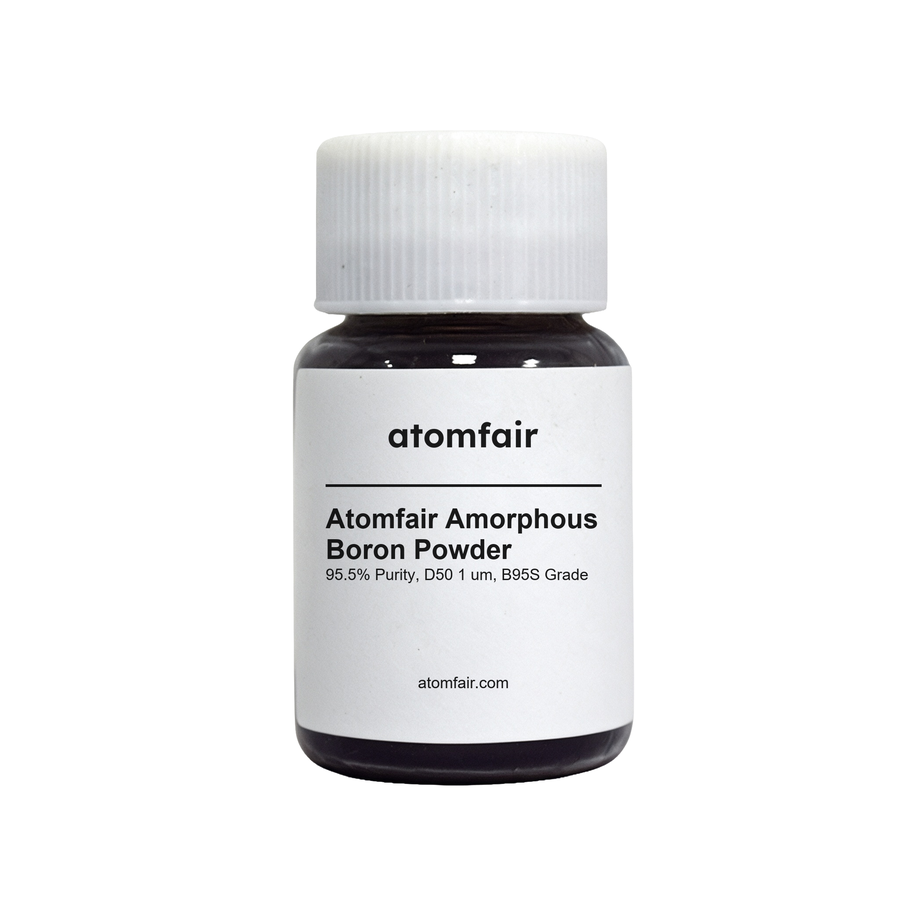
Amorphous Boron (B) Powder, 95.5% Purity, D50 1 μm
Price range: $299.00 through $1,199.00 -
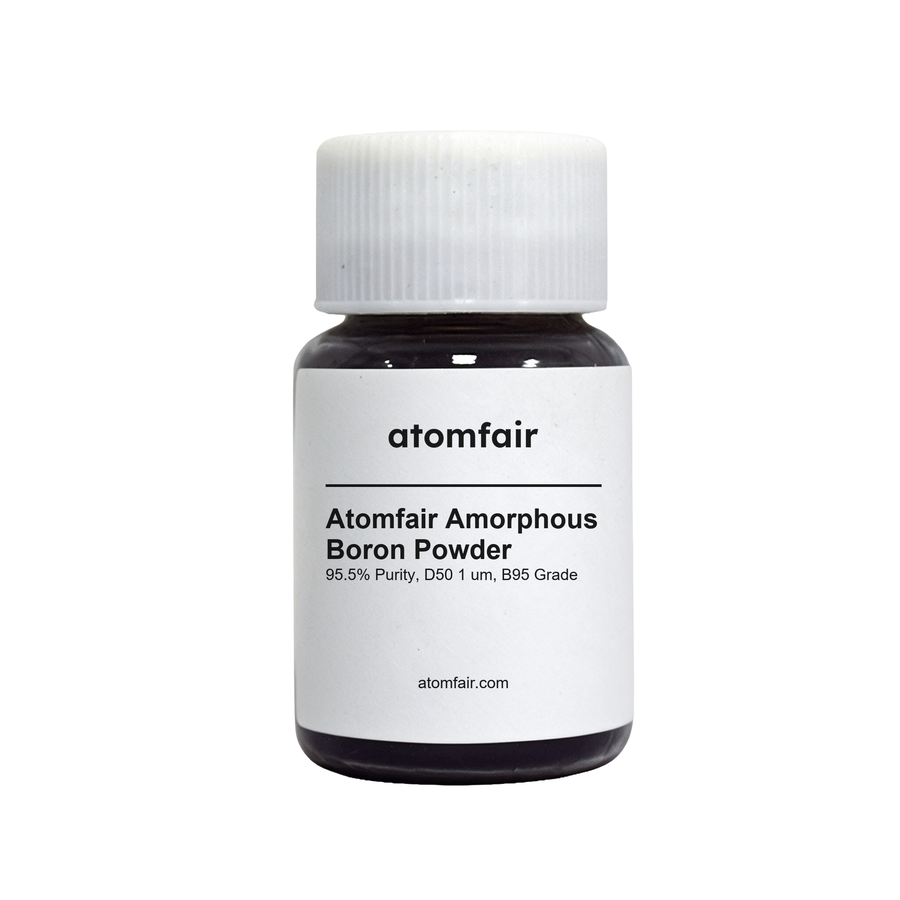
Amorphous Boron (B) Powder, 95.5% Purity, D50 1 μm
Price range: $299.00 through $1,199.00 -
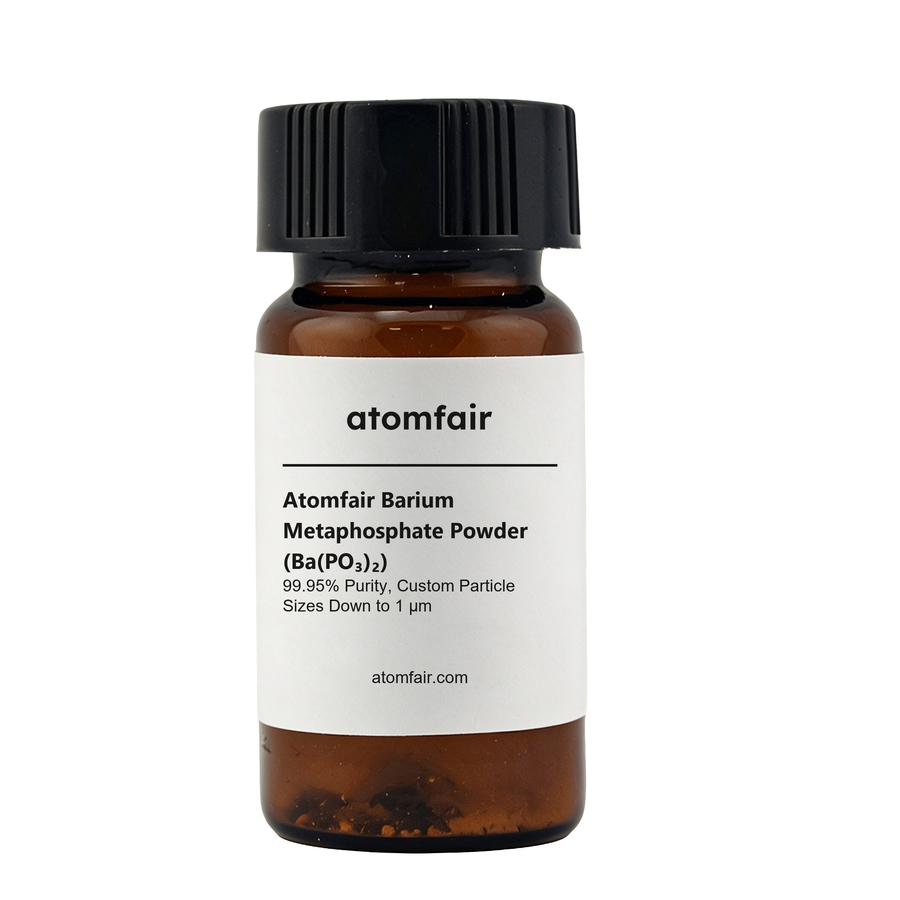
Barium Metaphosphate Powder 99.95% Optical Grade ATOMFAIR®
Price range: $239.00 through $1,299.00 -
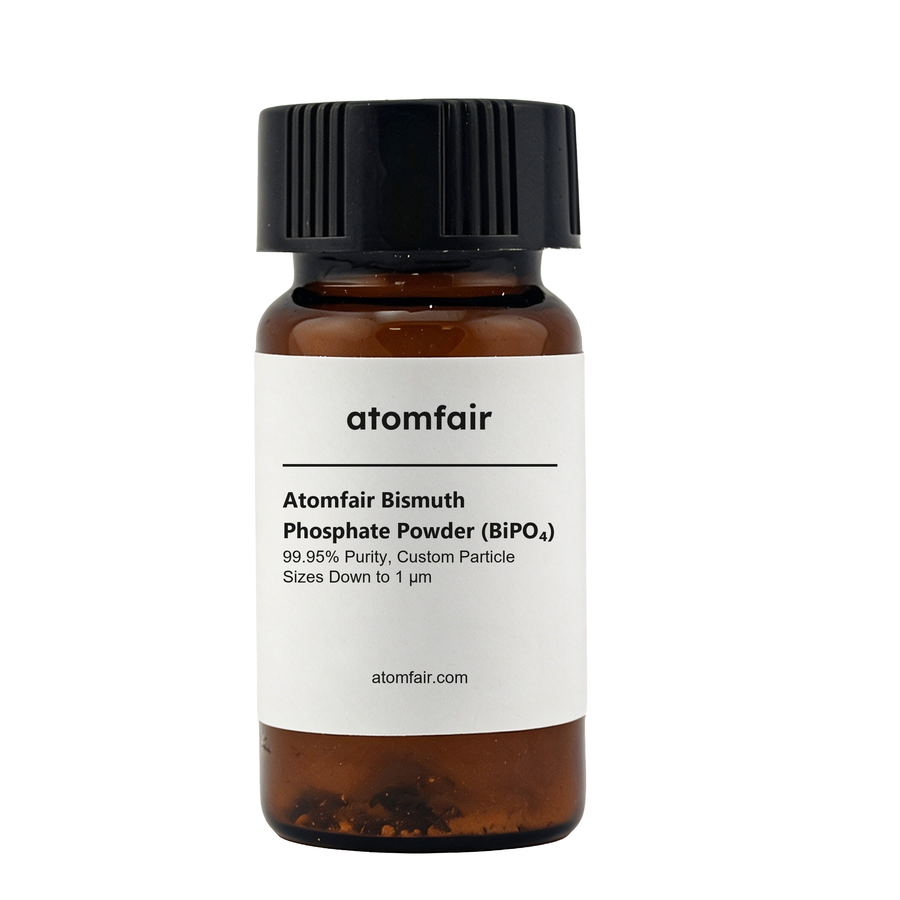
Bismuth Phosphate Powder 99.95% Purity 1μm ATOMFAIR®
Price range: $139.00 through $699.00 -
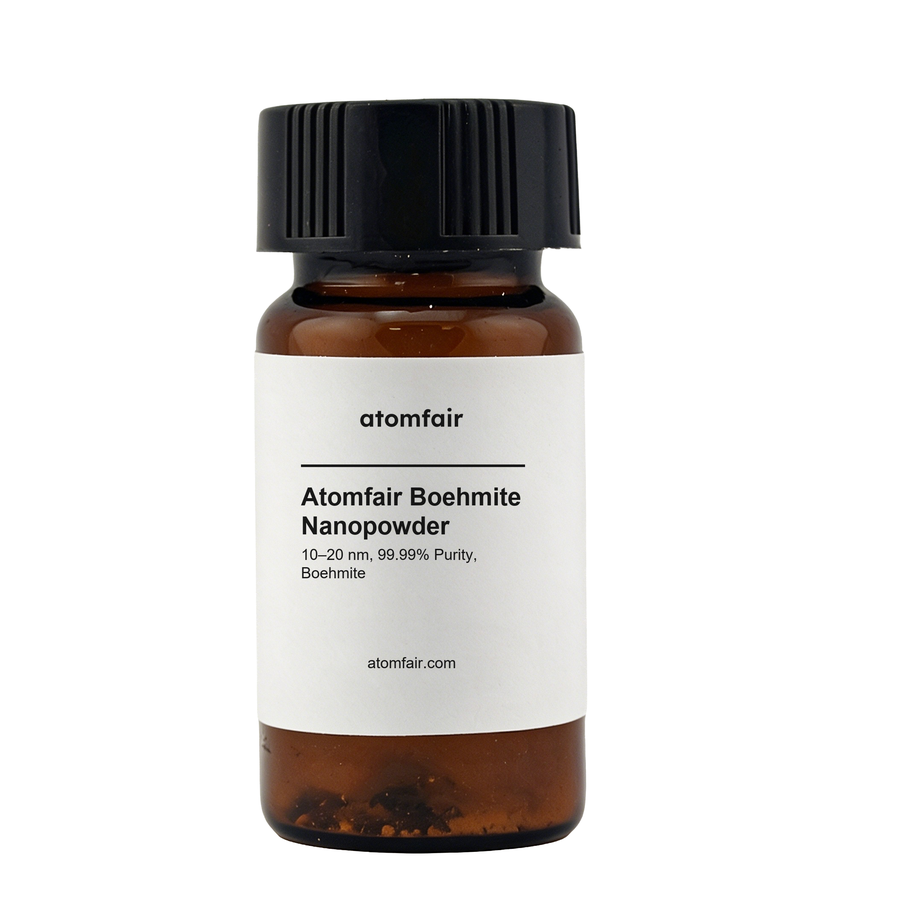
Boehmite Nanopowder 10–20 nm, 99.99% Pure ATOMFAIR®
Price range: $249.00 through $1,099.00 -
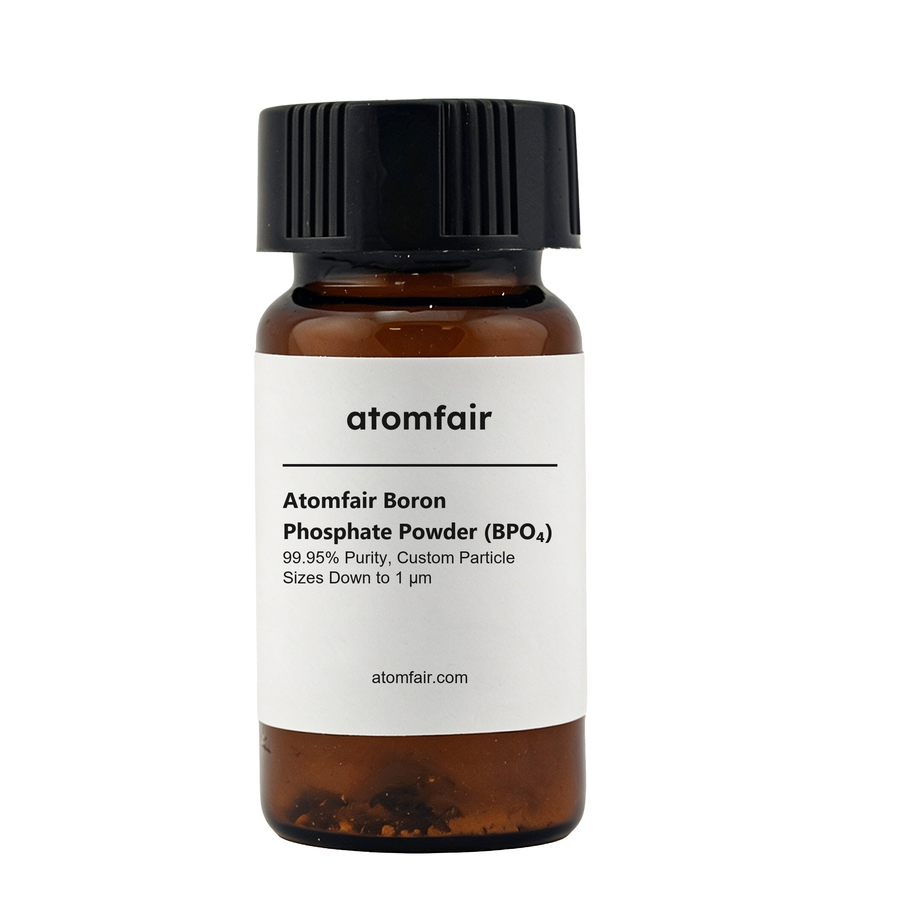
Boron Phosphate Powder BPO4 99.95% Pure 1μm ATOMFAIR®
Price range: $499.00 through $2,999.00