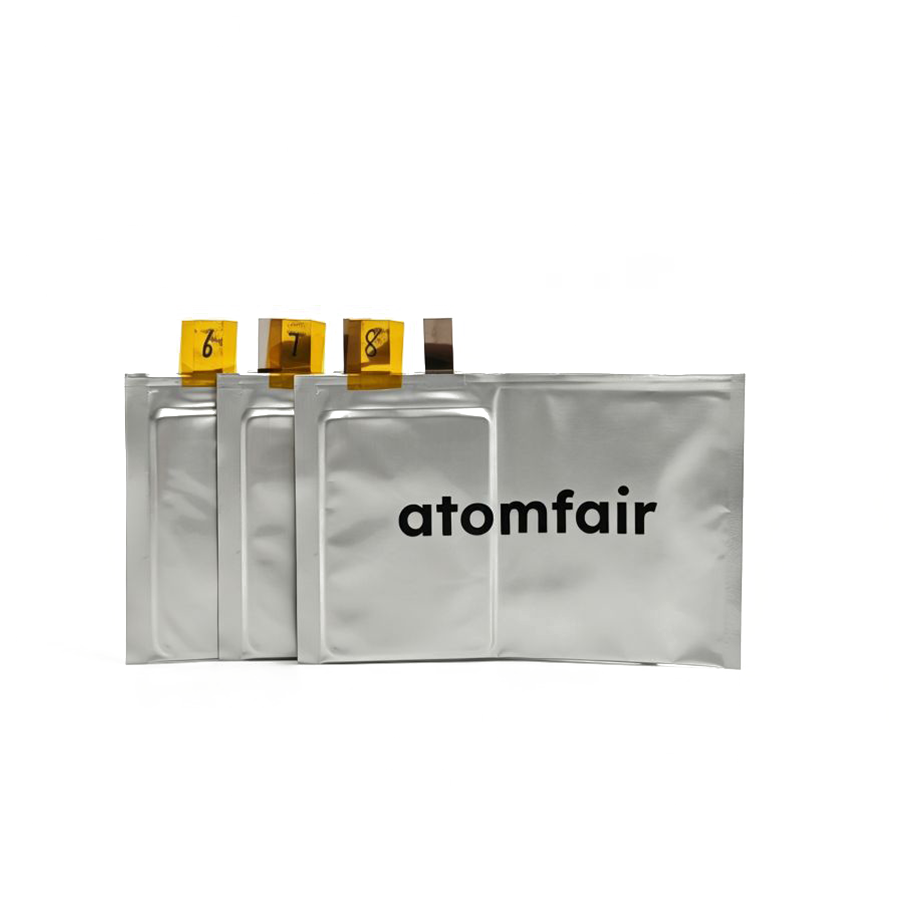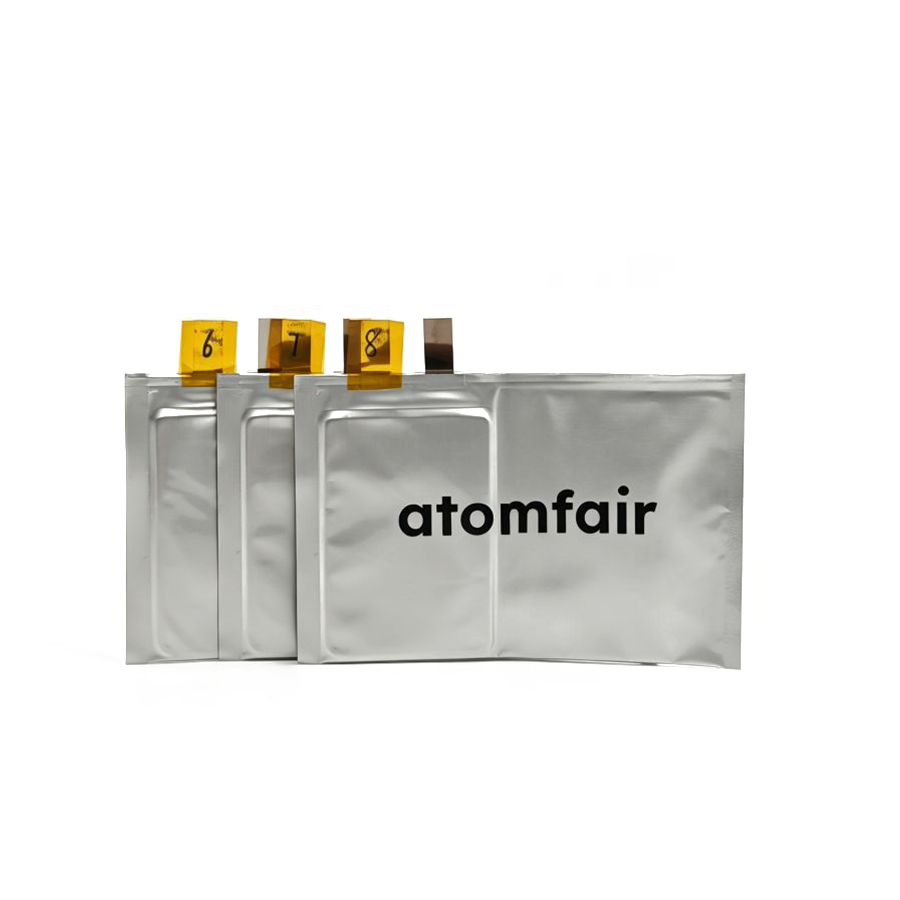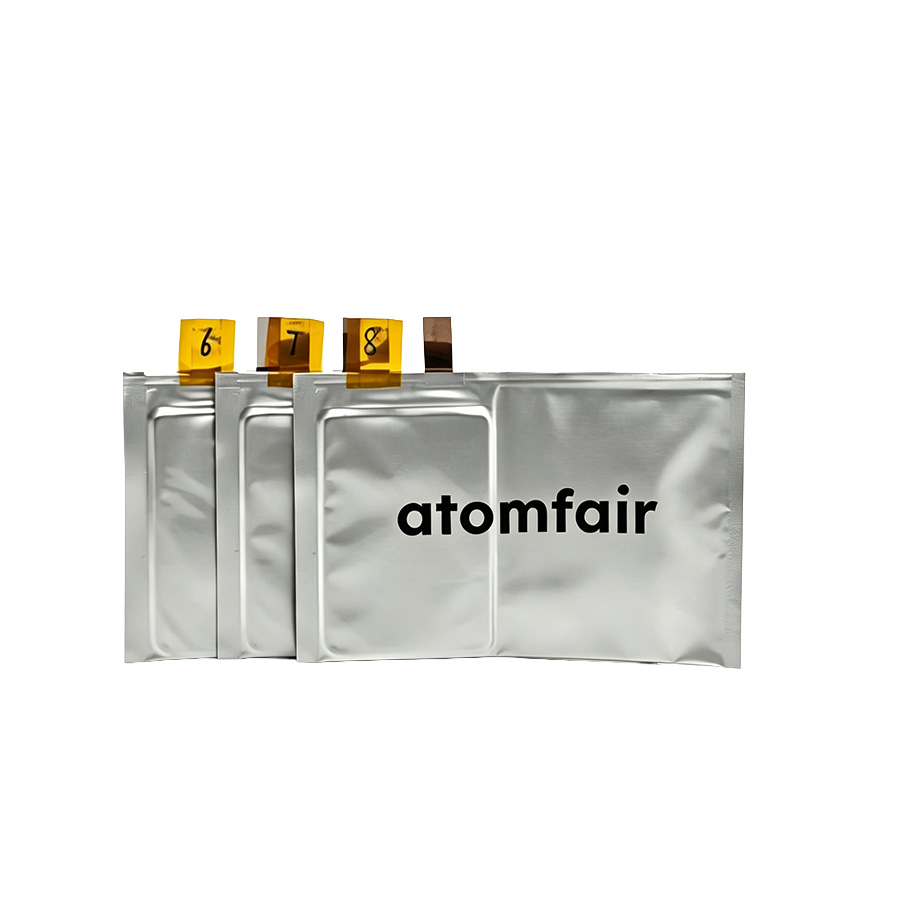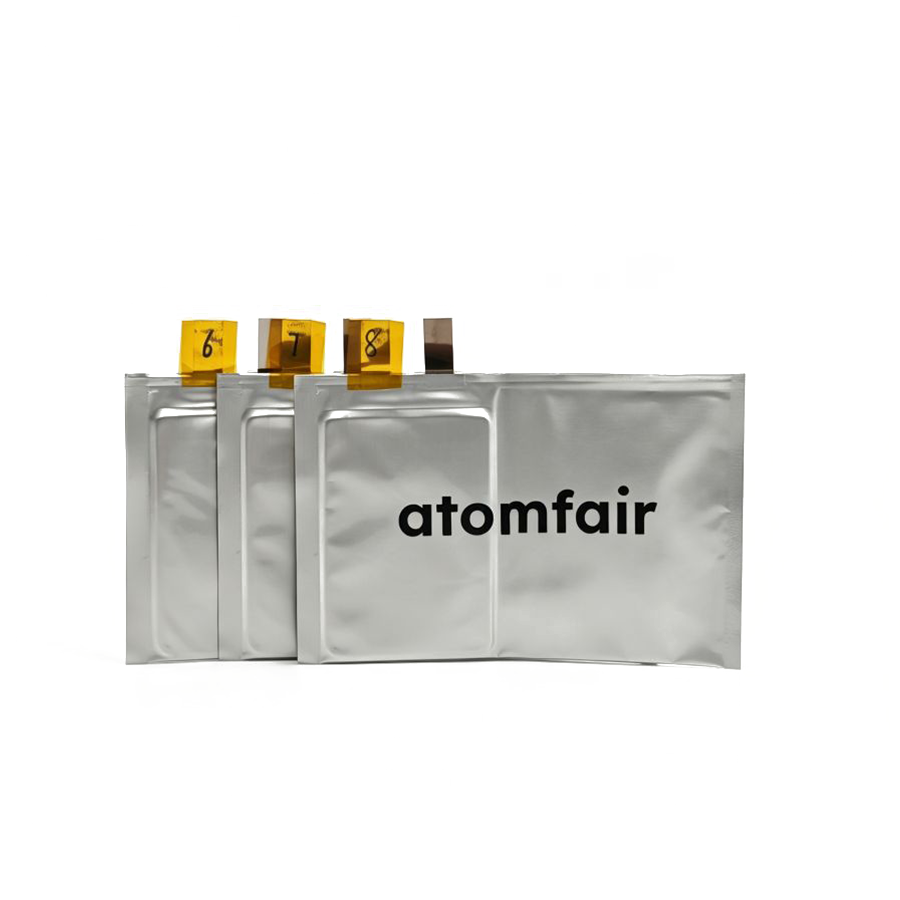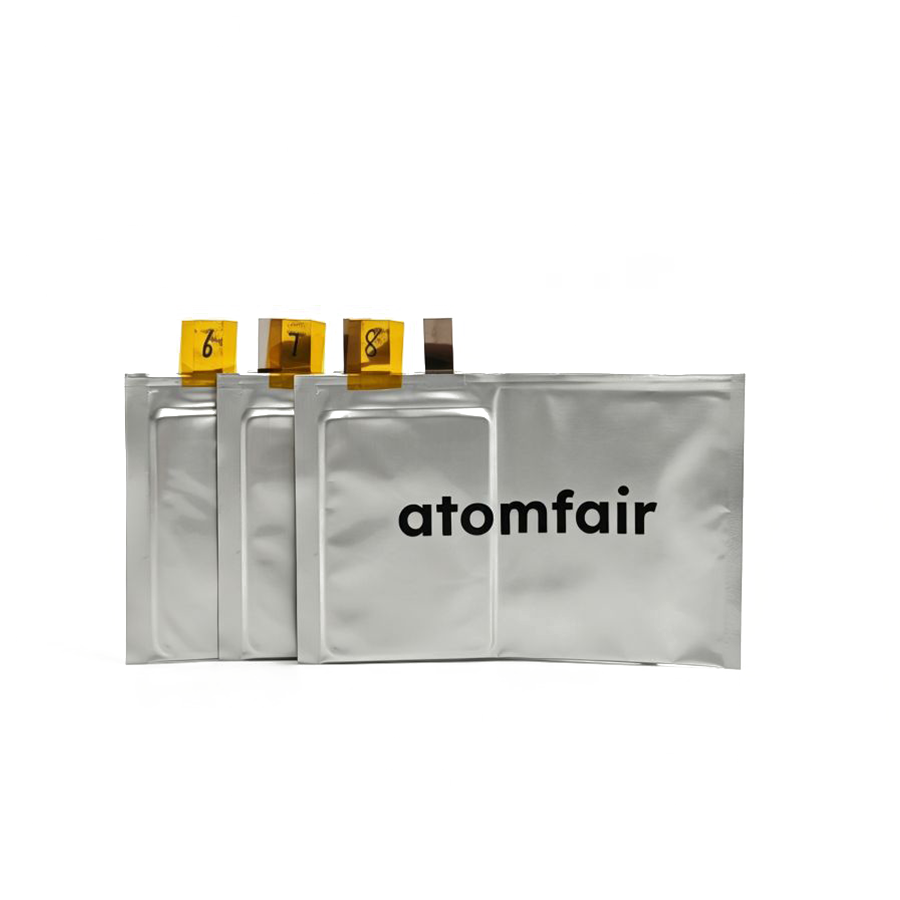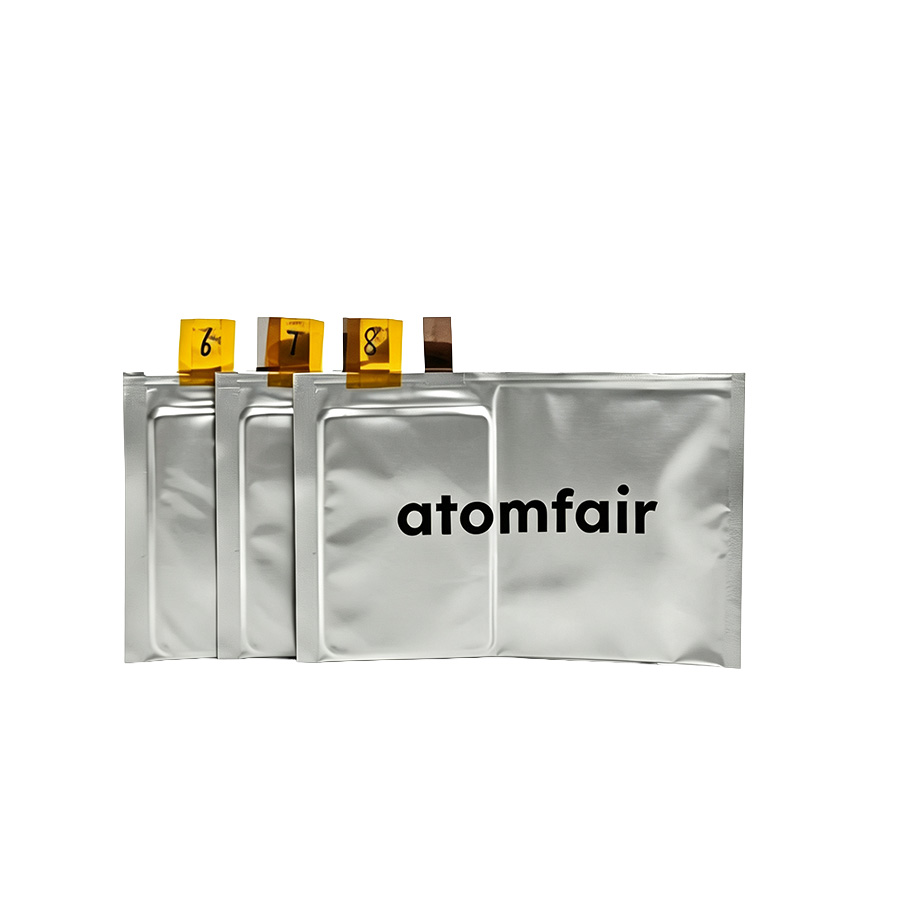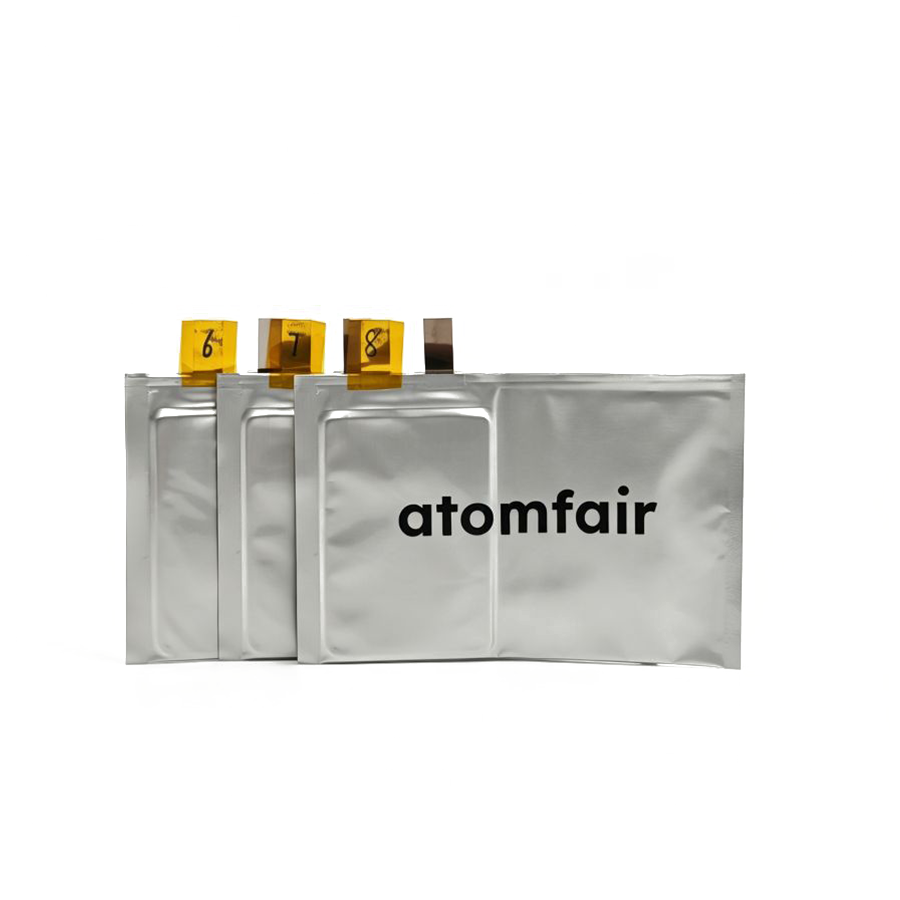
LFP Dry Pouch Cell (1.1Ah) – Lithium Metal Anode |
||||||||||||||||||||||||||||||||||||||||||||||||||||||||||||||
|
||||||||||||||||||||||||||||||||||||||||||||||||||||||||||||||
This dry pouch cell contains a reactive lithium metal anode that degrades rapidly upon exposure to moisture or oxygen. Storage in an inert atmosphere (argon or nitrogen) is required to maintain integrity and prevent thermal runaway.
- Moisture Sensitivity: Moisture exposure initiates exothermic corrosion of the lithium metal foil, reducing capacity and posing a safety hazard.
- Oxygen Sensitivity: Oxygen reacts with lithium metal to form lithium oxide, causing irreversible capacity loss and potential ignition.
- Temperature Constraints: Storage temperatures exceeding 30°C accelerate aging and increase internal gas generation risk.
- Mechanical Integrity: Mechanical deformation of the pouch or stack can induce internal short circuits and catastrophic failure.
This procedure describes the safe activation of the dry pouch cell by introducing electrolyte and performing initial formation cycles. All steps must be executed in an inert atmosphere glovebox to protect the lithium metal anode.
Required Equipment: Argon-filled glovebox, Electrolyte injection syringe, Formation cycling instrument, Insulated forceps
- Inspect
Inspect the dry pouch cell for any visible damage to the pouch material or tab seals before handling. - Transfer
Transfer the cell into an argon-filled glovebox with controlled moisture and oxygen levels to prevent lithium degradation. - Inject
Inject the electrolyte solution through the designated port, ensuring complete filling without introducing air bubbles. - Wet
Allow the cell to rest for a specified wetting period to ensure uniform electrolyte distribution across the electrodes. - Form
Apply a formation cycling protocol within the 2.5 V to 3.65 V window to activate the cell and stabilize the solid electrolyte interphase.
How does the 1.15 N/P ratio influence cycle life versus specific energy in the ATOMFAIR 1.1 Ah LFP lithium metal dry pouch cell?
The 1.15 N/P ratio provides a lithium excess that mitigates dendrite propagation and extends cycle life, but it reduces the cell's specific energy relative to a balanced design. The nominal 1.1 Ah capacity after activation and the 2.5–3.65 V operating window define the accessible energy density, and researchers can leverage this controlled baseline to isolate electrolyte and interface effects on capacity fade.
What electrolyte types and filling protocols are compatible with this dry pouch cell's ceramic-coated separator and lithium metal anode?
The cell is supplied dry with a 12 μm PE + 2 μm Al₂O₃ ceramic-coated separator and a 20+6+20 μm Li-Cu composite anode, making it compatible with both liquid electrolytes and solid-state electrolyte precursor systems. Filling must be performed in an inert atmosphere to prevent lithium passivation, and the 2.5–3.65 V voltage window must be strictly enforced to avoid lithium plating above 3.65 V or over-discharge below 2.5 V.
What are the required handling and storage conditions for the ATOMFAIR dry pouch cell before and after electrolyte activation?
Before filling, the cell must be stored in an inert atmosphere (e.g., argon glovebox) to protect the ultra-thin lithium metal anode from moisture and oxidation. The RoHS-compliant, dry construction reduces transport hazards, but after electrolyte activation, the cell must be cycled exclusively within the 2.5–3.65 V window to prevent irreversible capacity loss and maintain safety.
This dry pouch cell combines a high-purity LFP cathode (94% active mass, 140 mAh/g) with an ultra-thin lithium metal composite anode (20+6+20 μm) and a ceramic-coated separator, offering a controlled baseline for electrolyte and interface research without pre-loaded electrolyte.
Positive
- High-purity LFP cathode benchmark: The 94% active mass fraction and 140 mAh/g specific capacity of the LiFePO4 cathode establish a stable, reproducible electrochemical reference for electrolyte and solid-state integration studies.
- Ultra-thin lithium metal anode design: The 20+6+20 μm Li/Cu/Li composite anode paired with a 12 μm PE + 2 μm Al2O3 ceramic separator enables controlled investigation of lithium plating/stripping dynamics and interface formation.
Trade-offs
- Requires user electrolyte infusion: Assembled without liquid electrolyte, the cell must be filled and activated by the user, necessitating inert atmosphere equipment and introducing potential variability in wetting and contamination.
- Research-grade, not commercial-ready: Explicitly designed as a benchmarking matrix for laboratory research, this cell is not optimized for direct commercial integration or high-throughput manufacturing workflows.
Every advanced material, component, equipment, and instrument in our catalog is backed by rigorous testing. We maintain strict internal quality management frameworks and align with CE conformity metrics to deliver transparent, reproducible performance data via our public open-science repository.
To request raw batch performance data, submit formal vendor registration paperwork, or execute a fast-turnaround R&D manufacturing loop, contact us at inquiry@atomfair.com.
Item is dispatched under the Atomfair Shipping & Delivery Framework (Free worldwide shipping on orders over $59 USD excl. heavy equipment). Return is governed by the Atomfair Return & Refund Policy (7-day technical return window).