
Research Test Cells & Specialized Fixtures
Research Test Cells & Specialized Fixtures are designed for battery research that requires controlled pressure, elevated temperature, controlled atmosphere, non-standard sample dimensions, or specialized mechanical and instrument interfaces. These products are more than standard battery components or general-purpose holders: they combine sample containment, mechanical loading, sealing, environmental control, and research integration in dedicated laboratory hardware.
This category supports solid-state batteries, lithium-metal batteries, lithium-ion batteries, sodium-ion batteries, metal-air batteries, thin-film batteries, micro-batteries, specialized electrolyte systems, and other non-standard electrochemical research. The products are suitable for university laboratories, corporate R&D centers, solid-state battery platforms, materials laboratories, glovebox workstations, and small-batch research cell development.
From single-axis constant-pressure solid-state battery molds to high-pressure research cells, heated test units, and customized fixtures with gas, liquid, vacuum, or specialized mounting interfaces, this category helps researchers select hardware according to the actual experiment. Custom configurations may be available for sample diameter, chamber depth, plunger dimensions, heating method, sealing materials, sensor integration, and external instrument interfaces.
Show More Research Test Cell Applications
Core Product Scope
This category focuses on complete test cells, pressure molds, mechanical fixtures, research vessels, and custom interfaces that are required because the research conditions are specialized. Product selection should be based on the primary research function rather than simply on whether the product can connect to a battery testing instrument.
| Product Direction | Typical Research Tasks | Key Selection Parameters |
|---|---|---|
| Solid-State Battery Pressure Test Cells | Solid electrolyte compaction, interface contact, lithium-metal solid-state cells, and stack-pressure studies | Pressure range, loading method, plunger, sleeve diameter, and sealing |
| Single-Axis Constant-Pressure Molds | Solid-state battery and electrolyte interface studies under repeatable pressure | Pressure-holding method, feedback, sample diameter, temperature, and frame rigidity |
| High-Pressure Research Cells | High-load mechanical constraint, material compression, and pressure-dependent electrochemical research | Maximum pressure, effective load area, pressure uniformity, and safety limits |
| Heated Research Test Units | High-temperature solid-state batteries, thermally assisted interfaces, and temperature-dependent testing | Operating temperature, heating method, temperature sensor, and insulation |
| Gas, Vacuum, and Sealed-Environment Cells | Controlled-atmosphere, vacuum, metal-air, and gas-electrode research | Gas ports, sealing, pressure rating, and material compatibility |
| Non-Standard Battery Fixtures | Micro, thin-film, disc, square, and other non-standard sample formats | Sample dimensions, effective area, probes, and mounting holes |
| Offline Sample Observation Fixtures | Post-test sample inspection, cross-section positioning, and material morphology work | Sample height, clamp range, vibration control, and instrument clearance |
| Mechanical Loading and Response Fixtures | Compression, displacement, contact stability, and mechanical response studies | Load, displacement, parallelism, sensor mounting, and data interface |
| Custom Research Platforms | Experiments requiring combined pressure, heating, atmosphere, sensors, or special mounting | Drawings, operating conditions, interfaces, and maintenance requirements |
Solid-State Battery Pressure Test Cells
Solid-state battery research often requires simultaneous control of electrical contact and mechanical pressure. The contact condition between the solid electrolyte, electrodes, and interface layers can be affected by pressure, temperature, plunger parallelism, sample thickness, sealing, and material creep. Dedicated test cells may therefore include inner sleeves, plungers, springs, threaded loading, hydraulic loading, or force-feedback structures.
Common product directions include:
- Single-axis constant-pressure solid-state battery molds;
- Solid electrolyte compaction and electrochemical testing molds;
- Spring-loaded or threaded pressure cells;
- Solid-state battery pressure cells with sensor mounting;
- High-pressure solid-state battery fixtures;
- Heated solid-state battery test molds;
- Test cells for discs, pellets, thin samples, or non-standard stack structures;
- Modular molds that can be assembled and disassembled inside a glovebox.
Before ordering, confirm:
- Whether the experiment controls total load, interface pressure, displacement, or more than one parameter;
- How the pressure range and pressure unit are defined;
- Whether pressure can be adjusted, maintained, and recorded;
- Whether the plunger and inner sleeve materials are suitable for sulfide, oxide, polymer, or halide electrolytes;
- Whether the sample diameter, thickness, and effective reaction area match the chamber;
- Whether heating, insulation, or temperature feedback is required;
- Whether assembly, transfer, and disassembly will take place inside a glovebox;
- Whether seals and insulating parts are compatible with the target electrolyte.
A solid-state battery mold should not be selected by maximum pressure alone. Practical performance also depends on loading stability, pressure uniformity, plunger area, frame rigidity, sample alignment, and operating safety.
Constant-Pressure, High-Pressure, and Mechanical Loading Cells
Some research programs examine how pressure affects interface impedance, dendrite growth, material deformation, cycle life, or contact stability. These experiments require a test cell that maintains a repeatable mechanical boundary throughout the test rather than applying pressure only during initial assembly.
Research loading structures may use:
- Threaded compression;
- Spring loading;
- Piston loading;
- Hydraulic loading;
- Motorized actuators;
- External pressure frames;
- Pressure or force sensor mounting;
- Displacement, thickness, or expansion measurement interfaces.
When selecting a high-pressure or constant-pressure cell, compare the maximum pressure, continuous working pressure, effective load area, pressure uniformity, feedback method, plunger size, sample retention, and safety structure. For brittle solid electrolytes, thin electrodes, and small-area samples, excessive local stress can cause fracture, slippage, or distorted results.
Heated and Temperature-Coupled Research Test Units
Temperature affects solid-electrolyte conductivity, interface contact, electrolyte viscosity, gas-reaction rates, and material stability. A heated research test unit must therefore account for heating, temperature measurement, insulation, sealing, electrical connections, and mechanical loading at the same time.
Future product directions may include:
- High-temperature solid-state battery test molds;
- Research cells with heating jackets or heating rods;
- Test units with dedicated temperature-sensor mounting positions;
- Modular test cells connected to external temperature-control platforms;
- Low-temperature or wide-temperature-range research fixtures;
- Test units combining heating and pressure control;
- Temperature-controlled cells for gas or sealed environments.
Consumers should confirm:
- Whether the maximum temperature is the same as the continuous operating temperature;
- Whether the sensor measures the chamber, plunger, housing, or sample-area temperature;
- Whether heating is internal, external, jacketed, or platform-based;
- Whether windows, seals, insulating parts, and electrodes are suitable for the target temperature;
- Whether pressure, sealing, or sample alignment changes during heating;
- Whether a separate temperature controller, cable, or data-acquisition channel is required.
When an experiment combines high temperature and high pressure, use the product only within its specified combined operating conditions. Individual temperature and pressure limits should not simply be added together.
Gas, Vacuum, and Sealed-Environment Research Cells
Gas and sealed-environment research cells are designed for experiments that control air, moisture, oxygen, carbon dioxide, inert gas, vacuum, or another reactive atmosphere. These products may include sealed chambers, inlet and outlet fittings, valves, vacuum connections, pressure-sensor ports, sampling ports, or replaceable gas-electrode structures.
Typical applications include:
- Metal-air battery research;
- Gas-electrode studies;
- Controlled-atmosphere electrode reactions;
- Gas generation and pressure-change studies;
- Vacuum or low-pressure material testing;
- Moisture- and oxygen-sensitive electrolyte research;
- Research experiments connected to external gas-analysis equipment.
Confirm the following before ordering:
- The number of gas, vacuum, and sampling ports;
- Fitting specifications and external tubing compatibility;
- Seal compatibility with the gas, electrolyte, and solvent;
- Maximum working pressure and allowable pressure differential;
- Whether external flow control or valve assemblies are needed;
- Whether the sample is exposed directly to the gas or only to a controlled headspace;
- Whether assembly and transfer will take place inside a glovebox.
A sealed research cell should not automatically be treated as a vacuum or high-pressure cell. Verify the stated pressure range, allowable differential pressure, sealing materials, and intended operating direction before use.
Non-Standard, Micro, and Thin-Film Battery Fixtures
Thin-film batteries, micro-batteries, small-area electrodes, disc samples, and non-standard battery shapes often cannot be installed directly in a standard battery holder. Specialized fixtures may provide micro-probes, adjustable contact spacing, low-contact-force structures, sample-positioning features, replaceable supports, or custom mounting holes.
These fixtures can support:
- Thin-film batteries;
- Micro solid-state batteries;
- Small-area electrodes;
- Micro power sources and sensor devices;
- Non-standard disc and square samples;
- Low-capacity material screening;
- Specialized electrolyte and micro-sample research.
When requesting a small-format or custom fixture, provide the sample length, width, height, thickness, active area, contact locations, terminal format, operating current, and any microscopy or instrument-clearance requirements. For very small samples, probe pressure, contact resistance, fixture obstruction, and assembly repeatability can be more important than the external fixture dimensions.
Offline Sample Observation, Positioning, and Anti-Vibration Fixtures
This category may include fixtures for offline positioning and observation of battery samples, disassembled components, cross-sections, electrode sheets, and solid-electrolyte specimens. Their primary purpose is to hold a sample, reduce movement, maintain a flat plane, adjust height, or adapt a specimen to a microscope, profilometer, or laboratory observation platform.
Typical product directions include:
- Battery cross-section positioning fixtures;
- Solid-electrolyte sample holders;
- Electrode-sheet observation stages;
- Adjustable-height microscope fixtures;
- Anti-vibration sample bases;
- Specialized fixtures for instrument stages;
- Positioning tools for disassembled battery components.
Offline fixtures are intended for sample inspection before or after a test, or after disassembly. They are selected according to sample height, clamp range, observation direction, vibration control, and available stage space.
Mechanical Response and Sample-Loading Fixtures
Some research programs need to record the thickness change, deformation, contact force, or mechanical response of solid-state samples, electrode assemblies, and non-pouch structures under pressure, temperature, or repeated testing. These fixtures may be combined with displacement sensors, force sensors, pressure displays, or data-acquisition systems.
Suitable product directions include:
- Solid-state battery compression and loading fixtures;
- Electrode-assembly thickness-change fixtures;
- Mechanical-response fixtures for discs and small samples;
- Research cells with force-sensor mounting positions;
- Fixtures with displacement-measurement interfaces;
- Structures for pressure retention and contact-stability studies.
Select these products by load range, displacement range, frame parallelism, sample geometry, sensor interface, and data-collection method. The fixture should not obstruct required cables, gas lines, thermal components, or laboratory safety paths.
How to Select a Research Test Cell
| Research Objective | Recommended Product Direction | Confirm Before Ordering |
|---|---|---|
| Study pressure at a solid-electrolyte interface | Solid-state battery pressure test cell | Pressure range, loading method, sample diameter, plunger, and sealing |
| Maintain a stable experimental load | Constant-pressure or high-pressure research cell | Continuous pressure, feedback, load area, and safety limits |
| Study temperature effects on materials or interfaces | Heated research test unit | Temperature range, sensor location, heating method, and seals |
| Control gas, vacuum, or a sealed atmosphere | Gas or vacuum research cell | Port count, seals, pressure rating, sampling, and gas compatibility |
| Test a sample that does not fit a standard holder | Micro or non-standard-size fixture | Sample size, probe design, contact force, terminals, and clearance |
| Inspect a sample before or after testing | Offline observation and anti-vibration fixture | Sample height, clamp range, viewing direction, and stage space |
| Study compression or mechanical response | Mechanical loading and response fixture | Load, displacement, parallelism, sensors, and data interface |
Information to Provide Before Ordering
To confirm whether a test cell can work with an existing laboratory setup, prepare the following information:
- Battery chemistry and research objective, such as solid-state, gas, thin-film, or pressure- and temperature-dependent testing;
- Sample dimensions, including diameter, length, width, height, thickness, and effective reaction area;
- Target pressure, load, displacement, and temperature ranges;
- Whether heating, cooling, pressure sensing, force sensing, or displacement measurement is required;
- Whether gas, vacuum, liquid, sampling, or other environmental interfaces are required;
- The model of the temperature-control system, microscope, or other external research equipment;
- Whether assembly will take place in a glovebox, dry room, or controlled atmosphere;
- Requirements for plungers, sleeves, windows, seals, insulation, and wetted materials;
- Whether custom dimensions, replacement modules, spare parts, multiple sample positions, or batch configurations are needed.
When replacing an existing test cell or fixture, provide photographs, dimension drawings, mounting-hole locations, interface specifications, and the intended test procedure. A product name or sample diameter alone is usually not enough to confirm full compatibility.
Frequently Asked Questions
What experiments are Research Test Cells & Specialized Fixtures designed for?
This category is designed for battery experiments requiring special pressure, temperature, atmosphere, sample dimensions, mechanical loading, or research interfaces. Typical applications include solid-state battery pressure testing, heated testing, gas or vacuum environments, non-standard sample testing, mechanical loading, and offline sample positioning.
Should I choose a standard cell holder or a pressure test cell for a solid-state battery?
If the experiment depends on controlling contact pressure between the solid electrolyte and electrodes, choose a solid-state battery pressure cell, constant-pressure mold, or high-pressure research fixture. A standard holder may provide basic electrical contact but may not maintain stable, uniform, or recordable mechanical pressure during testing.
Is a higher maximum pressure always better when selecting a solid-state battery mold?
No. Maximum pressure is only a structural limit. Practical selection also depends on continuous working pressure, pressure adjustment, load uniformity, plunger area, sample alignment, feedback, and safety features. Excessive local stress can fracture brittle solid electrolytes or distort the test result.
Can a research test unit operate with both heating and pressure?
Some products can support combined heating and pressure, but the product must explicitly allow both conditions at the same time. Heating can affect seals, insulation, windows, pressure readings, and sample alignment. Do not combine separate temperature and pressure limits without confirming the approved operating conditions.
What battery research is suitable for a gas-interface test cell?
Gas-interface cells can support metal-air batteries, gas electrodes, controlled-atmosphere reactions, gas-generation studies, vacuum environments, and research that requires external gas analysis. Confirm the gas type, inlet and outlet fittings, pressure rating, seals, sampling ports, tubing, and flow-control requirements.
Does a sealed test cell automatically support vacuum or high-pressure work?
No. A sealed structure only indicates that the cell has a controlled enclosure or sealing path. It does not automatically establish a vacuum rating or high-pressure capability. Check the stated working pressure, allowable pressure differential, leak-control information, sealing materials, and intended operating direction.
How should I choose the plunger, sleeve, and chamber dimensions?
Select them according to sample diameter, sample thickness, effective reaction area, required pressure, plunger contact area, and assembly method. An oversized chamber may allow sample movement, while an undersized chamber may prevent assembly or create local stress. For solid-state batteries, also confirm compatibility between the plunger, sleeve, and electrolyte.
Can micro-batteries and thin-film batteries use a standard fixture?
Usually, a dedicated fixture is preferable. Micro and thin-film samples often require smaller probes, lower contact force, finer positioning, and a smaller effective test area. Provide the sample dimensions, contact locations, current range, and any microscope-clearance requirements before ordering.
What is the difference between an offline observation fixture and an in-situ test cell?
An offline observation fixture is used to position and inspect a sample before or after testing, or after disassembly. An in-situ test cell is designed for observation, imaging, or analysis while the battery is operating. Choose the product according to whether real-time measurement is part of the primary experiment.
Are electrodes, seals, and sensors included with a research test cell?
Standard configurations vary. Some products include plungers, inner sleeves, basic seals, or fundamental test interfaces, while others require separate selection of pressure sensors, heating components, windows, gas fittings, or replacement seals. Review the product-page package list before ordering rather than relying on the product image alone.
Can these test units be used inside a glovebox?
Some solid-state battery molds, sealed research cells, and modular test units are suitable for glovebox assembly or transfer. Suitability depends on external dimensions, materials, lubrication, seals, cleaning requirements, and volatile components. Confirm whether pre-cleaning, drying, or outer-package removal is required before transfer.
How can I confirm compatibility with my external testing equipment?
Confirm the external interface, terminal type, allowable current, insulation between terminals and the chamber, and the input requirements of the connected equipment. For products with sensors, also confirm whether pressure, temperature, or displacement signals require separate data-acquisition channels.
Can research test units be customized?
Some products can be customized for sample dimensions, pressure, temperature, chamber geometry, plungers, sleeves, gas or liquid interfaces, sensors, mounting holes, and instrument connections. For a quotation, provide sample drawings, operating conditions, target equipment, and estimated quantity.
What should I check for long-term cycling tests?
Focus on seal life, pressure retention, contact stability, material compatibility, temperature changes, maintainability, and spare-part availability. Before long-term testing, confirm whether seals can be replaced, pressure needs recalibration, components support repeated disassembly, and replacement plungers, sleeves, or connectors are available.
Showing 1–16 of 19 results
-
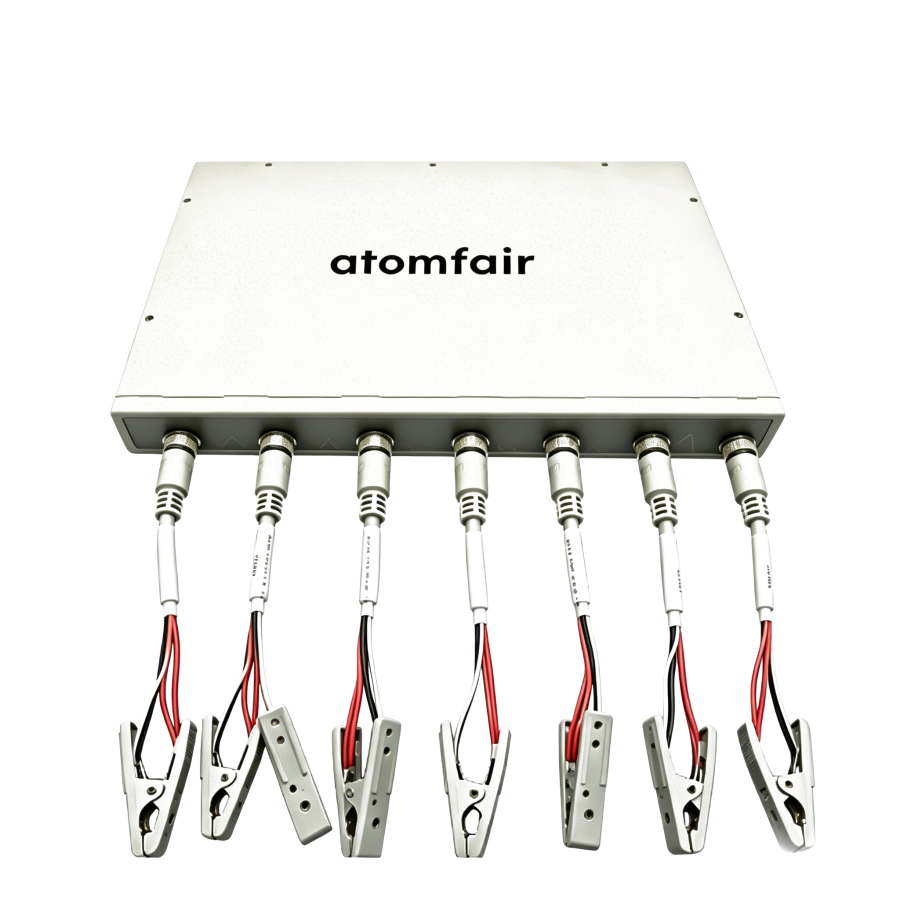
8-Channel Battery Testing System 5V 50mA Precision ATOMFAIR®
$1,799.50 -
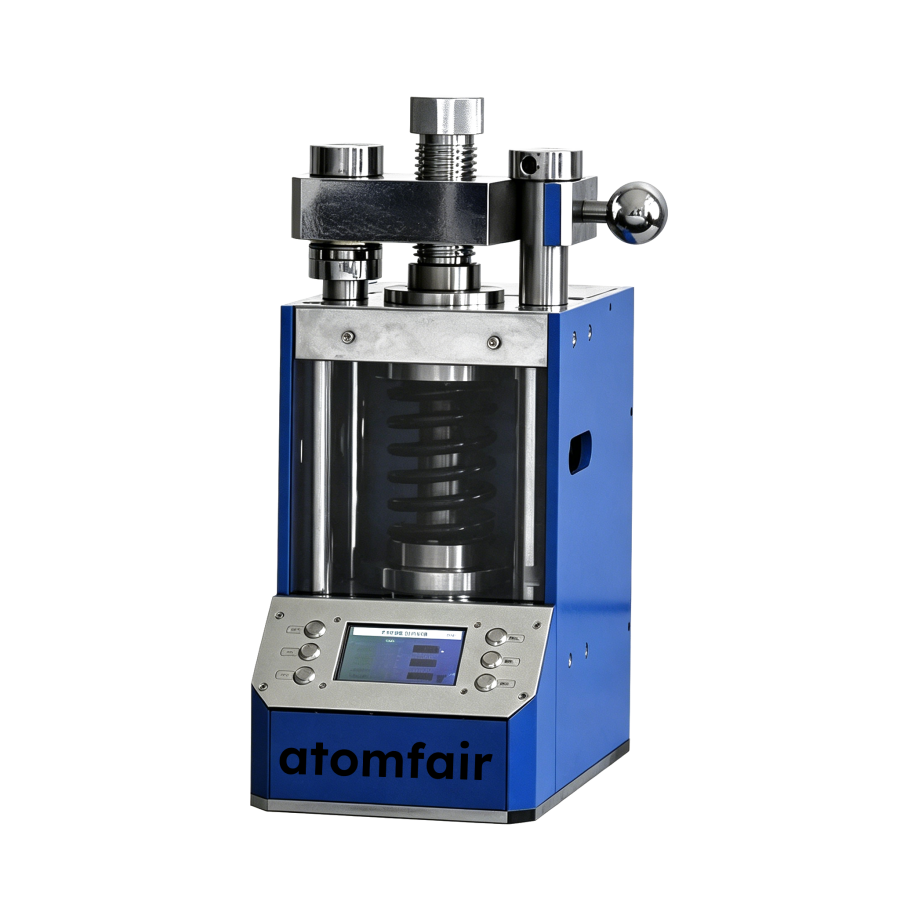
Automatic Fluorescence Pellet Press AFP-749 60 Ton ATOMFAIR®
$7,103.00 -

Cathode Material & Dry Cell
$4,000.00 -
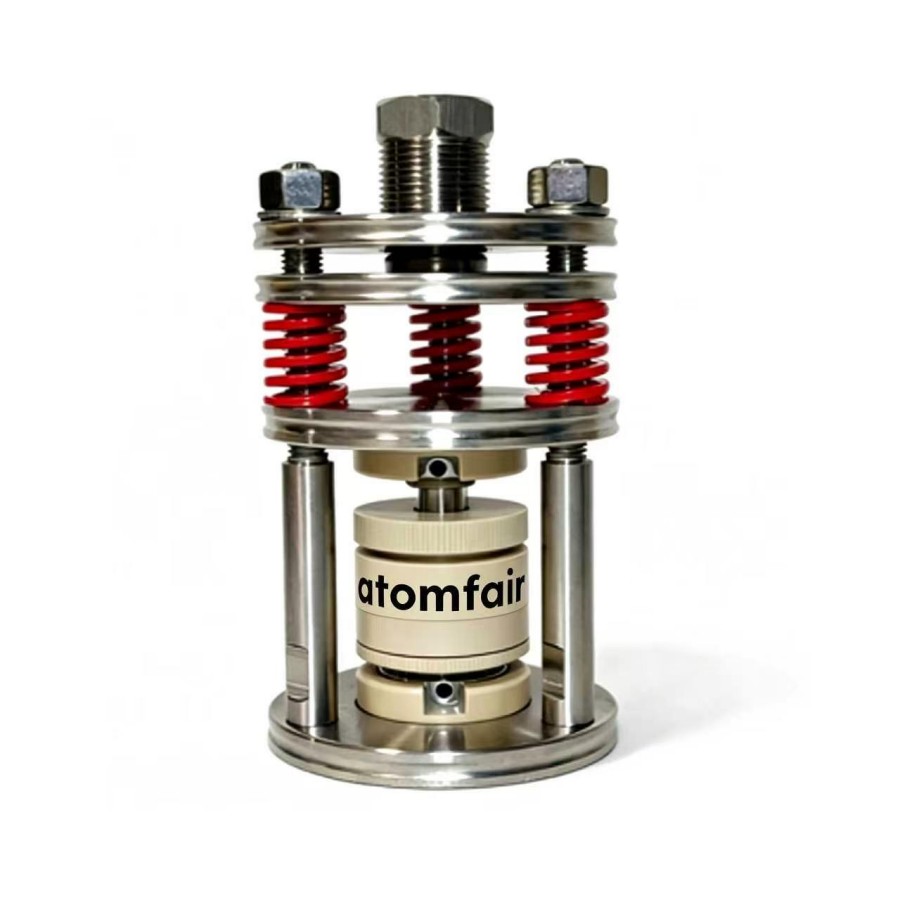
Constant-Pressure Battery Test Mold 0–20 MPa ATOMFAIR®
$280.00 -
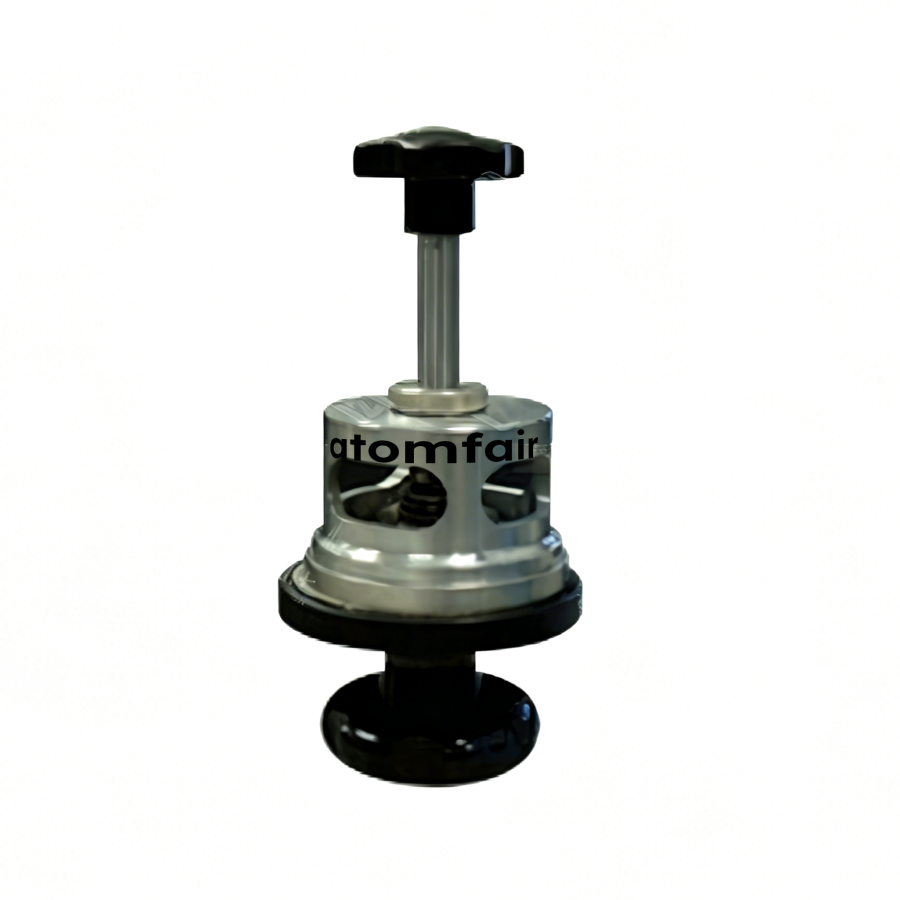
Electrode Sampler Punch SMP-58 V2.0 Φ50 mm ATOMFAIR®
$303.00 -

Handheld Coin Cell Electrode Punch 10–20mm ATOMFAIR®
Price range: $99.95 through $105.95 -
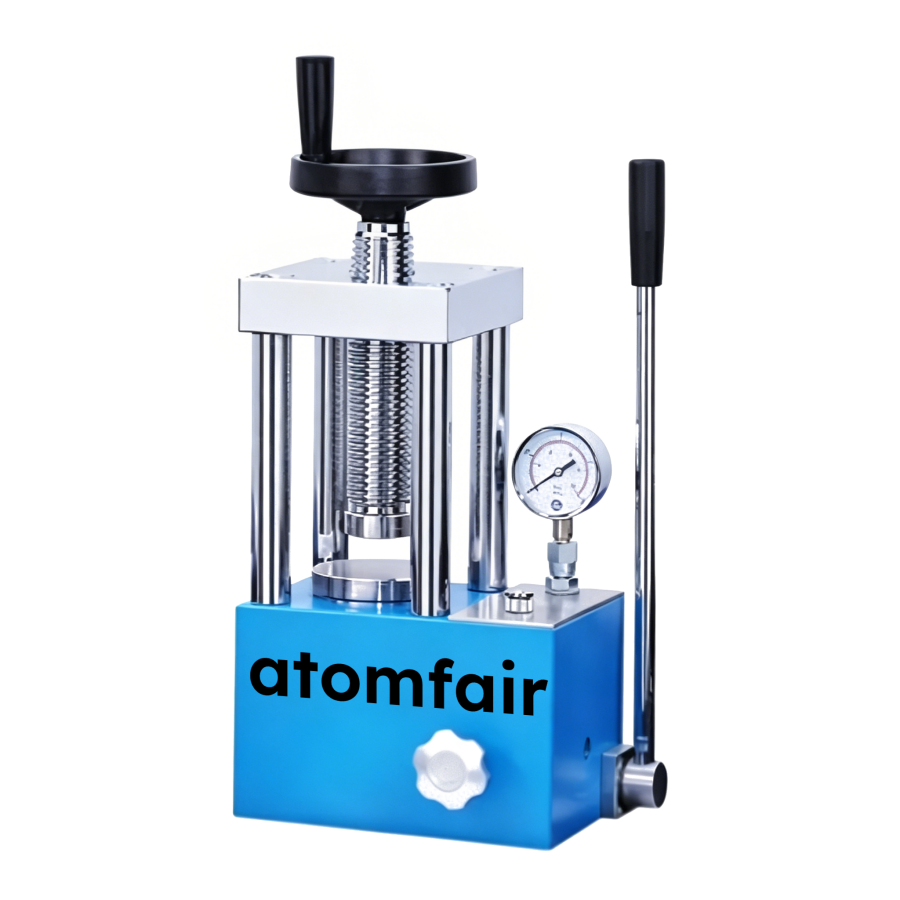
Manual Powder Pellet Press PPF-367 0–30 Ton ATOMFAIR®
$3,190.00 -
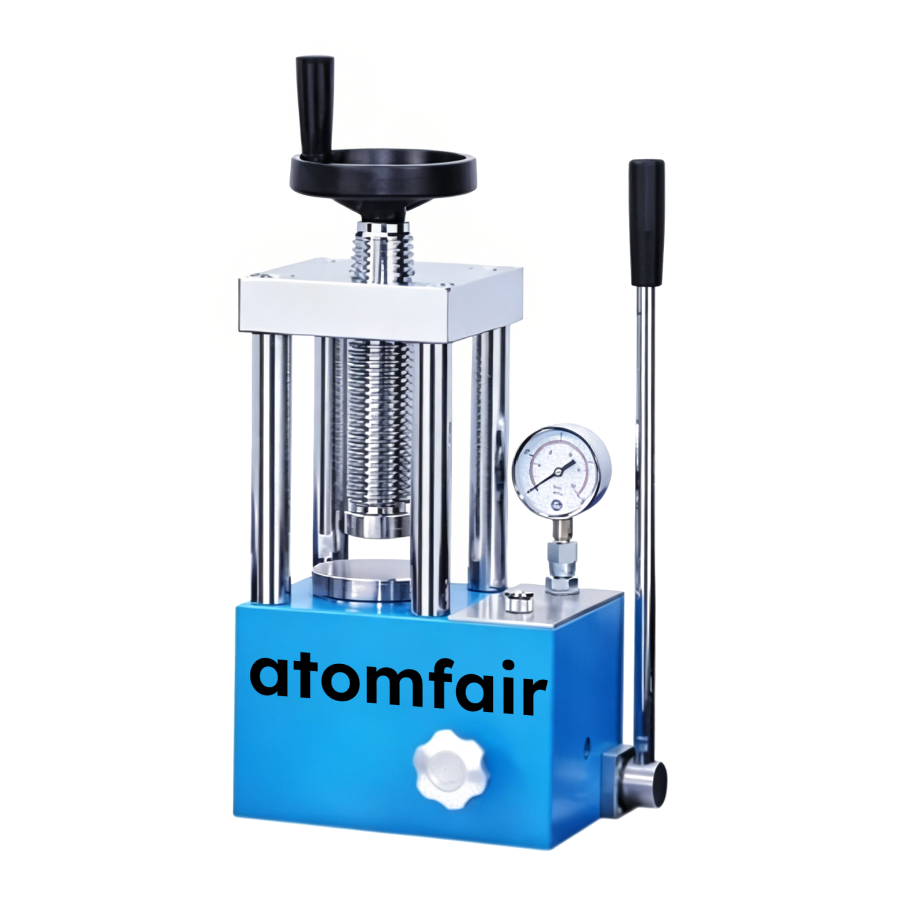
Manual Powder Pellet Press PTP-473 40 Ton ATOMFAIR®
$3,190.00 -
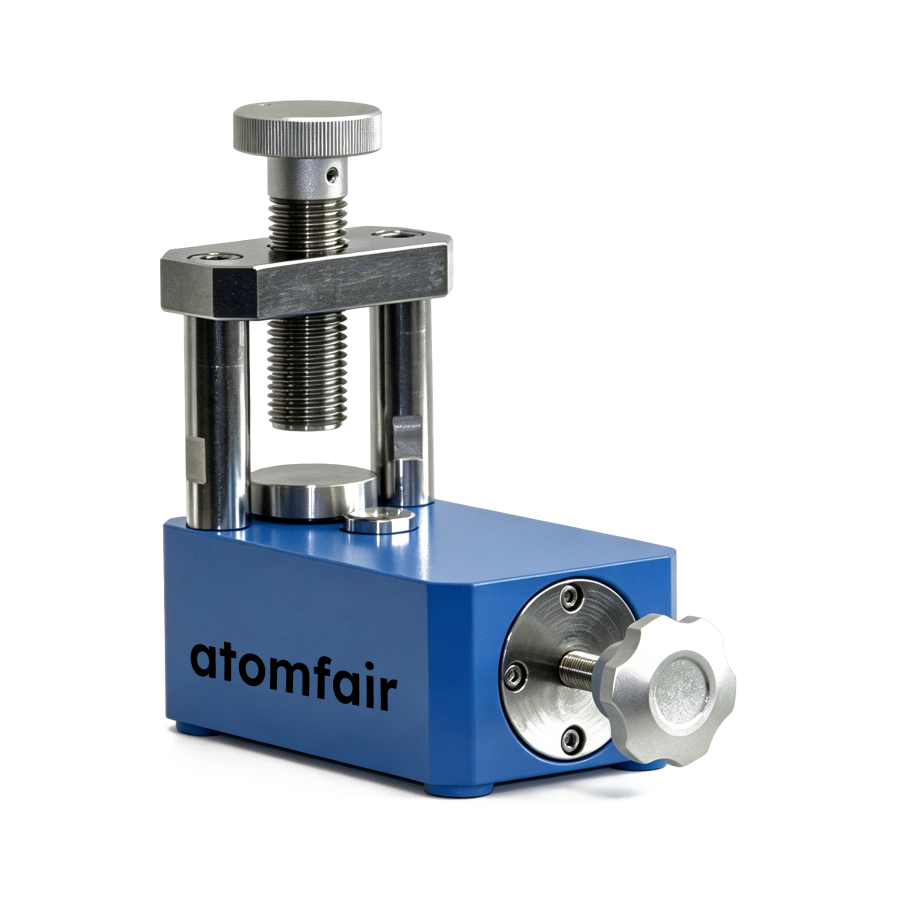
Micro Powder Tablet Press MTP-618 0−2 Ton ATOMFAIR®
$1,119.00 -
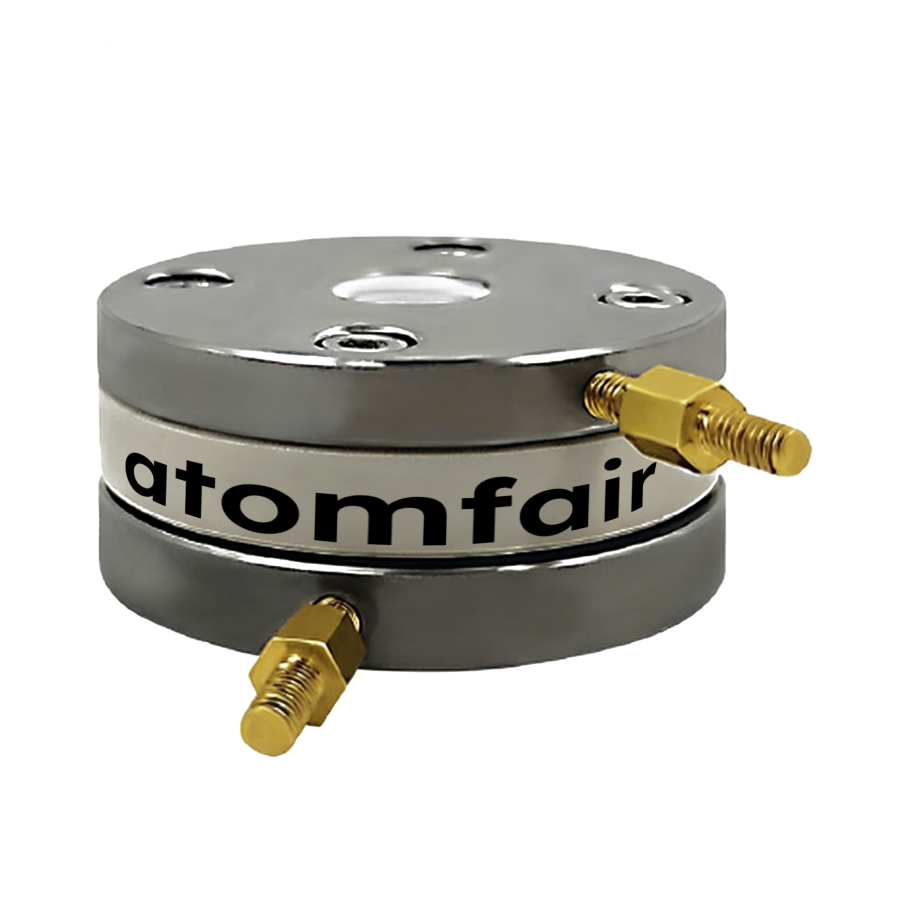
Microscopy Testing Fixture 20 mm Battery Samples ATOMFAIR®
$239.95 -
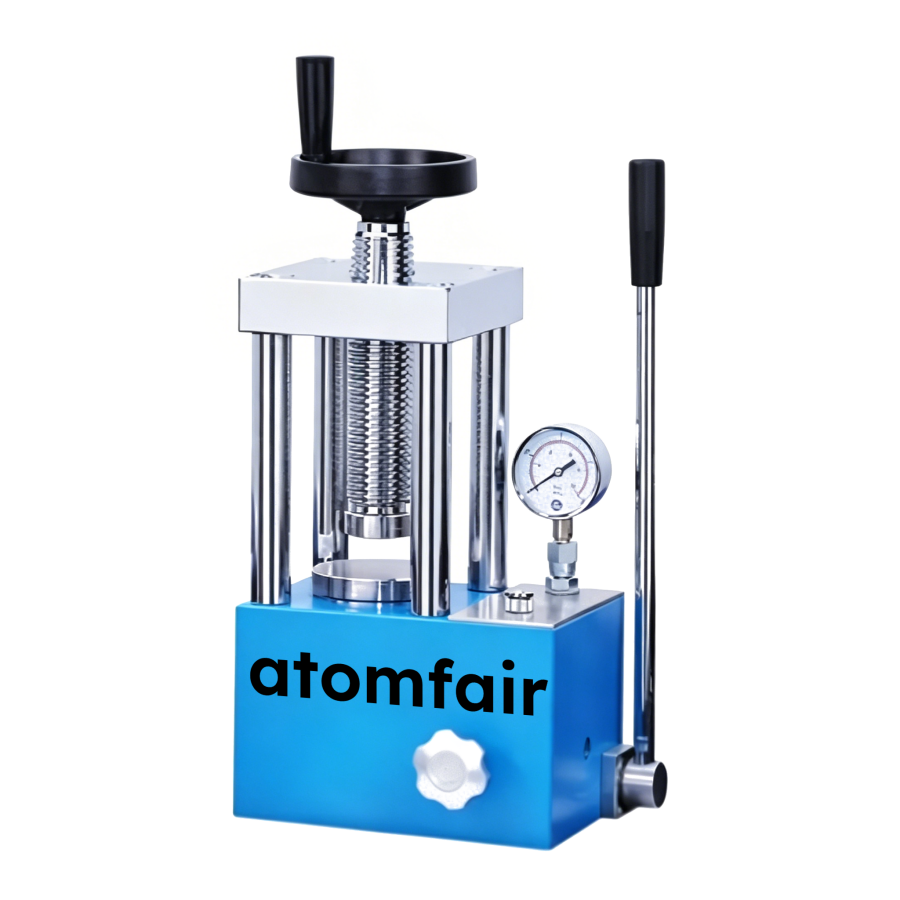
Powder Tablet Press PTP-395 0–15 Ton 2-Column, ATOMFAIR®
$1,608.00 -
Powder Tablet Press PTP-395 0−15 Ton FTIR Pellet ATOMFAIR®
$1,608.00 -
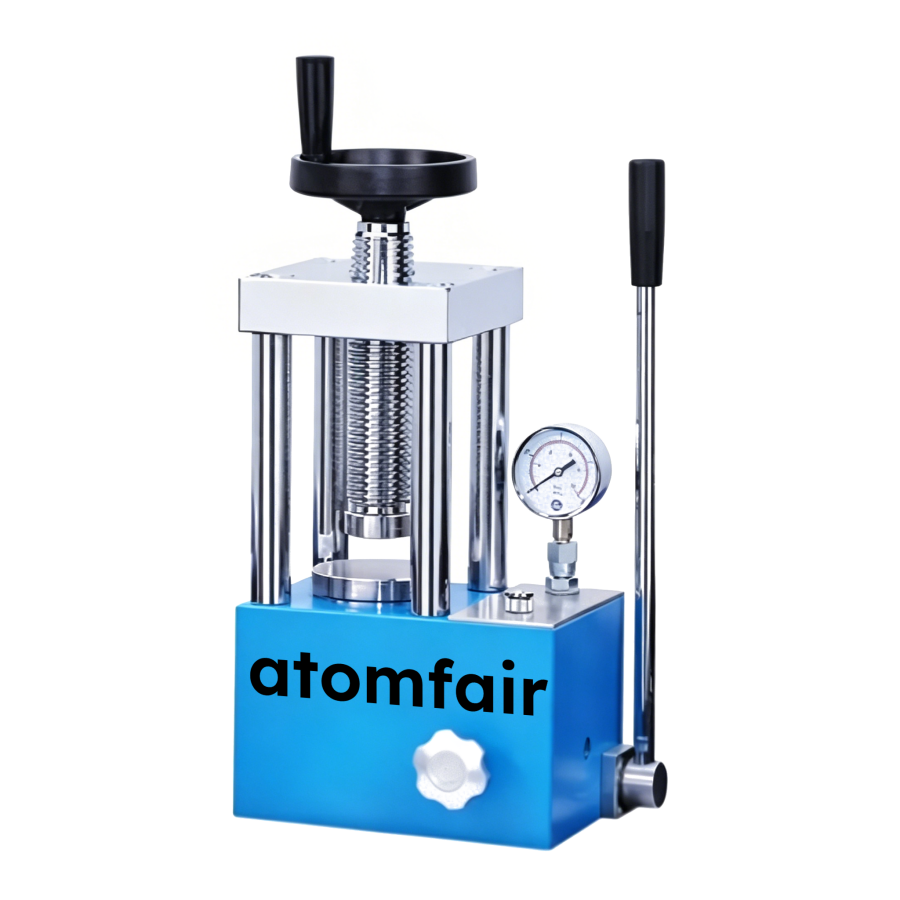
Powder Tablet Press PTP-572 0−24 Ton, 4-Column ATOMFAIR®
$1,989.00 -
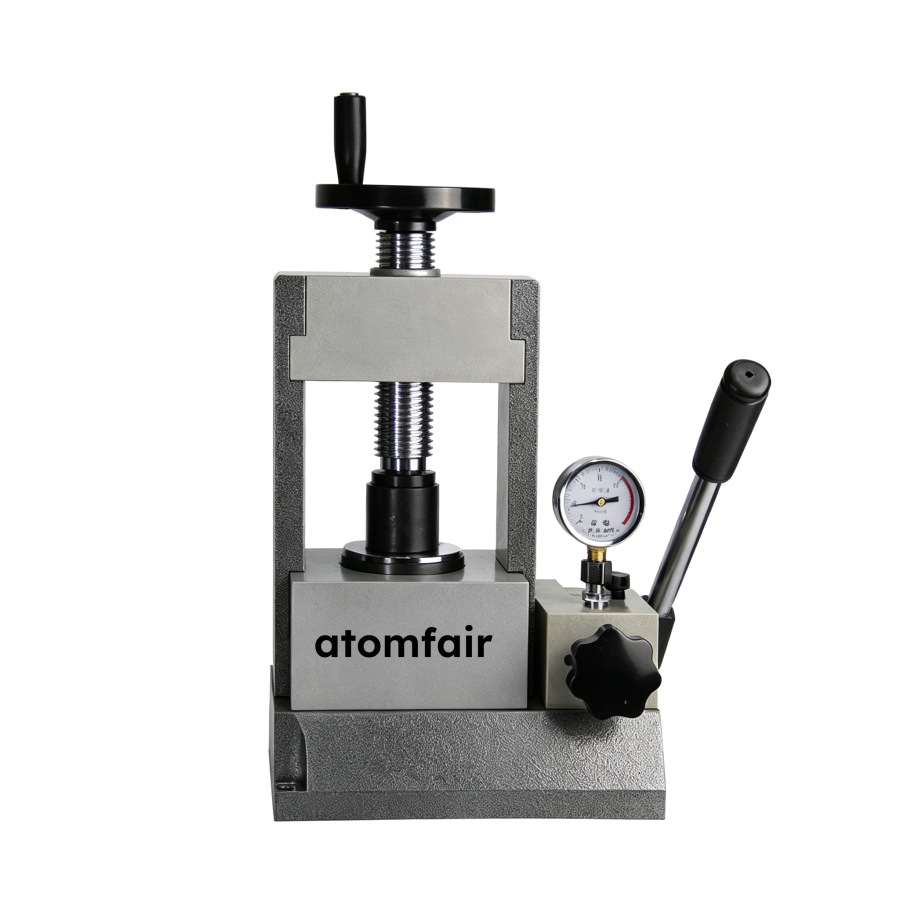
Powder Tablet Press PTP-837 0–24 Ton, 86 mm Piston ATOMFAIR®
$2,658.00 -
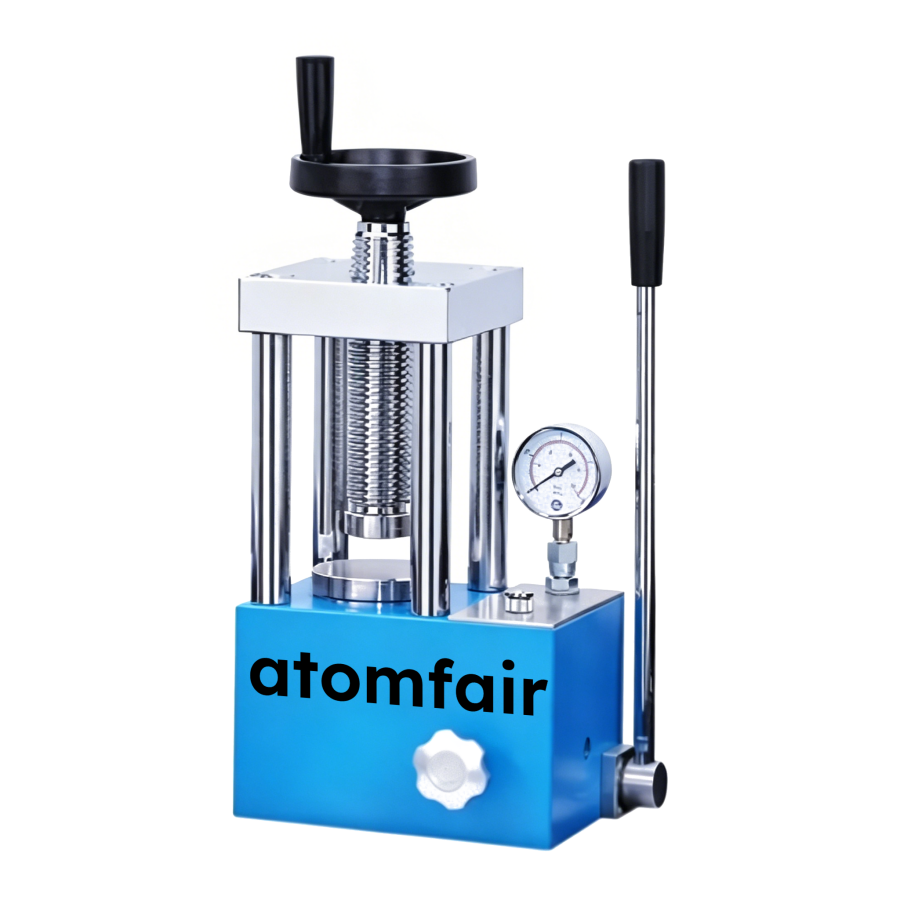
PPF-892 Manual Powder Pellet Press 40 Ton ATOMFAIR®
$3,490.00 -
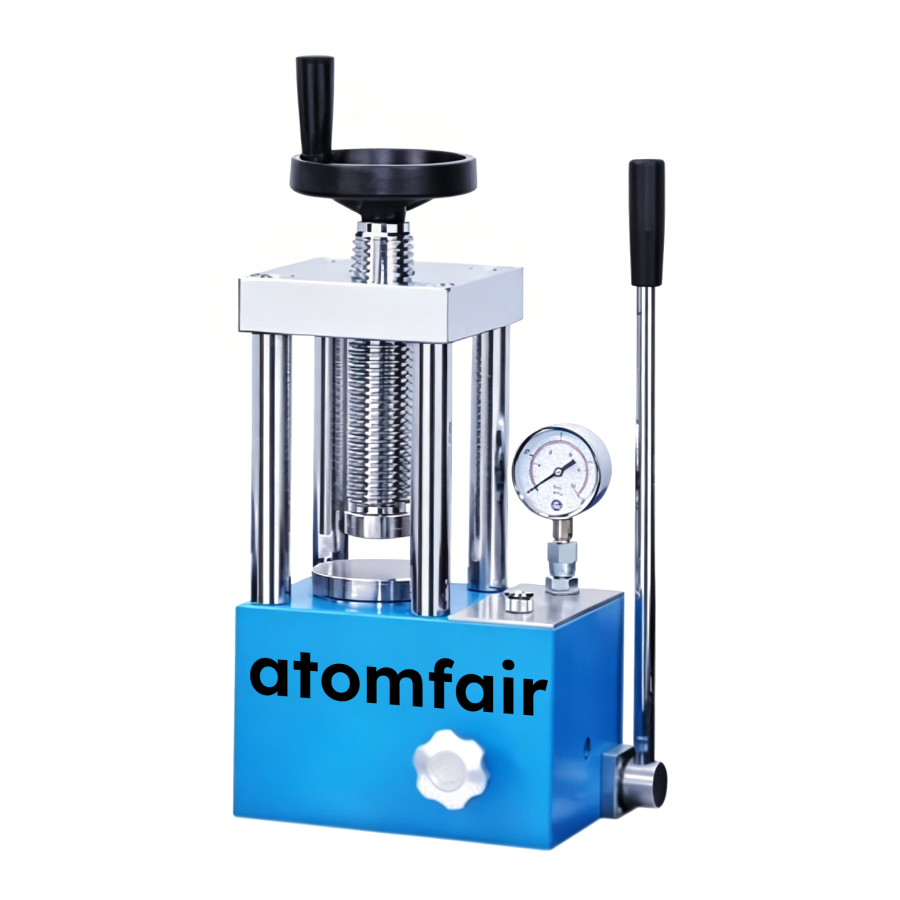
PTP-258 Manual Powder Pellet Press 30 Ton ATOMFAIR®
$2,690.00