
Framework Materials
Framework Materials are advanced materials built from ordered inorganic, organic, or hybrid structural units that form porous networks or functional skeletons. Their pore architecture, surface chemistry, composition, and structural properties can be tailored for gas adsorption and separation, catalysis, sensing, environmental treatment, molecular sieving, energy research, and advanced composite development.
This category includes metal-organic frameworks (MOFs), covalent organic frameworks (COFs), zeolitic and molecular-sieve materials, and functionalized framework systems. Different framework materials offer distinct combinations of pore size, specific surface area, chemical stability, hydrophilicity or hydrophobicity, active sites, and structural flexibility.
When selecting a framework material, consider the target application together with framework chemistry, pore structure, particle size, surface functionality, stability under the intended environment, and compatibility with the planned processing method.
Show More: Explore Framework Materials by Structure and Application
Metal-Organic Frameworks (MOFs)
Metal-organic frameworks are porous materials formed by connecting metal ions or metal clusters with organic ligands. Their ordered pore systems, tunable surface chemistry, and diverse metal centers make them valuable platforms for adsorption, separation, catalysis, sensing, and energy-related research.
By changing the metal node, organic linker, pore environment, particle size, or functional group, MOF materials can be tailored for different target molecules and operating conditions. Common MOF families include ZIF, UiO, MIL, HKUST, MOF, and other metal-based framework systems.
| Typical MOF Application | Material Features to Consider |
|---|---|
| Gas adsorption and separation | Pore aperture, pore volume, surface polarity, humidity tolerance, and regeneration requirements. |
| Carbon capture and gas purification | Functional groups, adsorption selectivity, water stability, and cyclic adsorption performance. |
| Catalysis and catalyst supports | Accessible metal sites, linker functionality, pore accessibility, and thermal or solvent stability. |
| Environmental adsorption | Surface charge, hydrophilicity, target-contaminant affinity, and compatibility with aqueous or mixed systems. |
| Sensing and electrochemical research | Active sites, electron-transfer behavior, particle morphology, and compatibility with electrodes or substrates. |
Covalent Organic Frameworks (COFs)
Covalent organic frameworks are porous organic materials assembled through covalent bonds between designed molecular building blocks. They provide ordered pore structures, low-density frameworks, controllable organic chemistry, and broad opportunities for functional modification.
COFs are particularly useful where tunable organic functionality, conjugated structures, molecular recognition, or tailored pore environments are important. Their performance can vary with linkage chemistry, monomer structure, pore size, crystallinity, surface area, and interaction with the target molecule or medium.
| COF Research Direction | Selection Focus |
|---|---|
| Adsorption and molecular separation | Pore size, pore connectivity, surface functionality, and affinity for the target molecule. |
| Catalysis and photocatalysis | Functional groups, active sites, light-response properties, and stability in the selected reaction system. |
| Energy and electrochemical materials | Conjugated structure, redox-active groups, conductivity-related design, and electrode compatibility. |
| Sensing and molecular recognition | Specific binding sites, fluorescence or electrochemical response, and analyte selectivity. |
| Membranes and composites | Particle size, dispersibility, surface compatibility, and processing stability. |
Zeolitic and Molecular-Sieve Frameworks
Zeolitic and molecular-sieve materials contain regular microporous channels or cages that can selectively adsorb, transport, or separate molecules according to their size, shape, polarity, and interaction with the framework. These materials are widely used in adsorption, catalysis, gas purification, and molecular-sieving research.
For zeolitic framework materials, the framework topology, pore geometry, chemical composition, particle size, acidity, activation condition, and environmental stability should be considered together. Materials with similar pore sizes may still perform differently because of channel structure, surface chemistry, or the intended operating conditions.
Functionalized Framework Materials
Functionalized framework materials incorporate chemical groups or active components that enhance selectivity, reactivity, stability, or compatibility with a specific application. Functional groups may influence molecular adsorption, ion binding, catalytic activity, water affinity, dispersion behavior, optical response, or electrochemical performance.
Framework functionalization can be especially valuable when a project requires stronger interaction with a target gas, pollutant, ion, reactant, solvent, polymer matrix, or electrode surface. The appropriate material should be selected according to both the base framework and the required chemical function.
Choose by Research Application
| Research Objective | Key Selection Factors |
|---|---|
| Gas adsorption and separation | Pore aperture, pore volume, surface chemistry, target-gas affinity, and moisture stability. |
| Carbon dioxide capture | Amine-like functionality, pore environment, selectivity, humidity tolerance, and regeneration conditions. |
| Molecular sieving | Pore opening size, pore-size distribution, diffusion behavior, and target-molecule dimensions. |
| Catalysis | Active sites, framework stability, pore accessibility, solvent compatibility, and reaction temperature. |
| Water adsorption and humidity control | Hydrophilicity, water uptake, adsorption kinetics, cycling performance, and regeneration temperature. |
| Environmental treatment | Surface charge, functional groups, contaminant affinity, chemical stability, and recovery method. |
| Energy and electrochemical research | Conductive or redox-active design, thermal stability, pore structure, and compatibility with electrodes. |
| Membranes and composites | Particle size, dispersibility, interfacial compatibility, mechanical behavior, and solvent resistance. |
How to Choose the Right Framework Material
- Start with the intended use: Define whether the material will be used for adsorption, separation, catalysis, sensing, environmental treatment, energy research, or composite development.
- Match the pore structure to the target: The size, shape, and polarity of the target molecule influence adsorption, transport, and selectivity.
- Compare surface chemistry: Functional groups, metal centers, and framework composition can affect molecular affinity and reaction performance.
- Review operating stability: Consider exposure to moisture, aqueous solutions, acids, bases, organic solvents, heat, or repeated adsorption cycles.
- Select a suitable particle size: Particle size can influence dispersion, coating, membrane fabrication, column packing, separation, and processing behavior.
- Evaluate pore and surface-area data together: A higher specific surface area does not automatically mean better performance; pore accessibility and chemical compatibility are equally important.
- Confirm the required quantity: Choose a package size appropriate for initial material screening, formulation development, or larger-scale experimental work.
Frequently Asked Questions
What are Framework Materials used for?
Framework Materials are used in gas adsorption and separation, molecular sieving, catalysis, environmental treatment, sensing, water adsorption, energy research, membranes, and advanced composite development.
What is the difference between MOF and COF materials?
MOFs are constructed from metal ions or metal clusters connected by organic ligands. COFs are formed mainly from organic building blocks joined through covalent bonds. MOFs provide diverse metal-centered chemistry, while COFs offer broad flexibility in organic functionality and conjugated structural design.
How do I choose a framework material for gas adsorption?
Compare pore size, pore volume, surface chemistry, adsorption selectivity, humidity tolerance, and regeneration requirements. The pore environment should be compatible with the size and properties of the target gas.
Is a higher specific surface area always better?
Not always. Specific surface area is important, but pore size, pore accessibility, surface functionality, chemical stability, and the properties of the target molecule can have an equally strong effect on performance.
Which framework materials are suitable for catalysis?
MOFs with accessible metal sites, functionalized frameworks, and COFs with suitable active organic groups are widely considered for catalytic research. The best choice depends on the reaction type, reactants, solvent, temperature, and desired selectivity.
Can framework materials be used in water or humid environments?
Some framework materials offer good stability in water or humid conditions, while others are more sensitive to moisture. Select a material according to its framework composition, functional groups, activation state, and actual operating environment.
What particle size should I choose?
Smaller particles may provide shorter diffusion paths and improved dispersion. Larger particles may be easier to recover, pack, filter, or process. Choose according to whether the material will be used in suspensions, coatings, membranes, columns, pellets, or composites.
Can Framework Materials be used in membranes or composites?
Many framework materials can be used as fillers, coatings, membrane components, catalyst supports, or functional additives. Particle size, dispersion, surface compatibility, matrix selection, and processing conditions should be reviewed before use.
What information should I confirm before purchasing?
Confirm the framework type, composition, functional groups, particle size, pore characteristics, surface-area information, physical form, package size, and suitability for the intended application and working environment.
Showing 1–16 of 53 results
-
Al-Fum Aluminum Fumarate MOF Powder >800m²/g ATOMFAIR®
Price range: $242.00 through $465.00 -
Aluminum MOF MIL-101(Al) 100–1000nm Powder ATOMFAIR®
Price range: $209.00 through $1,187.00 -
BFBAEPY-COF Autopolyligand 500 mg 23.2 nm ATOMFAIR®
$391.00 -
COF-LZU1 Covalent Organic Framework 100 mg ATOMFAIR®
$1,881.00 -
COF-TpPa-1 Covalent Organic Framework 100 mg ATOMFAIR®
$1,881.00 -
DAAQ-TFP-COF Material 100 mg, 1.9–2.3 nm Pores ATOMFAIR®
$1,881.00 -
DUT-67 Zirconium MOF Powder Research ≥800 m2/g ATOMFAIR®
Price range: $268.00 through $1,700.00 -
Er-MOF Erbium Metal-Organic Framework ≥98% ATOMFAIR®
Price range: $261.00 through $502.00 -
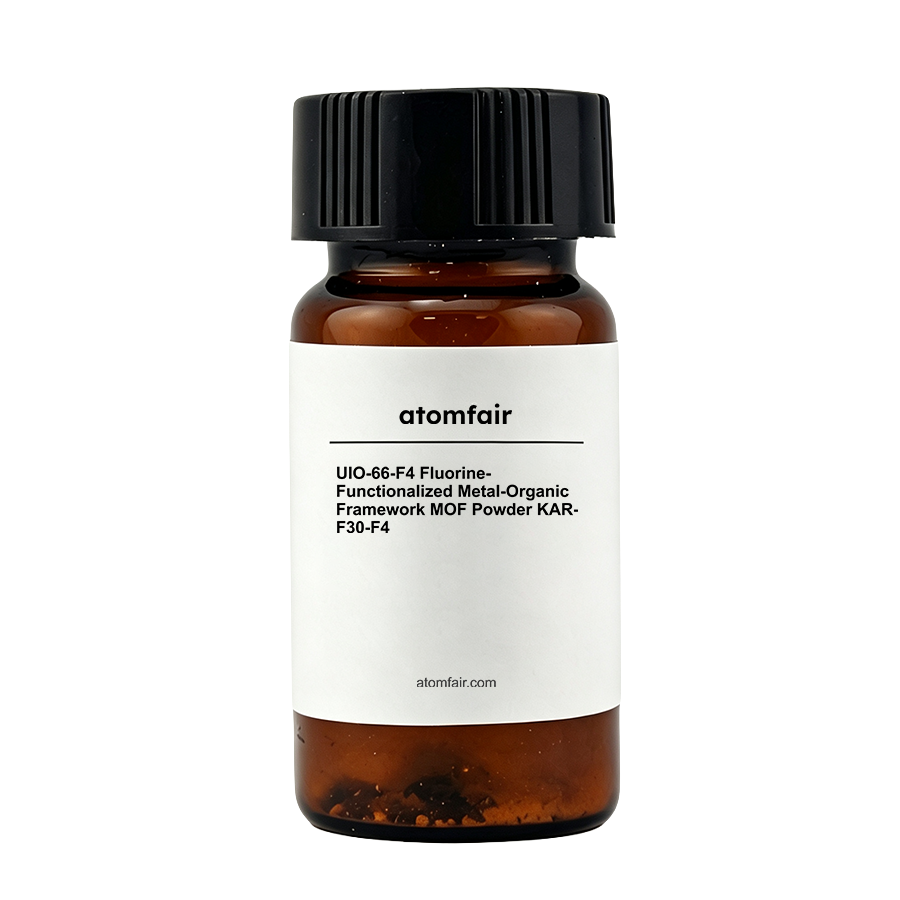
Fluorinated UiO-66-F4 MOF Powder KAR-F30-F4 ATOMFAIR®
Price range: $353.00 through $576.00 -
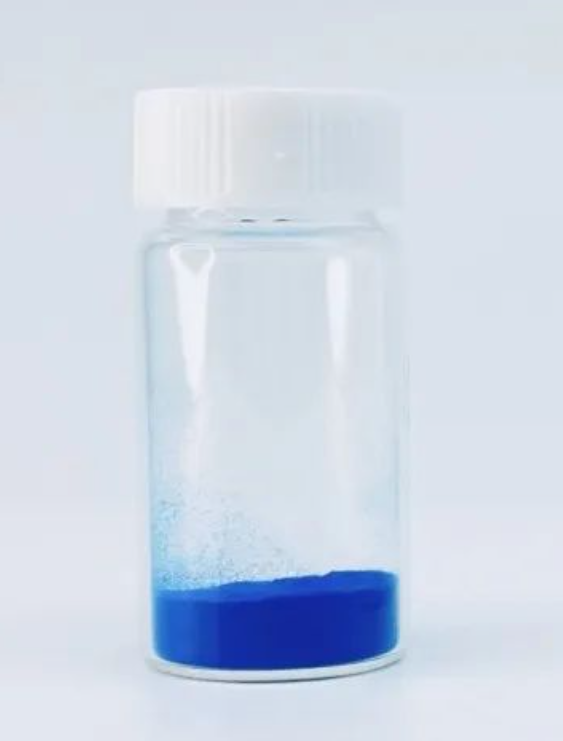
HKUST-1 (Cu-BTC) Research Grade Reagent Powder ATOMFAIR®
Price range: $179.00 through $287.00 -
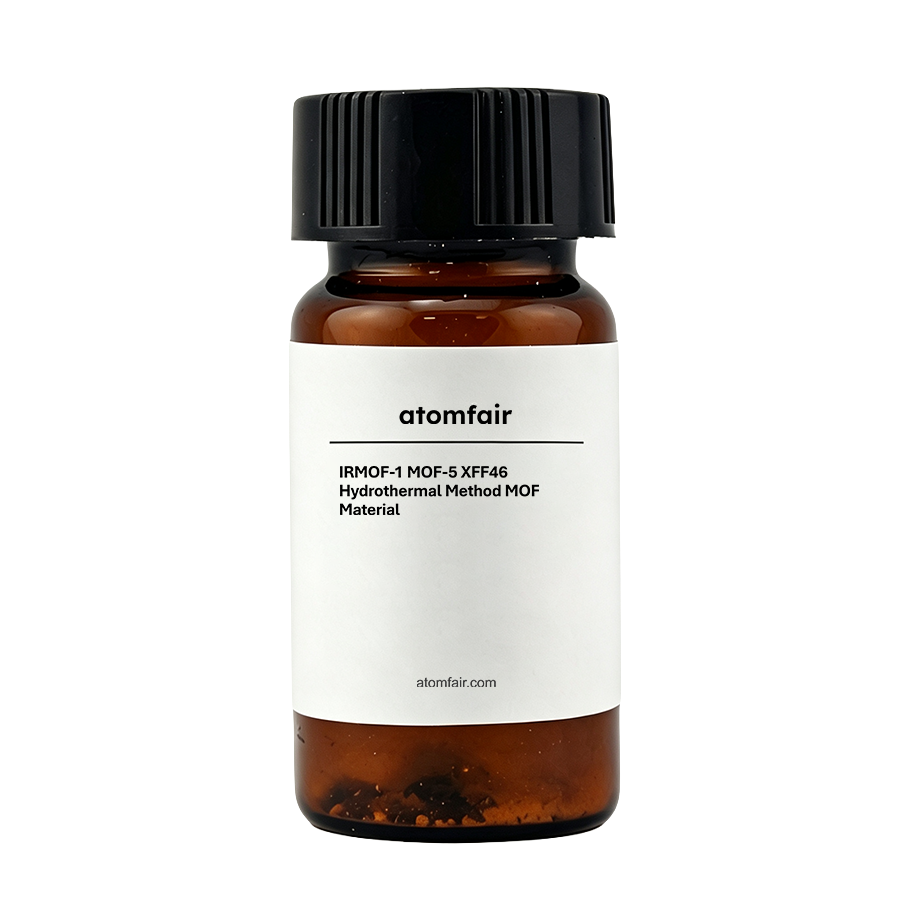
IRMOF-1 MOF-5 Organic Framework Material 955 m2/g ATOMFAIR®
$354.00 -
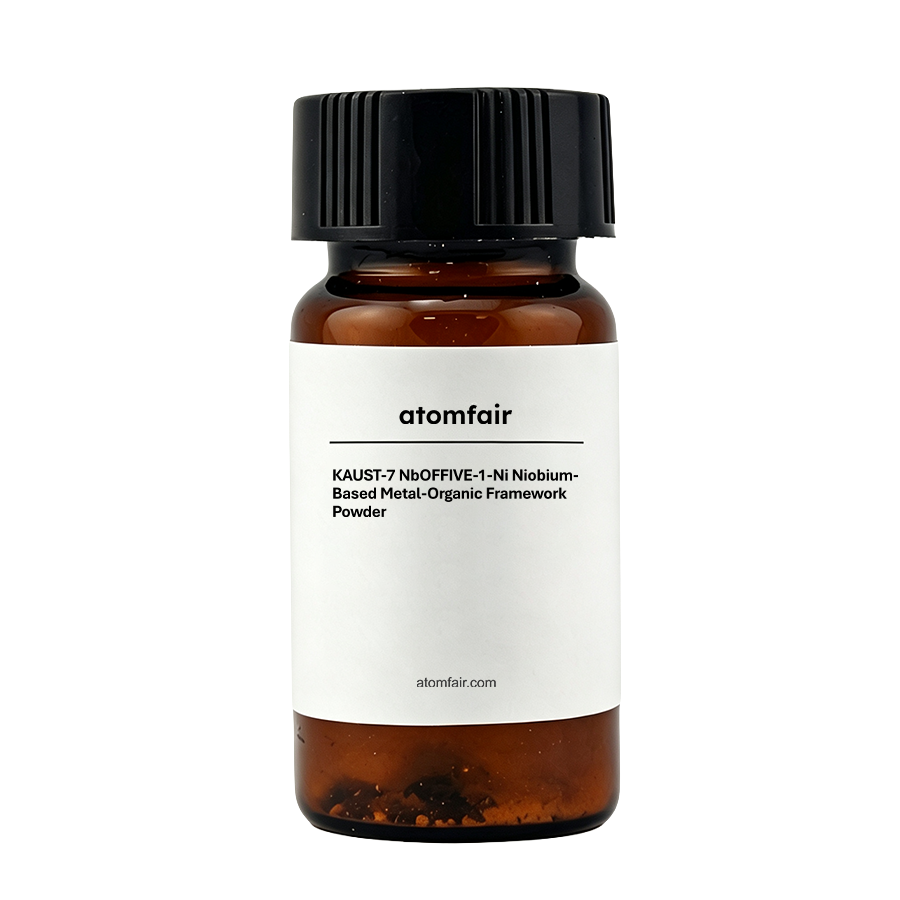
KAUST-7 Niobium MOF Powder 1000–5000nm Research ATOMFAIR®
Price range: $242.00 through $1,804.00 -
MAF-5(Zn) MOF White Powder 80–150 nm, 500 mg ATOMFAIR®
$310.00 -
Magnetic MOF Fe3O4@ZIF-8 150–400 nm 500 mg ATOMFAIR®
$465.00 -
MIL-100(Cr) MOF Powder 50–100 nm Research Grade ATOMFAIR®
Price range: $353.00 through $800.00 -
MIL-100(Fe) MOF Powder 100–1000nm Research ATOMFAIR®
Price range: $197.00 through $1,187.00