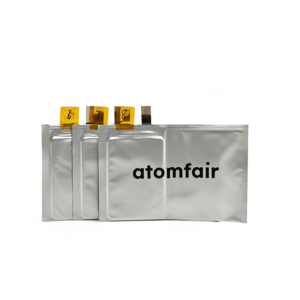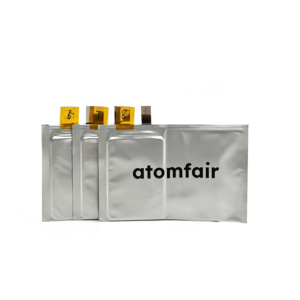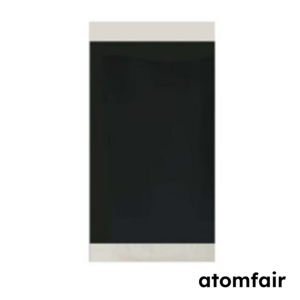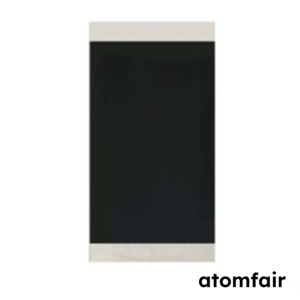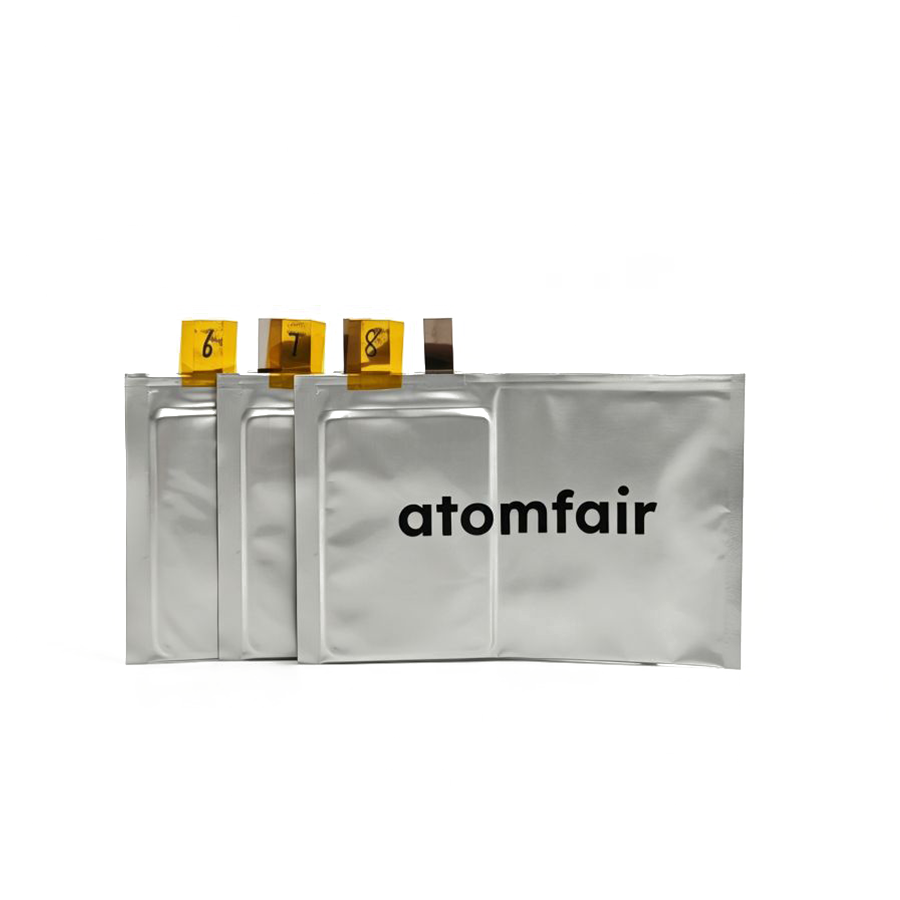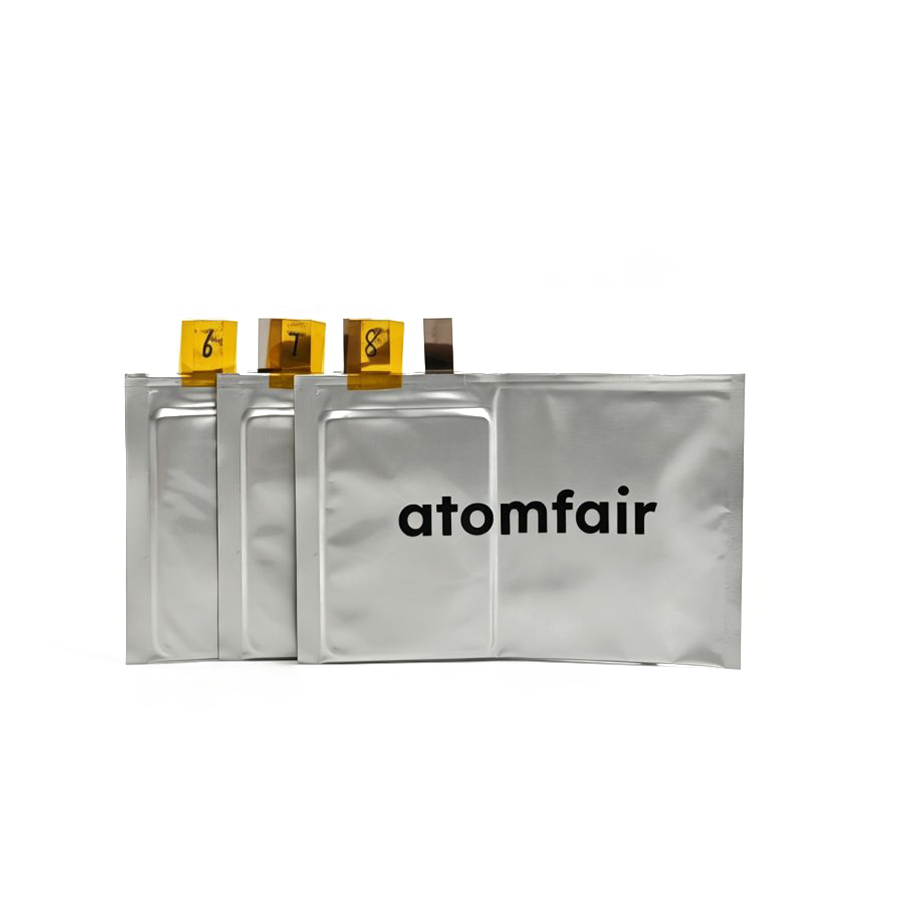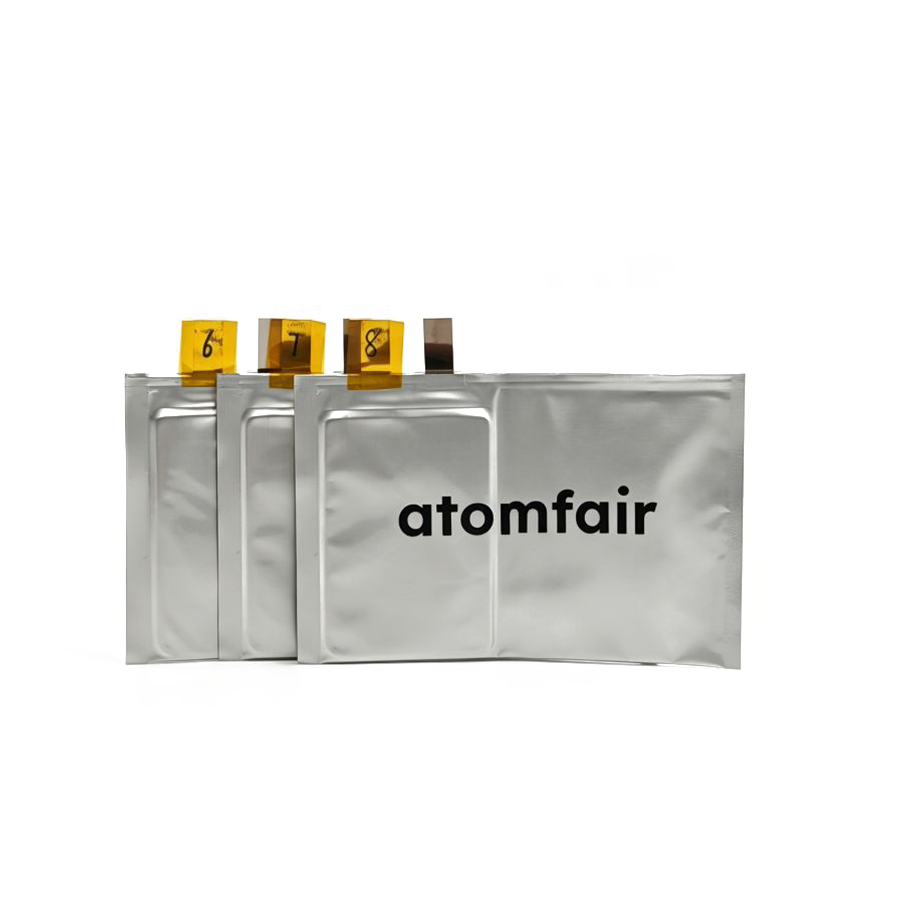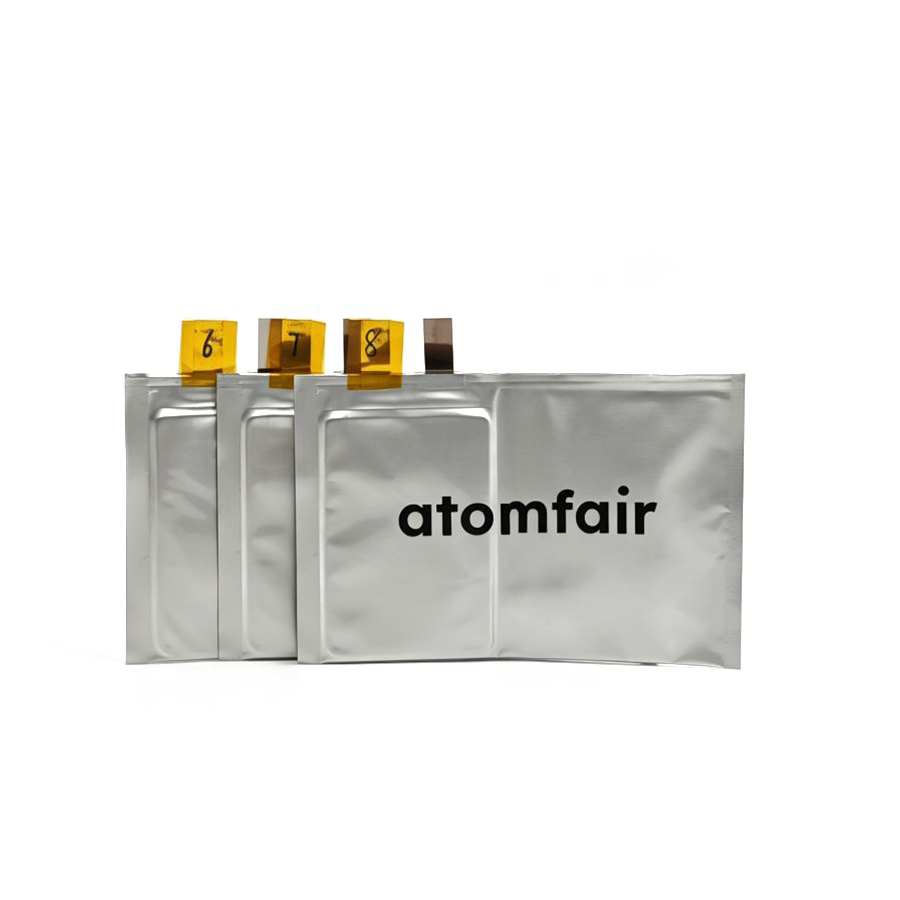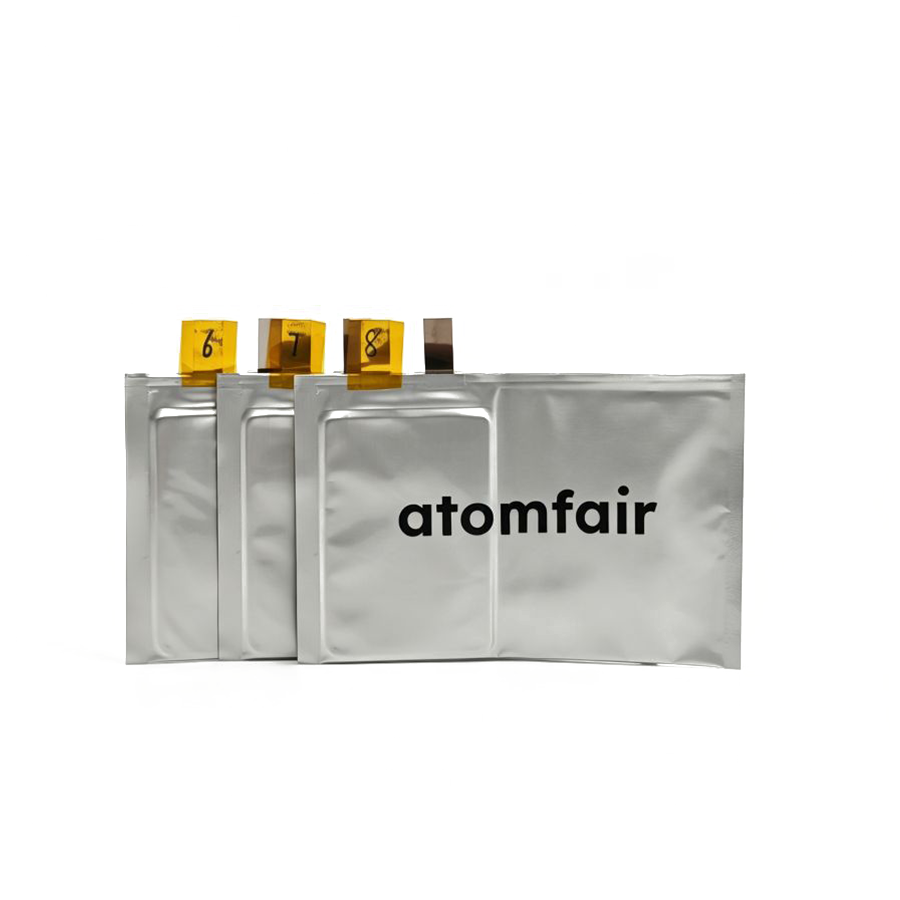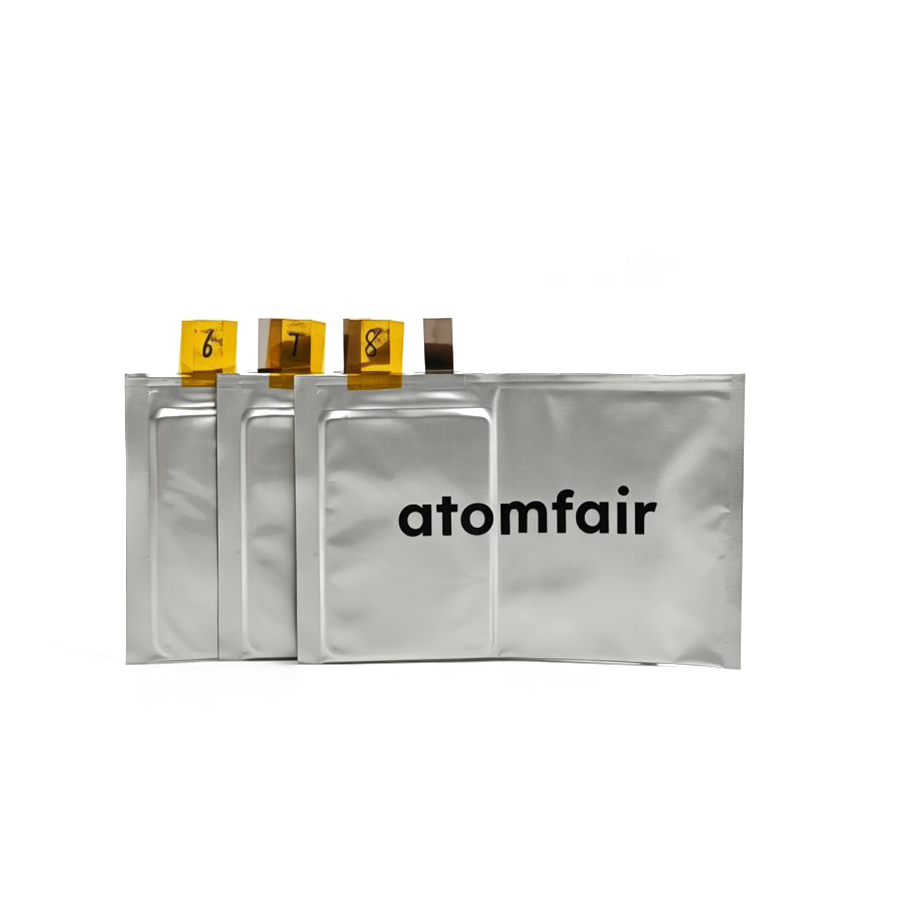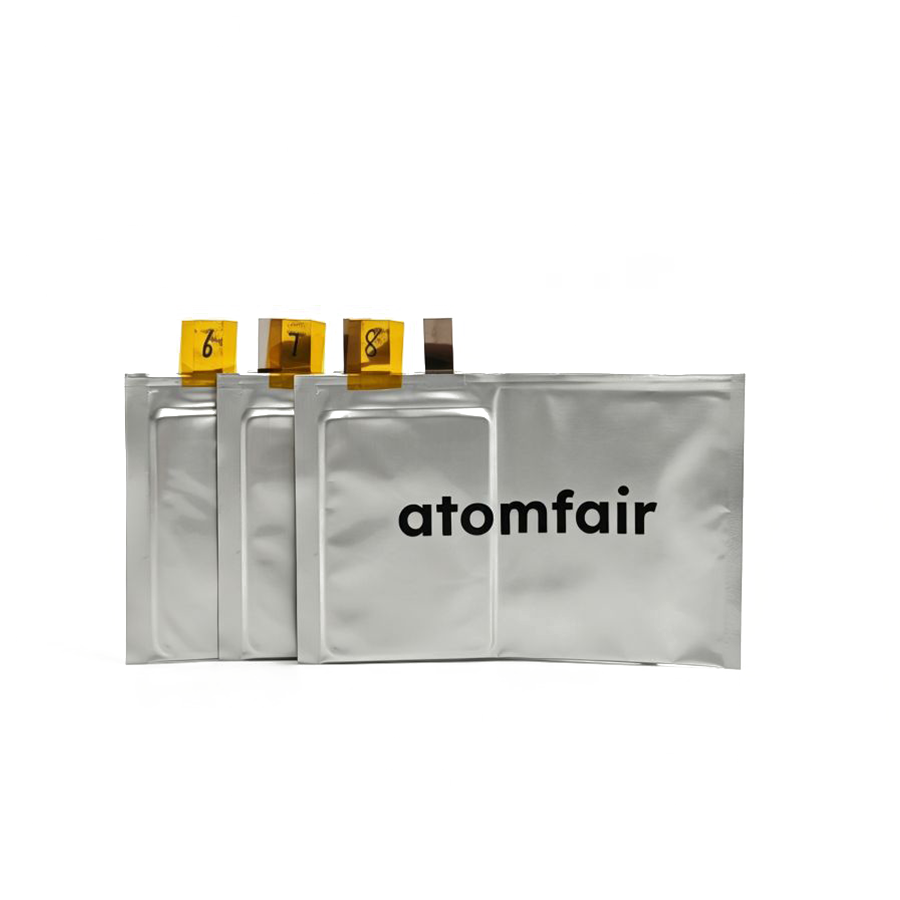
ATOMFAIR® 6.2AH LMR-LICU LITHIUM METAL DRY POUCH CELLLITHIUM METAL TECHNOLOGY | 14/15 LAYERS
|
|||||||||||||||||||||||||||||||||||||||||||||||||||
|
|||||||||||||||||||||||||||||||||||||||||||||||||||
|
TAILORED SOLUTIONS FOR RESEARCH
Contact our engineering team for technical support or official institutional quotations.
EMAIL: inquiry@atomfair.com
|
|||||||||||||||||||||||||||||||||||||||||||||||||||
|
Manufacturer: Atomfair LLC
Brand: ATOMFAIR®
|
|||||||||||||||||||||||||||||||||||||||||||||||||||
Vacuum-sealed dry pouch cell must be stored in inert environment until electrolyte injection. Cell activation requires controlled moisture-free conditions to preserve electrochemical performance.
- Moisture Sensitivity: This cell must be handled exclusively in dry environments to prevent degradation of sodium-ion kinetics.
- Voltage Window: The operating voltage window is typically 2.0V to 4.0V, dependent on cathode and electrolyte chemistry.
- Current Collector Design: Dual aluminum foils are used to prevent over-discharge and optimize cost.
- Electrolyte Compatibility: Electrolytes must be compatible with the selected cathode and anode materials; recommended electrolytes are not supplied.
- Storage Condition: Cell is vacuum-sealed and should remain sealed until immediately prior to electrolyte injection.
How does the dual aluminum current collector design in the ATOMFAIR SIB dry pouch cell affect over-discharge protection compared to conventional copper anode foils?
The dual aluminum current collector design optimizes cost and prevents over-discharge by eliminating the need for copper on the anode side, which is standard in lithium-ion cells. Aluminum for both electrodes is feasible in sodium-ion systems due to the lack of alloying reactions at low potentials. This design trade-off reduces material cost while maintaining cell integrity during deep discharge cycles, as stated in the product specifications.
Which cathode chemistries are supported by the ATOMFAIR 1Ah SIB dry pouch cell, and how does the choice affect the operational voltage window?
The cell supports layered oxides, polyanionic compounds like NVP, and Prussian blue analogs as cathode options. The voltage window of 2.0V–4.0V is typical and chemistry dependent, meaning the specific cathode material will determine the precise operating range. Full-stack customization including cathode, anode, and current collector is available to match research requirements.
What laboratory conditions are required for electrolyte injection and activation of the unfilled ATOMFAIR SIB dry pouch cell?
The cell is delivered in a vacuum-sealed dry state and requires proprietary electrolyte injection prior to use. Assembly is performed in high-purity dry rooms or gloveboxes to ensure superior sodium-ion kinetics and avoid moisture contamination. The cell core must be handled in an inert atmosphere to maintain electrochemical performance.
The ATOMFAIR 1Ah Sodium-ion Dry Pouch Cell is a customizable SIB research platform featuring dual aluminum current collectors and full-stack cathode/anode/collector flexibility; however, it is delivered dry and requires proprietary electrolyte injection and inert handling, while the typical voltage window (2.0–4.0V) is chemistry-dependent, necessitating experimental validation.
Positive
- Dual aluminum current collectors: Both cathode and anode use aluminum foils, which optimizes cost and prevents over-discharge, a unique advantage for sodium-ion cell design.
- Full-stack material customization: Allows selection of layered oxides, polyanionic compounds, or Prussian Blue cathodes, and hard carbon anodes with adjustable capacity and ICE, enabling tailored SIB research.
Trade-offs
- Requires proprietary electrolyte injection: The cell is delivered vacuum-sealed and dry; users must supply compatible electrolyte and perform injection under inert conditions to prevent moisture contamination.
- Chemistry-dependent voltage window: The 2.0–4.0V window is typical but varies with cathode, anode, and electrolyte choices; users must experimentally verify safe operating limits for their specific chemistry.
Every advanced material, component, equipment, and instrument in our catalog is backed by rigorous testing. We maintain strict internal quality management frameworks and align with CE conformity metrics to deliver transparent, reproducible performance data via our public open-science repository.
To request raw batch performance data, submit formal vendor registration paperwork, or execute a fast-turnaround R&D manufacturing loop, contact us at inquiry@atomfair.com.
Item is dispatched under the Atomfair Shipping & Delivery Framework (Free worldwide shipping on orders over $59 USD excl. heavy equipment). Return is governed by the Atomfair Return & Refund Policy (7-day technical return window).