|
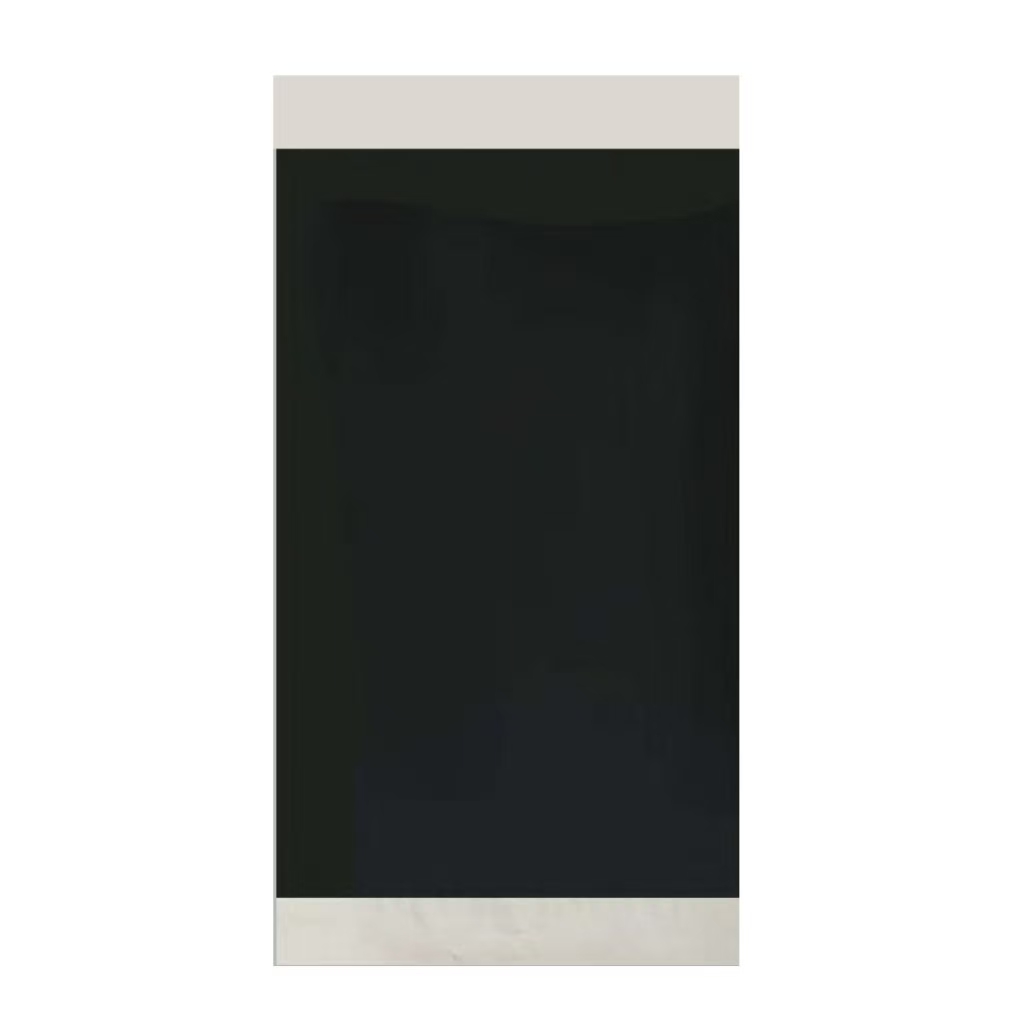
LMR Double-Sided Cathode, 60 mg/cm² per side, Dry Process
Battery Electrode Sheet
|
||||||||||||||||||||||||||||||||||||||||||||
|
This document outlines the environmental and handling constraints for the ATOMFAIR LMR-D04 lithium-rich manganese-based cathode electrode sheet. Adherence to these constraints is critical to prevent moisture-induced degradation and ensure electrochemical performance.
- Moisture Sensitivity: The electrode sheet is highly sensitive to ambient moisture and must be vacuum-baked at 100°C for 12 hours before cell assembly to isolate moisture factors.
- Handling Caution: The thick dry-process coating requires careful handling to prevent physical damage or delamination from the carbon-coated aluminum substrate.
This procedure outlines the recommended conditioning and handling steps for the ATOMAIR LMR-D04 electrode sheet prior to cell assembly. Following these steps ensures the removal of adsorbed moisture and maintains electrode integrity.
Required Equipment: Vacuum oven capable of 100°C
- Inspect the electrode sheet
Inspect the received electrode sheet for any visible damage, creases, or delamination before proceeding. - Transfer to vacuum oven
Transfer the electrode sheet into a vacuum oven, ensuring it is placed on a clean, flat surface. - Set vacuum and temperature
Set the vacuum oven to 100°C and initiate vacuum to establish the required environment. - Bake for 12 hours
Bake the electrode sheet under vacuum at 100°C for a continuous period of 12 hours. - Cool and store
After baking, cool the electrode sheet to room temperature under vacuum before transferring to an inert atmosphere for storage or assembly.
How does the dry process coating method affect the electrochemical performance of the LMR-D04 electrode compared to wet-process electrodes?
The dry process ensures superior electrode film cohesion and robust structure without solvent phase residues, enabling stable 60 mg/cm² coating thickness control on both sides. This eliminates solvent-induced variability, enhancing electrochemical uniformity and long-term cycling stability, as supported by the carbon-coated aluminum substrate interlayer that minimizes interfacial contact resistance.
What are the essential pre-treatment steps required before assembling the LMR-D04 electrode into a full cell?
The electrode requires a standard conditioning protocol of 12 hours under vacuum baking at 100°C to isolate ambient moisture factors. This step is critical for advanced dry process thick coatings to ensure proper handling and cell performance. The electrode is double-side coated on a carbon-coated aluminum foil substrate with a total thickness of 13 μm.
Why is a carbon-coated aluminum foil used as the current collector for the LMR-D04 cathode electrode?
The carbon-coated aluminum foil substrate (areal density 4.4 mg/cm², total thickness 13 μm) minimizes interfacial contact resistance and contact polarization between the active material and current collector. This promotes long-term cycling stability and enhances electrochemical uniformity, critical for high-precision laboratory testing.
Atomfair LMR-D04 is a dry-processed, double-side coated lithium-rich manganese-based cathode electrode sheet with a 60 mg/cm² coating density, 300 mAh/g capacity, and 96% active material ratio, designed for high-precision Li-ion battery research. Its carbon-coated aluminum substrate reduces interfacial resistance, but requires vacuum baking before assembly and is limited to laboratory use.
Positive
- High Specific Capacity and Active Ratio: Offers a material design capacity of 300 mAh/g with 96% active material ratio, optimizing testing accuracy for high-energy-density cathode evaluation.
- Advanced Dry Process Coating: Dry processing ensures superior film cohesion, stable 60 mg/cm² double-side coating without solvent residues, reducing variability in electrode fabrication.
Trade-offs
- Mandatory Vacuum Baking Protocol: Electrode sheets require 12-hour vacuum baking at 100°C prior to cell assembly to remove ambient moisture, adding time and energy overhead to the experimental workflow.
- Restricted to Laboratory Research: Sold exclusively for R&D purposes; not validated for commercial production, limiting scalability and direct industrial application.
Every advanced material, component, equipment, and instrument in our catalog is backed by rigorous testing. We maintain strict internal quality management frameworks and align with CE conformity metrics to deliver transparent, reproducible performance data via our public open-science repository.
To request raw batch performance data, submit formal vendor registration paperwork, or execute a fast-turnaround R&D manufacturing loop, contact us at inquiry@atomfair.com.
Item is dispatched under the Atomfair Shipping & Delivery Framework (Free worldwide shipping on orders over $59 USD excl. heavy equipment). Return is governed by the Atomfair Return & Refund Policy (7-day technical return window).