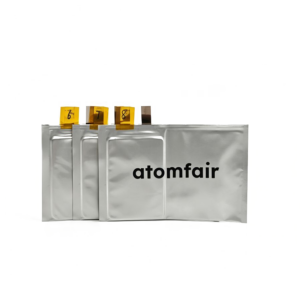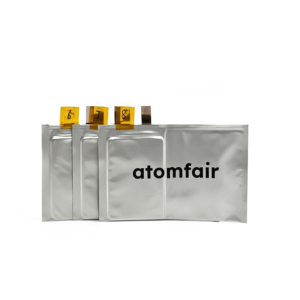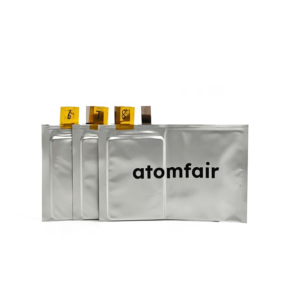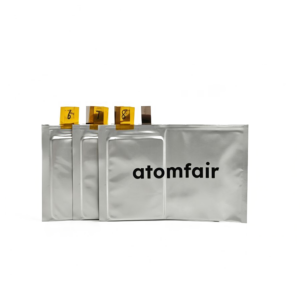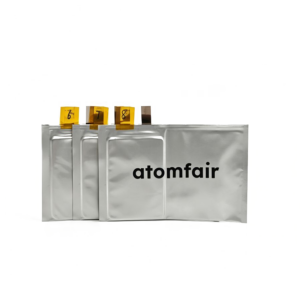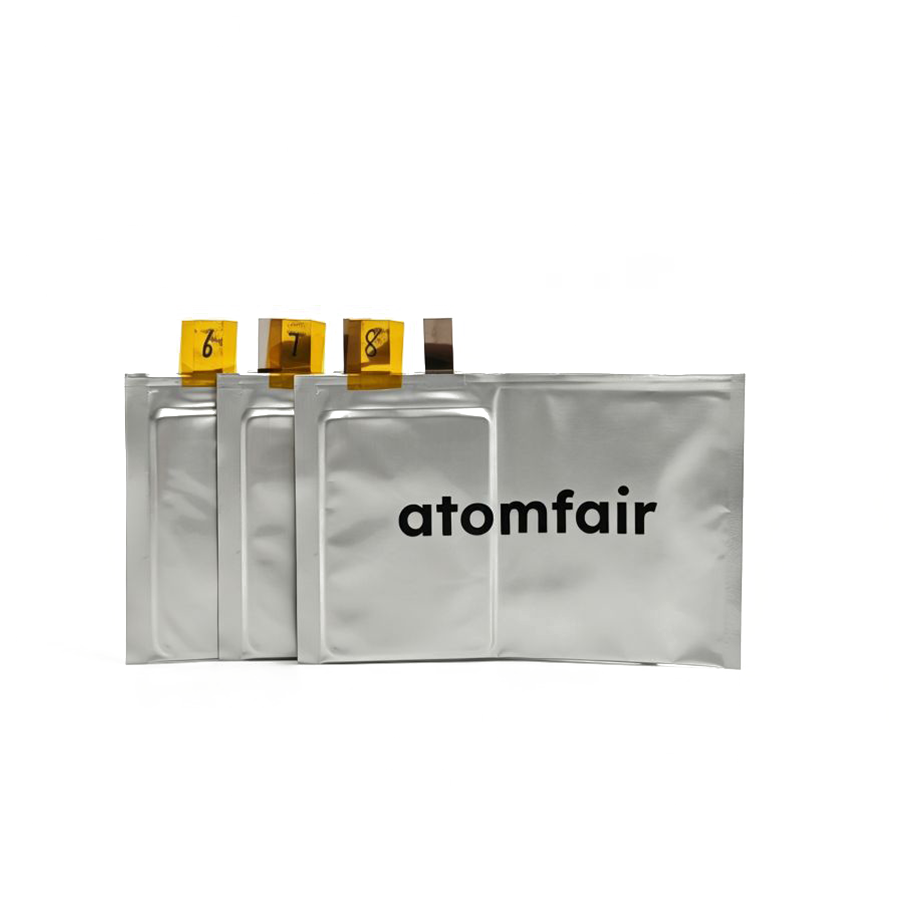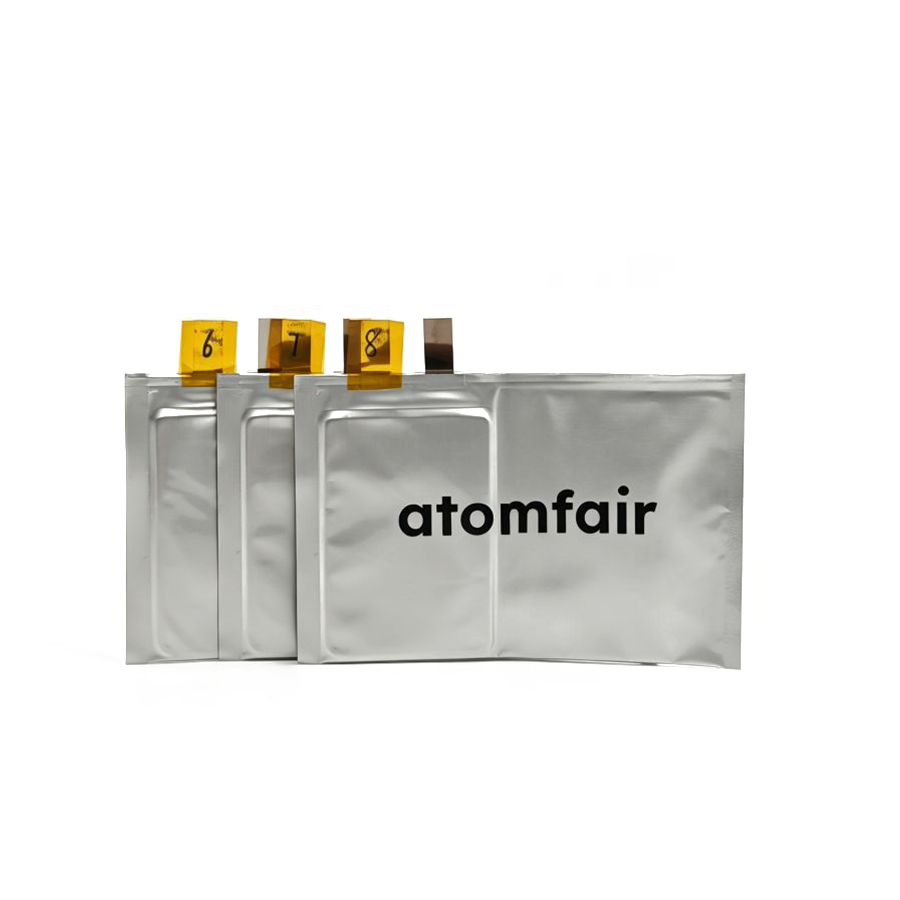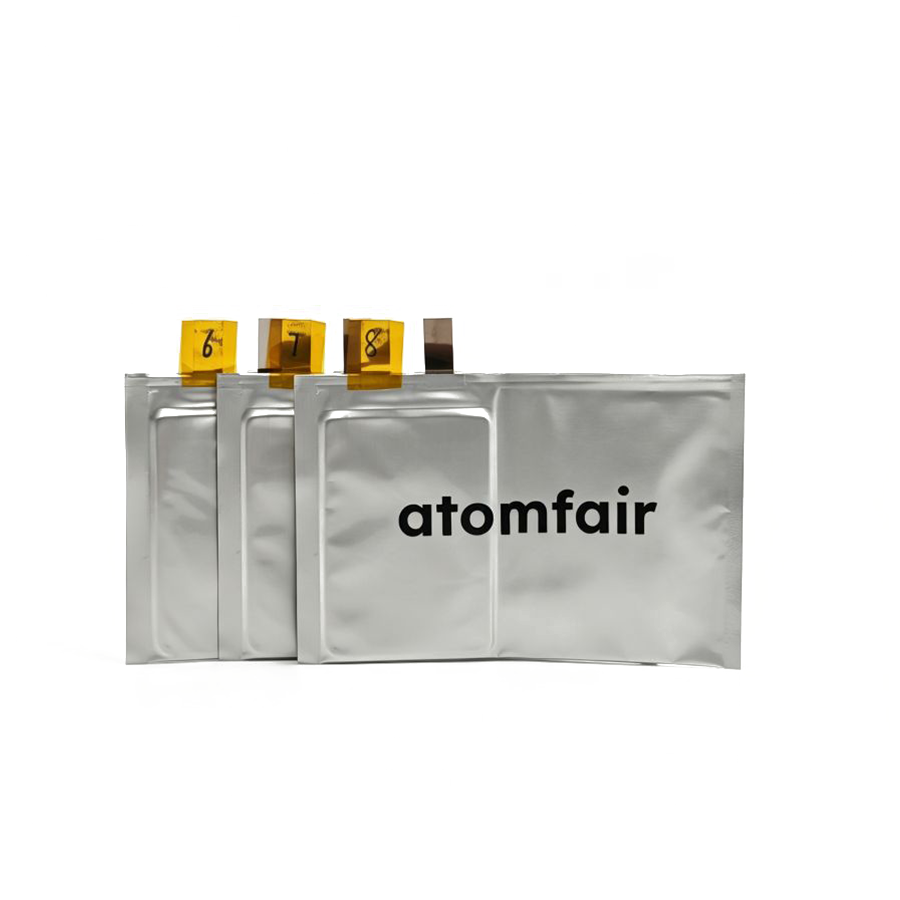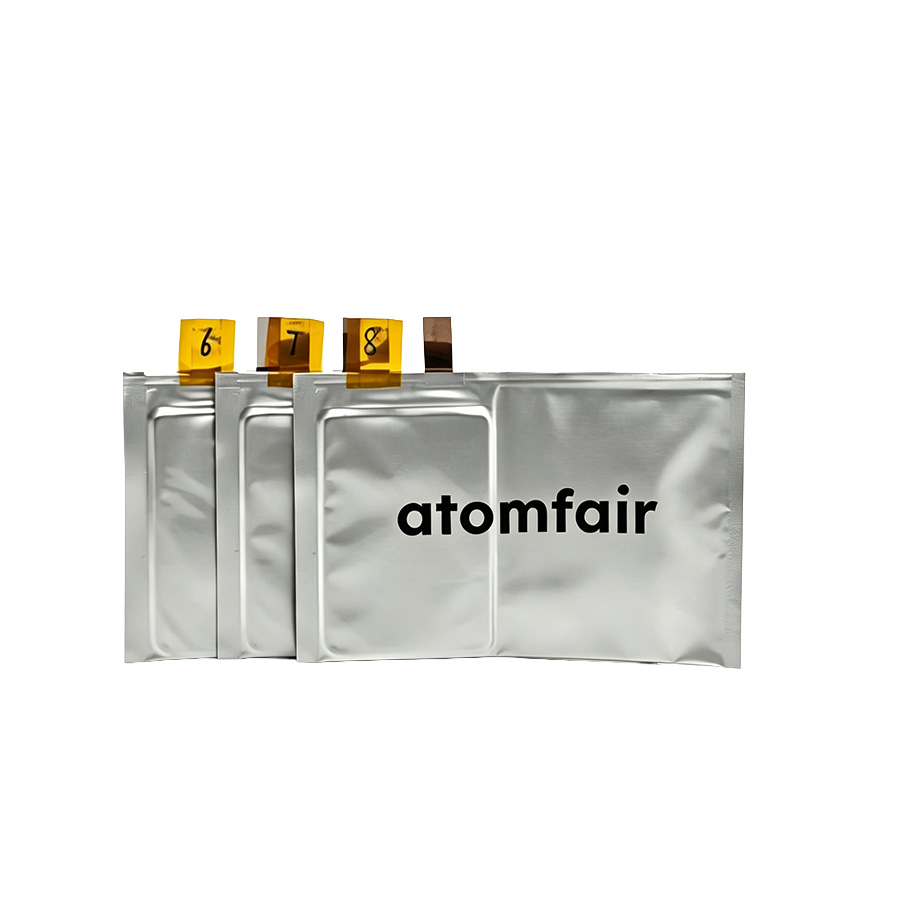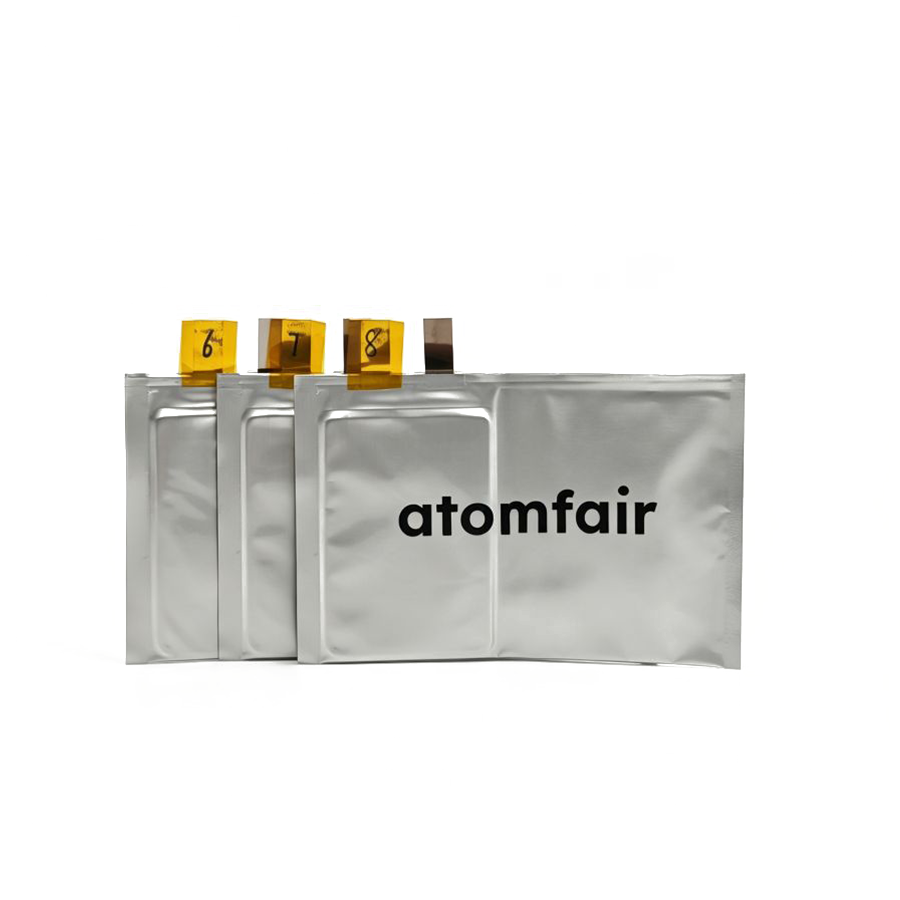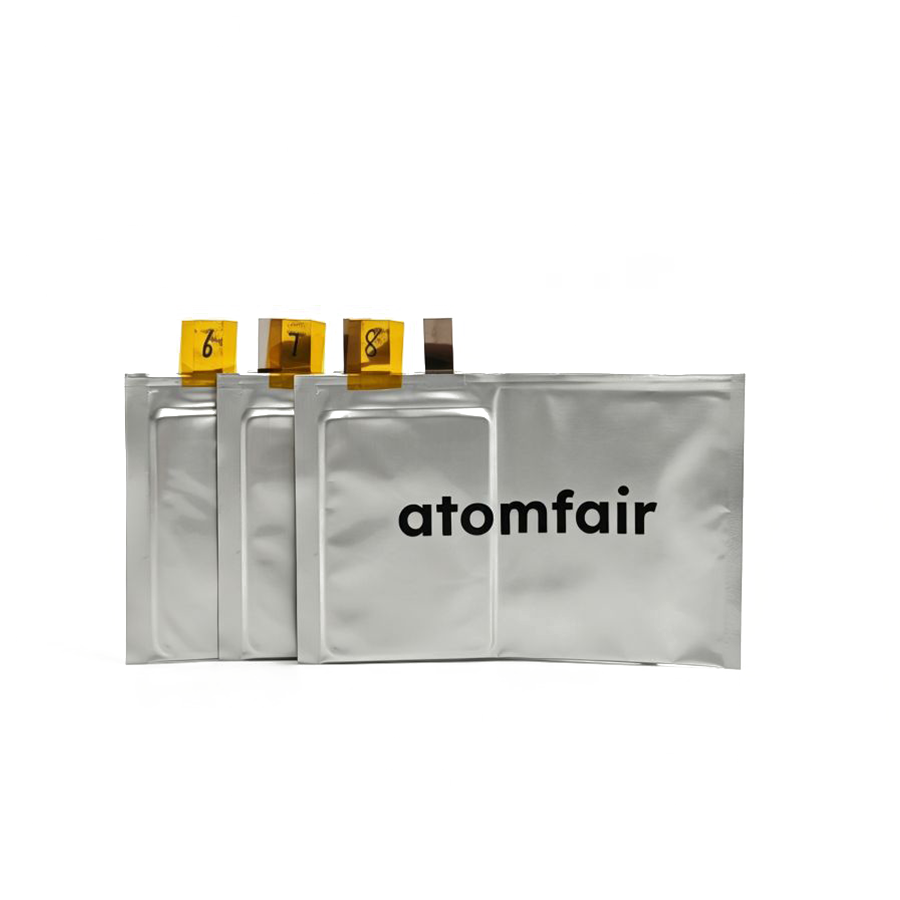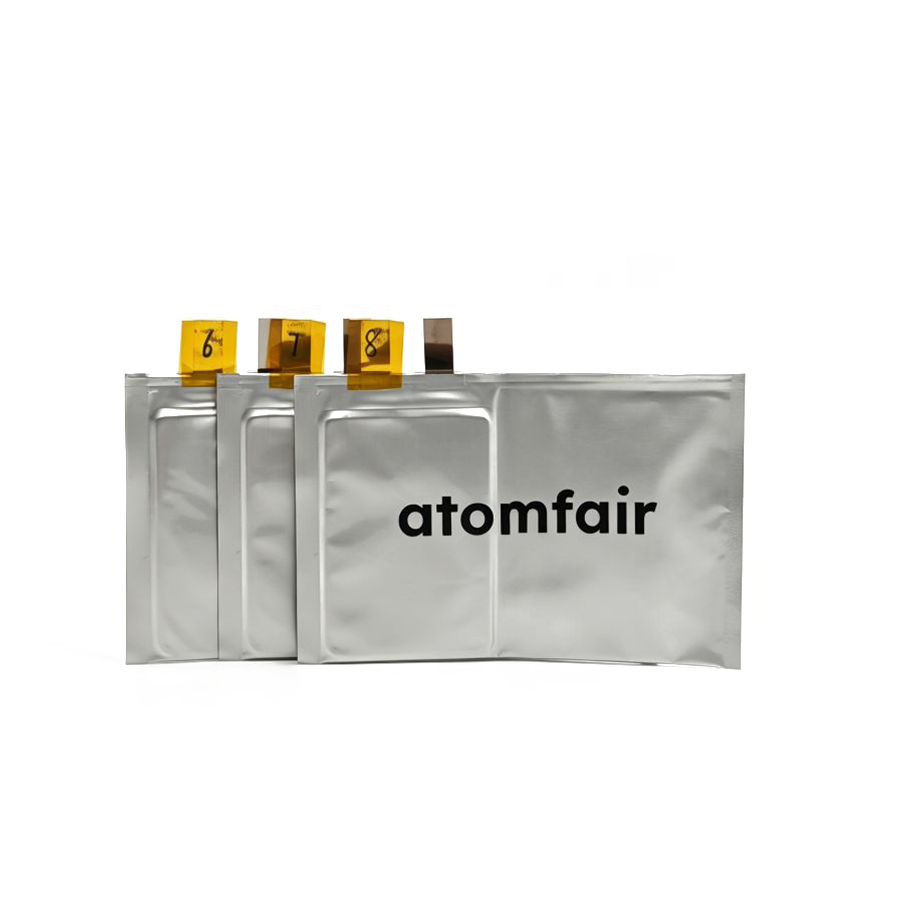
NCM811 Dry Pouch Cell (1.5Ah) – Li-Cu Composite Anode |
||||||||||||||||||||||||||||||||||||||||||||||||||||||||||||
|
||||||||||||||||||||||||||||||||||||||||||||||||||||||||||||
This document outlines storage and handling constraints for the unactivated dry pouch cell. The cell must be stored in a dry, inert atmosphere to prevent oxidation of the lithium-containing anode and avoid short circuits.
- Atmosphere Control: Store the cell in an argon-filled glovebox with controlled oxygen and moisture levels to mitigate anode degradation.
- Temperature Management: Maintain the cell at temperatures below 25°C to minimize self-discharge and preserve capacity.
- Electrical Safety: Keep the cell terminals insulated to prevent accidental short circuits during handling and storage.
- Moisture Sensitivity: Do not expose the cell to humid air or liquid water as this may cause lithium metal corrosion and gas generation.
- Personal Protective Equipment: Handle the cell with non-conductive tools and wear appropriate personal protective equipment to reduce electrical shock risk.
This procedure describes the activation of the dry pouch cell with electrolyte in an inert atmosphere. The steps ensure safe handling and proper wetting before electrochemical testing.
Required Equipment: Argon-filled glovebox, Electrolyte dispensing syringe, Vacuum sealer, Insulated tweezers
- Transfer to glovebox
Transfer the dry pouch cell into an argon-filled glovebox with controlled atmosphere. - Inspect cell integrity
Inspect the cell for any visible damage or pinholes in the pouch seal. - Inject electrolyte
Inject the target electrolyte into the cell through the designated filling port using a syringe. - Seal filling port
Seal the filling port under vacuum to ensure hermetic closure. - Wet electrodes
Allow the cell to rest for at least one hour to promote electrolyte wetting of the electrodes. - Connect to cycler
Connect the cell to a battery cycler and perform formation cycles as per experimental protocol. - Monitor for hazards
Monitor the cell for any signs of swelling, leakage, or abnormal voltage during formation.
How does the 20+6+20 μm Li-Cu composite anode in this atom fair dry pouch cell trade off energy density against structural stability compared to pure lithium foil?
The Li-Cu composite anode replaces pure lithium foil with a 20 μm lithium layer on each side of a 6 μm copper core, enhancing mechanical rigidity and preventing electrode deformation during cycling. This structural stability eliminates performance variability in high-voltage electrolyte screening, but the inert copper layer reduces the anode-level energy density relative to an equivalent thickness of pure lithium foil. The 20+6+20 μm architecture provides a balanced trade-off, making it suitable for benchmarking studies where reproducibility is prioritized over maximum specific energy.
What electrolyte compatibility constraints must be considered when using this dry pouch cell with an NCM811 cathode and a 3.0–4.3 V operating window?
This cell is shipped without electrolyte, requiring the researcher to select a liquid electrolyte stable against the ultra-high nickel NCM811 cathode at potentials up to 4.3 V. Electrolytes with conventional carbonate solvents may undergo oxidative decomposition; fluorinated solvents, additives like FEC or VC, or dual-salt systems are typically necessary to form a stable cathode-electrolyte interphase. The 12 μm PE + 2 μm Al2O3 ceramic separator provides mechanical and thermal protection but does not chemically stabilize the interface, making electrolyte formulation critical for achieving the 220 mAh/g cathode capacity and 1.5 Ah cell target.
What storage and handling precautions are required for the atom fair dry pouch cell before electrolyte activation?
The cell contains a highly reactive Li-Cu composite anode and must be stored in an inert, moisture-free environment—ideally an argon-filled glovebox with O2 and H2O levels below 0.1 ppm—to prevent lithium oxidation or contamination. Prior to activation, electrolyte injection must be performed under the same inert conditions to avoid moisture ingress. Once activated, the cell operates within a 3.0–4.3 V window and should be handled with lithium-ion safety protocols, including temperature monitoring and charge control, due to the high nickel content of the NCM811 cathode.
This dry pouch cell integrates an ultra-high nickel NCM811 cathode with a Li-Cu composite anode for structurally stable benchmarking of high-voltage electrolyte and interface systems. Its dry delivery requires controlled electrolyte addition, making it ideal for laboratories with glovebox capabilities.
Positive
- Composite Anode Structural Integrity: Substrate-supported Li-Cu composite anode (20+6+20 µm) mitigates mechanical deformation and dendrite penetration risks compared to pure lithium foils during cycling.
- High-Fidelity Screening Platform: Dry pouch architecture with ultra-high nickel NCM811 cathode (97.4% active mass) and standardized geometry enables reproducible benchmarking of electrolytes, additives, and interfaces.
Trade-offs
- Requires Electrolyte Infusion: Cell is delivered dry without liquid electrolyte; users must perform electrolyte filling, wetting, and activation under inert atmosphere, adding process steps.
- Limited Capacity for High-Throughput: Nominal 1.5 Ah capacity after activation restricts test durations and may require larger format cells for statistically significant cycling studies.
Every advanced material, component, equipment, and instrument in our catalog is backed by rigorous testing. We maintain strict internal quality management frameworks and align with CE conformity metrics to deliver transparent, reproducible performance data via our public open-science repository.
To request raw batch performance data, submit formal vendor registration paperwork, or execute a fast-turnaround R&D manufacturing loop, contact us at inquiry@atomfair.com.
Item is dispatched under the Atomfair Shipping & Delivery Framework (Free worldwide shipping on orders over $59 USD excl. heavy equipment). Return is governed by the Atomfair Return & Refund Policy (7-day technical return window).