|
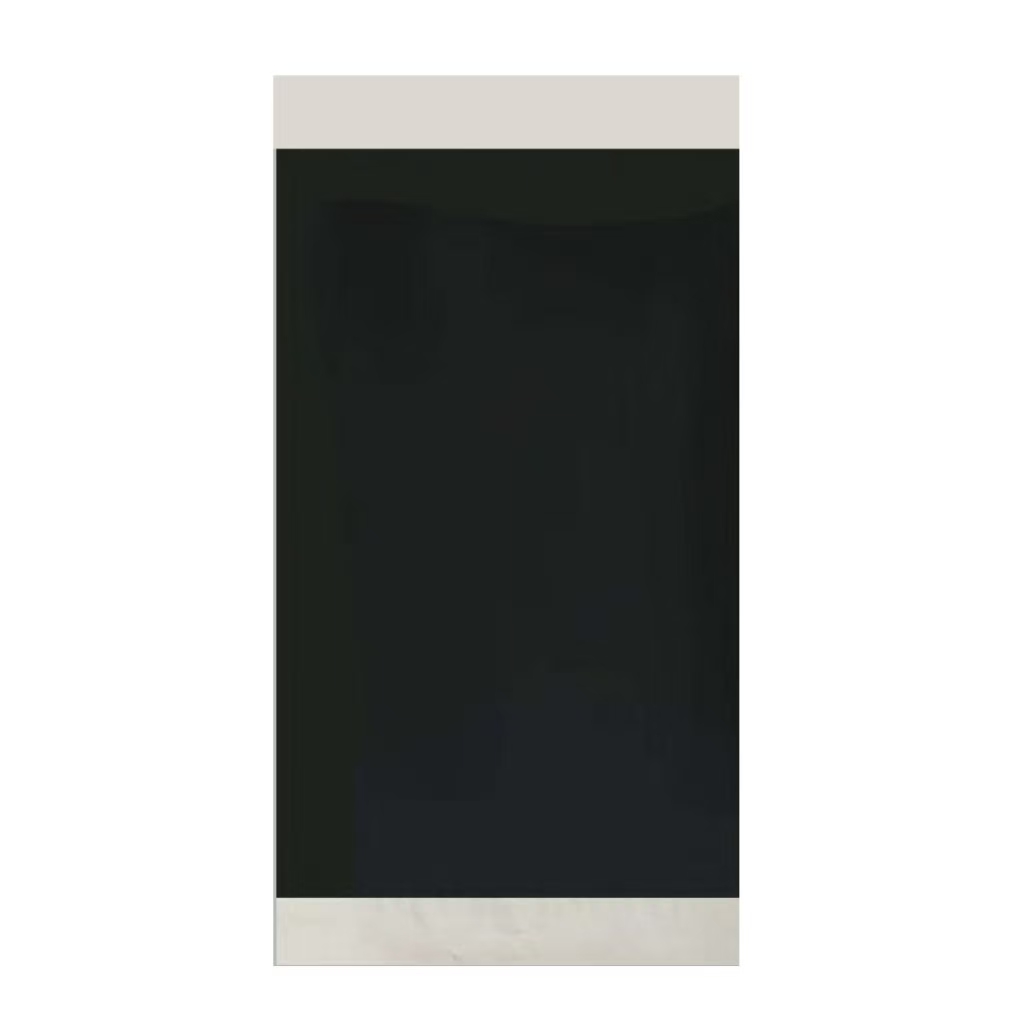
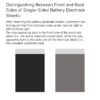
NMC811 Nickel Manganese Cobalt Oxide Single-Sided Cathode, 40 mg/cm² per side
Single-Sided Cathode Sheet
|
||||||||||||||||||||||||||||||||||||||||||||||
|
The electrode sheet requires vacuum-sealed storage to prevent atmospheric degradation. Vacuum baking at 100°C for 12 hours is mandatory before cell assembly to secure the active matrix.
- Storage: Store the electrode sheet vacuum-sealed to protect it from atmospheric moisture and oxygen.
- Handling: Handle the dry-processed sheet carefully to avoid mechanical damage.
- Processing: Bake the sheet under vacuum at 100°C for 12 hours prior to formal cell assembly.
- Degradation: Exposure to atmospheric factors can compromise the active material integrity.
Prepare the electrode sheet for cell assembly by vacuum baking to remove residual moisture and secure the active matrix. This procedure ensures optimal electrochemical performance.
Required Equipment: Vacuum oven
- Handle with care
Handle the electrode sheet carefully to avoid mechanical damage. - Remove from packaging
Remove the electrode sheet from its vacuum-sealed packaging. - Place in oven
Place the electrode sheet into a vacuum oven. - Set temperature and vacuum
Set the oven to 100°C and activate the vacuum. - Bake for 12 hours
Bake the sheet for 12 hours to secure the active matrix.
What is the significance of the 96% active material ratio and 40 mg/cm² coating density in the NCM811-S04 electrode sheet for battery R&D?
The 96% active material ratio ensures high analytical data accuracy by minimizing inactive binder and conductive additive interference, while the 40 mg/cm² coating density, applied via a dry process, delivers precise film uniformity and robust mechanical cohesion. Together, these specifications enable reliable baseline testing, variable elimination, and electrochemical performance analysis in lithium-ion battery research.
What are the critical preparation requirements for integrating the NCM811-S04 electrode sheet into a cell assembly?
The dry-processed NCM811-S04 sheets require vacuum baking at 100°C for 12 hours prior to cell assembly to fully secure the active matrices against atmospheric moisture and oxygen. The carbon-coated aluminum foil current collector (4.4 mg/cm² areal density, 12 + 0.5 + 0.5 μm thickness) minimizes electrical resistance and polarization risks, but careful handling is essential to maintain batch consistency and research-grade integrity.
What are the storage and handling requirements for the NCM811-S04 electrode sheets to prevent degradation?
The sheets are vacuum-sealed in packs of 5 to preserve laboratory batch constants. After unsealing, they must be stored in a dry, inert atmosphere and baked at 100°C under vacuum for 12 hours before use to remove any adsorbed moisture. The dry-process coating eliminates chemical residues but makes the sheets sensitive to ambient conditions, requiring strict adherence to standard electrode preparation protocols.
The Atomfair NCM811-S04 electrode sheet offers a 96% active material loading with a dry-processed 40 mg/cm² coating on carbon-coated aluminum foil, providing high capacity (200 mAh/g) and reduced polarization for reliable Li-ion battery R&D. However, the single-sided design and mandatory vacuum baking at 100°C for 12 hours before cell assembly impose additional processing steps and limit areal capacity per electrode volume.
Positive
- High active material loading: 96% active material ratio maximizes analytical data accuracy and ensures reliable electrochemical performance testing.
- Dry process coating uniformity: Advanced dry process yields precise 40 mg/cm² film thickness without chemical residues, enhancing mechanical cohesion and batch consistency.
Trade-offs
- Requires pre-assembly vacuum baking: Sheets must be vacuum-baked at 100°C for 12 hours before cell assembly to remove moisture and stabilize active material, adding processing time and infrastructure requirements.
- Single-sided coating limits capacity density: Single-sided configuration reduces areal capacity per electrode volume compared to double-sided coatings, potentially increasing cell stack size for target capacity.
Every advanced material, component, equipment, and instrument in our catalog is backed by rigorous testing. We maintain strict internal quality management frameworks and align with CE conformity metrics to deliver transparent, reproducible performance data via our public open-science repository.
To request raw batch performance data, submit formal vendor registration paperwork, or execute a fast-turnaround R&D manufacturing loop, contact us at inquiry@atomfair.com.
Item is dispatched under the Atomfair Shipping & Delivery Framework (Free worldwide shipping on orders over $59 USD excl. heavy equipment). Return is governed by the Atomfair Return & Refund Policy (7-day technical return window).