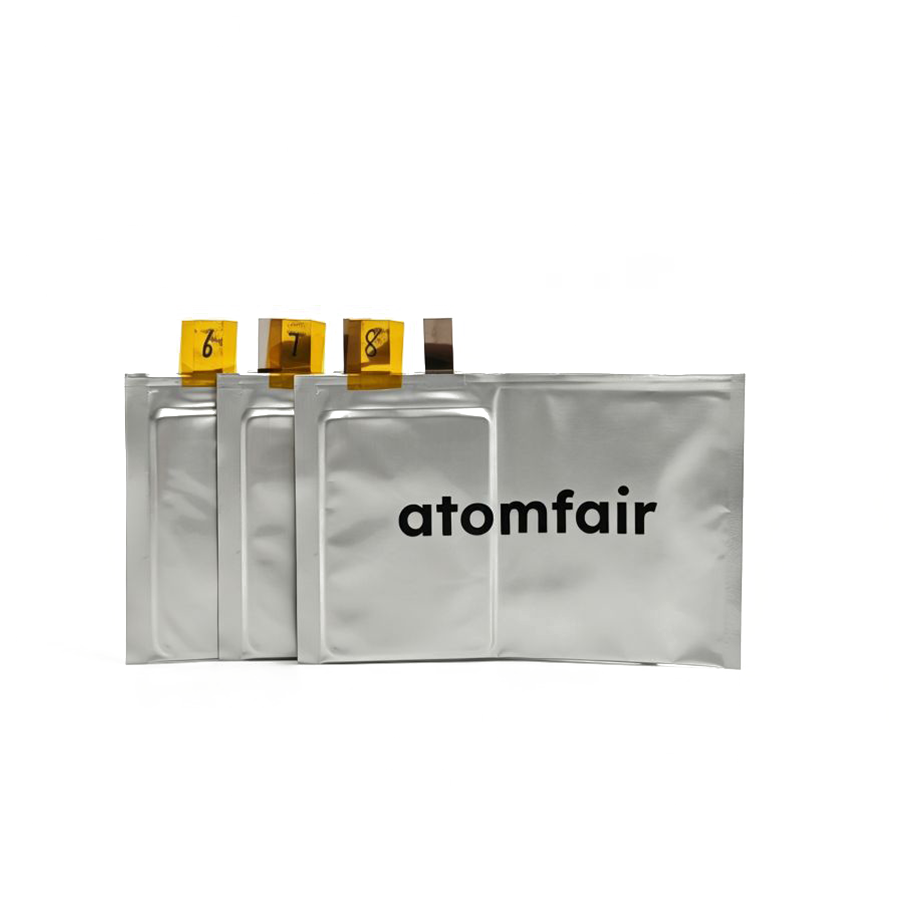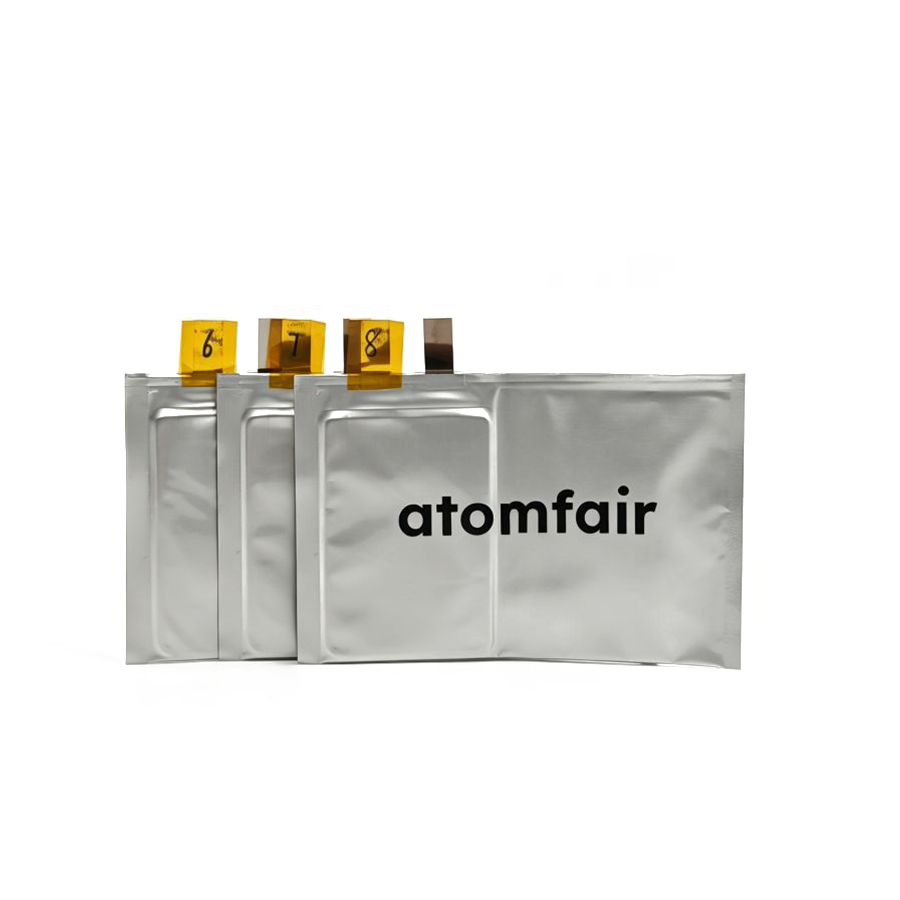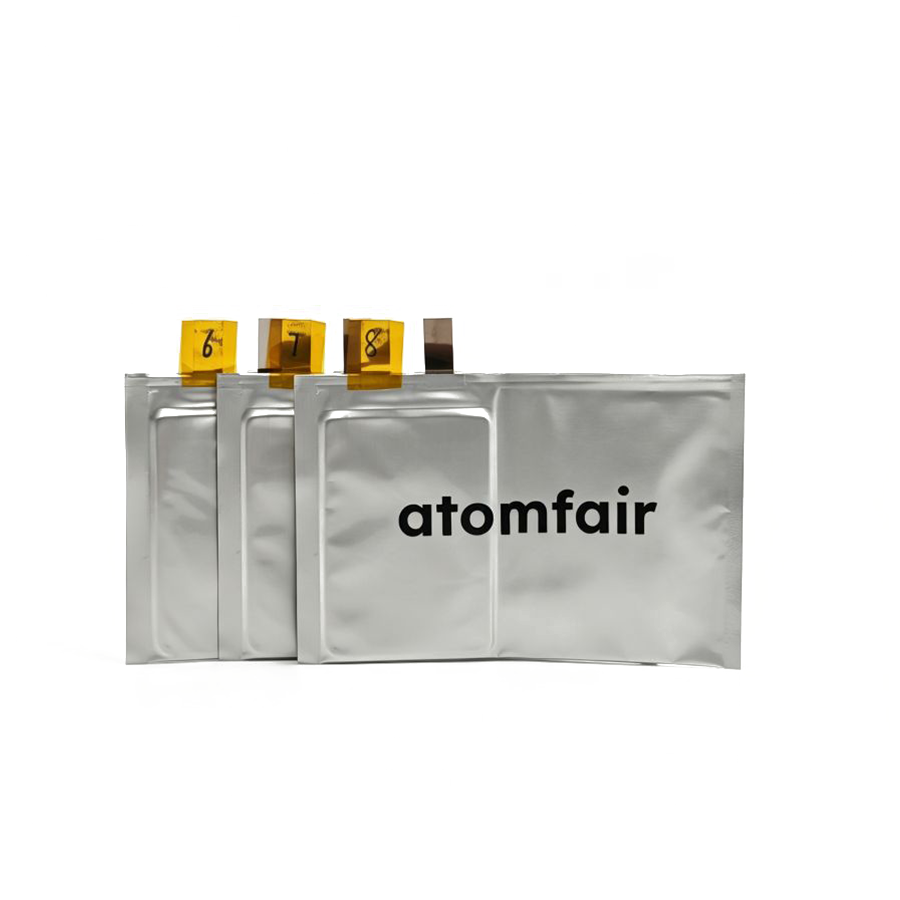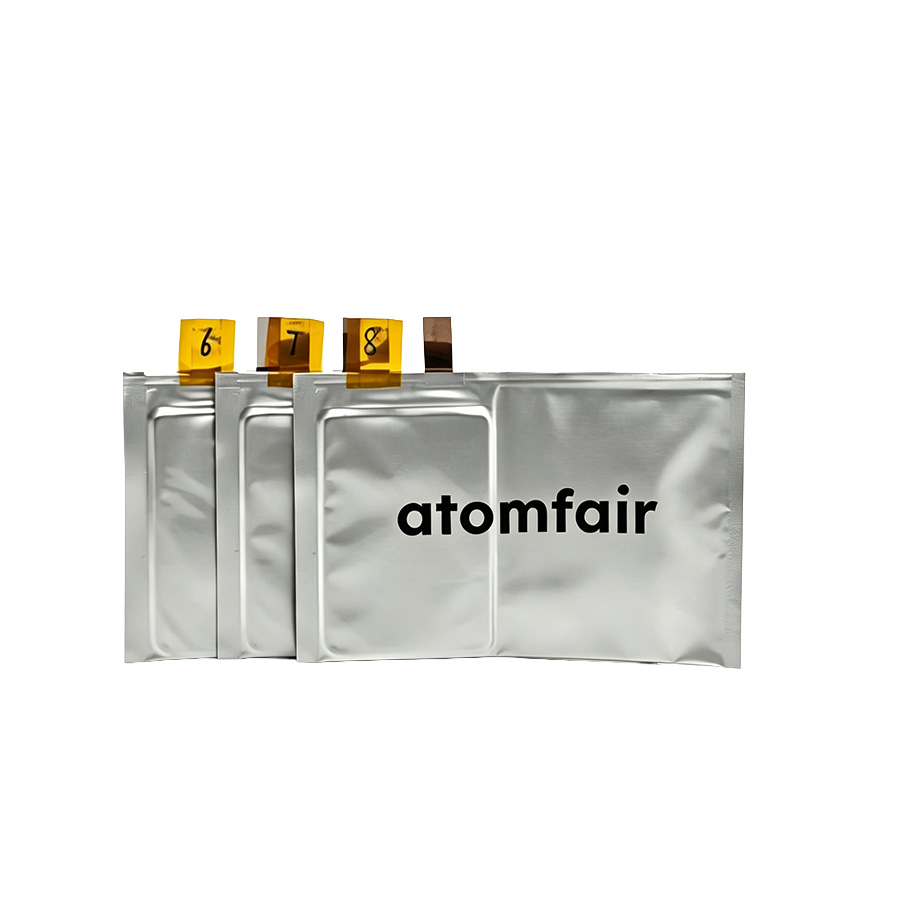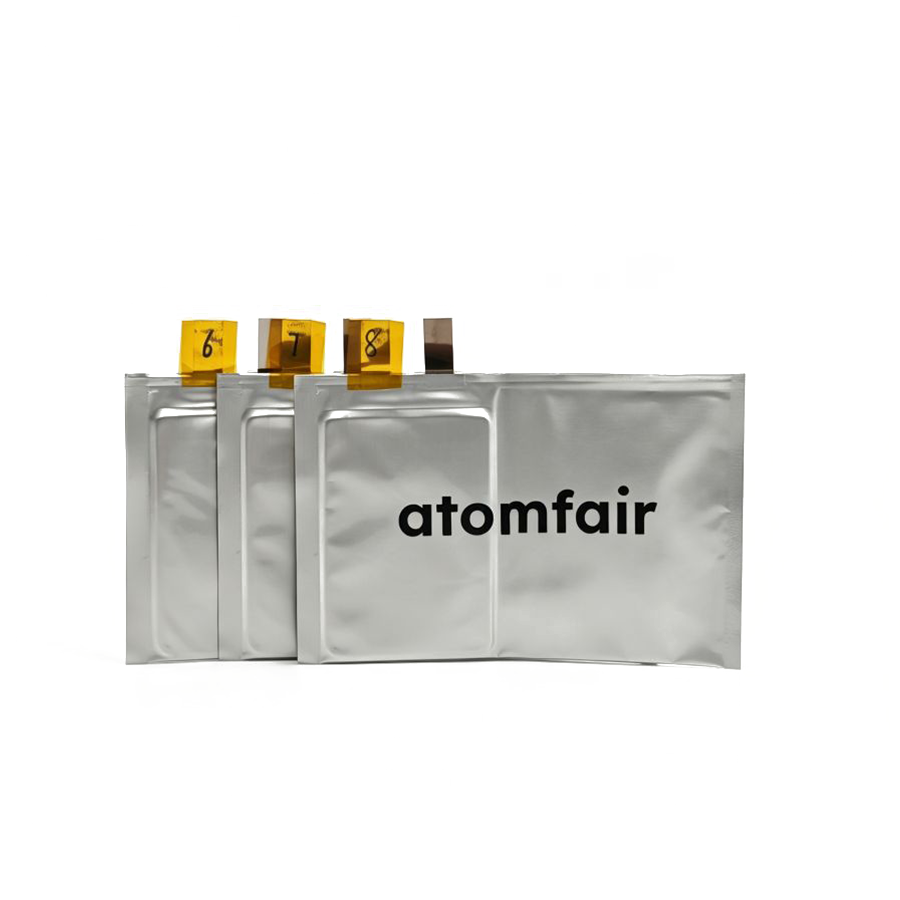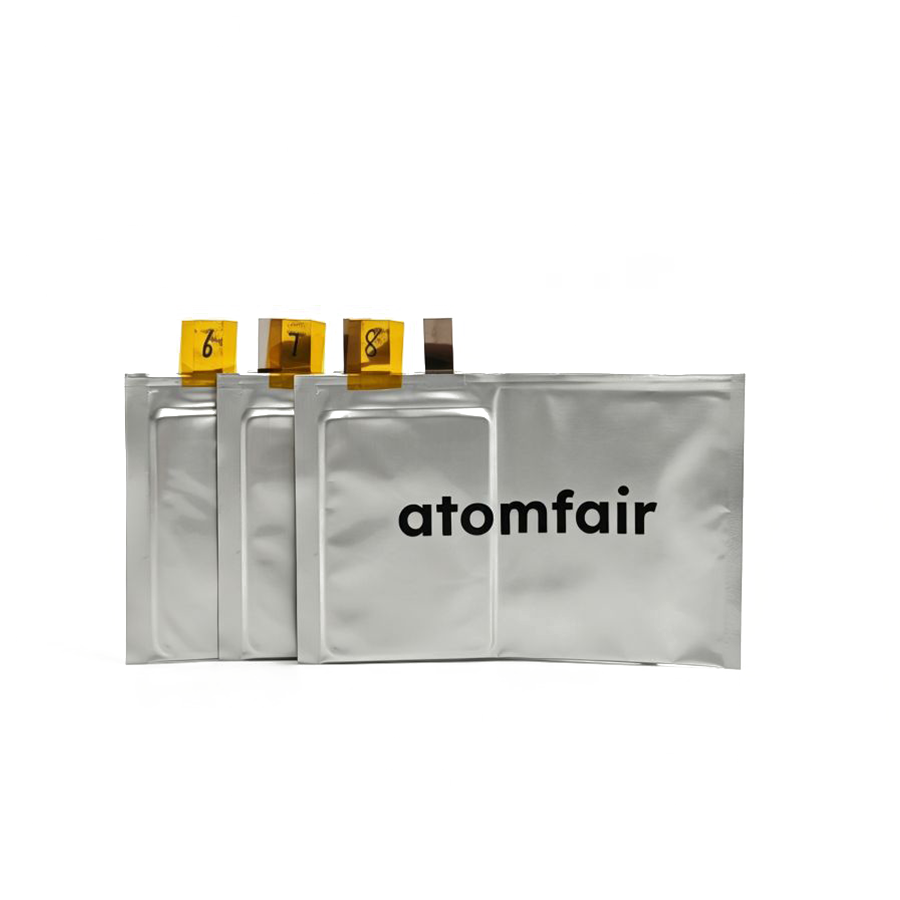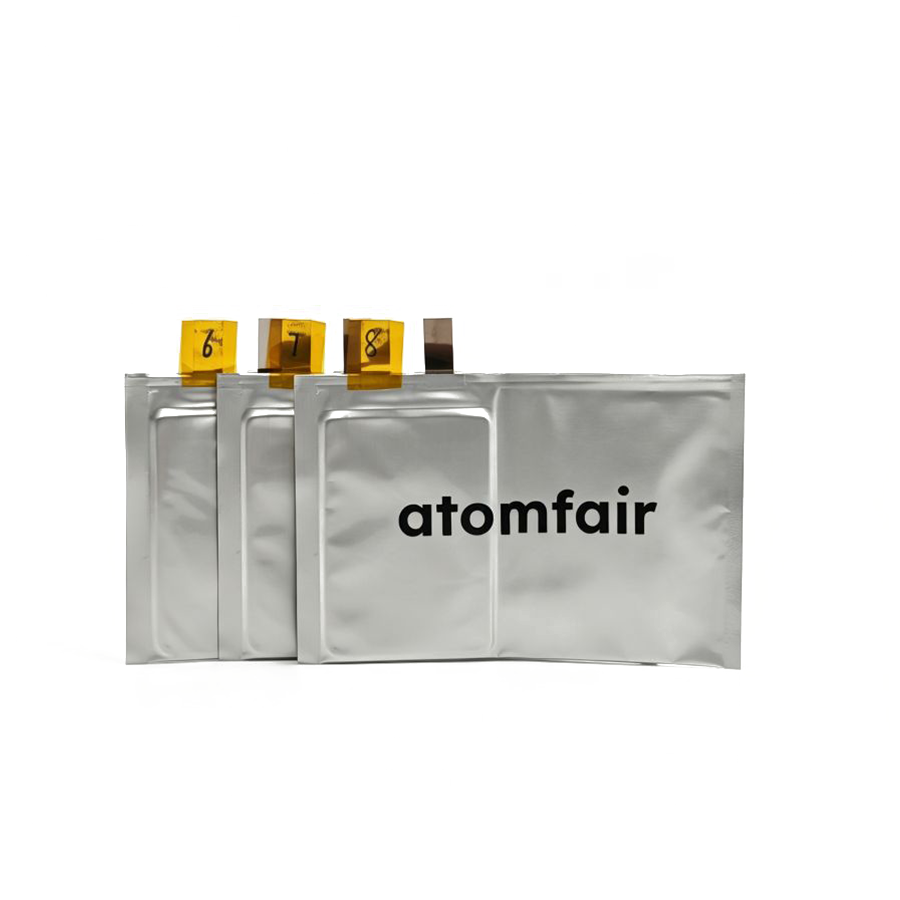
NCM811 1.3 Ah Dry Pouch Cell Al/C Carbon FoilRESEARCH GRADE CELL ARCHITECTURE
|
||||||||||||||||||||||||||||||||||||||||||||||||||||||||||||
|
||||||||||||||||||||||||||||||||||||||||||||||||||||||||||||
This dry pouch cell requires storage in a dry, inert atmosphere to prevent moisture-induced degradation of the NCM cathode and carbon-coated anode. Electrical short circuits must be avoided by maintaining insulation between the tabs and storing cells in non-conductive packaging.
- Moisture Sensitivity: Exposure to ambient moisture can cause capacity fade and structural cathode degradation; store in an argon-filled glovebox with controlled dew point.
- Electrical Safety: The cell terminals present a short-circuit hazard; keep tabs isolated and store in original conductive-free packaging.
- Temperature Stability: Store at controlled room temperature (20–25 °C) to maintain electrode stability and prevent thermal stress.
- Mechanical Integrity: Avoid puncturing or bending the pouch as it may compromise the internal electrode stack alignment and lamination.
- Handling Precautions: Use insulating gloves and antistatic mats when handling to prevent electrostatic discharge and contamination.
This procedure describes the safe handling and activation of the dry pouch cell prior to electrochemical testing. Follow these steps in a controlled laboratory environment to ensure cell integrity and reproducible results.
Required Equipment: Argon-filled glovebox with moisture and oxygen sensors, Heat sealer with vacuum port, Syringe with needle for electrolyte injection
- Inspect
Inspect the pouch cell for any visible damage, such as creases, punctures, or misaligned tabs, and reject if defects are found. - Transfer
Transfer the dry cell into an argon-filled glovebox with oxygen and moisture levels below 0.1 ppm. - Prepare Electrolyte
Prepare the desired electrolyte formulation and degas it under vacuum to remove dissolved gases. - Inject
Inject a controlled volume of electrolyte into the dry cell through the designated port using a syringe, ensuring full wetting without air pockets. - Seal
Seal the pouch under vacuum using a heat sealer to achieve a hermetic closure. - Rest
Allow the filled cell to rest for at least 12 hours to ensure complete electrolyte penetration into the electrodes. - Form
Perform the initial formation cycle following the recommended protocol to stabilize the solid electrolyte interphase.
What performance trade-offs should researchers expect when operating this 1.3 Ah NCM811 dry pouch cell at its 4.2 V upper cutoff voltage?
The 198 mAh/g cathode specific capacity and 3.4 g/cc compaction density deliver high energy density, but cycling to 4.2 V increases risk of transition metal dissolution and oxygen release inherent to NCM811. This dry pouch cell is specifically intended as a baseline for high-voltage polarization modeling and degradation tracking, enabling researchers to isolate electrolyte and interface effects.
What electrolyte compatibility considerations apply to the Al/C carbon-coated aluminum anode in this dry pouch cell?
The Al/C carbon-coated foil anode is designed for low-impedance operation and is optimized for custom electrolyte verification studies. Researchers must ensure that electrolyte formulations are compatible with the carbon-coated aluminum surface to avoid pitting corrosion, particularly at the elevated potentials used in high-voltage cycling tests up to 4.2 V.
What handling and infrastructure requirements are necessary for activating this dry NCM811 pouch cell?
As a dry cell assembled without electrolyte, filling must be performed in an inert atmosphere glovebox to prevent moisture contamination. The 5/6 electrode stack with a 12 μm PE separator and 2 μm Al2O3 ceramic coating requires careful handling during electrolyte injection to avoid separator damage and ensure uniform wetting.
This 1.3 Ah NCM811 dry pouch cell with Al/C carbon-coated aluminum anode delivers a high-fidelity benchmarking platform for electrolyte and interface studies, but arrives without electrolyte infusion, requiring the buyer to fill and activate the cell under controlled conditions.
Positive
- Benchmark-grade electrolyte validation platform: The cell's dry construction and 97.4% active mass NCM811 cathode create a high-fidelity matrix for systematic variable elimination in custom electrolyte verification, high-voltage polarization modeling, and interface degradation tracking.
- Low-impedance Al/C carbon-coated anode: The premium conductive carbon-coated aluminum foil anode framework establishes a low-impedance interface baseline, enabling reliable separation of anode contributions during gas evolution screening and layer degradation studies.
Trade-offs
- Dry cell requires electrolyte filling: Assembled without liquid electrolyte infusion, the cell must be filled and undergo formation cycling to reach its nominal 1.3 Ah capacity, demanding appropriate electrolyte handling and cycling infrastructure.
- High-voltage window demands compatible electrolyte: The target operating range up to 4.2 V necessitates custom electrolyte formulations matched to the ultra-high nickel cathode to avoid accelerated side reactions and maintain data fidelity during high-voltage cycling tracking.
Every advanced material, component, equipment, and instrument in our catalog is backed by rigorous testing. We maintain strict internal quality management frameworks and align with CE conformity metrics to deliver transparent, reproducible performance data via our public open-science repository.
To request raw batch performance data, submit formal vendor registration paperwork, or execute a fast-turnaround R&D manufacturing loop, contact us at inquiry@atomfair.com.
Item is dispatched under the Atomfair Shipping & Delivery Framework (Free worldwide shipping on orders over $59 USD excl. heavy equipment). Return is governed by the Atomfair Return & Refund Policy (7-day technical return window).