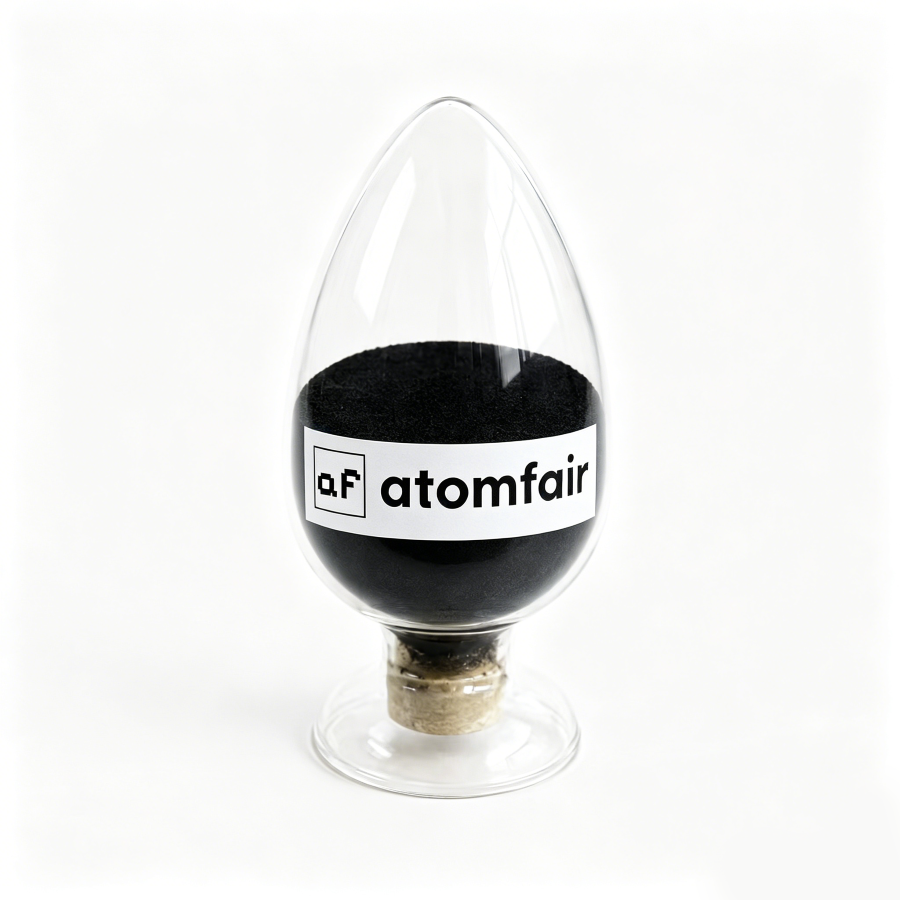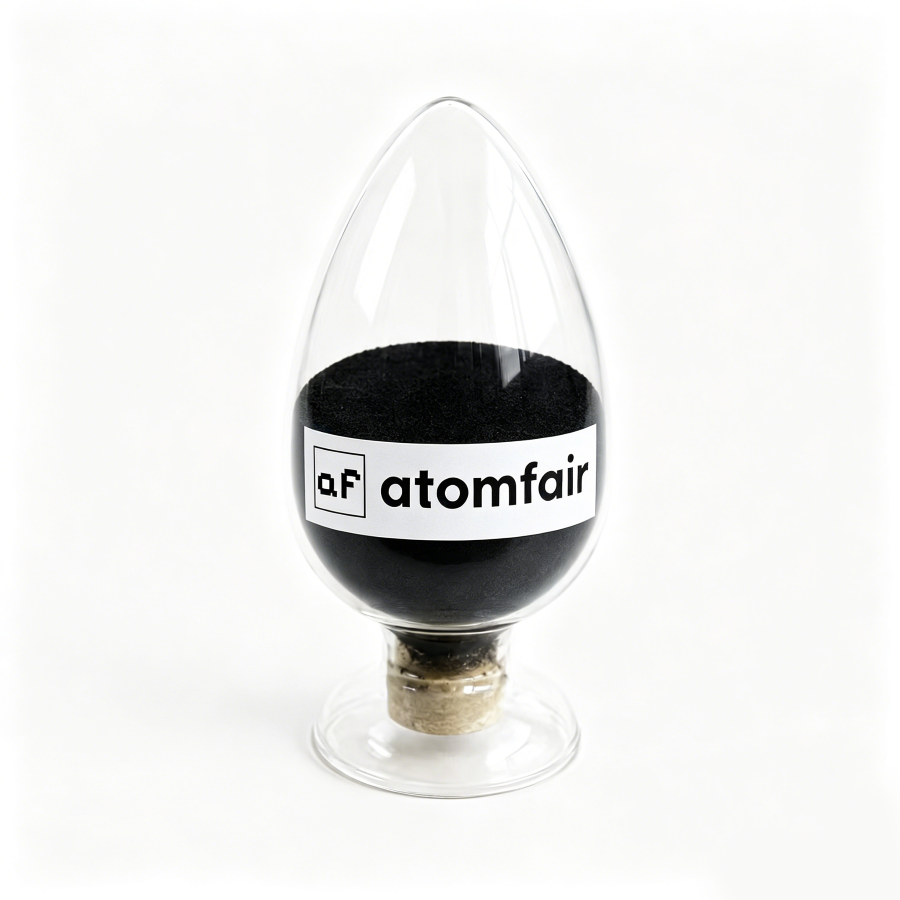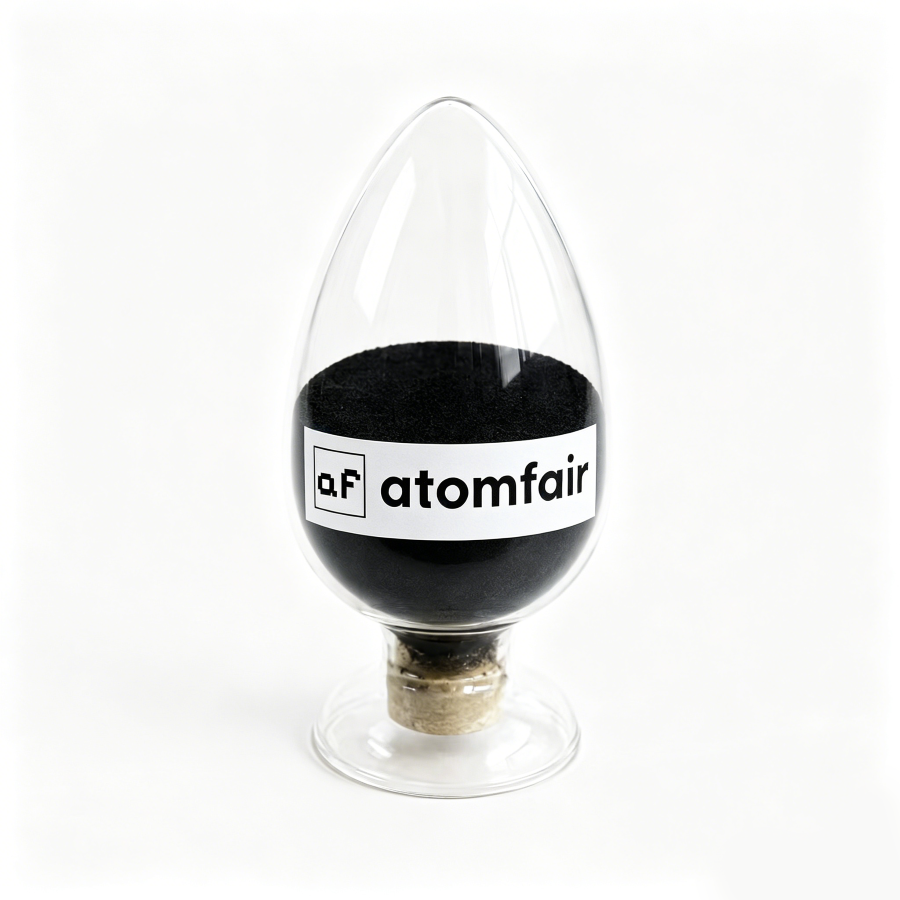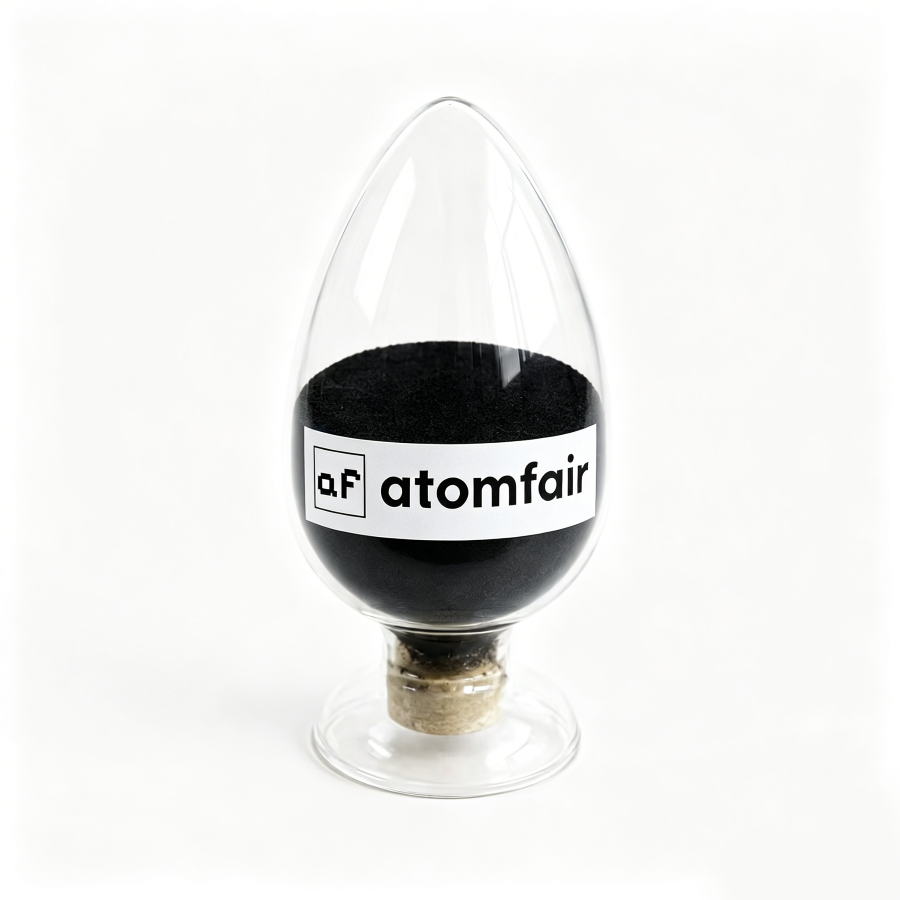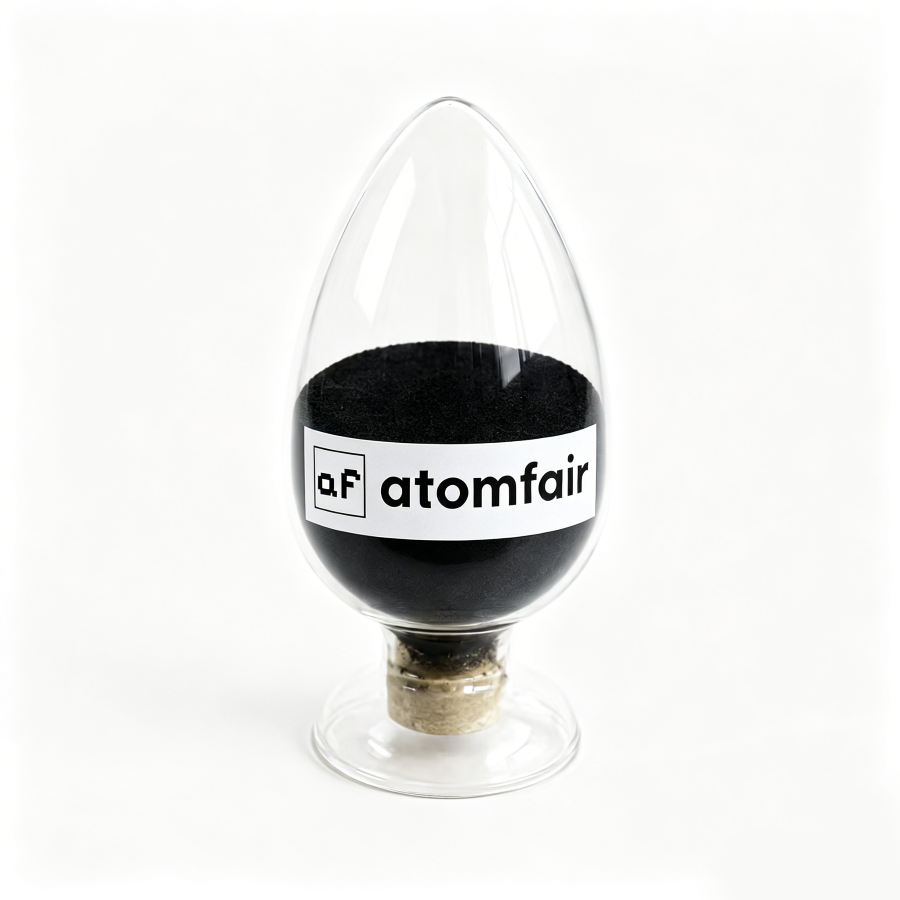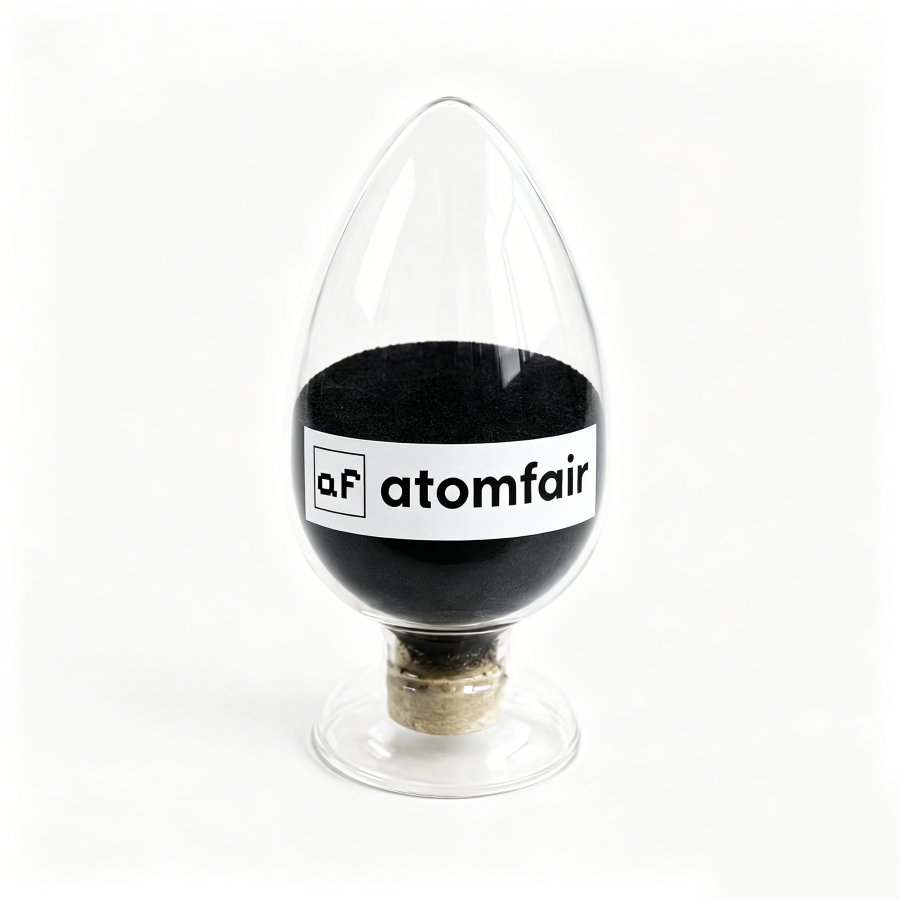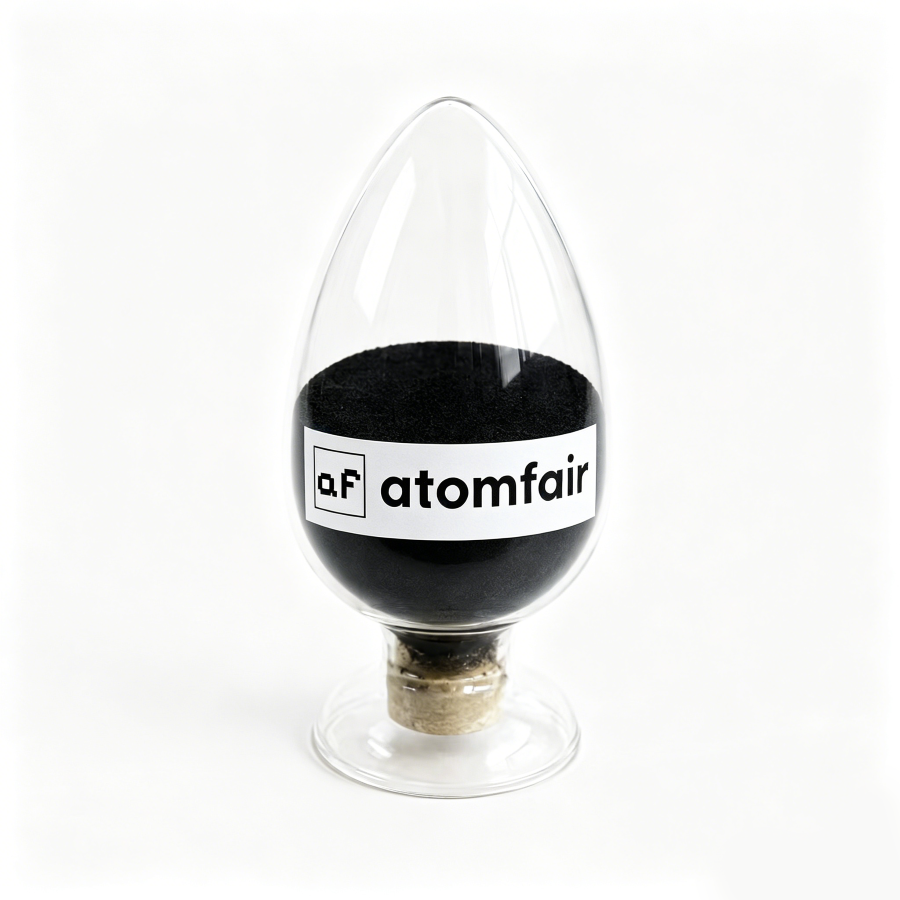
ATOMFAIR NCM (85:10:5): 216 mAh/g Cathode Active MaterialRESEARCH GRADE MATERIAL
|
|||||||||||||||||||||||||||||||||||||||||||||||||||||||||||||||||||||||
|
|||||||||||||||||||||||||||||||||||||||||||||||||||||||||||||||||||||||
This high-nickel cathode material contains residual surface alkali compounds that react with atmospheric moisture and CO2. Store in a sealed container under dry inert atmosphere (e.g., argon) to maintain structural integrity.
- Moisture Sensitivity: Surface residual LiOH and Li2CO3 can cause gelation with PVDF binders if exposed to humidity.
This powder must be handled under inert atmosphere to avoid contamination and degradation. Use appropriate PPE including gloves and dust mask.
Required Equipment: Argon-filled glovebox
- Prepare glovebox
Verify glovebox atmosphere is below 0.1 ppm H2O and O2 before introducing the material. - Transfer material
Open the sealed container only inside the glovebox and transfer the required amount to a clean vial.
How does the 0.1C specific capacity of 216.7 mAh/g trade off against rate capability at higher C-rates for this NCM85 bimodal cathode?
While the 0.1C discharge specific capacity reaches 216.7 mAh/g, capacity drops to 190.8 mAh/g at 2.0C, representing a 12% reduction. This trade-off is consistent with high-nickel NCM cathodes; the bimodal architecture with small single-crystal particles helps maintain 88% capacity retention at 2.0C versus 0.1C, as evidenced by the specified rate capacities: 216.5 mAh/g at 0.1C, 203.6 mAh/g at 0.5C, 196.4 mAh/g at 1.0C, and 190.8 mAh/g at 2.0C.
Is this NCM85 cathode material compatible with standard graphite anodes in full-cell pouch cell configurations?
Yes, it is designed for full-cell baseline validation using a graphite anode system, as explicitly stated in the anode parameters: testing counter electrode configuration is specified as a graphite anode system with pouch cell tracking. The 0.1C discharge capacity of 216.7 mAh/g was validated in a 2.8V–4.3V full-cell setup, confirming direct integration compatibility without requiring specialized anodes.
What storage and handling precautions are required due to the high surface residual alkali content in this NCM85 powder?
The material has a surface residual alkali content of 0.3639 wt% LiOH and 0.0988 wt% Li₂CO₃, with a pH of 10.91, indicating alkaline reactivity. Storage must be in airtight, moisture-free containers to prevent further LiOH/Li₂CO₃ formation and degradation. Handling should be performed in a dry room or glovebox with inert atmosphere; direct skin contact and inhalation of fines must be avoided due to caustic nature.
This ultra-high nickel NCM85 cathode material delivers 216.7 mAh/g initial discharge capacity with a bimodal particle architecture that improves powder compaction density and supports cycling stability up to 2000 loops under elevated thermal testing, though its high surface residual alkali content demands moisture-controlled processing environments.
Positive
- High initial discharge capacity: Achieves 216.7 mAh/g at 0.1C in full-cell validation (2.8V–4.3V), providing a strong energy-density baseline for advanced lithium-ion cell development.
- Bimodal structure enhances compaction: The blend of large grains with small single-crystal particles fills interstitial voids, yielding a tap density of 2.20 g/cm³ and pellet density of 3.63 g/cm³ for optimized electrode loading.
Trade-offs
- Moisture-sensitive handling required: High pH (10.91) and surface residual alkali (LiOH 0.3639% wt, Li₂CO₃ 0.0988% wt) necessitate strict dry-room or inert-atmosphere processing to prevent slurry gelation and capacity fade.
- Full-cell test infrastructure needed: The material is validated exclusively in graphite-anode full cells with pouch-cell tracking; researchers must have equivalent electrode coating, cell assembly, and cycling capabilities to replicate the specified performance.
Every advanced material, component, equipment, and instrument in our catalog is backed by rigorous testing. We maintain strict internal quality management frameworks and align with CE conformity metrics to deliver transparent, reproducible performance data via our public open-science repository.
To request raw batch performance data, submit formal vendor registration paperwork, or execute a fast-turnaround R&D manufacturing loop, contact us at inquiry@atomfair.com.
Item is dispatched under the Atomfair Shipping & Delivery Framework (Free worldwide shipping on orders over $59 USD excl. heavy equipment). Return is governed by the Atomfair Return & Refund Policy (7-day technical return window).