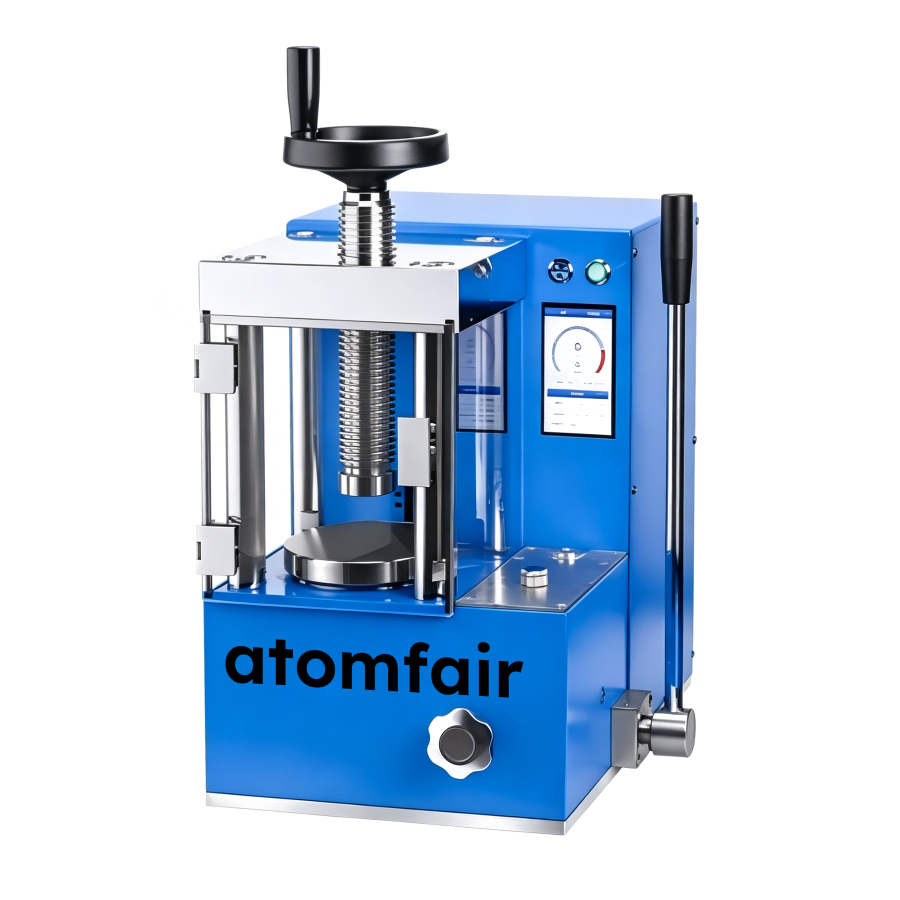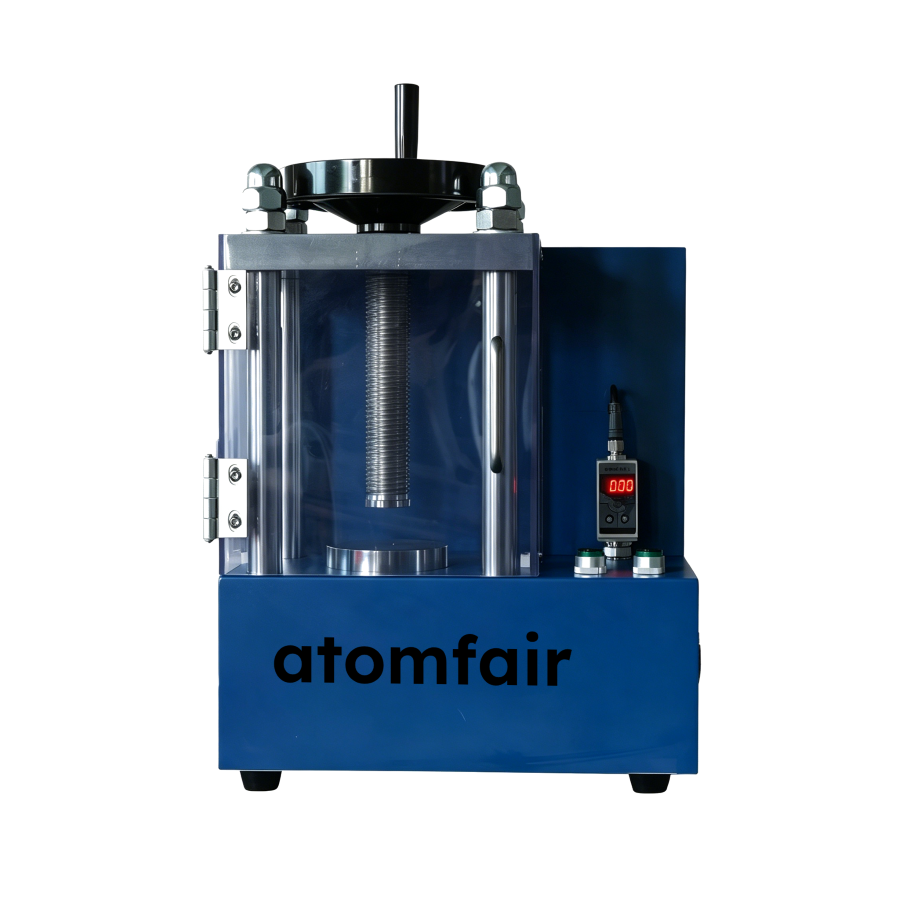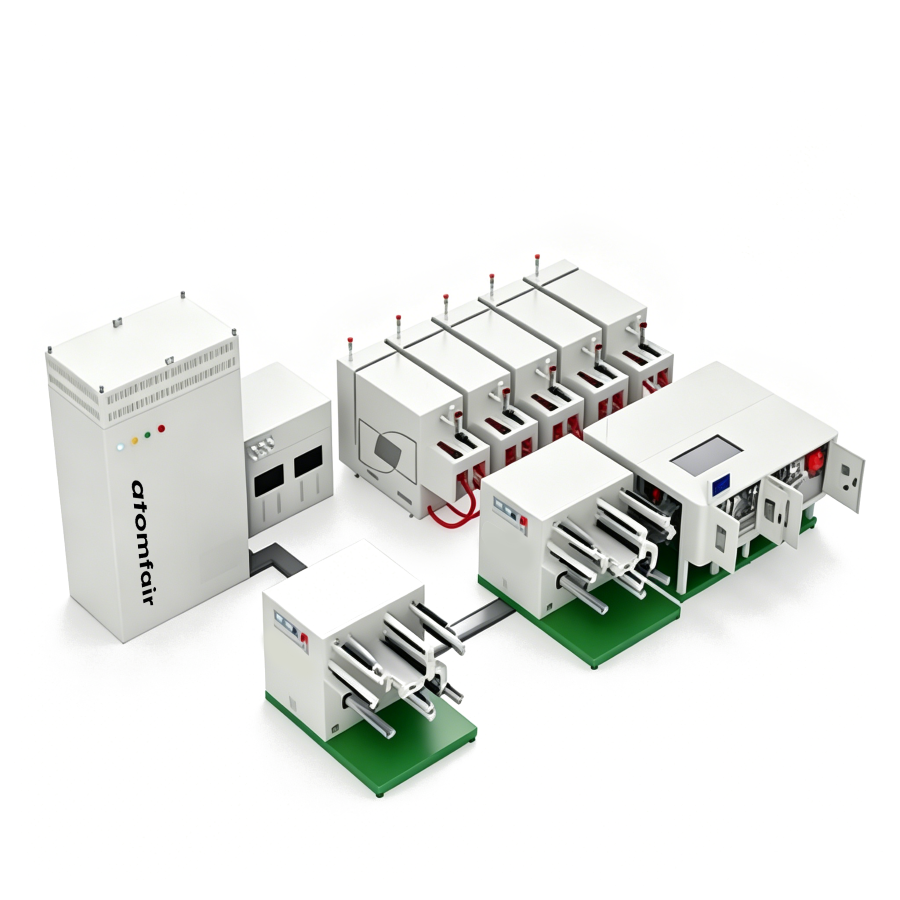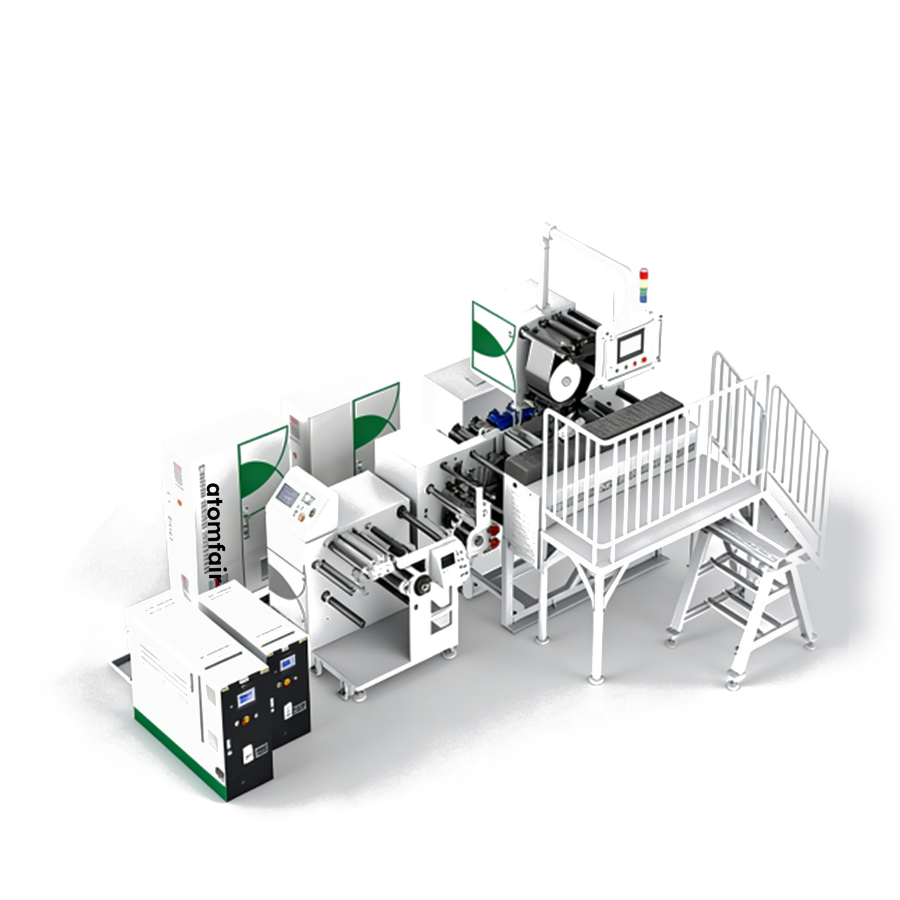
Atomfair-RM2080 Roller Mill
Product Overview
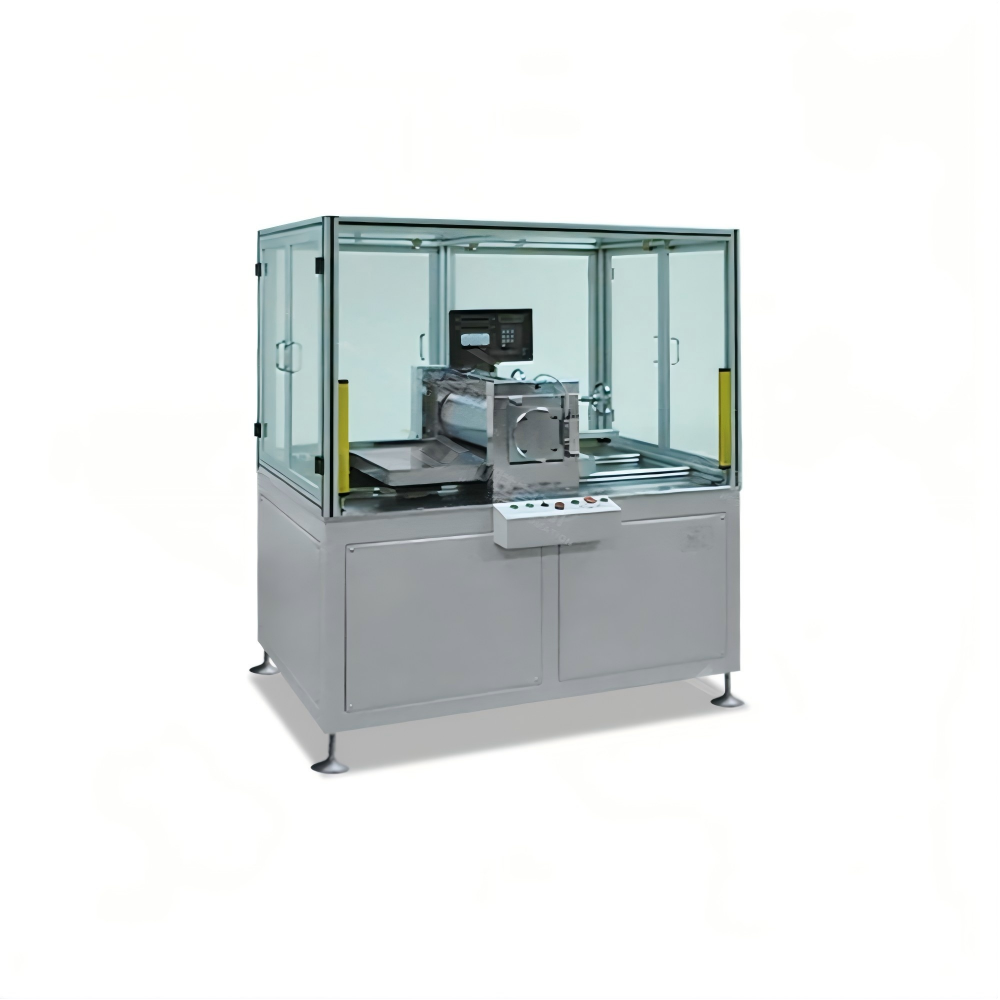
A professional dedicated equipment for flat rolling of battery electrode sheets, effectively improving the flatness of battery electrode sheets to ensure consistent product quality, with safe and reliable operation performance for industrial production and lab application.
Functional Features
- Roller surface is electroplated with hard chrome with silk finish, surface hardness ≥ HRC62
- Rolling gap is digitally displayed by linear encoder for intuitive and precise reading
- Rack and pinion meshing drive is adopted to realize stable and uniform rolling
- Adjustable sheet rolling thickness and speed, with exquisite and aesthetic appearance
- Electric rolling mode for automated operation
- Simple operation, flexible and quick to use
Technical Parameters
| Parameter Item | Specification |
|---|---|
| Roller Diameter | Φ200mm, Width 300±10mm |
| Rolling Plate | Length 700±10mm, Width 300±10mm, Thickness 55±5mm |
| Roller Surface Hardness | HRC55-62 |
| Linear Speed | 1.6±0.2cm/s (Adjustable on request) |
| Adjustable Gap Range | 0.5-2mm, Adjustment Precision 0.02mm |
| Operation Mode | Electric |
| Voltage | Three-phase four-wire AC380V |
| Power | 2.2KW |
| Overall Dimension | L1400mm × W900mm × H1700mm |
| Equipment Weight | 1T |
If you’re interested, have any questions, or have specific customization requirements, please feel free to contact us at inquiry@atomfair.com.
This equipment requires a three-phase four-wire AC380V power supply and a stable, level floor rated for its 1T weight. The rolling gap must be set between 0.5mm and 2mm with 0.02mm precision to avoid roller damage.
- Roller Surface Protection: The hard chrome-plated roller surface (HRC62) must be kept clean and free of debris to prevent scoring or surface damage.
- Gap Adjustment Constraint: The rolling gap must never be set below 0.5mm or above 2mm to prevent mechanical jamming or roller damage.
- Electrical Safety: The equipment must be connected to a properly grounded three-phase four-wire AC380V supply with appropriate circuit protection.
- Load and Stability: The mill must be installed on a level, vibration-dampening surface capable of supporting its 1T weight to ensure rolling accuracy.
This procedure covers the safe setup, gap adjustment, and electric rolling operation for battery electrode sheets. Always verify power and gap settings before starting the rolling process.
Required Equipment: Feeler gauge or calibrated gap tool, Personal protective equipment (safety glasses, gloves)
- Inspect Equipment
Inspect the roller surfaces and rolling plate for any debris, damage, or residue before each use. - Connect Power
Connect the mill to a properly grounded three-phase four-wire AC380V power outlet and confirm the emergency stop is released. - Set Rolling Gap
Set the rolling gap to the desired thickness (0.5-2mm) using the digital display and adjustment mechanism, verifying with a feeler gauge. - Load Electrode Sheet
Load the battery electrode sheet onto the rolling plate, aligning it squarely with the roller entry. - Start Rolling
Start the electric rolling mode and feed the sheet through at the set linear speed (1.6±0.2cm/s). - Monitor Process
Monitor the rolling process for uniform thickness and adjust the gap incrementally if needed, allowing the sheet to pass completely. - Power Down and Clean
Power down the mill, remove the rolled sheet, and clean the rollers and work area to maintain surface quality.
What is the minimum rolling gap adjustment precision and how does it affect electrode thickness uniformity?
The Atomfair-RM2080 Roller Mill offers an adjustable gap range of 0.5-2mm with an adjustment precision of 0.02mm, enabling precise control over electrode thickness. The rolling gap is digitally displayed via a linear encoder, ensuring intuitive and accurate reading for consistent product quality. This precision is critical for achieving uniform electrode flatness, which directly impacts battery performance and consistency.
What are the electrical and infrastructure requirements for installing this roller mill?
The equipment operates on a three-phase four-wire AC380V power supply with a power consumption of 2.2KW, requiring a compatible industrial electrical infrastructure. It has an overall dimension of L1400mm × W900mm × H1700mm and weighs 1T, so the installation site must accommodate its footprint and floor loading. Ensure the facility provides the correct voltage and sufficient space for safe operation and maintenance.
What is the maximum sheet size and rolling speed capability of this equipment?
The roller mill handles rolling plates up to 700±10mm in length, 300±10mm in width, and 55±5mm in thickness, with a roller diameter of Φ200mm and width of 300±10mm. The linear speed is 1.6±0.2cm/s, which is adjustable on request, allowing for process flexibility. These specifications define the maximum workpiece dimensions and throughput for electrode sheet processing.
The Atomfair-RM2080 Roller Mill is a dedicated electric flat-rolling system for battery electrode sheets, featuring hard-chrome-plated rollers (HRC55-62) and a digitally displayed linear encoder for gap adjustment with 0.02mm precision. Its rack-and-pinion drive ensures stable, uniform rolling, while the 0.5-2mm adjustable gap and 1.6±0.2cm/s linear speed support consistent electrode densification for lab and pilot-scale production.
Positive
- Hard-chrome rollers with high surface hardness: Roller surface hardness of HRC55-62 (electroplated hard chrome, silk finish) provides wear resistance and consistent surface quality for repeated electrode rolling, reducing contamination risk and extending service life.
- Precise digital gap adjustment: A linear encoder digitally displays the rolling gap with 0.02mm adjustment precision, enabling reproducible electrode thickness control critical for battery performance consistency.
Trade-offs
- Requires three-phase 380V power infrastructure: Operates on three-phase four-wire AC380V at 2.2kW, necessitating industrial electrical supply and potentially limiting deployment in standard lab settings without appropriate power infrastructure.
- Fixed rolling speed with limited adjustability: Linear speed is factory-set at 1.6±0.2cm/s and only adjustable on request, meaning users cannot fine-tune speed in real time for different electrode chemistries or thicknesses without prior specification.
Every advanced material, component, equipment, and instrument in our catalog is backed by rigorous testing. We maintain strict internal quality management frameworks and align with CE conformity metrics to deliver transparent, reproducible performance data via our public open-science repository.
To request raw batch performance data, submit formal vendor registration paperwork, or execute a fast-turnaround R&D manufacturing loop, contact us at inquiry@atomfair.com.
Item is dispatched under the Atomfair Shipping & Delivery Framework (Free worldwide shipping on orders over $59 USD excl. heavy equipment). Return is governed by the Atomfair Return & Refund Policy (7-day technical return window).