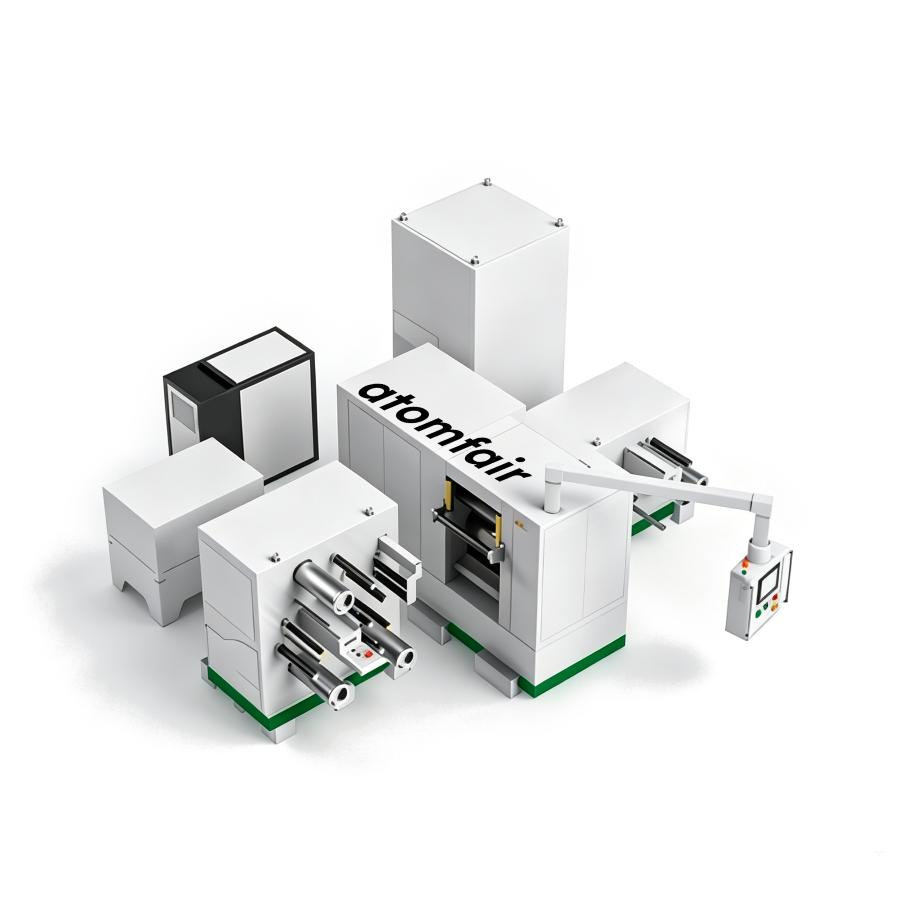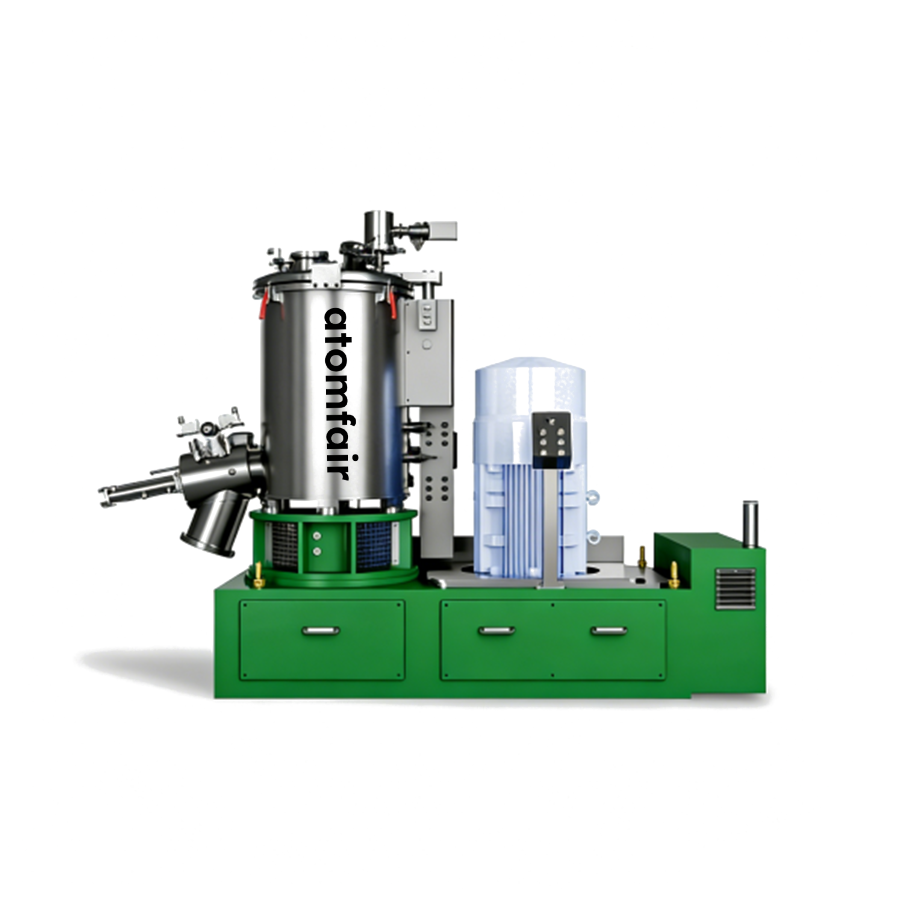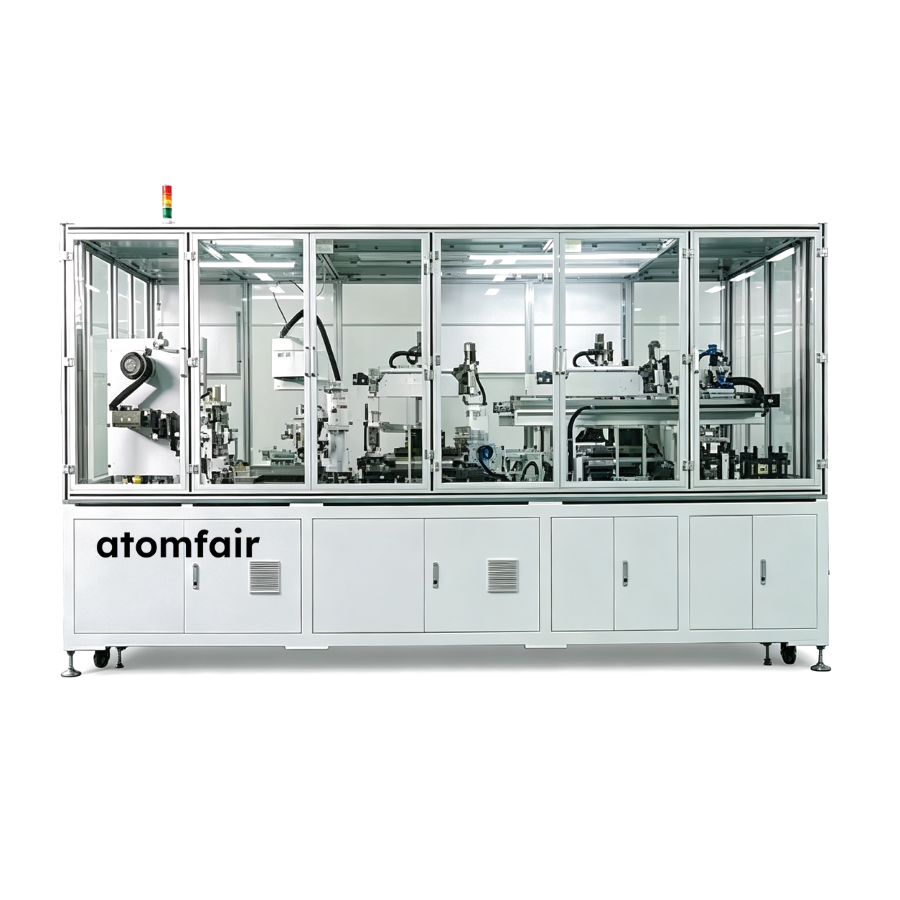
ATOMFAIR® AF-HEMP-ASBCE AUTOMATED PRINTING PLATFORMRESEARCH GRADE MATERIAL
|
|||||||||||||||||||||||||||||||||||||
|
|||||||||||||||||||||||||||||||||||||
The platform imposes dimensional limits on electrode width (40–160 mm) and length (40–260 mm) with a cutting precision of ±0.1 mm. Applied pressure must remain between 0 and 1 T to avoid structural damage or print defects.
- Electrode Dimension Constraints: Electrode width must be between 40 and 160 mm and length between 40 and 260 mm.
- Cutting Precision Constraint: Cutting blade precision must be maintained at ±0.1 mm to ensure electrode length accuracy.
- Pressure Constraint: Applied pressure must be adjustable between 0 and 1 T to avoid damage to electrodes or equipment.
- Printing Speed Constraint: Printing speed is limited to 2 pieces per minute for electrodes larger than 50×50 mm.
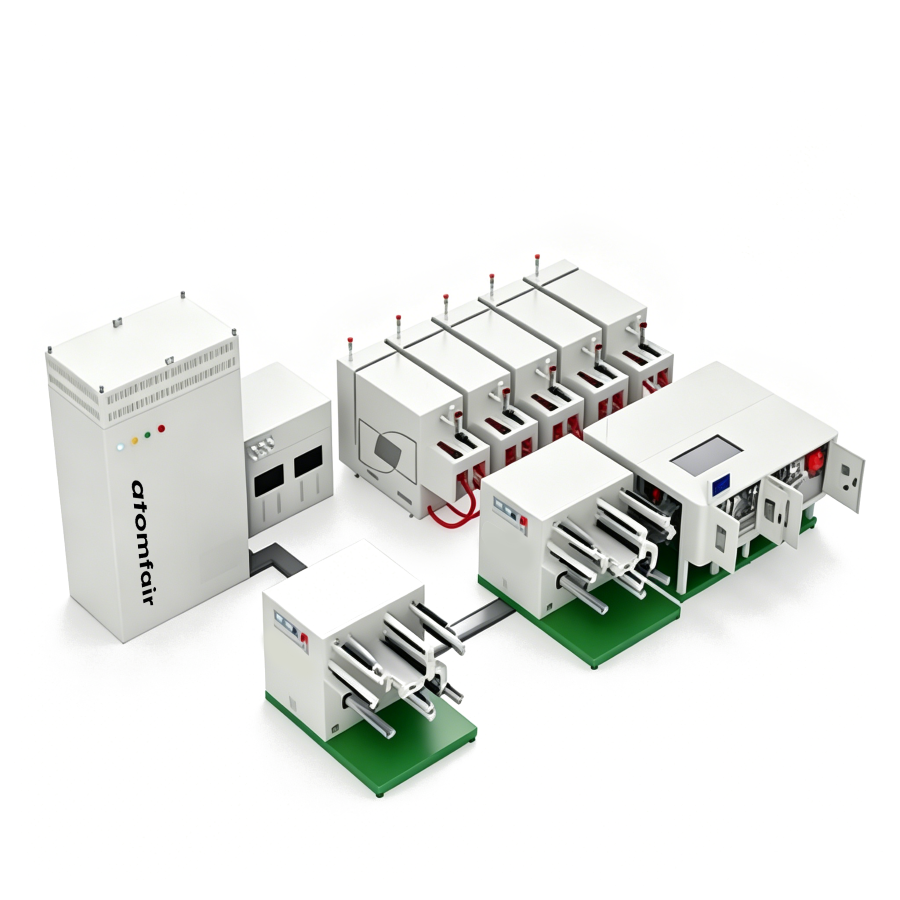
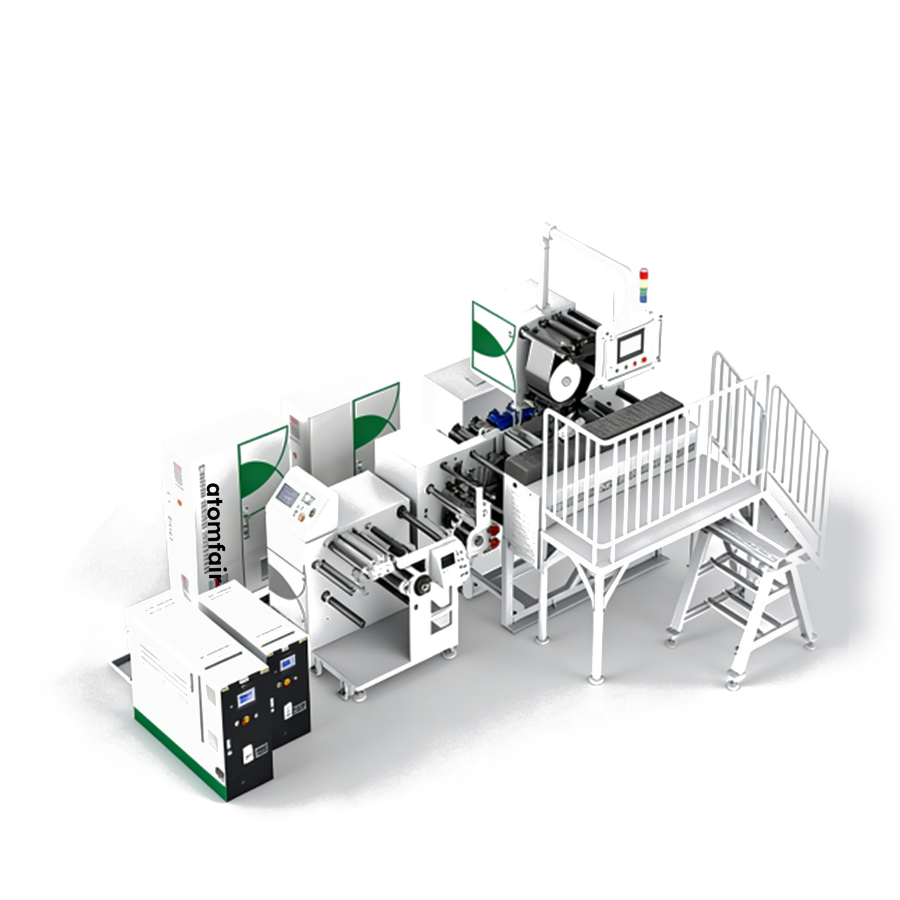
The platform automates the fabrication of double-sided composite electrodes through sequential 3D printing, drying, and collection steps. Operators must follow the prescribed order to ensure electrode quality and process safety.
Required Equipment: 3D Printing Head, Intelligent Drying Chamber, Precision Cutting Blade, Automatic Collection Conveyor
- Set cutting blade precision
Set the electrode cutting blade precision to the desired tolerance within ±0.1 mm. - Adjust pressure range
Adjust the pressure range to suit the electrode material within 0 to 1 T. - Initiate double-sided printing
Initiate the 3D printing process for the first side of the composite electrolyte on the preconditioned substrate. - Cure printed layer
Activate the intelligent drying system to cure the printed electrolyte before printing the second side. - Complete electrode collection
Enable automatic collection to separate and retrieve the finished double-sided composite electrode.
How does the AF-HEMP-ASBCE balance printing speed and dimensional precision for all-solid-state composite electrodes?
The platform achieves a cutting precision of ±0.1 mm while maintaining a printing speed of 2 pcs/min for electrodes larger than 50×50 mm. This trade-off ensures high dimensional accuracy essential for battery performance, but throughput may be lower for very large formats, as the electrode size range extends up to 260 mm in length.
Is the AF-HEMP-ASBCE compatible with both positive and negative electrode manufacturing for all-solid-state batteries?
Yes, the platform supports high-precision double-sided composite electrolyte printing for both positive and negative electrodes, as stated in its key features. It also includes intelligent drying technology optimized for double-sided composite electrolytes, particularly for lithium metal negative electrodes.
What automation and handling capabilities does the platform provide to reduce manual intervention?
The platform features automatic loading/unloading and automatic collection of composite electrodes, minimizing manual handling. The cutting system achieves ±0.1 mm precision across the 300×200 mm cutting size, ensuring consistent electrode dimensions with minimal operator intervention.
The AF-HEMP-ASBCE platform integrates high-precision 3D printing, intelligent drying, and automatic collection for scalable all-solid-state battery composite electrode production, achieving ±0.1 mm dimensional accuracy and double-sided printing. Its electrode size range (40–260 mm length, 40–160 mm width) and printing speed of 2 pieces per minute for electrodes >50×50 mm present operational constraints for larger or high-throughput demands.
Positive
- Double-sided high-precision printing: Enables fabrication of double-sided composite electrodes with ±0.1 mm cutting blade precision, critical for consistent electrochemical performance in solid-state batteries.
- Full automation reduces manual intervention: Automatic loading/unloading and integrated intelligent drying minimize operator touch points, enhancing reproducibility and supporting industrial-scale manufacturing.
Trade-offs
- Limited electrode size range: Electrode width is restricted to 40–160 mm and length to 40–260 mm; the cutting size of 300×200 mm means electrodes outside these dimensions cannot be produced on this platform.
- Printing speed constraint for larger electrodes: For electrodes larger than 50×50 mm, the 3D printing speed is fixed at 2 pieces per minute, which may bottleneck high-volume production lines.
Every advanced material, component, equipment, and instrument in our catalog is backed by rigorous testing. We maintain strict internal quality management frameworks and align with CE conformity metrics to deliver transparent, reproducible performance data via our public open-science repository.
To request raw batch performance data, submit formal vendor registration paperwork, or execute a fast-turnaround R&D manufacturing loop, contact us at inquiry@atomfair.com.
Item is dispatched under the Atomfair Shipping & Delivery Framework (Free worldwide shipping on orders over $59 USD excl. heavy equipment). Return is governed by the Atomfair Return & Refund Policy (7-day technical return window).