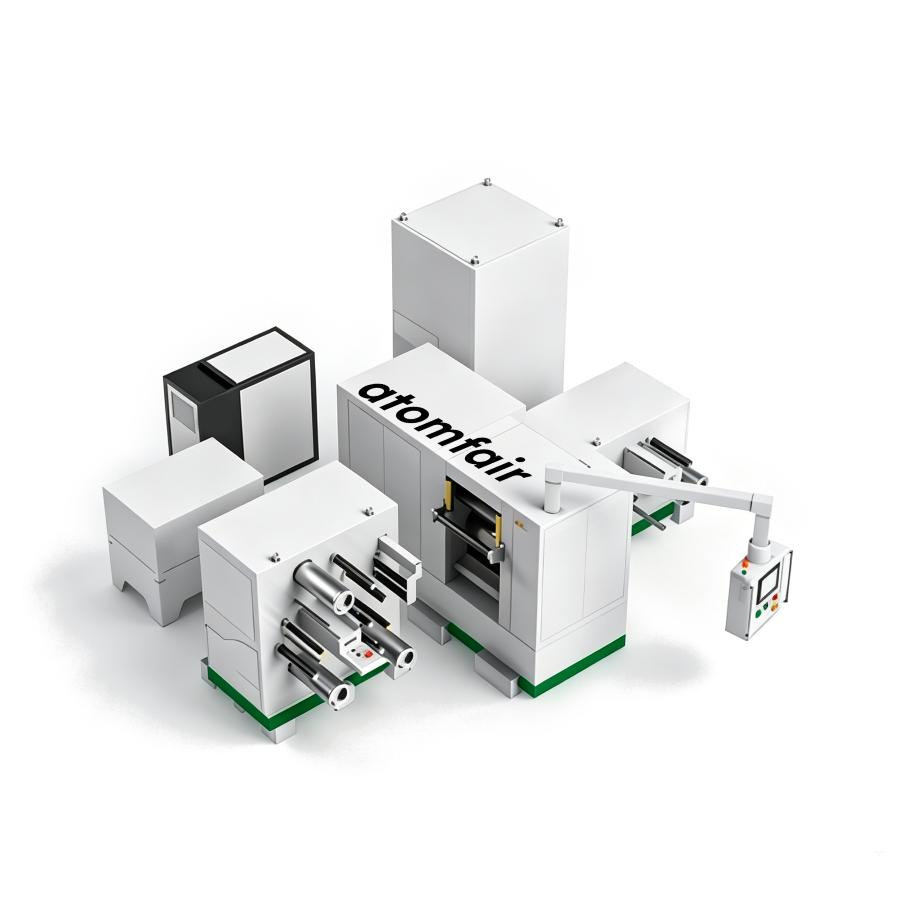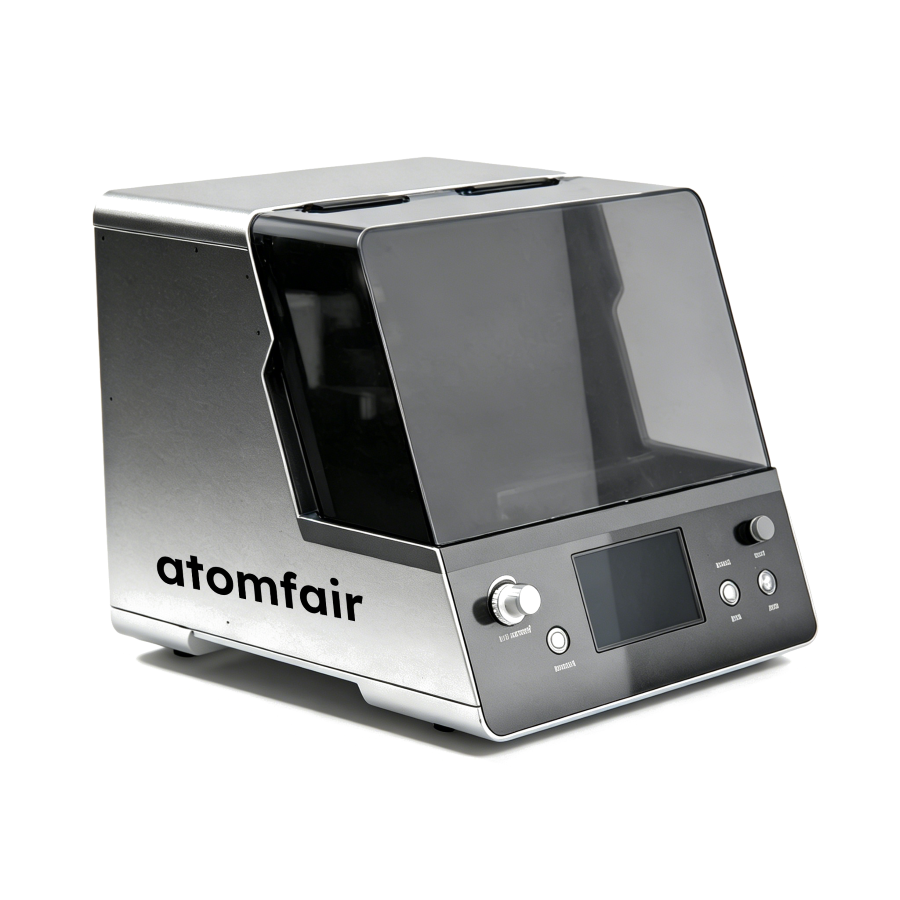
ATOMFAIR® AF-SN-B3DP BATTERY PRINTING SYSTEMRESEARCH GRADE MATERIAL
|
|||||||||||||||||||||||||||||||||||||
|
|||||||||||||||||||||||||||||||||||||
This device enables additive manufacturing of battery electrodes and electrolytes with controlled layer thickness between 20 and 200 μm. Operation requires proper material compatibility, stable positioning, and adherence to working range limits to maintain print quality.
- Layer Thickness Control: Single-layer printing thickness must be maintained within 20 to 200 μm to ensure electrode uniformity and performance.
- Nozzle Selection: Nozzle diameters from 60 μm to 1 mm are compatible, but must be matched to slurry particle size to prevent clogging.
- Build Volume Limits: Printing is confined to a working range of 170 mm in X, 120 mm in Y, and 50 mm in Z; exceeding these bounds may damage the equipment.
- Material Compatibility: The system accepts positive/negative battery slurries, oxide/polymer electrolytes, and metal slurries, but viscosity and solvent compatibility must be verified prior to use.
- Line Resolution: Minimum achievable line width and spacing are both 0.1 mm, requiring precise calibration and stable extrusion.
What is the achievable minimum feature size and how does it relate to the nozzle diameter?
The minimum line width is 0.1 mm, achieved with the smallest nozzle diameter of 60 μm. Larger nozzle diameters up to 1 mm allow faster deposition but coarser features, as indicated by the system's specified nozzle diameter range of 60 μm to 1 mm.
Which types of battery materials are compatible with the AF-SN-B3DP single-nozzle system?
The system supports positive and negative battery slurries, oxide and polymer electrolyte slurries, and metal slurries, providing broad material adaptability for diverse battery chemistries, as stated in the product features.
What are the physical dimensions and working envelope of the AF-SN-B3DP for lab bench integration?
The system measures 512 × 495 × 594 mm (excluding 15 mm anchor feet) and offers a working range of X: 170 mm, Y: 120 mm, Z: 50 mm, requiring a standard laboratory bench with sufficient clearance and space for the compact desktop footprint.
The AF-SN-B3DP is a desktop single-nozzle 3D printer optimized for battery electrode and electrolyte membrane fabrication, offering multi-material compatibility and fine feature resolution but constrained by a limited build volume and single-head printing.
Positive
- Multi-material slurry compatibility: Supports positive/negative battery slurries, oxide/polymer electrolyte slurries, and metal slurries, enabling broad material adaptability for diverse battery chemistries.
- Rapid complex electrode preparation: Delivers efficient preparation of irregular shapes, porous electrodes, ultra-thin electrolyte membranes, and thick electrodes, accelerating battery R&D prototyping.
Trade-offs
- Limited build volume: With a working range of 170 mm × 120 mm × 50 mm, the system restricts the maximum electrode or membrane size that can be printed.
- Single-nozzle sequential printing: Equipped with one printing head, multi-material structures require manual material change or purging between depositions, increasing process time and complexity.
Every advanced material, component, equipment, and instrument in our catalog is backed by rigorous testing. We maintain strict internal quality management frameworks and align with CE conformity metrics to deliver transparent, reproducible performance data via our public open-science repository.
To request raw batch performance data, submit formal vendor registration paperwork, or execute a fast-turnaround R&D manufacturing loop, contact us at inquiry@atomfair.com.
Item is dispatched under the Atomfair Shipping & Delivery Framework (Free worldwide shipping on orders over $59 USD excl. heavy equipment). Return is governed by the Atomfair Return & Refund Policy (7-day technical return window).