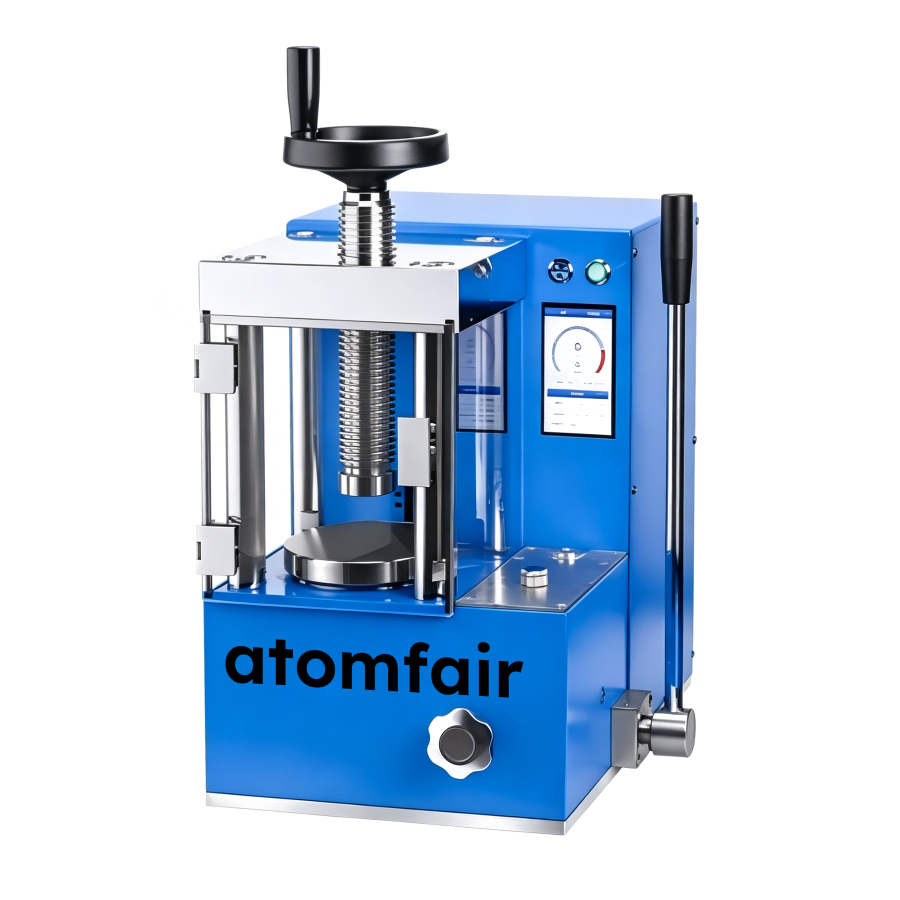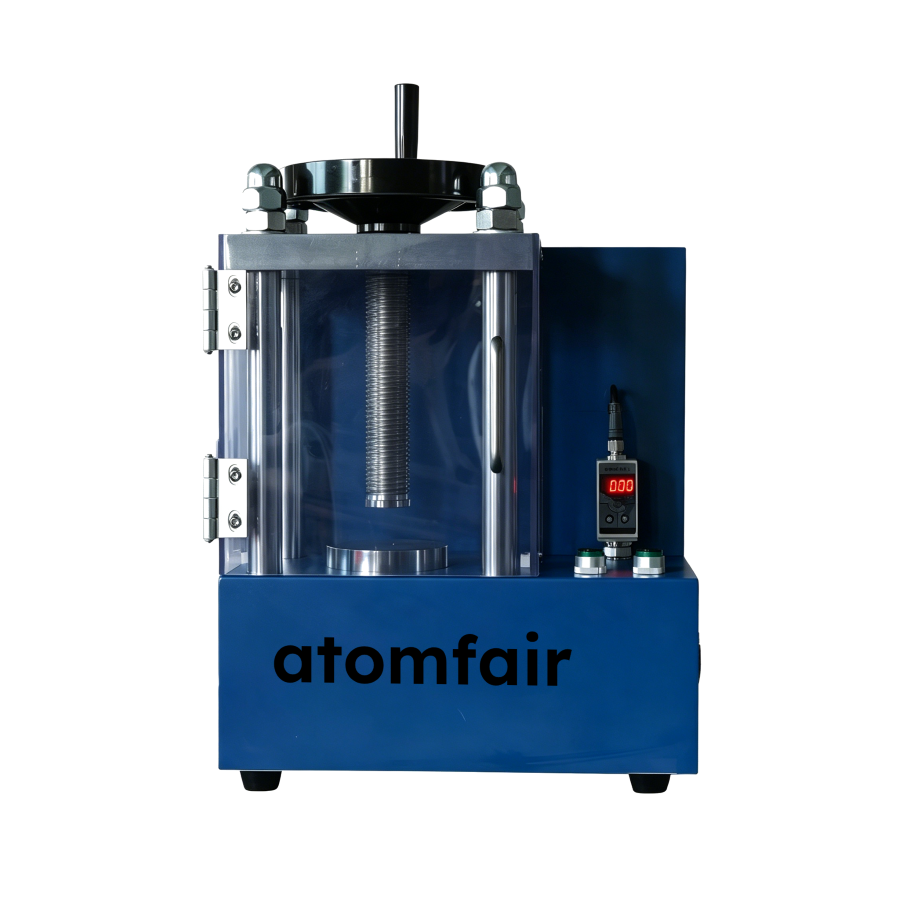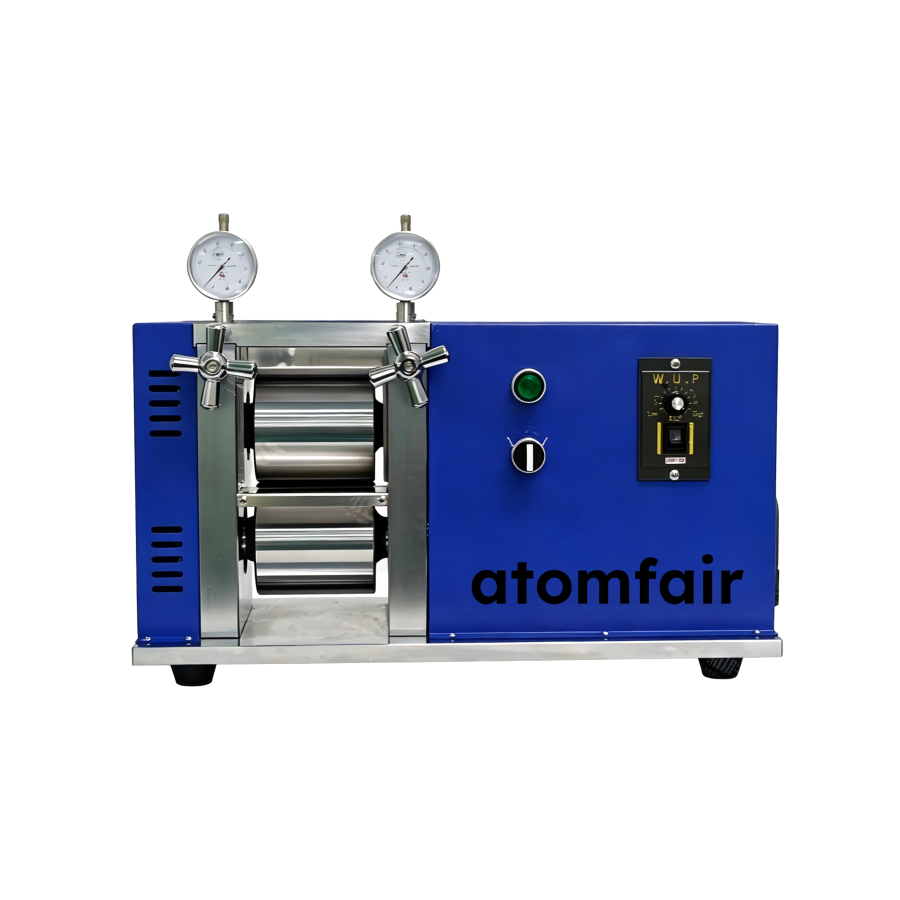
ATOMFAIR® ATOMFAIR-MRM8056 MANUAL ROLLING MILLRESEARCH GRADE MATERIAL
|
|||||||||||||||||||||||||||||||||||
|
|||||||||||||||||||||||||||||||||||
|
TAILORED SOLUTIONS FOR RESEARCH
Contact our engineering team for technical support or official quotations.
EMAIL: inquiry@atomfair.com
|
|||||||||||||||||||||||||||||||||||
|
Manufacturer: Atomfair LLC
Brand: ATOMFAIR®
|
Store the equipment in a dry, dust-free environment to protect the chrome-plated rolls and electrical components from moisture and corrosion. Operate the mill only with the specified electrical supply to prevent electrical hazards and ensure the rolling area is free of obstructions and flammable materials.
- Moisture Protection: Keep the rolling mill in a low-humidity environment to avoid corrosion of the chrome-plated rolls and electrical components.
- Electrical Safety: Connect the mill only to an AC220V/50Hz power source with proper grounding to prevent electrical shock.
- Mechanical Integrity: Do not exceed the specified rolling thickness of 2 mm to avoid damaging the rolls or gear mechanism.
- Operational Clearance: Ensure the feeding area is free of loose objects and that the operator's hands remain clear of the rolls during operation.
- Rust Prevention: Wipe the rolls dry after use and apply a light coat of rust inhibitor if the mill will be stored for extended periods.
This procedure describes the safe initialization and operation of the manual rolling mill for thinning lithium battery plates. Follow these steps to achieve precise reduction while ensuring operator safety and equipment longevity.
Required Equipment: Atomfair-MRM8056 Manual Rolling Mill
- Inspect the Equipment
Inspect the rolling rolls and work area for cleanliness and ensure the power cord is undamaged. - Set the Rolling Thickness
Adjust the inclined block to set the desired rolling gap, ensuring uniform spacing across the roll width. - Adjust the Feeding Speed
Turn the speed control knob to set the feeding speed between 0 and 50 mm/s as required for the material. - Feed the Material
Carefully insert the battery plate or strip material into the roll nip, aligning it centrally to the roll width. - Operate the Rolling Cycle
Activate the motor using the forward/reverse switch to start the rolling process, monitoring the material exit. - Collect the Rolled Material
Remove the rolled plate from the output side and repeat the process if further reduction is needed. - Clean the Equipment After Use
Wipe down the rolls and work surface to remove any debris and power off the mill when finished.
How does the roll cylindricity tolerance of ≤±2μm affect the uniformity of lithium battery electrode thickness across the width?
The roll cylindricity ≤±2μm ensures that the roll surface is nearly perfectly cylindrical, directly translating to uniform thickness across the rolling width of up to 100mm. Combined with the roll finish Ra 0.4μm and gear meshing drive for stable twin-roll pressing, this minimizes local variations in electrode density and thickness, critical for consistent battery cell performance.
Can the Atomfair-MRM8056 roll lithium metal anodes without damaging the foil surface?
Yes, the MRM8056 is suitable for rolling lithium metal foils. The vertical design allows easy feeding of thin lithium strips, and the adjustable rolling thickness (0–2mm) and feeding speed (0–50mm/s) enable gradual reduction with minimal surface damage. The hard chrome plated rolls (HRC62) provide a smooth, non-reactive surface that resists sticking, but the mill is not sealed for inert atmosphere operation, so additional environmental controls are recommended.
What are the electrical and installation requirements for the MRM8056 in a typical laboratory?
The MRM8056 operates on standard AC220V/50Hz with 120W power consumption, requiring only a grounded outlet. With a compact footprint of L385mm x W245mm x H355mm and weight of 55kg, it fits on a sturdy lab bench. No special wiring, ventilation, or structural modifications are needed, though the adjustable rolling thickness and feeding speed allow integration into diverse R&D workflows.
This Atomfair-MRM8056 manual rolling mill delivers sub-2-micron cylindricity and HRC62 chrome-plated rolls for precise thinning of lithium battery electrodes and precious metal strips, with an integrated electric drive enabling automated, adjustable-speed operation for laboratory workflows.
Positive
- High-hardness chrome rolls with rust resistance: Roll surface hardness exceeds HRC62 with a hard chrome plating, providing excellent wear resistance and corrosion protection for extended service life in lab environments.
- Precision cylindricity for uniform rolling: Roll cylindricity is held to ≤±2 μm, ensuring consistent thickness reduction across the strip width and enabling high-accuracy electrode densification.
Trade-offs
- Limited rolling width (100 mm max): The maximum rolling width of 100 mm restricts processing to narrow electrode strips or thin materials, making it unsuitable for wider sheets or larger-scale applications.
- Thickness range confined to 0–2 mm: The adjustable rolling thickness is capped at 2 mm, limiting the mill to thin-film densification and precluding rolling of thicker stock or bulk materials.
Every advanced material, component, equipment, and instrument in our catalog is backed by rigorous testing. We maintain strict internal quality management frameworks and align with CE conformity metrics to deliver transparent, reproducible performance data via our public open-science repository.
To request raw batch performance data, submit formal vendor registration paperwork, or execute a fast-turnaround R&D manufacturing loop, contact us at inquiry@atomfair.com.
Item is dispatched under the Atomfair Shipping & Delivery Framework (Free worldwide shipping on orders over $59 USD excl. heavy equipment). Return is governed by the Atomfair Return & Refund Policy (7-day technical return window).