ATOMFAIR® AF-ROLL-SSB ROLL-TO-ROLL PLATFORMRESEARCH GRADE MATERIAL
|
|||||||||||||||||||||||||||||||||||||
|
|||||||||||||||||||||||||||||||||||||
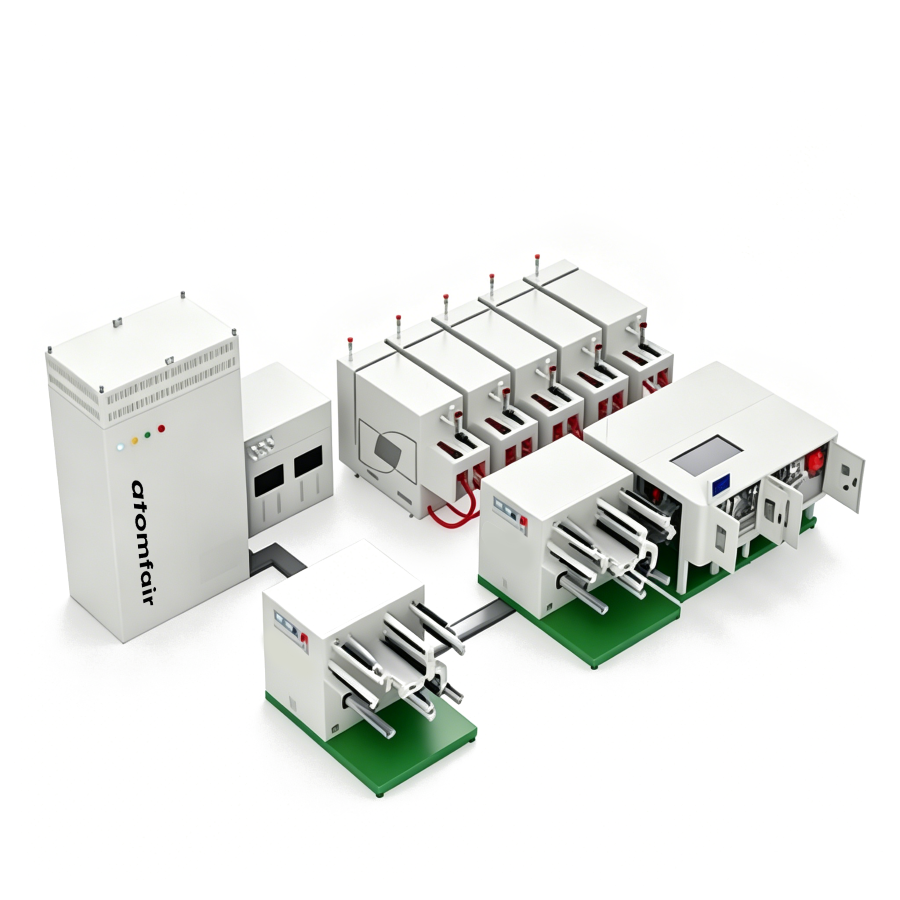
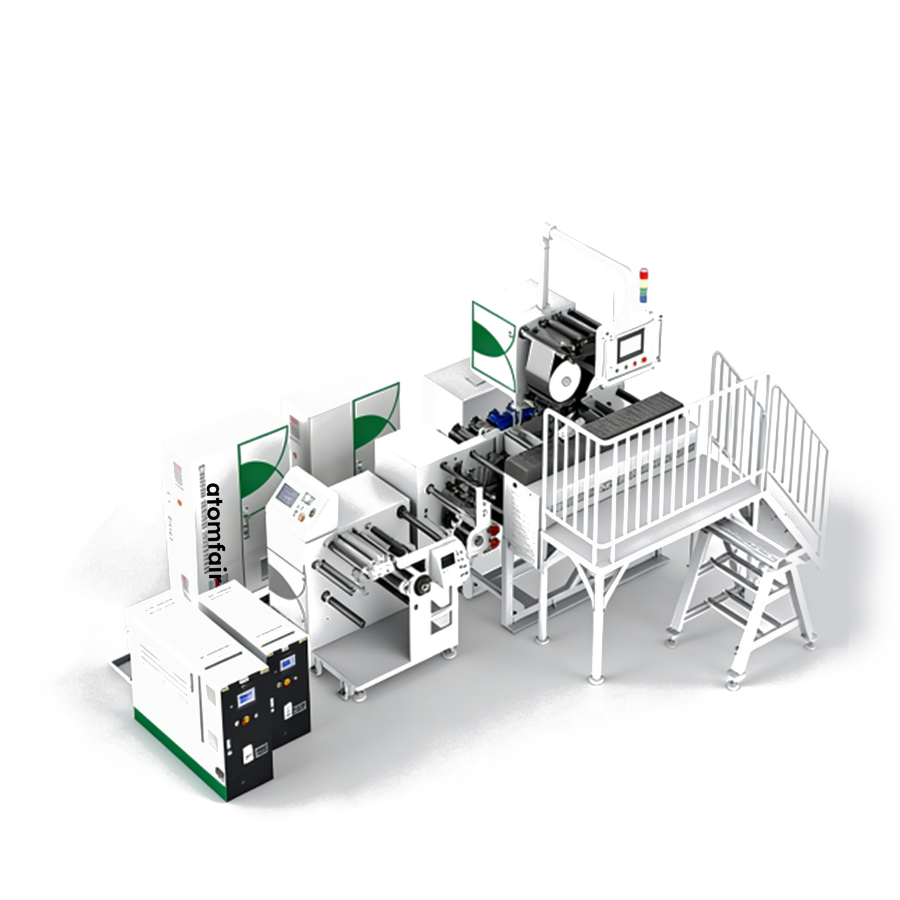
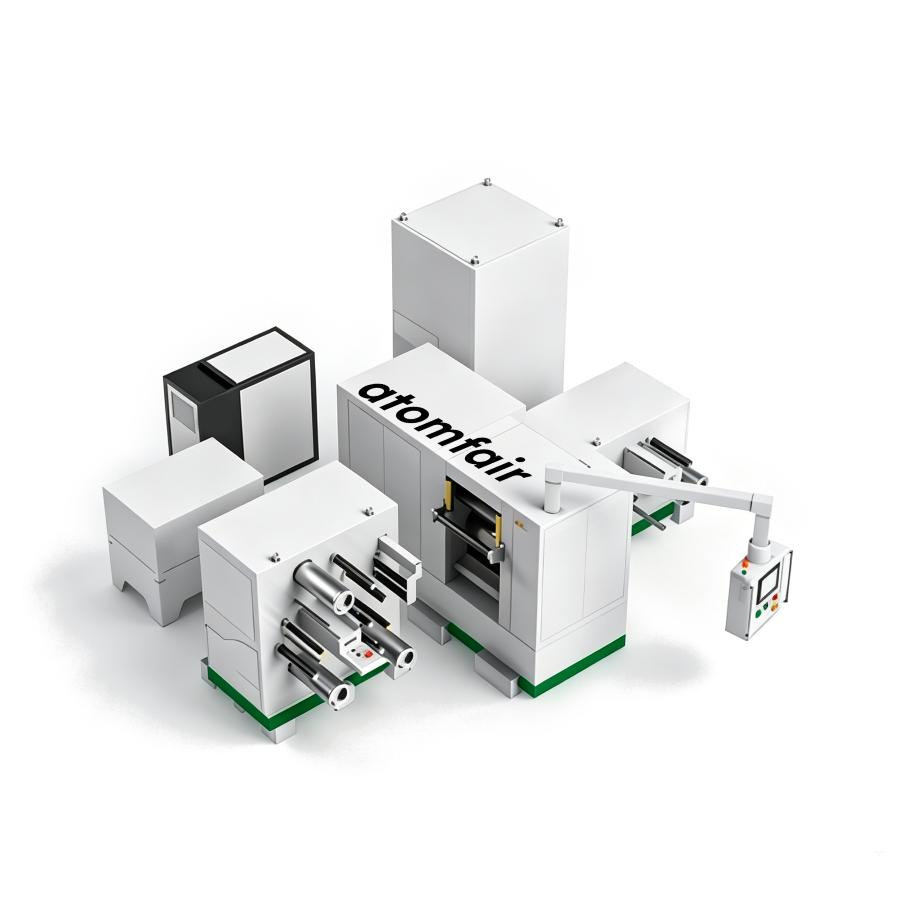
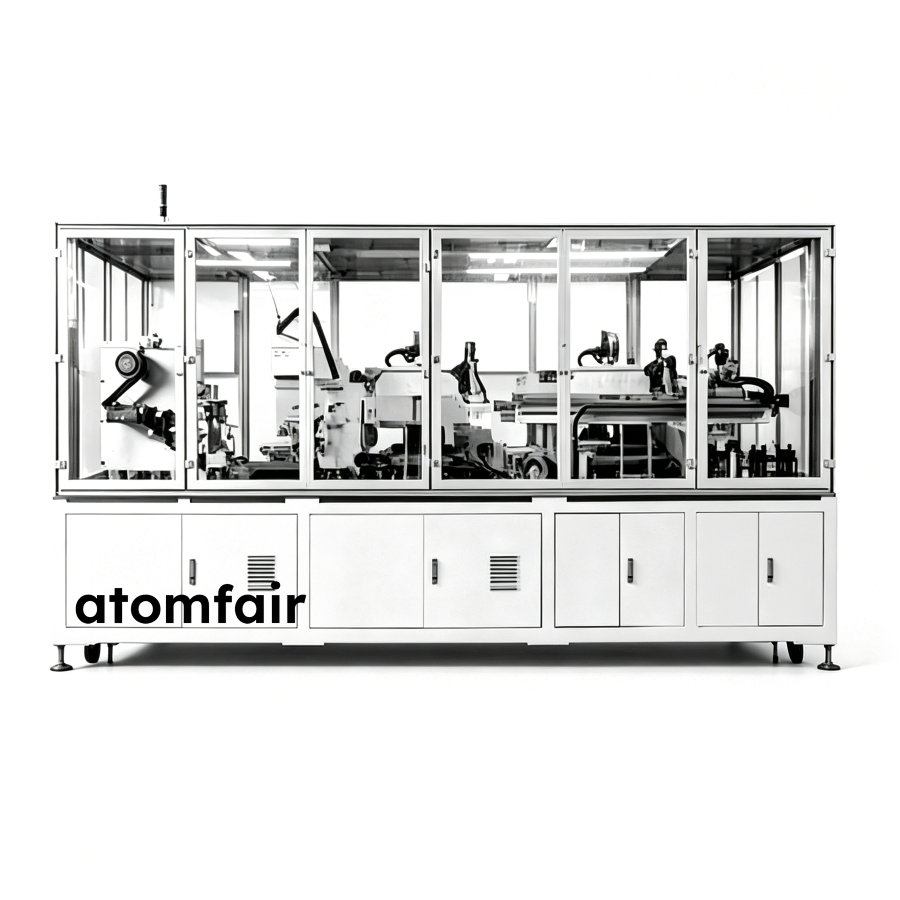
The AF-ROLL-SSB roll-to-roll manufacturing platform requires a minimum floor area of 9000 × 2500 mm and a 15 kW power supply. The equipment must be installed in accordance with the specified electrical and spatial requirements to ensure safe operation.
- Floor Area Requirement: The platform occupies a minimum footprint of 9000 mm by 2500 mm with a height clearance of 2700 mm.
- Power Supply Requirement: The system draws 15 kW of electrical power and requires a dedicated circuit.
How does the AF-ROLL-SSB's printing precision of ±5% after rolling affect the electrochemical performance consistency for composite electrodes with varying particle size distributions?
The ±5% printing precision after rolling ensures consistent electrode thickness across continuous runs, which is critical for uniform ionic and electronic pathways in composite electrodes. However, variations in solid electrolyte particle size distribution can impact packing density and thickness uniformity within the stated tolerance, potentially affecting cell-level performance consistency.
What are the material rheology requirements for the slurry to maintain stable printing thickness on the AF-ROLL-SSB across the full 50–160 mm dimension range?
The platform is designed for multi-material compatibility and achieves stable printing thickness through precise process control. For uniform coating across the 50–160 mm dimension, the slurry should exhibit controlled viscosity and shear-thinning behavior to prevent edge effects and thickness variations; specific rheological parameters are not provided but can be optimized using the system's adjustable printing parameters.
What are the facility infrastructure requirements for installing the AF-ROLL-SSB roll-to-roll platform?
The AF-ROLL-SSB requires a minimum floor area of 9,000 × 2,500 × 2,700 mm and a 15 kW electrical supply. While no specific environmental controls are listed, operation with moisture-sensitive solid electrolytes may necessitate integration into a dry room or glovebox system to prevent material degradation.
The AF-ROLL-SSB roll-to-roll platform enables scalable production of all-solid-state battery composite electrodes with multi-material compatibility and consistent thickness, but requires substantial floor space and offers only moderate printing precision.
Positive
- Supports Multiple Solid-State Battery Chemistries: The platform accommodates diverse electrode and electrolyte materials, providing flexibility for different all-solid-state battery compositions and formulations.
- Consistent Electrode Thickness Across Runs: Delivers stable printing thickness during continuous production, ensuring uniform material performance and repeatable cell characteristics.
Trade-offs
- Large Floor Space Requirement: The minimum floor area of 9000 × 2500 mm demands a substantial dedicated laboratory or production footprint, which may constrain deployment in space-limited facilities.
- Moderate Printing Precision of ±5%: After rolling, thickness tolerance is within ±5%, which may be insufficient for applications requiring exceptionally tight electrode thickness control.
Every advanced material, component, equipment, and instrument in our catalog is backed by rigorous testing. We maintain strict internal quality management frameworks and align with CE conformity metrics to deliver transparent, reproducible performance data via our public open-science repository.
To request raw batch performance data, submit formal vendor registration paperwork, or execute a fast-turnaround R&D manufacturing loop, contact us at inquiry@atomfair.com.
Item is dispatched under the Atomfair Shipping & Delivery Framework (Free worldwide shipping on orders over $59 USD excl. heavy equipment). Return is governed by the Atomfair Return & Refund Policy (7-day technical return window).