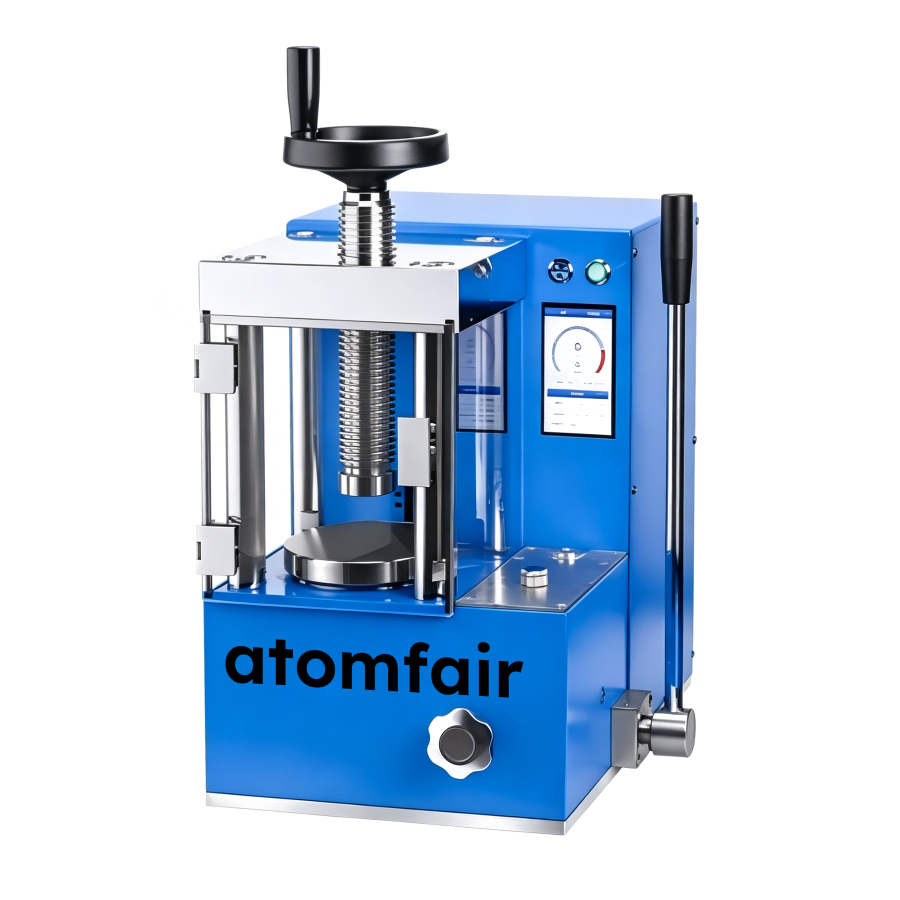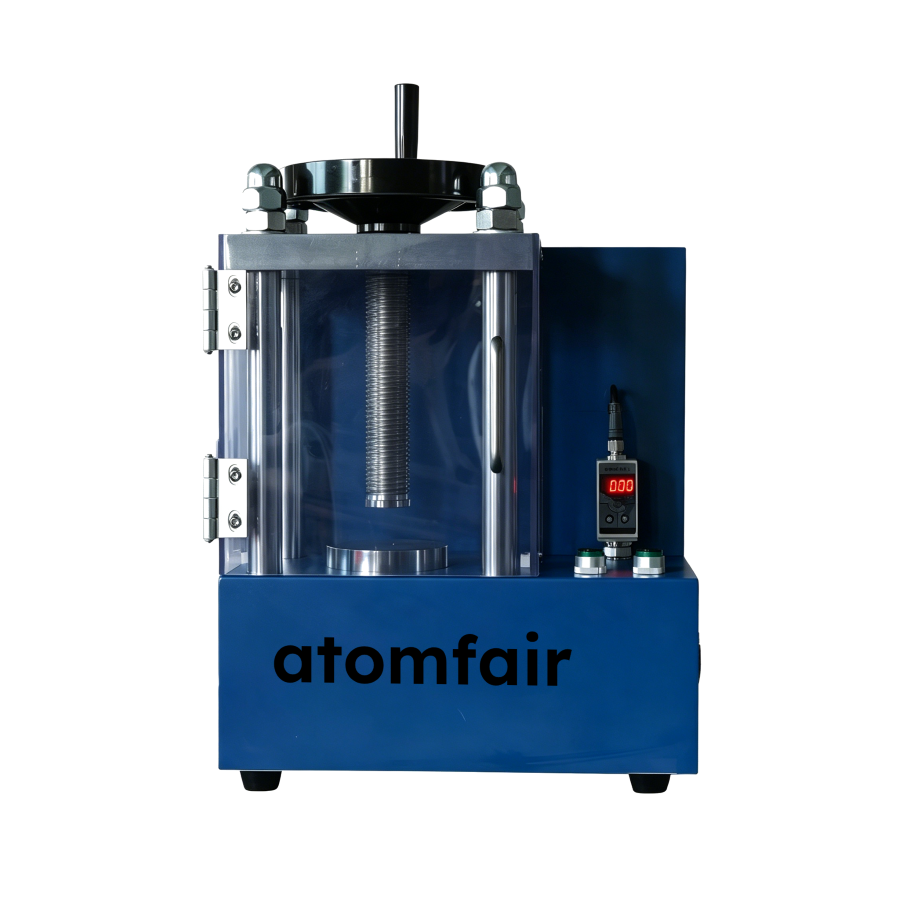
ATOMFAIR® ATOMFAIR-MTR9012 MANUAL TWIN ROLL MILLRESEARCH GRADE MATERIAL
|
|||||||||||||||||||||||||||||||||||
|
|||||||||||||||||||||||||||||||||||
|
TAILORED SOLUTIONS FOR RESEARCH
Contact our engineering team for technical support or official quotations.
EMAIL: inquiry@atomfair.com
|
|||||||||||||||||||||||||||||||||||
|
Manufacturer: Atomfair LLC
Brand: ATOMFAIR®
|
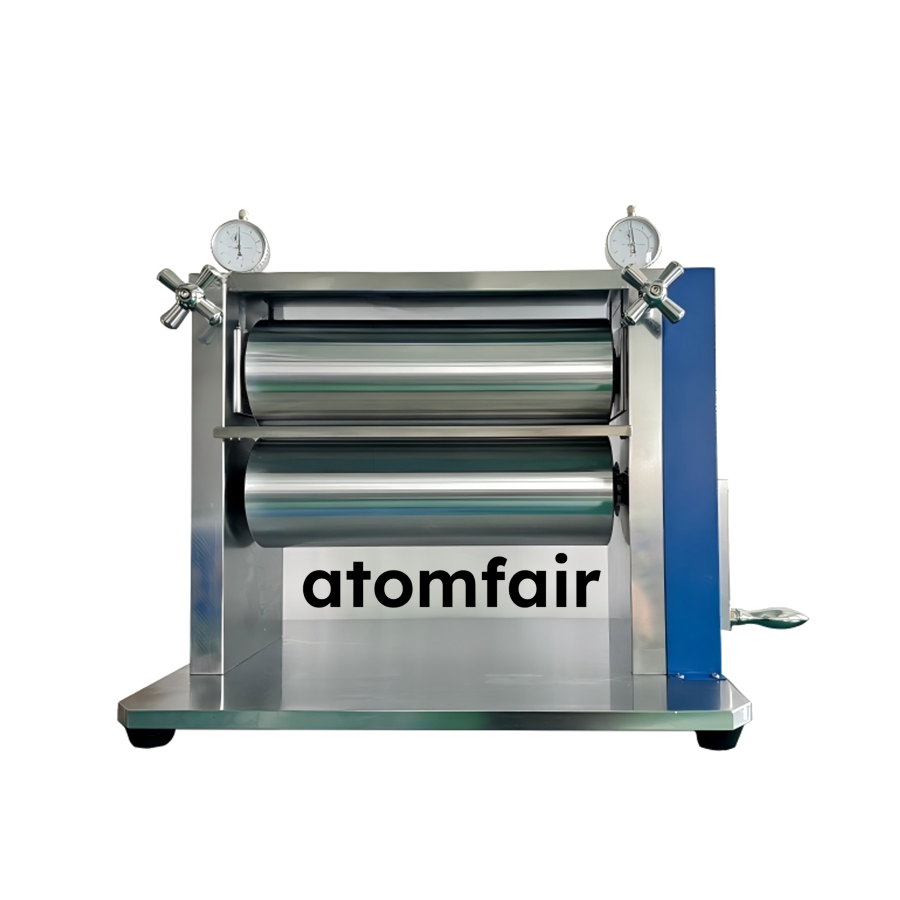
This manual twin roll mill is used to thin and densify lithium battery plates and small metal strips in a laboratory environment. The vertical roll design and inclined gap adjustment enable precise rolling with high cylindricity accuracy.
Required Equipment: Manual twin roll mill with hard chrome rolls
- Adjust gap
Set the desired rolling thickness by adjusting the inclined block gap mechanism. - Feed material
Insert the strip material between the vertically aligned rolls. - Roll material
Crank the hand wheel to drive the gear meshing and compress the material.
How does manual operation affect the rolling precision compared to automated mills for lithium battery electrode densification?
Manual operation does not compromise precision on the Atomfair-MTR9012 because its inclined block gap adjustment provides superior self-locking performance and high adjustment precision, enabling roll cylindricity of ≤±2μm. This manual design eliminates automated control complexity while maintaining the ±2μm tolerance essential for uniform battery plate densification, though throughput is limited to lab-scale feeding and rolling of strip materials.
Can the MTR9012 process electrode strip materials wider than 100 mm or thicker than 2 mm?
No, the maximum rolling width is 100 mm and the thickness range is 0–2 mm, as defined in the technical parameters. This mill is specifically designed for lab-scale strip materials such as lithium battery plates and precious/nonferrous metals; materials exceeding these dimensions cannot be processed and would require a different equipment specification.
What infrastructure and handling precautions are required for operating this manual twin roll mill in a laboratory?
The mill requires no electrical power for rolling—only manual force—and fits on a standard lab bench due to its compact footprint of 385×245×355 mm and weight of 45 kg. The hard chrome rolls with hardness >HRC62 and finish above Ra 0.4 μm are rust-resistant but should be wiped clean after use; no special infrastructure beyond standard lab safety equipment is needed.
The Atomfair-MTR9012 Manual Twin Roll Mill offers high-hardness chrome rolls (>HRC62) with ≤±2μm cylindricity, enabling precise thinning and densification of lithium battery plates in small-batch R&D. However, its manual operation and 0–2 mm thickness range limit throughput and restrict application to thin materials only.
Positive
- Hard chrome rolls with high durability: Roll surface hardness >HRC62 with excellent rust resistance ensures long-term use under repeated laboratory rolling conditions without degradation.
- Ultra-precise rolling accuracy: Roll cylindricity ≤±2μm delivers uniform, flat finished products essential for consistent densification of lithium battery plates.
Trade-offs
- Manual operation limits throughput: As a manually operated mill, consistent output depends entirely on operator skill and effort, making it unsuitable for high-volume or automated processing.
- Restricted rolling thickness range: Rolling thickness is limited to 0–2 mm, precluding the processing of thicker materials and confining the mill to thin-sheet applications only.
Every advanced material, component, equipment, and instrument in our catalog is backed by rigorous testing. We maintain strict internal quality management frameworks and align with CE conformity metrics to deliver transparent, reproducible performance data via our public open-science repository.
To request raw batch performance data, submit formal vendor registration paperwork, or execute a fast-turnaround R&D manufacturing loop, contact us at inquiry@atomfair.com.
Item is dispatched under the Atomfair Shipping & Delivery Framework (Free worldwide shipping on orders over $59 USD excl. heavy equipment). Return is governed by the Atomfair Return & Refund Policy (7-day technical return window).