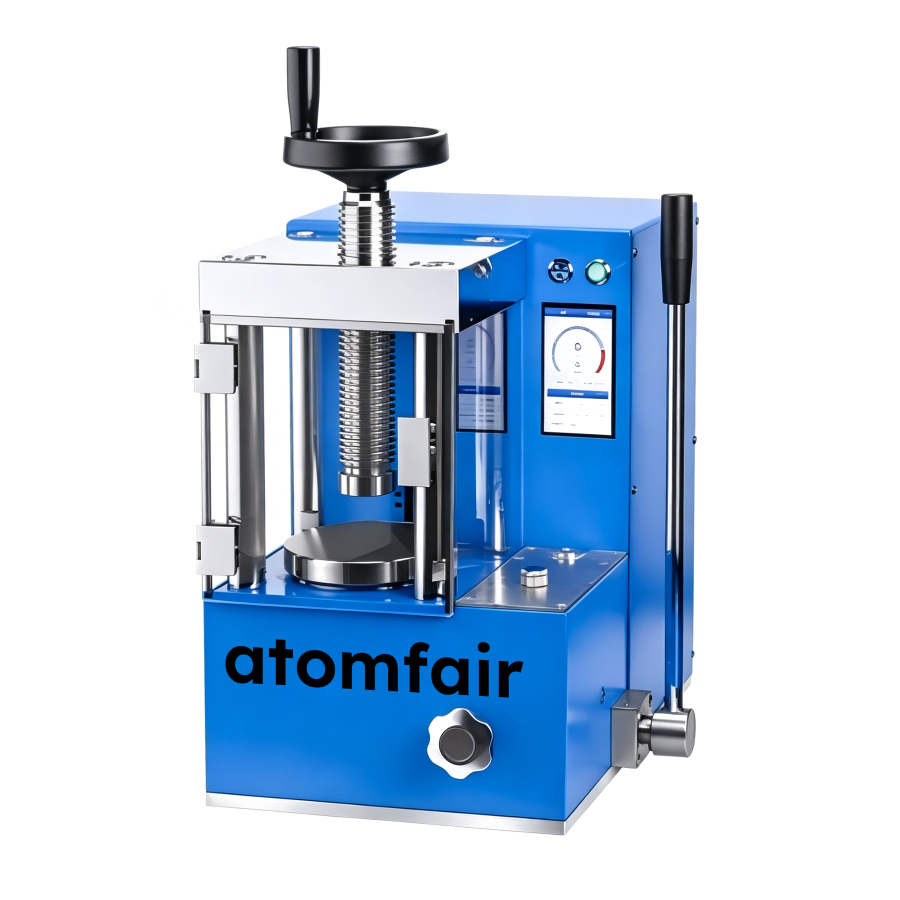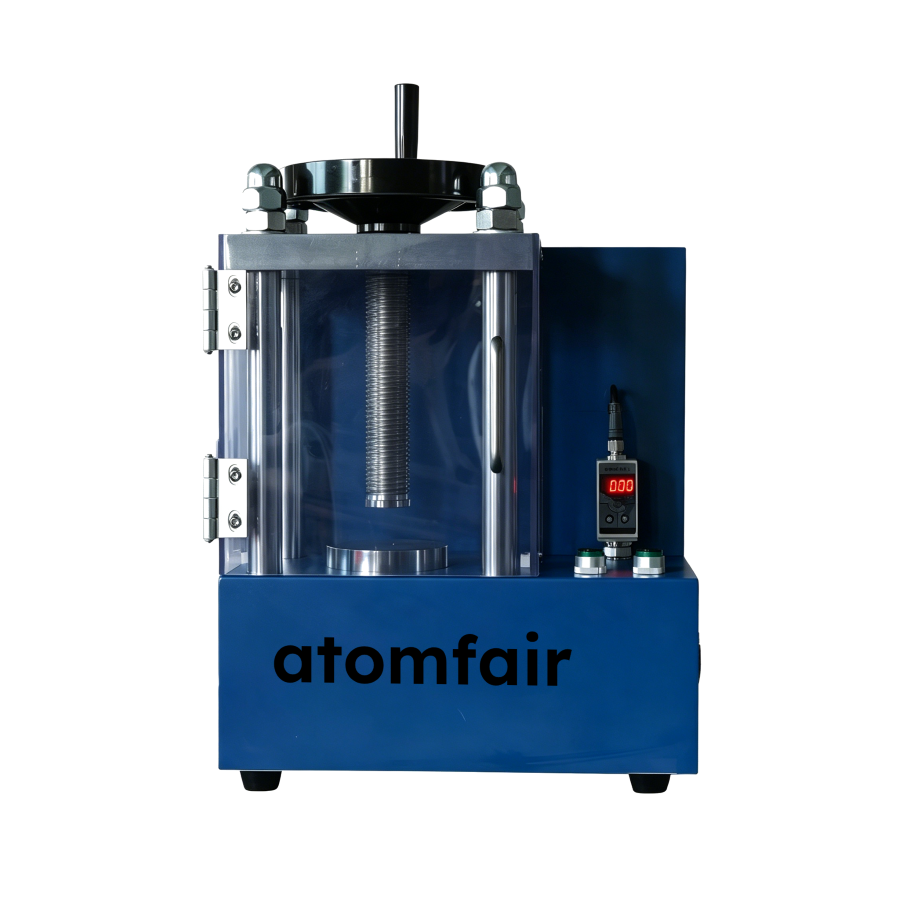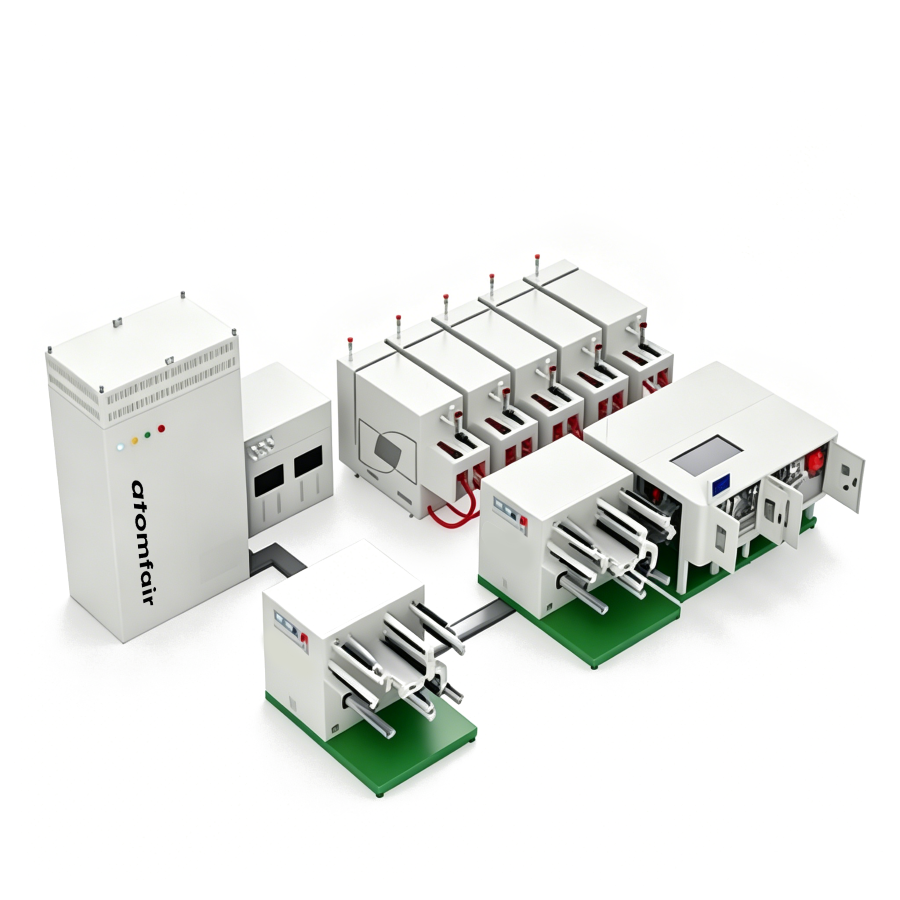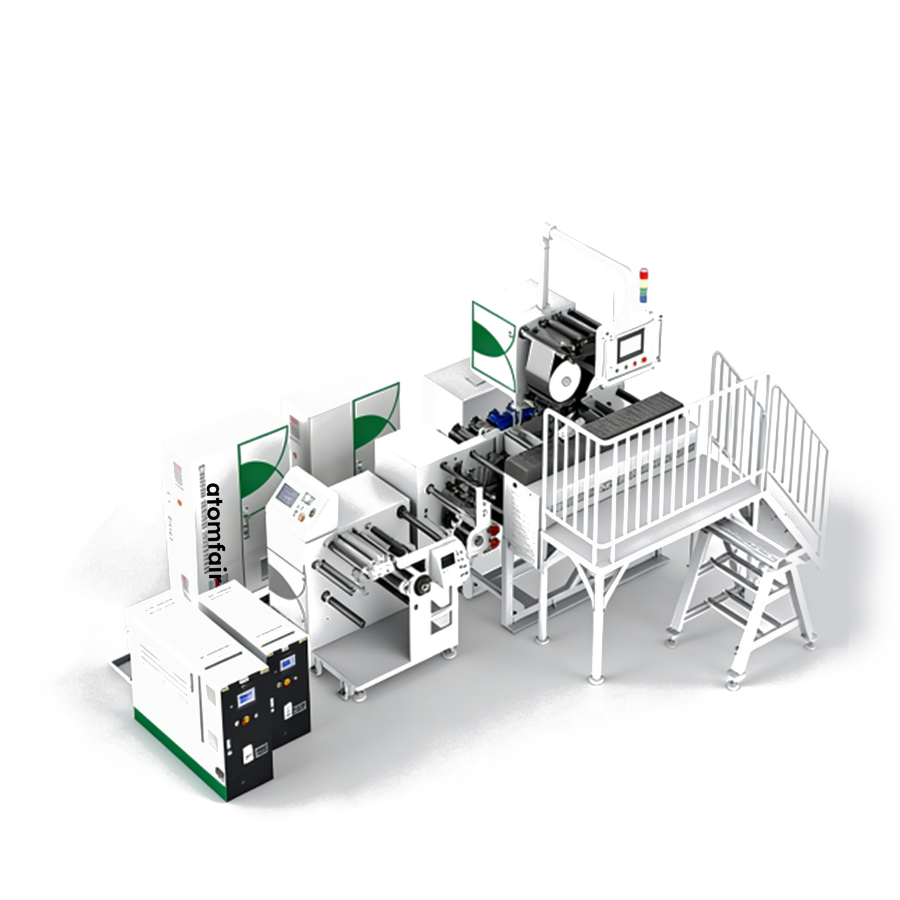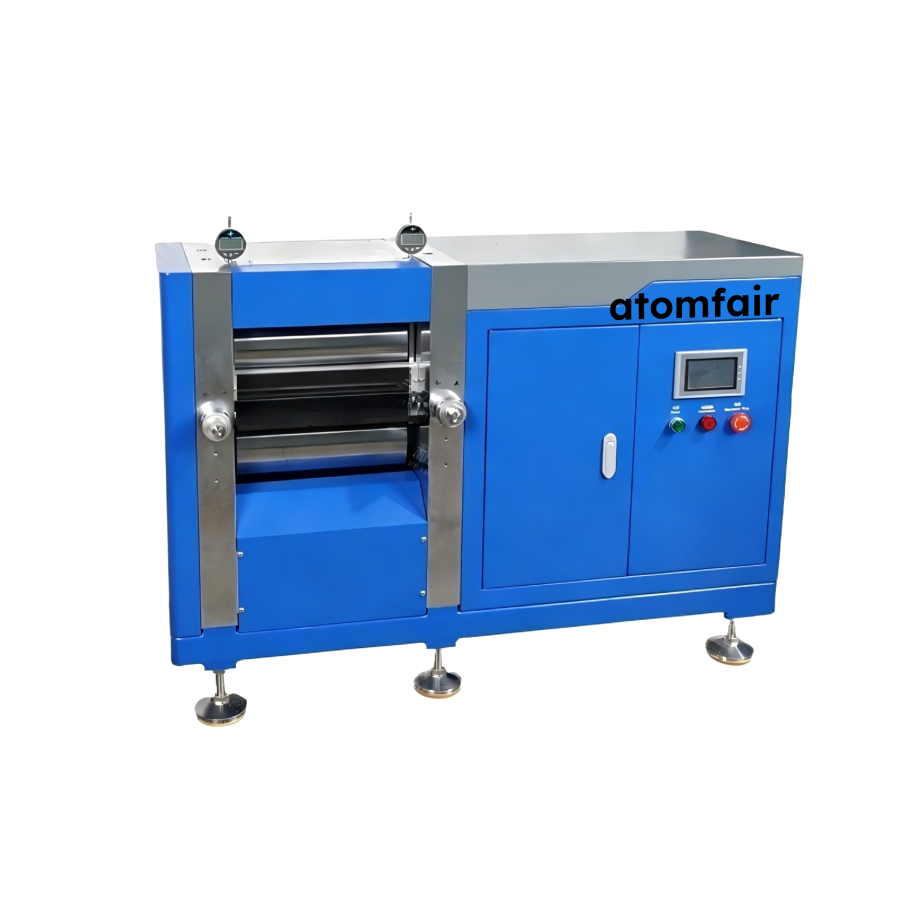
ATOMFAIR® BATTERY MATERIAL ROLLING MACHINE / MODEL ATOMFAIR-LMR-3185RESEARCH GRADE MATERIAL
|
|||||||||||||||||||||||||||||||||||||||
|
|||||||||||||||||||||||||||||||||||||||
|
TAILORED SOLUTIONS FOR RESEARCH
Contact our engineering team for technical support or official quotations.
EMAIL: inquiry@atomfair.com
|
|||||||||||||||||||||||||||||||||||||||
|
Manufacturer: Atomfair LLC
Brand: ATOMFAIR®
|
The equipment requires a grounded 380V electrical supply and a compressed air source at 0.5-0.8 MPa for proper operation. The hydraulic system must be inspected for leaks and the work rolls kept free of debris to maintain ±2.5 μm rolling accuracy.
- Electrical Safety: Connect the machine to a dedicated grounded 380V power outlet to prevent electrical shock and equipment damage.
- Compressed Air Quality: Supply clean, dry compressed air within 0.5-0.8 MPa to avoid contamination of hydraulic and pneumatic components.
- Hydraulic Fluid Check: Verify hydraulic fluid level and ensure no leaks in hoses or fittings before each use.
- Roll Surface Protection: Keep work rolls free of debris or residue to prevent surface damage and preserve rolling precision.
- Stable Installation: Place the machine on a level, vibration-free surface and secure the integral gantry frame to prevent movement during operation.
This procedure outlines the safe initialization and rolling process for laboratory battery plate processing. Follow each step sequentially to achieve uniform thickness reduction and density improvement.
Required Equipment: Atomfair-LMR-3185 rolling machine, Compressed air source (0.5-0.8 MPa), Pay-off and take-up device (optional)
- Connect utilities
Connect the compressed air supply and the 380V power cable, ensuring all connections are secure and grounded. - Set rolling pressure
Adjust the hydraulic pressure control to the desired rolling force up to 25T based on material thickness and density targets. - Insert material
Feed the battery plate between the work rolls, aligning it centrally to avoid uneven rolling. - Initiate rolling
Start the AC variable frequency motor and gradually increase speed up to 6 m/min while monitoring the material feed. - Adjust roll gap
Fine-tune the roll gap using the hydraulic depression to achieve the target thickness with ±2.5 μm accuracy. - Monitor process
Observe the rolling operation continuously for any signs of slipping, chatter, or abnormal noise. - Stop and inspect
Stop the motor and compressed air supply after rolling, then inspect the plate thickness and roll surface condition.
How does the roll surface hardness of HRC62-68 affect the machine's suitability for rolling different lithium battery electrode chemistries with varying abrasive characteristics?
The rolls are made of 9Cr3Mo cold-rolled chromium-molybdenum alloy with a chrome-plated surface, achieving HRC62-68 hardness and Ra0.4 roughness. This hardness provides excellent resistance to wear from abrasive cathode materials like NMC, while the chrome plating minimizes adhesion, ensuring consistent thickness reduction across multiple runs. The ±2.5μm accuracy is maintained due to the patented hydraulic balance rolling mechanism.
What utility and space requirements must be met to install this rolling machine in a laboratory setting for continuous electrode processing?
The machine requires a 380V, 1.5KW power supply and compressed air at 0.5-0.8MPa. Its footprint is L1500mm × W1300mm × H600mm, and the optional pay-off and take-up device allows integration into a continuous roll-to-roll process. The integral gantry frame provides stability but requires a level, vibration-free floor to maintain the ±2.5μm rolling accuracy.
What specific precautions are needed for long-term maintenance of the hydraulic system and roll surfaces to prevent contamination and ensure consistent performance?
The imported US hydraulic system requires periodic inspection of fluid levels and seals to maintain the 25T max rolling force. The chrome-plated roll surfaces (Ra0.4) should be cleaned after each use to prevent residue buildup from electrode slurries, which could degrade the HRC62-68 hardness finish. The integral gantry frame and CNC-machined components do not require recalibration under normal use, but compressed air quality should be maintained at 0.5-0.8MPa to avoid moisture-induced corrosion.
The Atomfair-LMR-3185 offers high-precision rolling (±2.5 μm) with durable Cr-Mo alloy rolls (HRC62-68), but requires a compressed air source (0.5-0.8 MPa) and operates at a moderate mechanical speed of 6 m/min, making it suitable for laboratory-scale battery plate thinning and density improvement.
Positive
- High rolling accuracy: Rolling accuracy of ±2.5 μm enables precise thickness control for lithium battery plates, critical for consistent electrochemical performance.
- Wear-resistant roll surface: Work rolls made of 9Cr3Mo alloy with surface hardness HRC62-68 and roughness Ra0.4 provide excellent durability and long-term stability during repeated processing.
Trade-offs
- Compressed air requirement: Operation requires a supply of compressed air at 0.5-0.8 MPa, adding infrastructure and maintenance demands typical of hydraulic-pneumatic systems.
- Limited processing speed: Maximum mechanical speed of 6 m/min may restrict throughput for high-volume batch processing, though sufficient for most laboratory-scale work.
Every advanced material, component, equipment, and instrument in our catalog is backed by rigorous testing. We maintain strict internal quality management frameworks and align with CE conformity metrics to deliver transparent, reproducible performance data via our public open-science repository.
To request raw batch performance data, submit formal vendor registration paperwork, or execute a fast-turnaround R&D manufacturing loop, contact us at inquiry@atomfair.com.
Item is dispatched under the Atomfair Shipping & Delivery Framework (Free worldwide shipping on orders over $59 USD excl. heavy equipment). Return is governed by the Atomfair Return & Refund Policy (7-day technical return window).