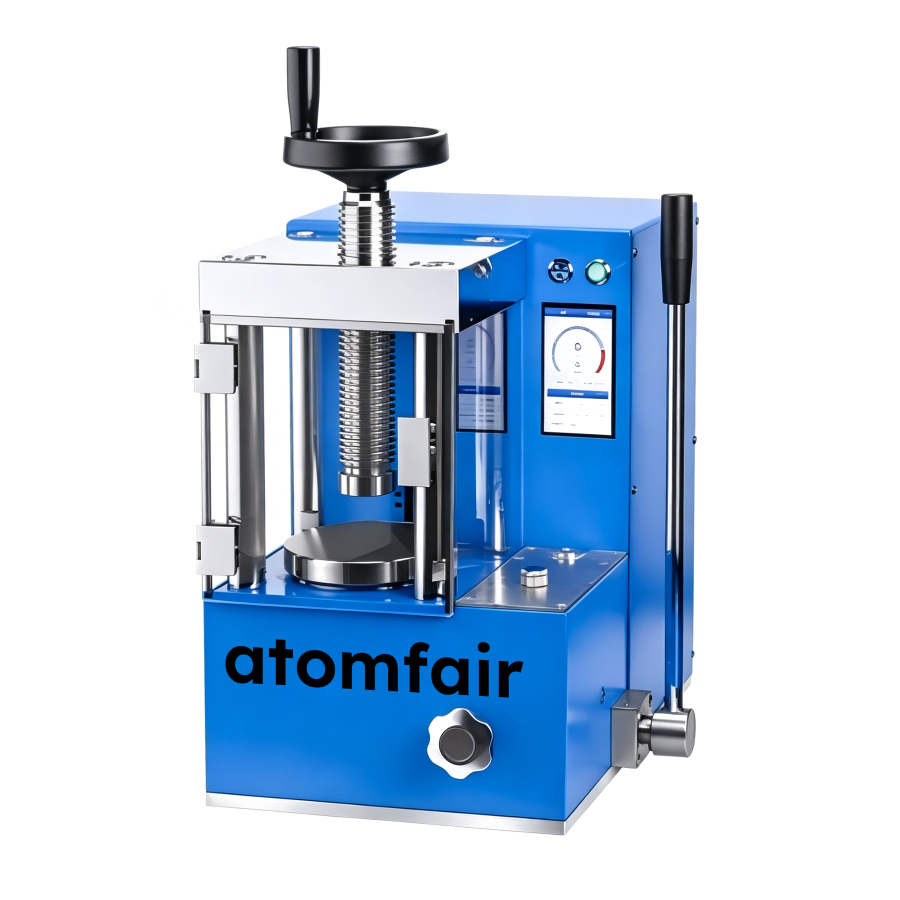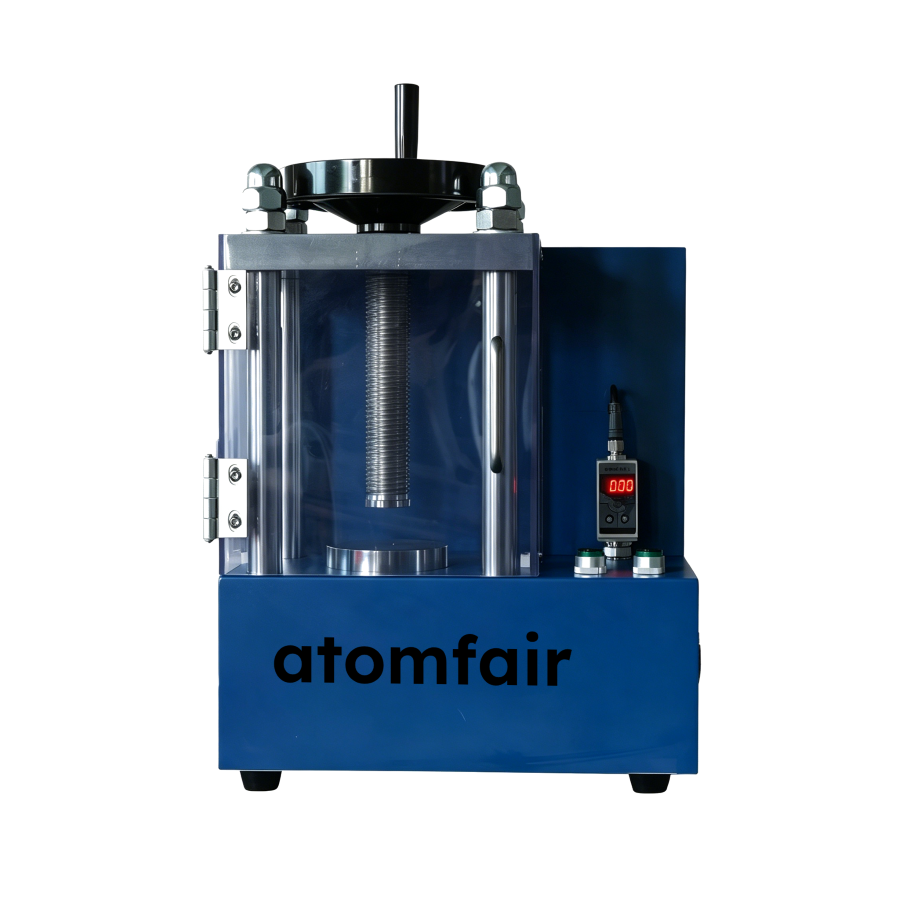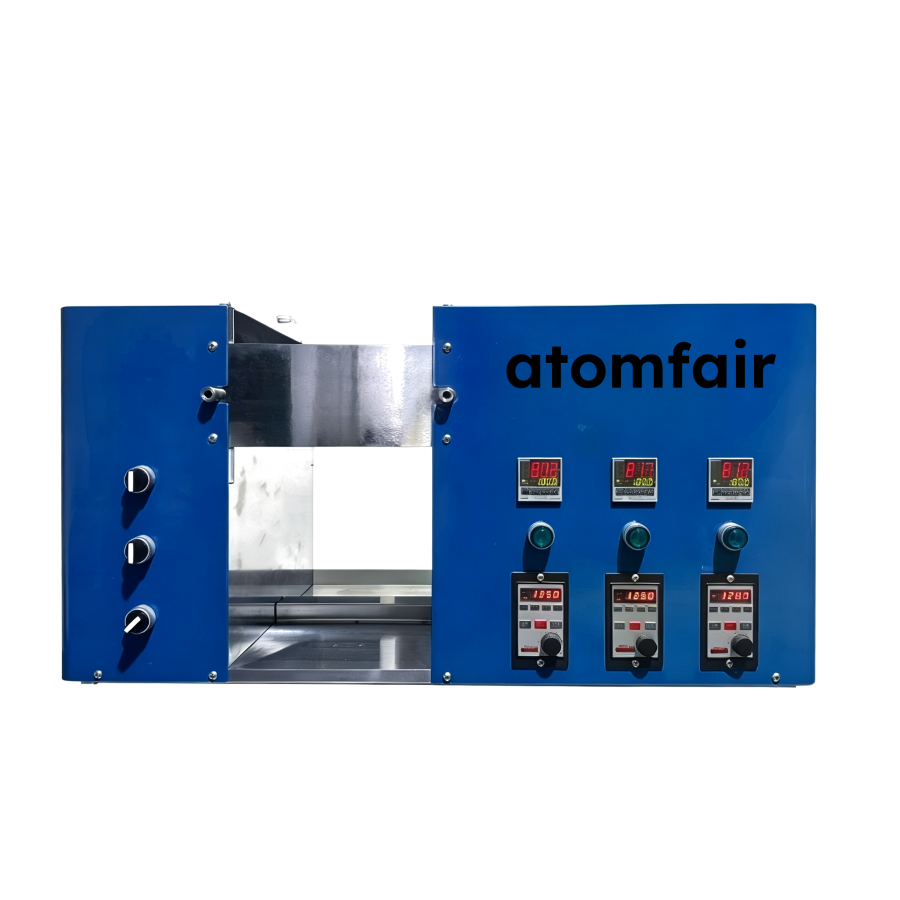
ATOMFAIR® ELECTRIC ROLLING MILL / MODEL ATOMFAIR-ROLLING582RESEARCH GRADE MATERIAL
|
|||||||||||||||||||||||||||||||||||
|
|||||||||||||||||||||||||||||||||||
|
TAILORED SOLUTIONS FOR RESEARCH
Contact our engineering team for technical support or official quotations.
EMAIL: inquiry@atomfair.com
|
|||||||||||||||||||||||||||||||||||
|
Manufacturer: Atomfair LLC
Brand: ATOMFAIR®
|
Operate within specified electrical and thermal limits to ensure safe performance. Store in a dry, clean environment to prevent contamination of precision components.
- Electrical Supply Constraint: Use only the rated AC220V/50Hz power supply to avoid electrical overload or damage.
- Temperature Limit Constraint: Do not exceed the maximum rolling temperature of 200°C to prevent overheating and equipment degradation.
- Ventilation Requirement: Ensure adequate ventilation around the equipment to dissipate heat from the motor and rolling operation.
- Roll Surface Cleanliness: Keep the rolling rolls clean and free of debris to maintain surface quality and prevent scoring or contamination of materials.
- Personal Protective Equipment: Wear appropriate personal protective equipment, including gloves and safety glasses, when handling materials near the rolls.
Follow these steps to safely and effectively roll battery electrode materials or metal sheets. Adjust parameters according to material thickness and desired density.
Required Equipment: Atomfair Electric Rolling Mill
- Inspect Equipment
Inspect the rolling rolls for cleanliness and any damage before starting operation. - Connect Power Supply
Connect the equipment to the specified AC220V/50Hz power supply and ensure proper grounding. - Adjust Rolling Thickness
Adjust the rolling thickness using the wedge-type gap adjustment mechanism to the desired value. - Set Feeding Speed
Set the feeding speed within the range of 0 to 10 mm/s based on material requirements. - Load Material
Load the material onto the feed table and align it with the roll gap. - Start Rolling
Activate the forward rotation function to begin the rolling process. - Monitor and Reverse
Monitor the rolling operation and use reverse rotation if the material needs to pass through again.
What is the trade-off between the Φ96mm roller diameter and achievable foil thickness uniformity for lithium battery cathode materials?
The Φ96mm roller diameter on the Atomfair Rolling582 provides a compact form factor while maintaining high precision with a roller cylindricity of ≤±2μm, ensuring uniform thickness for thin foils. However, the relatively small diameter may limit the maximum sheet width (up to 200mm) and can introduce higher bending stress on the rollers, potentially affecting edge uniformity during prolonged use. This design is optimized for laboratory-scale processing of battery materials and precious metals.
Can the Atomfair Rolling582 be used for calendering wet electrode coatings, or is it restricted to dry processing?
The Atomfair Rolling582 is designed specifically for dry preparation of battery materials and metals, as stated in its functional features. The rolling temperature is limited to 200°C, and the equipment lacks solvent handling or drying capabilities. For wet electrode coatings, the material must be fully dried prior to rolling to avoid contaminating the hard chrome roller surface (hardness HRC62) and to maintain precise thickness control.
What are the power and installation requirements for the Atomfair Rolling582 in a standard laboratory?
The Atomfair Rolling582 requires a single-phase AC220V/50Hz power supply with a power rating of 720W, compatible with standard laboratory outlets. With a weight of 150kg and dimensions of 830mm x 500mm x 480mm, it should be placed on a sturdy benchtop or floor-mounted. The equipment features forward and reverse rotation for easy operation, but proper grounding and operator training are recommended due to the rotating rollers.
The Atomfair Electric Rolling Mill (Model: Atomfair-Rolling582) offers precision rolling with ≤±2μm cylindricity and hard chrome rolls (HRC62), making it ideal for laboratory-scale thinning of battery electrodes and non-ferrous metals. Its 0-2mm thickness range and AC220V/50Hz power requirement are key operational constraints for potential buyers.
Positive
- High roller cylindricity ≤±2μm: Ensures uniform rolling thickness and smooth surface finish, critical for consistent electrode density in battery materials.
- Hard chrome rolls with HRC62 hardness: Provides excellent wear and corrosion resistance, extending service life and maintaining performance with precious and non-ferrous metals.
Trade-offs
- Limited rolling thickness to 2mm: The equipment only processes materials within a 0-2mm thickness range, restricting its use for thicker sample preparation or bulk rolling.
- AC220V/50Hz power dependency: Requires a standard AC220V/50Hz electrical supply; facilities with different mains voltage or frequency must use a transformer, adding infrastructure complexity.
Every advanced material, component, equipment, and instrument in our catalog is backed by rigorous testing. We maintain strict internal quality management frameworks and align with CE conformity metrics to deliver transparent, reproducible performance data via our public open-science repository.
To request raw batch performance data, submit formal vendor registration paperwork, or execute a fast-turnaround R&D manufacturing loop, contact us at inquiry@atomfair.com.
Item is dispatched under the Atomfair Shipping & Delivery Framework (Free worldwide shipping on orders over $59 USD excl. heavy equipment). Return is governed by the Atomfair Return & Refund Policy (7-day technical return window).