ATOMFAIR® 5130 PVDF BATTERY BINDERRESEARCH GRADE MATERIAL
|
||||||||||||||||||||||||||||||||||||||||||||
|
||||||||||||||||||||||||||||||||||||||||||||
|
|||
|
TAILORED SOLUTIONS FOR RESEARCH
Contact our engineering team for technical support or official institutional quotations.
EMAIL: inquiry@atomfair.com
|
|||
|
Manufacturer: Atomfair LLC
Brand: ATOMFAIR®
|
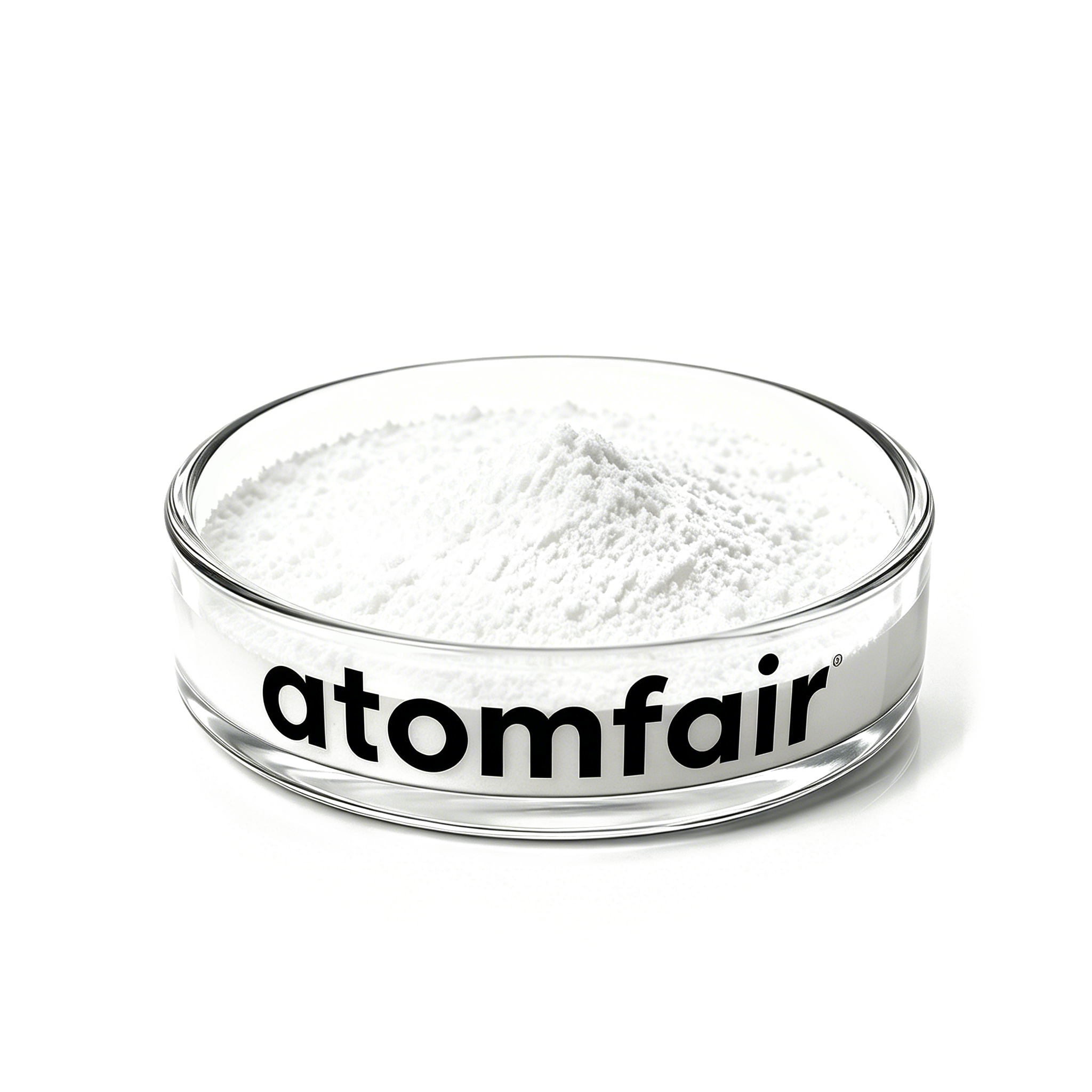
PVDF powder is hygroscopic and requires storage in a dry atmosphere below 25°C. The material must be protected from moisture to maintain its binding performance in electrode slurry preparation.
- Moisture sensitivity: Store the PVDF powder in a sealed container with desiccant to prevent moisture absorption.
How does the elongation at break range of 50-250% balance flexibility with mechanical strength for lithium-ion battery electrodes?
The elongation at break of 50-250% provides a broad design window for electrode flexibility, accommodating various coating and calendaring processes. The tensile strength at break of 34-43 MPa ensures adequate mechanical integrity, while the flexural modulus of 1360-2210 MPa maintains structural support. This combination allows optimization between cycle life and energy density without sacrificing electrode cohesion.
What electrode materials and conductive agents are compatible with 5130 PVDF binder for lithium battery cathodes?
The 5130 PVDF powder is designed as a universal binder for lithium battery electrodes, effectively bonding active materials such as NMC and LFP, conductive agents like carbon black, and current collectors. Its high viscosity and good toughness ensure uniform slurry dispersion and robust adhesion, making it suitable for high-end manufacturing. No specific incompatibilities are noted for standard cathode formulations.
What are the recommended storage conditions for 5130 PVDF powder to maintain its performance as a battery binder?
Store the PVDF powder in a sealed container in a dry, cool environment to prevent moisture absorption, which can affect slurry viscosity and electrode coating uniformity. The powder's specific gravity of 1.77-1.79 g/cm³ indicates dense particles that can agglomerate if exposed to humidity. Avoid temperatures above the melting peak of 162-172°C to preserve polymer integrity.
This PVDF powder 5130 provides high viscosity and toughness as a lithium battery binder, improving electrode bonding and cycling stability, but its powder form and melting temperature range (162–172°C) demand precise processing conditions.
Positive
- Enhanced electrode bonding and cycling stability: The binder efficiently bonds active materials, conductive agents, and current collectors, improving electrode layer integrity and cycle life.
- High viscosity and toughness: Specified as having good toughness and high viscosity, these properties contribute to robust slurry cohesion and electrode structural performance.
Trade-offs
- High viscosity increases mixing demands: The inherently high viscosity may require optimized mixing times and shear conditions to achieve homogeneous slurry dispersion.
- Melting range limits thermal processing: With a melting peak temperature of 162–172°C, the material's processing temperature window is constrained, requiring careful thermal management during electrode drying or lamination.
Every advanced material, component, equipment, and instrument in our catalog is backed by rigorous testing. We maintain strict internal quality management frameworks and align with CE conformity metrics to deliver transparent, reproducible performance data via our public open-science repository.
To request raw batch performance data, submit formal vendor registration paperwork, or execute a fast-turnaround R&D manufacturing loop, contact us at inquiry@atomfair.com.
Item is dispatched under the Atomfair Shipping & Delivery Framework (Free worldwide shipping on orders over $59 USD excl. heavy equipment). Return is governed by the Atomfair Return & Refund Policy (7-day technical return window).