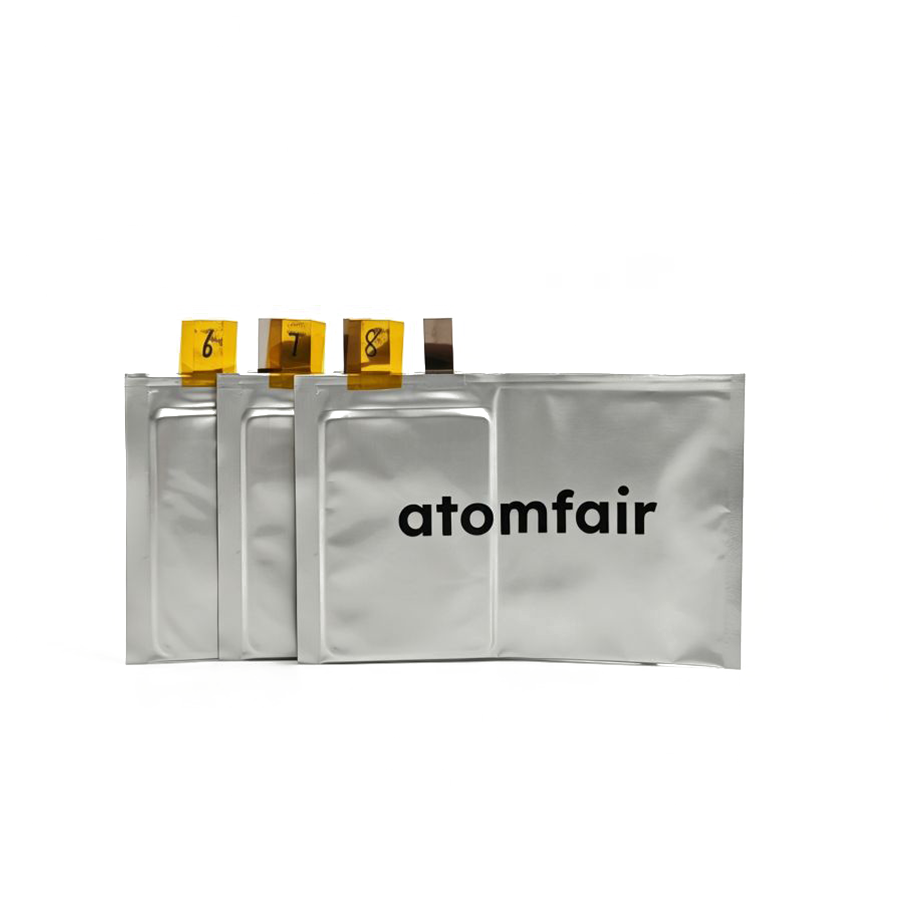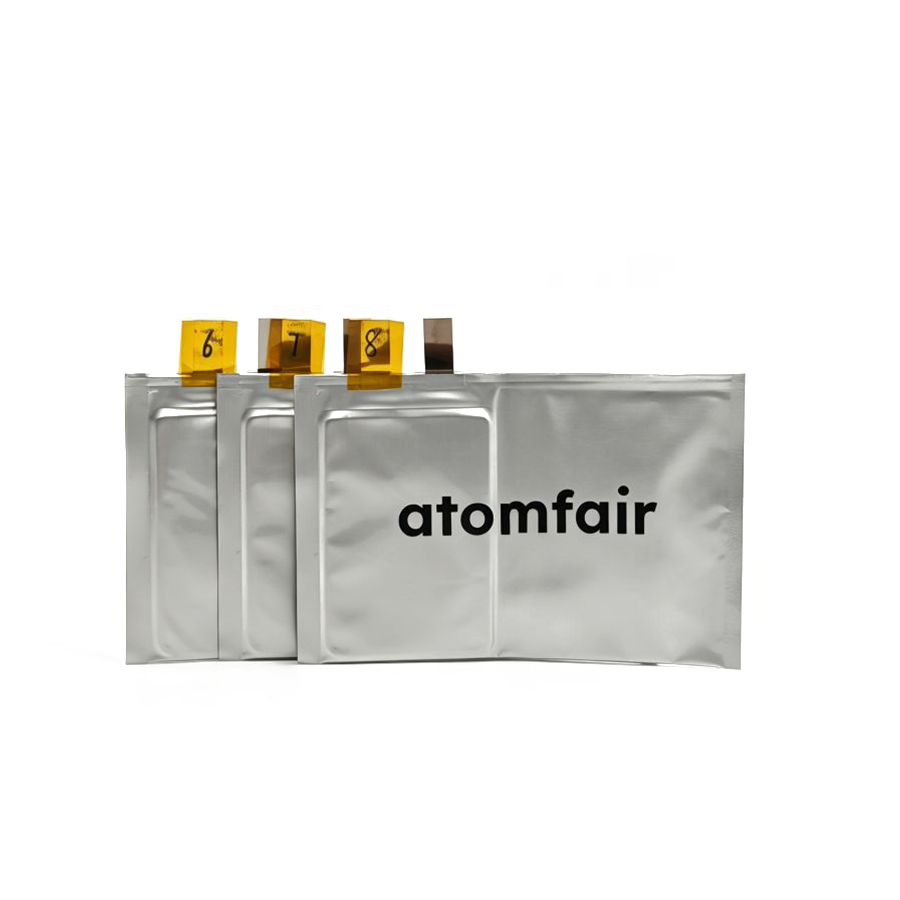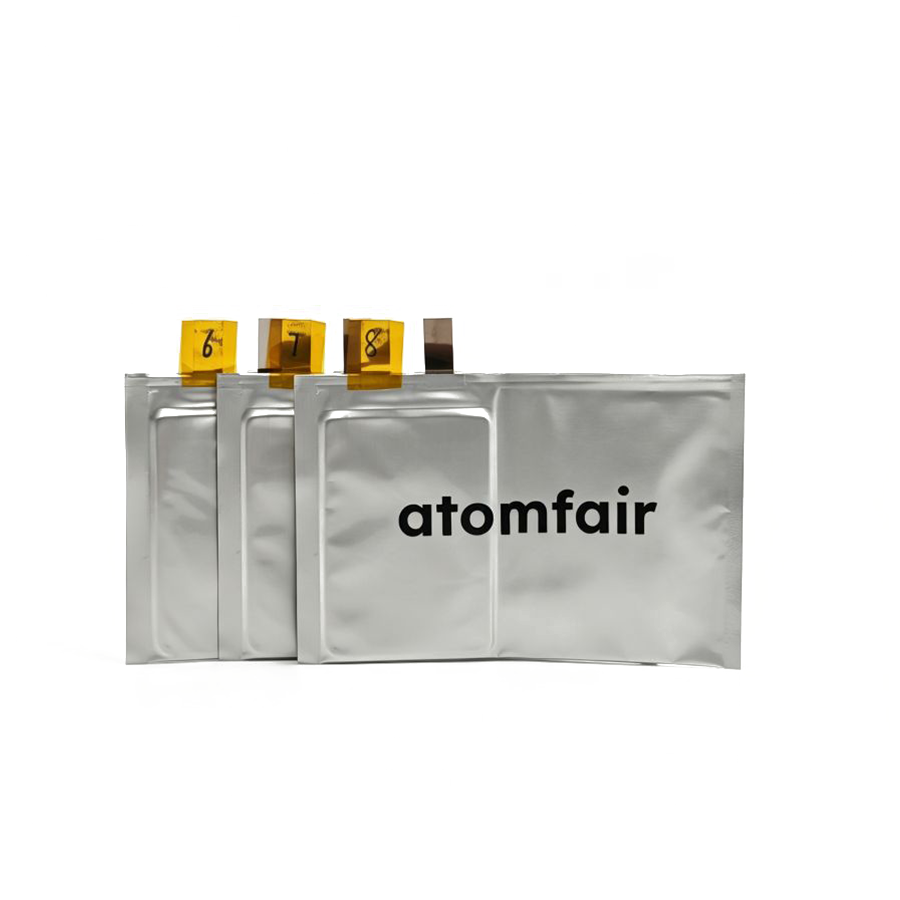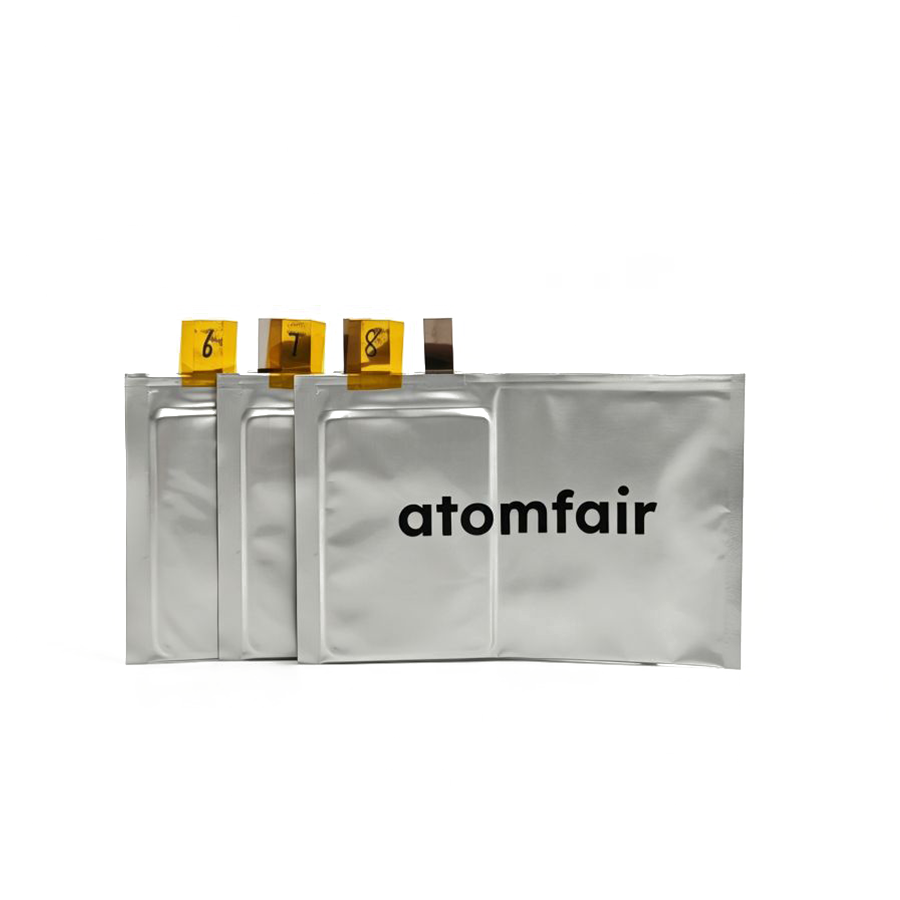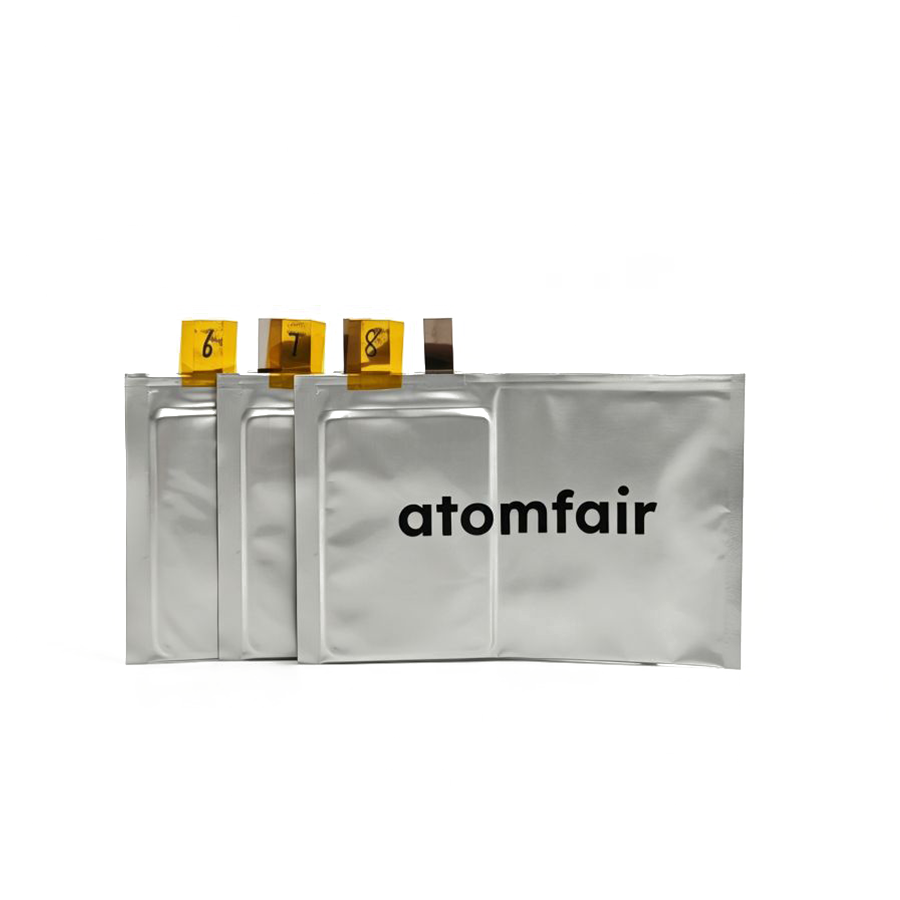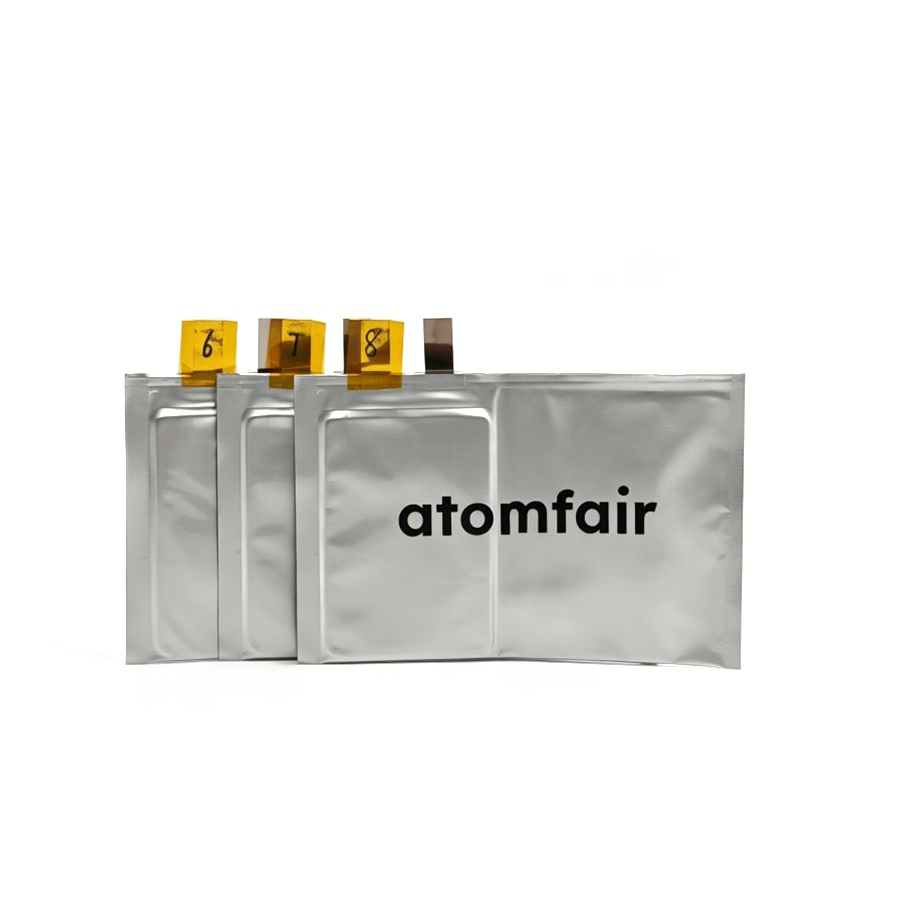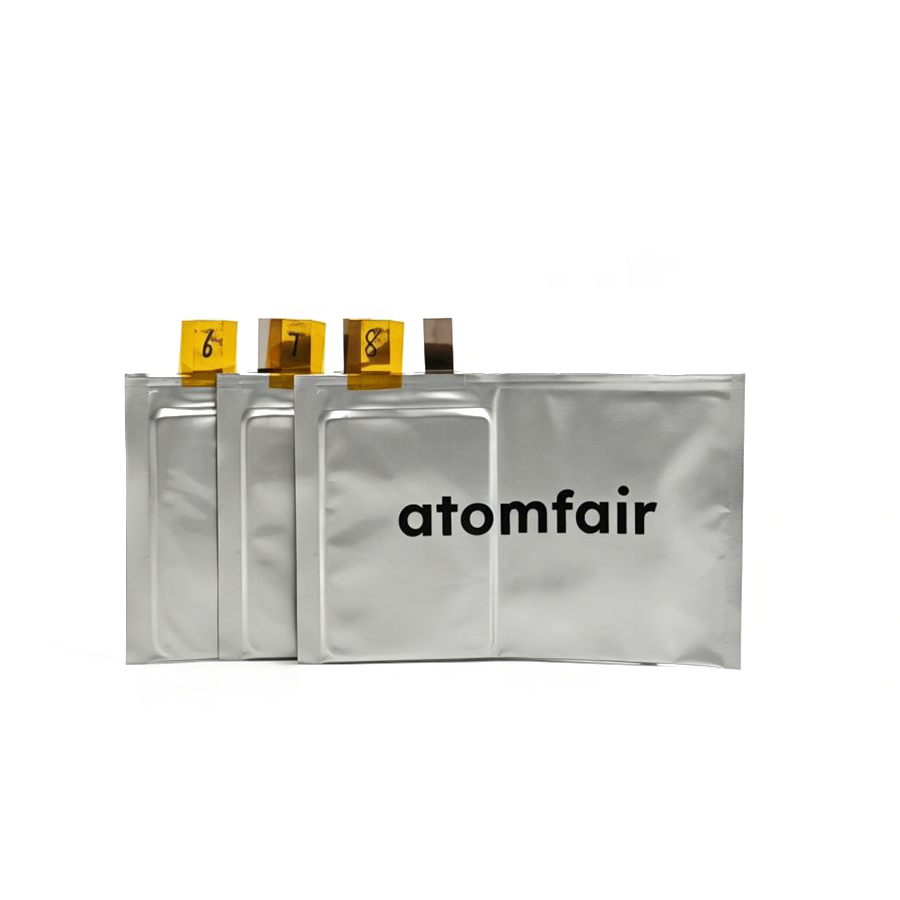
NVP Sodium-Ion Dry Pouch Cell (1Ah) – Hard Carbon Anode |
||||||||||||||||||||||||||||||||||||||||||||||||||||
|
||||||||||||||||||||||||||||||||||||||||||||||||||||
|
||||||||||||
Related Products |
||||||||||||
|
||||||||||||
|
TAILORED SOLUTIONS FOR RESEARCH
Contact our engineering team for technical support or official institutional quotations.
EMAIL: inquiry@atomfair.com
|
||||||||||||
| Manufacturer: Atomfair LLC Brand: ATOMFAIR |
This dry pouch cell must be filled with electrolyte under inert atmosphere before activation and requires strict moisture control throughout assembly. Multi-layer interfacial stability and uniform stack pressure are critical to prevent capacity fade and internal short circuits.
- Electrolyte Filling Requirement: The cell is supplied electrolyte-free and must be filled with an appropriate sodium-ion electrolyte inside an argon-filled glovebox with oxygen and water levels below 0.1 ppm.
- Moisture Sensitivity: All materials, including the NVP cathode and hard carbon anode, are moisture-sensitive and require dry-room conditions (dew point ≤ -40°C) or glovebox handling to avoid degradation.
- Voltage Window Limits: The operating voltage range is defined as 2.5 V to 3.8 V; exceeding these limits risks electrolyte decomposition and irreversible capacity loss.
- Stack Pressure Uniformity: The multi-layer pouch stack must be compressed uniformly using external fixtures to prevent delamination and ensure consistent electrode-electrolyte contact.
- Interfacial Integrity Monitoring: Dynamic resistance and interfacial degradation should be tracked during cycling to validate the polyanionic full-cell design and identify failure modes such as cracking or gas evolution.
What is the impact of the hard carbon anode's 295 mAh/g specific capacity and 0.9 g/cc compaction density on the 1Ah dry pouch cell's rate capability?
The hard carbon anode's specific capacity of 295 mAh/g is typical for sodium-ion systems, but its low compaction density of 0.9 g/cc leads to a porous electrode structure with an areal density of 5 mg/cm². This configuration may increase ionic resistance at high charge/discharge rates, making the cell more suitable for low-to-moderate rate validation profiling rather than high-power testing.
Can the 12 µm PE + 2 µm ceramic coated separator in this dry pouch cell be used with solid-state electrolytes?
The separator is designed as a dual-layer polyethylene (12 µm) with a ceramic coating (2 µm), which is compatible with liquid electrolyte infiltration but not intended as a solid-state electrolyte membrane. For solid-state electrolyte testing, researchers must introduce their own solid electrolyte layer between the electrodes, using this dry cell as a platform specifically engineered for meticulous solid state electrolyte pouch cell validation.
What precautions are necessary when handling the unfilled dry pouch cell before electrolyte introduction?
The unfilled dry pouch cell contains high-activity electrodes with 93.5% active NVP cathode and 94.5% active hard carbon anode, which are sensitive to moisture and air. Storage under inert atmosphere is required to maintain electrode integrity and prevent pre-lithiation or degradation before electrolyte filling and activation.
This dry pouch cell provides an electrolyte-free NVP/HC full-cell platform optimized for multi-layer solid-state battery research, enabling precise interfacial and resistance profiling without electrolyte influence.
Positive
- High-stability NVP cathode design: The 93.5% active material NVP polyanionic matrix with 1.8 g/cc compaction density provides a stable, high-voltage positive electrode for reliable full-cell validation.
- Isolated interfacial degradation study: The multi-layer dry architecture eliminates electrolyte interference, allowing unambiguous isolation of interfacial degradation and dynamic resistance changes during testing.
Trade-offs
- Exogenous electrolyte filling required: This is an electrolyte-free dry cell; the buyer must fill it with a compatible electrolyte under controlled atmosphere, requiring additional infrastructure and expertise.
- Thin ceramic-coated separator handling: The 12 μm PE + 2 μm ceramic separator is mechanically delicate; careful assembly is needed to avoid puncture or short circuits in multi-layer stacking.
Every advanced material, component, equipment, and instrument in our catalog is backed by rigorous testing. We maintain strict internal quality management frameworks and align with CE conformity metrics to deliver transparent, reproducible performance data via our public open-science repository.
To request raw batch performance data, submit formal vendor registration paperwork, or execute a fast-turnaround R&D manufacturing loop, contact us at inquiry@atomfair.com.
Item is dispatched under the Atomfair Shipping & Delivery Framework (Free worldwide shipping on orders over $59 USD excl. heavy equipment). Return is governed by the Atomfair Return & Refund Policy (7-day technical return window).