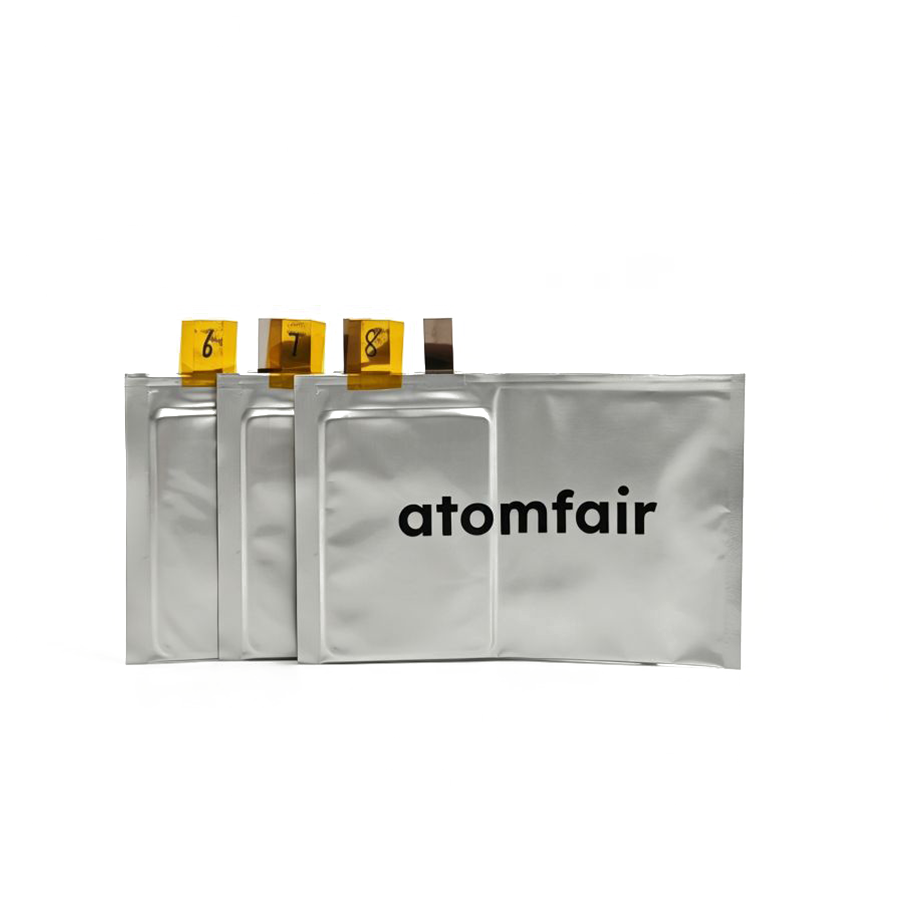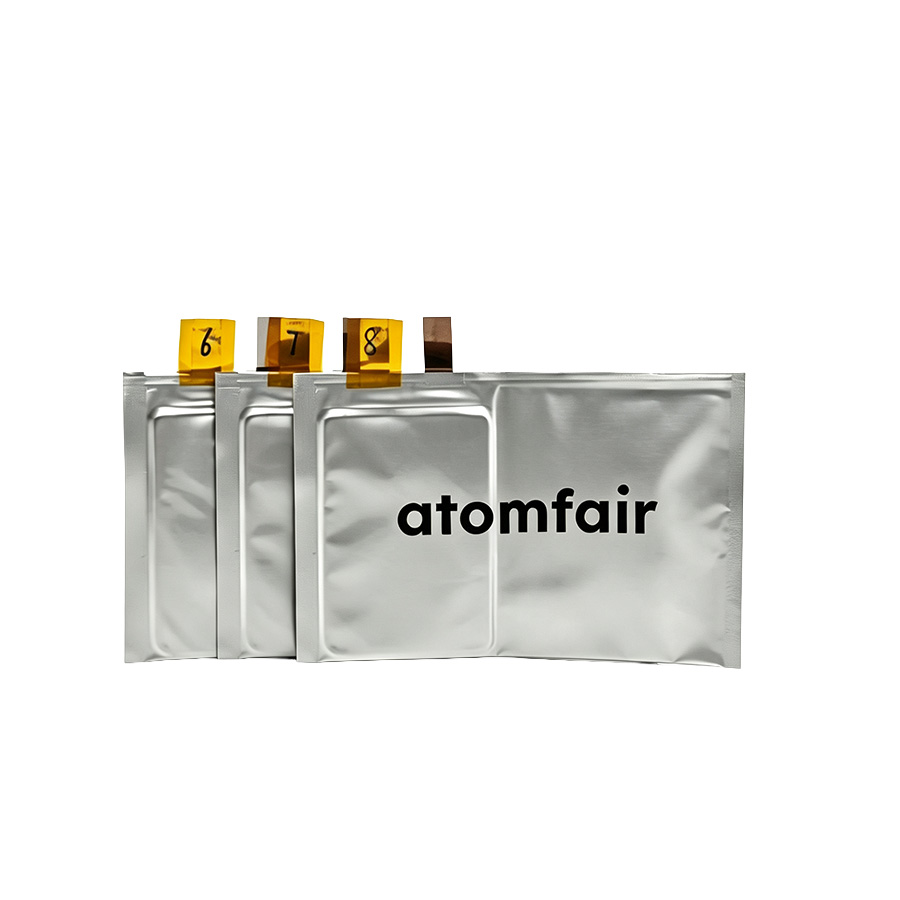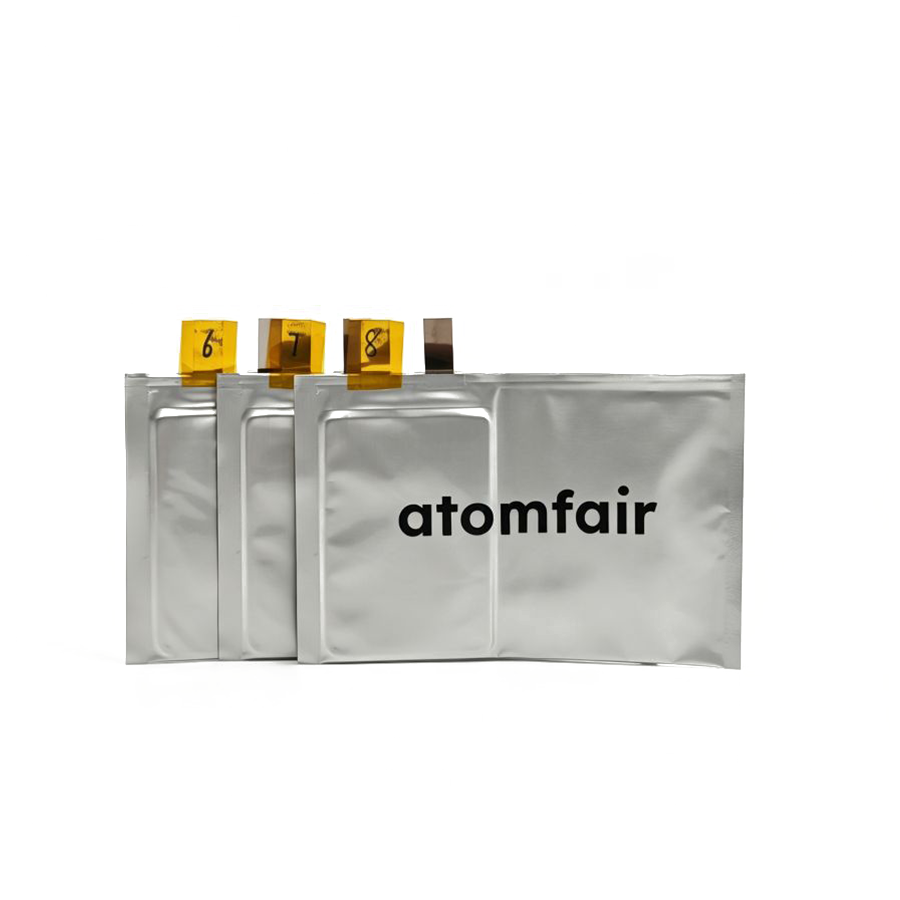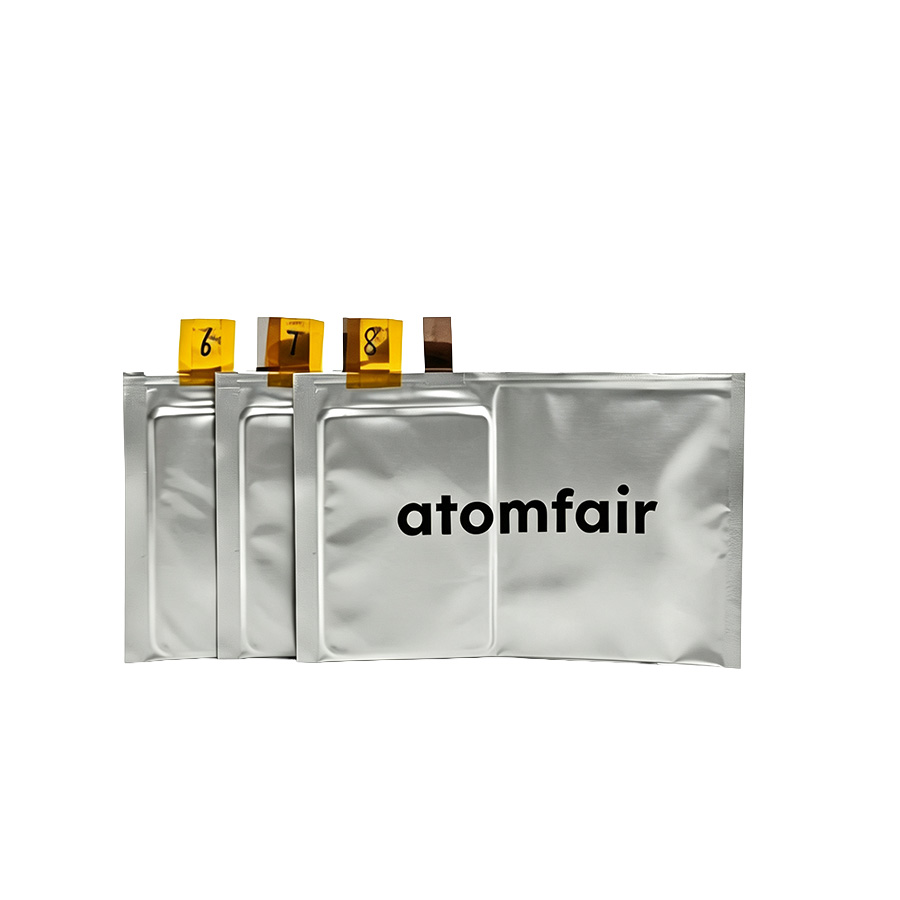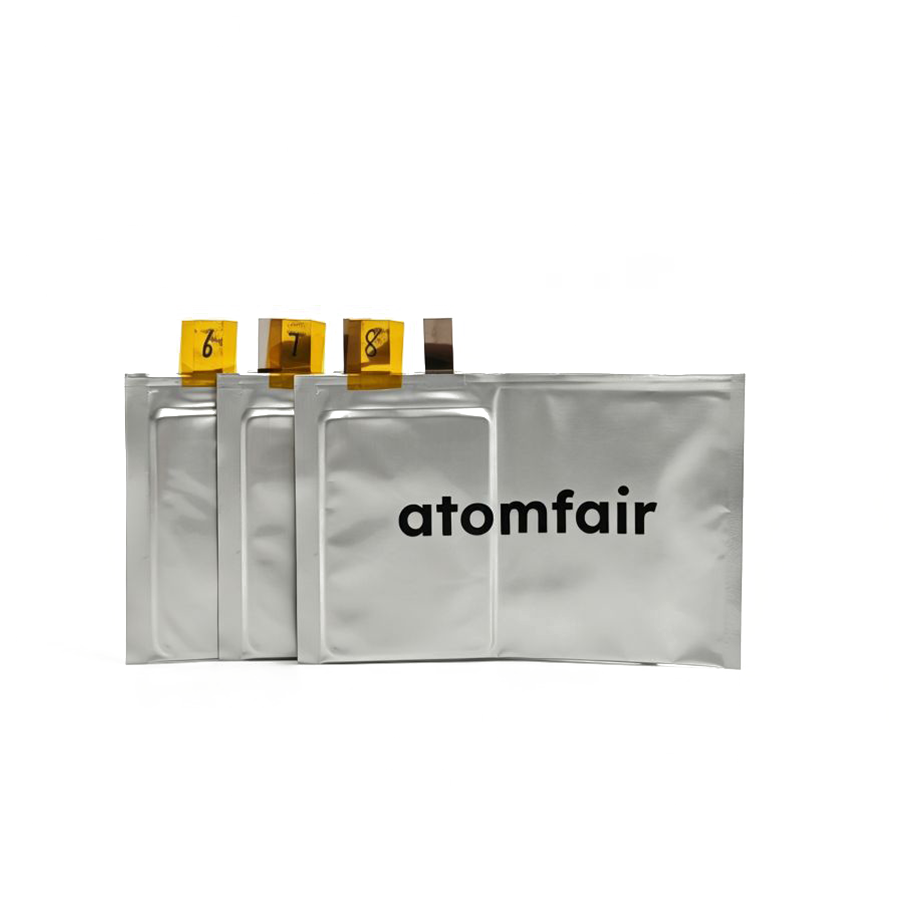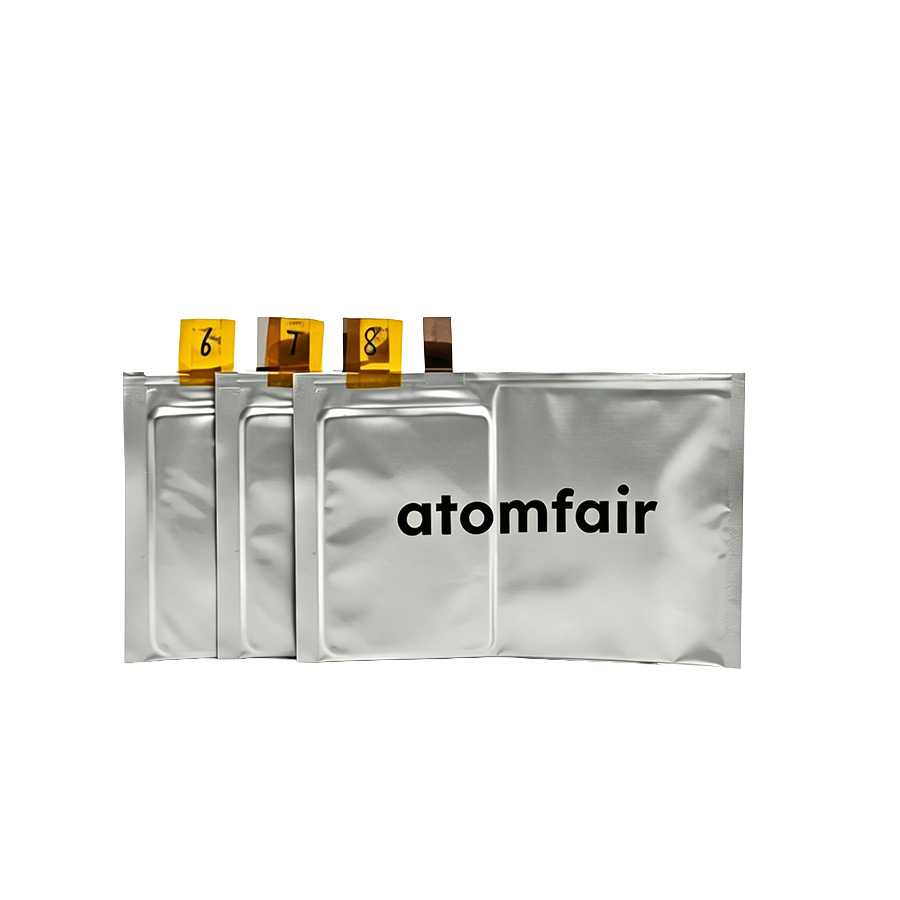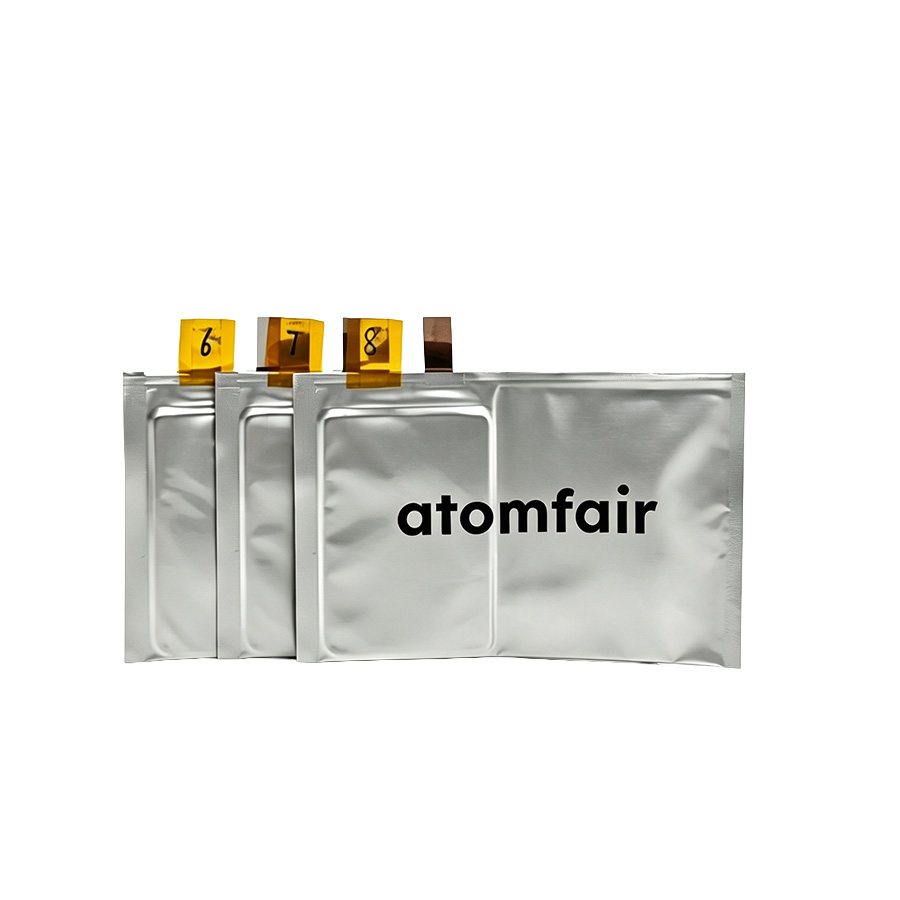
NFPP Sodium-Ion Dry Pouch Cell (0.4 Ah, 4/5 Layers) – Anode-Free, Al/C-3 Current CollectorProduct Type: Research-grade dry pouch cell
Research-grade laboratory product
|
||||||||||||||||||||||||||||||||||||||||||||||||||||||||
|
||||||||||||||||||||||||||||||||||||||||||||||||||||||||
How does the coating areal density of 18 mg/cm2 on the NFPP cathode translate into cell capacity for this 0.4 Ah dry pouch cell?
With a specific capacity of 100 mAh/g and 95% active material, the areal capacity of the NFPP cathode is approximately 1.71 mAh/cm2 (18 mg/cm2 × 0.95 × 100 mAh/g / 1000). The 45.5 × 64 mm electrode footprint, combined with a 4/5-layer stack, yields the stated 0.4 Ah nominal capacity. This loading is typical for research cells and allows direct comparison of electrode utilization without kinetic limitations from thick coatings.
What is the role of the Al/C-3 current collector in the anode-free architecture of this sodium-ion pouch cell?
The Al/C-3 current collector serves as both the substrate for sodium plating and the current collector in the anode-free design. The source specifies its dimensions as 46.5 × 65 mm, slightly larger than the cathode (45.5 × 64 mm) to ensure complete sodium-plated coverage. This configuration enables direct evaluation of sodium plating/stripping behavior and SEI formation without conventional anode active material, which is critical for next-generation anode-free sodium-ion battery research.
Why is the separator specification of 12 μm PE + 2 μm ceramic critical for this dry pouch cell?
The 12 μm polyethylene (PE) base layer provides a thin, porous separation membrane, while the 2 μm ceramic coating adds thermal stability and mechanical puncture resistance. In an anode-free sodium-ion design where sodium plating occurs directly on the current collector, the ceramic coating helps mitigate dendrite penetration that could cause short circuits. This separator configuration is a key infrastructure parameter for safe cell assembly and subsequent electrochemical testing.
This NFPP sodium-ion dry pouch cell (0.4 Ah, 4/5 layers) provides a pre-assembled, unfilled platform for laboratory studies of electrolyte effects and electrode configurations, with defined cathode loading (18 mg/cm2, 95% active) and a thin ceramic-coated separator. The 2.5–3.6 V voltage window and small capacity target fundamental evaluation rather than high-energy testing.
Positive
- Pre-characterized dry-pouch platform: The unfilled pouch cell with controlled electrode loading (18 mg/cm2 areal density, 95% active NFPP) and specified specific capacity (100 mAh/g) enables reproducible electrolyte and activation studies, reducing variability from in-house electrode fabrication.
- Consistent electrode geometry for comparison: Fixed cathode (45.5 x 64 mm) and anode (46.5 x 65 mm) dimensions with a 4/5-layer stack provide a standardized geometry for evaluating separator coatings, electrolyte formulations, or dry-core handling protocols.
Trade-offs
- Requires electrolyte filling and formation: As a dry pouch without electrolyte, the cell requires liquid electrolyte addition, wetting, and formation cycling, introducing an additional processing step that can affect final performance if not carefully controlled.
- Limited operational voltage window: The 2.5–3.6 V voltage range restricts the usable energy density compared to wider-voltage sodium-ion chemistries, making this cell best suited for fundamental studies rather than high-voltage or high-energy applications.
Every advanced material, component, equipment, and instrument in our catalog is backed by rigorous testing. We maintain strict internal quality management frameworks and align with CE conformity metrics to deliver transparent, reproducible performance data via our public open-science repository.
To request raw batch performance data, submit formal vendor registration paperwork, or execute a fast-turnaround R&D manufacturing loop, contact us at inquiry@atomfair.com.
Item is dispatched under the Atomfair Shipping & Delivery Framework (Free worldwide shipping on orders over $59 USD excl. heavy equipment). Return is governed by the Atomfair Return & Refund Policy (7-day technical return window).