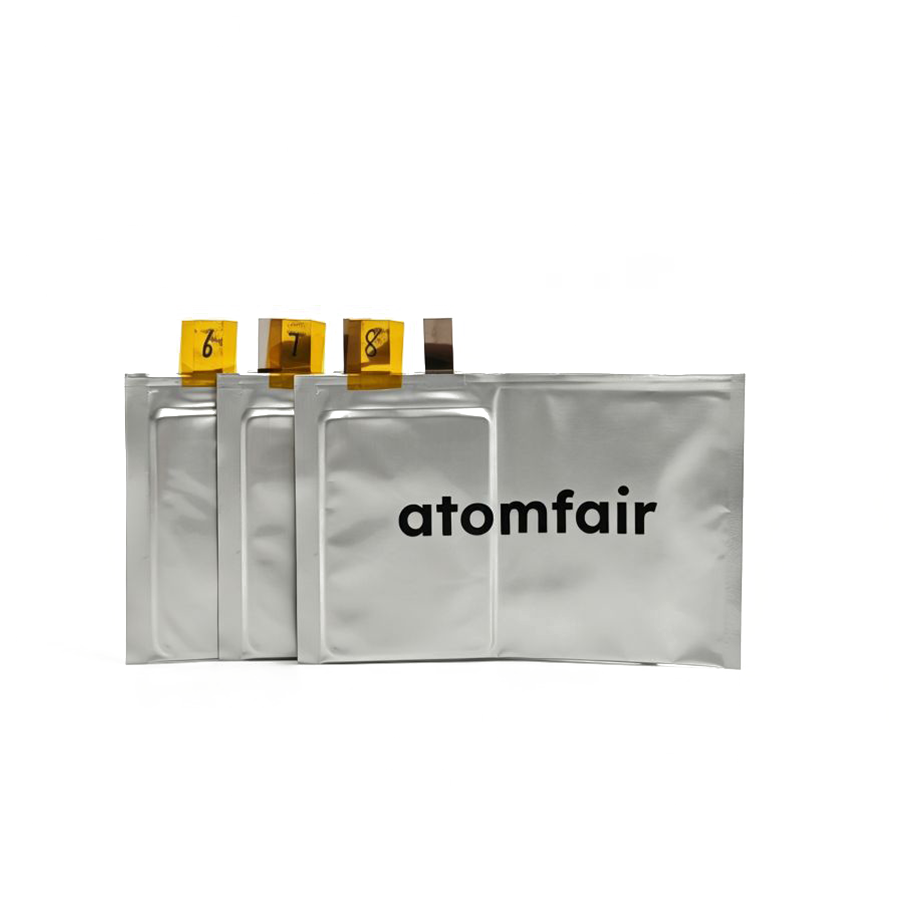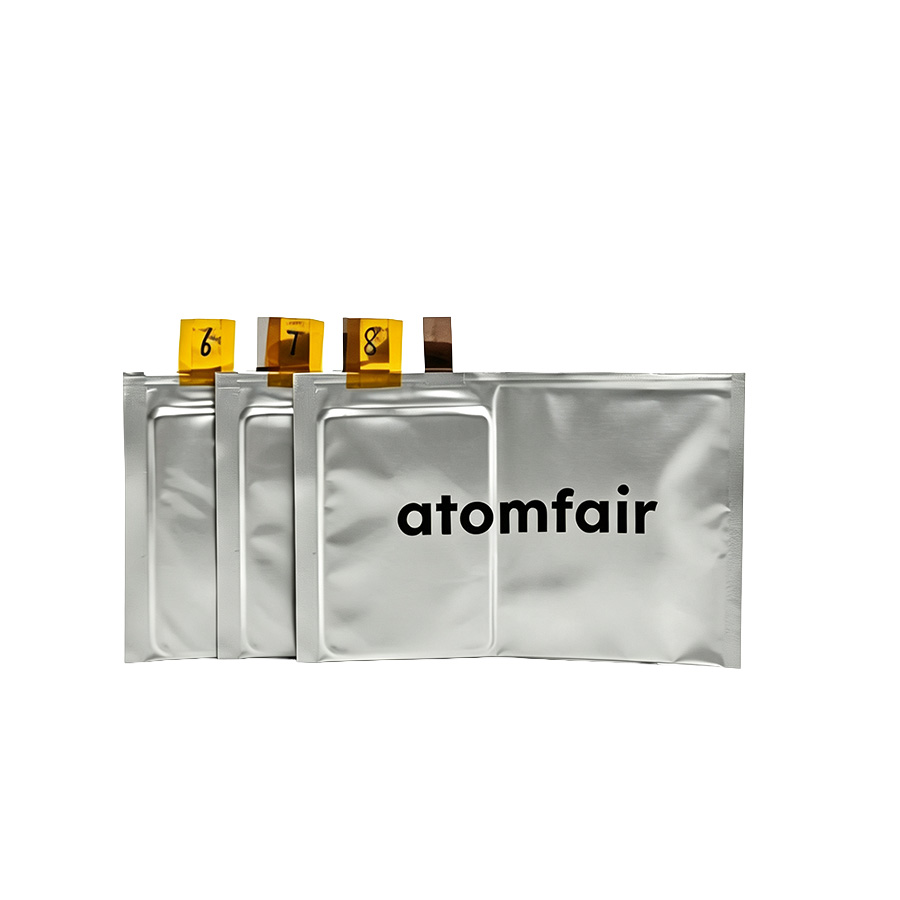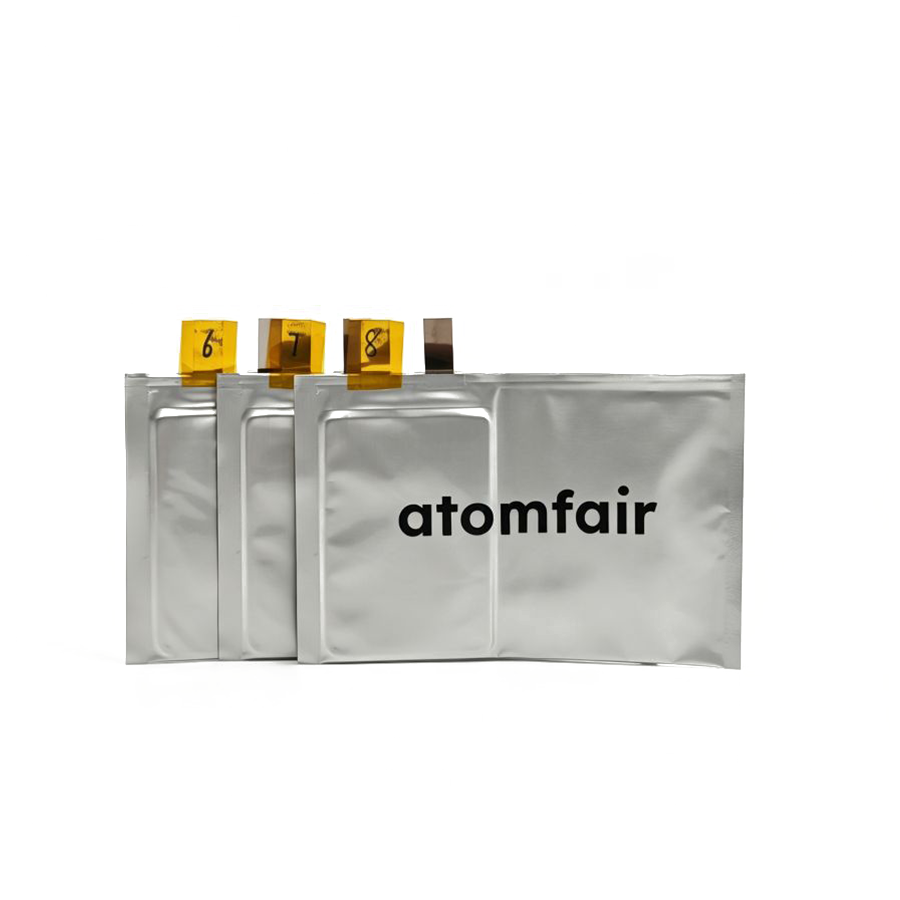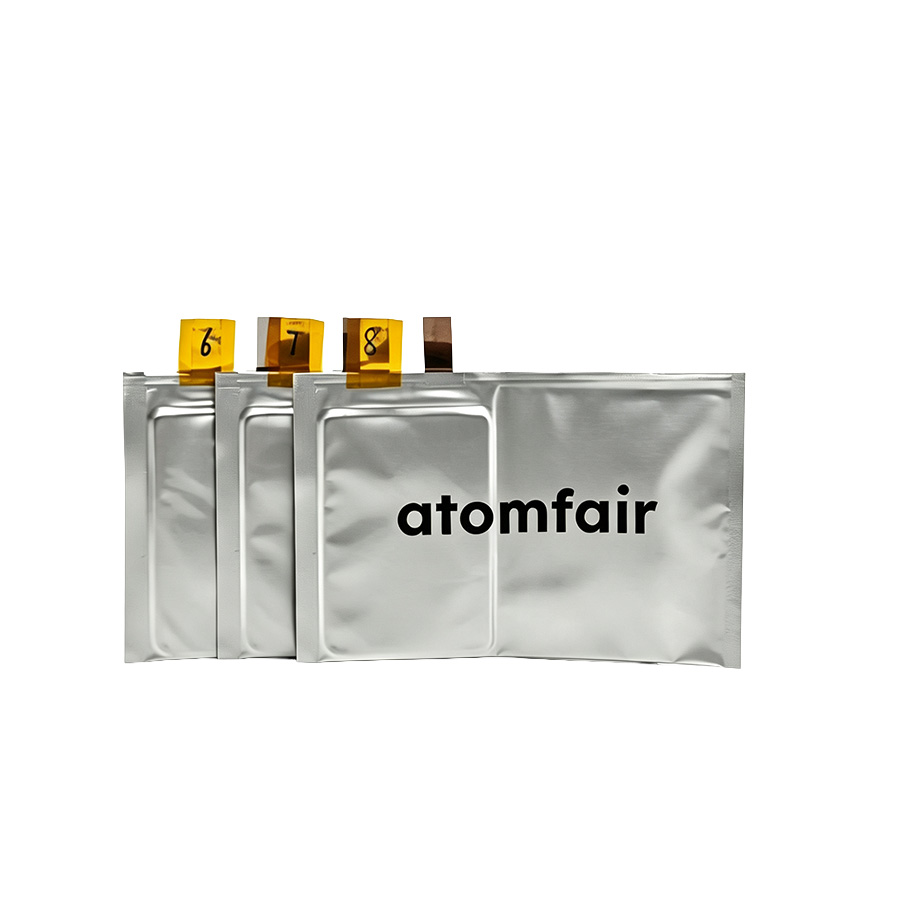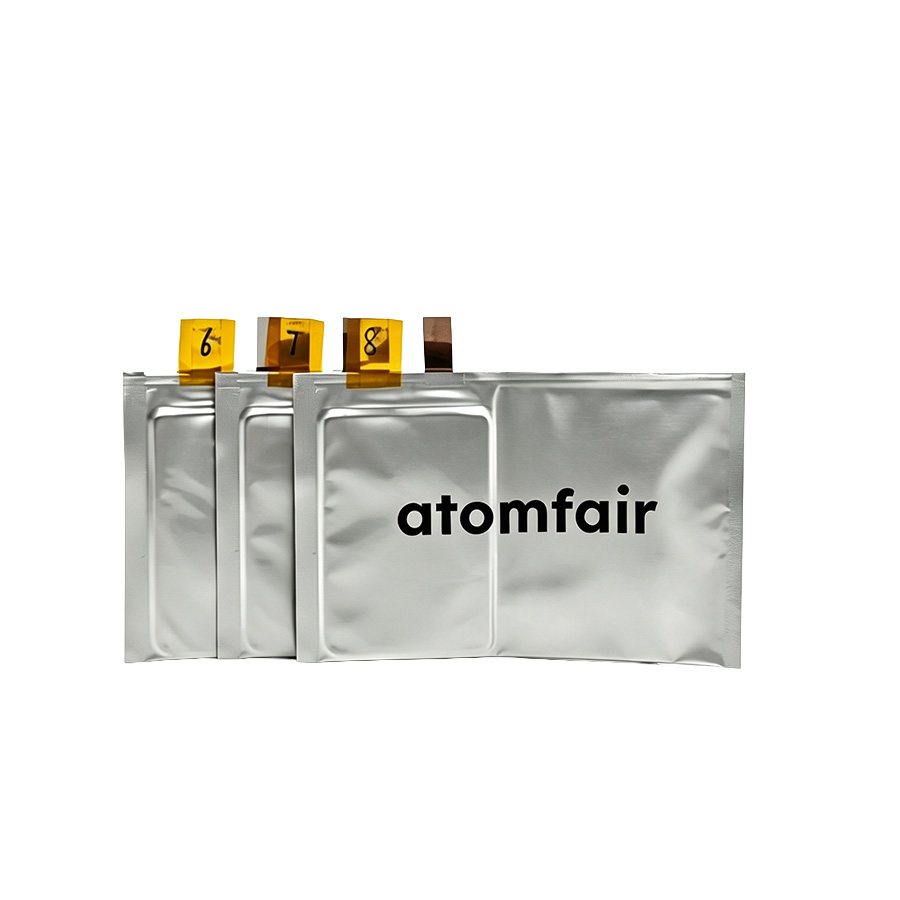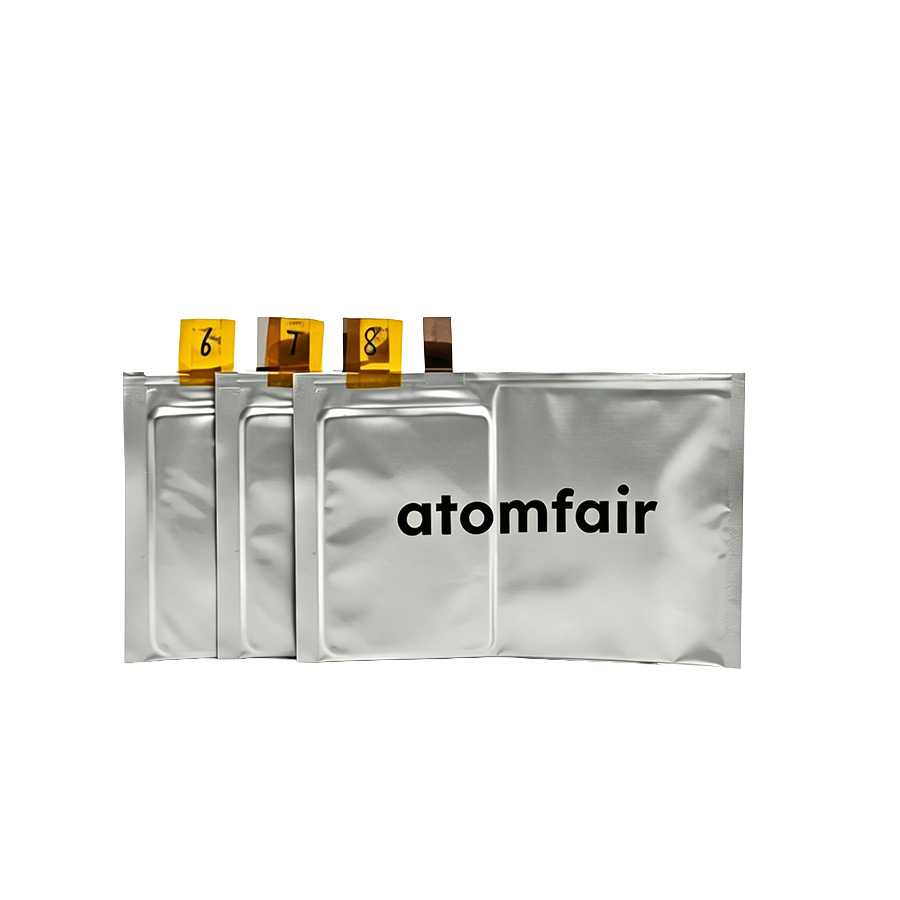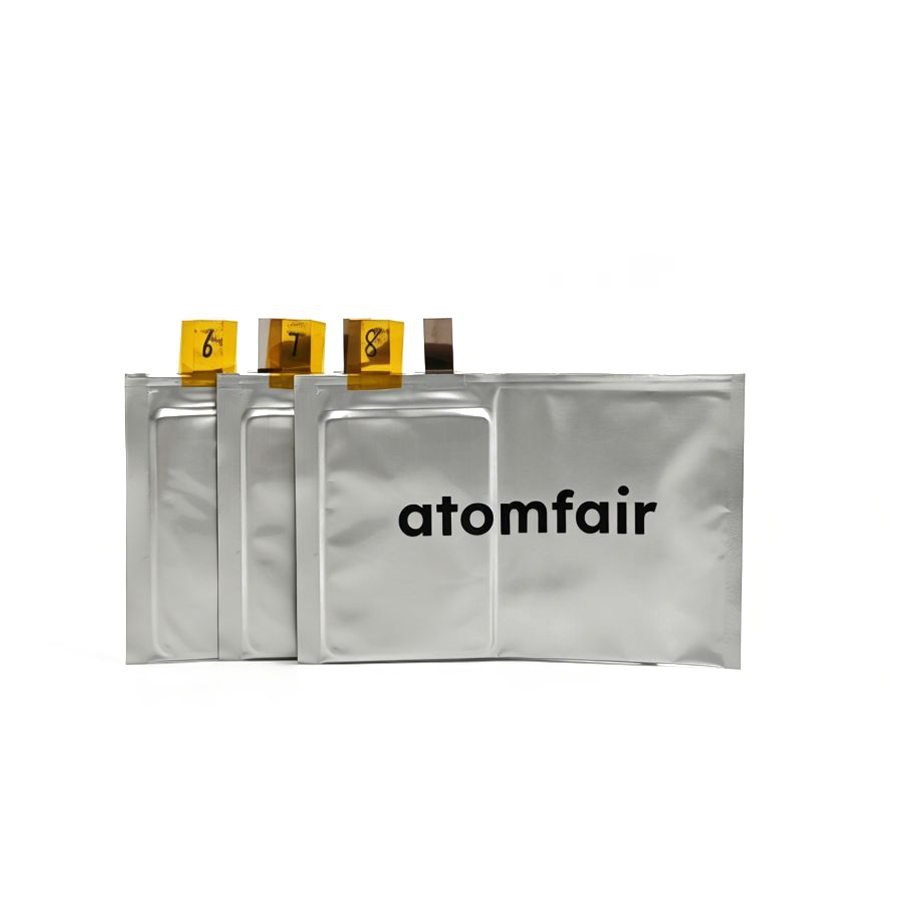
NVP Sodium-Ion Dry Pouch Cell (1Ah, 14 Layers) – Anode-Free, Carbon-Coated Aluminum Foil14-LAYER MULTILAYER CORES
|
||||||||||||||||||||||||||||||||||||||||||||||||||||
|
||||||||||||||||||||||||||||||||||||||||||||||||||||
|
||||||||||||
Related Products |
||||||||||||
|
||||||||||||
|
TAILORED SOLUTIONS FOR RESEARCH
Contact our engineering team for technical support or official institutional quotations.
EMAIL: inquiry@atomfair.com
|
||||||||||||
| Manufacturer: Atomfair LLC Brand: ATOMFAIR |
This electrolyte-free multilayer pouch cell must be stored in an inert, moisture-free environment to prevent oxidation of the carbon-coated aluminum current collector and absorption of atmospheric water. The 14-layer stacked architecture is mechanically sensitive and requires careful handling to preserve interlayer alignment and avoid internal short circuits.
- Moisture Sensitivity: Store the dry cell in an argon-filled glovebox or vacuum desiccator with <1 ppm water and oxygen to maintain electrode integrity prior to electrolyte filling.
- Mechanical Integrity: Avoid bending, puncturing, or applying excessive pressure to the pouch body to prevent delamination of the multilayer stack and loss of electrical isolation.
- Electrostatic Discharge Precautions: Ground all handling equipment and personnel to prevent electrostatic discharge that could damage the thin carbon coating on the aluminum foil substrate.
- Temperature Stability: Keep the pouch cell below 30°C during storage to delay any potential thermal degradation of the polyanionic NVP cathode matrix.
How does the 14-layer stacked architecture improve isolation of bulk charging degradation from surface effects?
The 14-layer multilayer matrix layout enables dense stack pressures that isolate bulk charging degradation variables from surface parasites, providing precise electrochemical control not achievable in single-layer cells. This architecture, designed for multi-interface solid state electrolyte pouch cell scaling studies, allows researchers to evaluate custom sodium electrolyte formulas without confounding factors from parasitic surface reactions.
What sodium electrolyte formulations are compatible with this dry pouch cell for testing?
This electrolyte-free cell is specifically engineered as an evaluation control for industrial institutions developing custom sodium electrolyte formulas, including solid-state electrolytes. Compatibility is based on the NVP polyanionic cathode and carbon-coated aluminum anode; users must verify their electrolyte's chemical stability and wetting behavior with the 93.5% active NVP cathode and Al/C foil architecture prior to testing.
What handling infrastructure is required for this electrolyte-free dry pouch cell before filling?
The cell must be stored and processed in a moisture-free environment, such as a dry room or argon-filled glovebox, because it is electrolyte-unfilled and its dry architecture is susceptible to contamination. The 14/15 multilayer precision stacked core design also demands careful alignment during handling to preserve layer integrity before electrolyte injection under controlled conditions.
This 14-layer dry pouch cell, featuring a high-loading NVP cathode and carbon-coated aluminum anode, is engineered for electrolyte scaling studies in sodium-ion solid-state systems. Its dry, unfilled architecture and multilayer stack provide precise electrochemical control under pressure, but require post-delivery electrolyte fill and premium substrate costs.
Positive
- High-purity NVP cathode loading: 93.5% active material with 90 mAh/g specific capacity and 1.7 g/cc compaction density enables high energy density and consistent electrochemical performance in scaling studies.
- 14-layer dry stack architecture: Multilayer stacked format with optimized NP ratio couples dense stack pressure control, isolating bulk degradation from surface parasites for accurate solid-state electrolyte evaluation.
Trade-offs
- Electrolyte-free dry delivery: Cell is supplied unfilled, requiring post-delivery electrolyte injection and hermetic sealing — adds handling steps and need for compatible filling infrastructure.
- Premium carbon-coated foil cost: The carbon-coated aluminum substrate introduces a material cost premium, as noted in the product description, which must be weighed in budget for scaled R&D programs.
Every advanced material, component, equipment, and instrument in our catalog is backed by rigorous testing. We maintain strict internal quality management frameworks and align with CE conformity metrics to deliver transparent, reproducible performance data via our public open-science repository.
To request raw batch performance data, submit formal vendor registration paperwork, or execute a fast-turnaround R&D manufacturing loop, contact us at inquiry@atomfair.com.
Item is dispatched under the Atomfair Shipping & Delivery Framework (Free worldwide shipping on orders over $59 USD excl. heavy equipment). Return is governed by the Atomfair Return & Refund Policy (7-day technical return window).