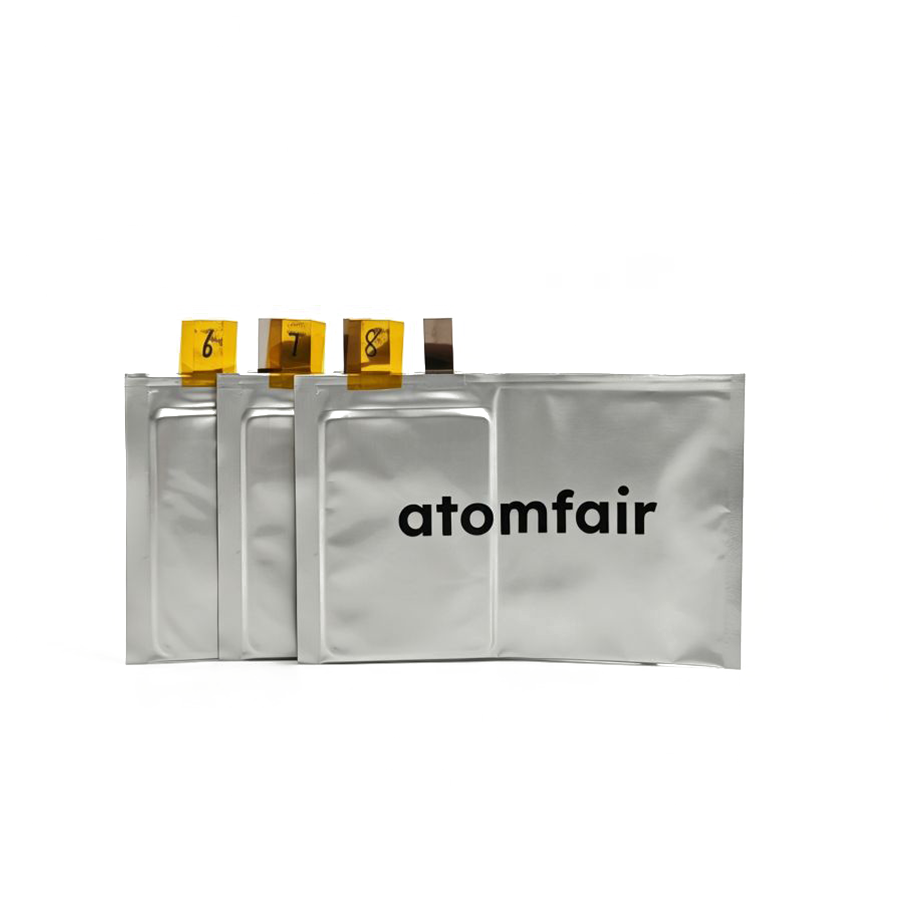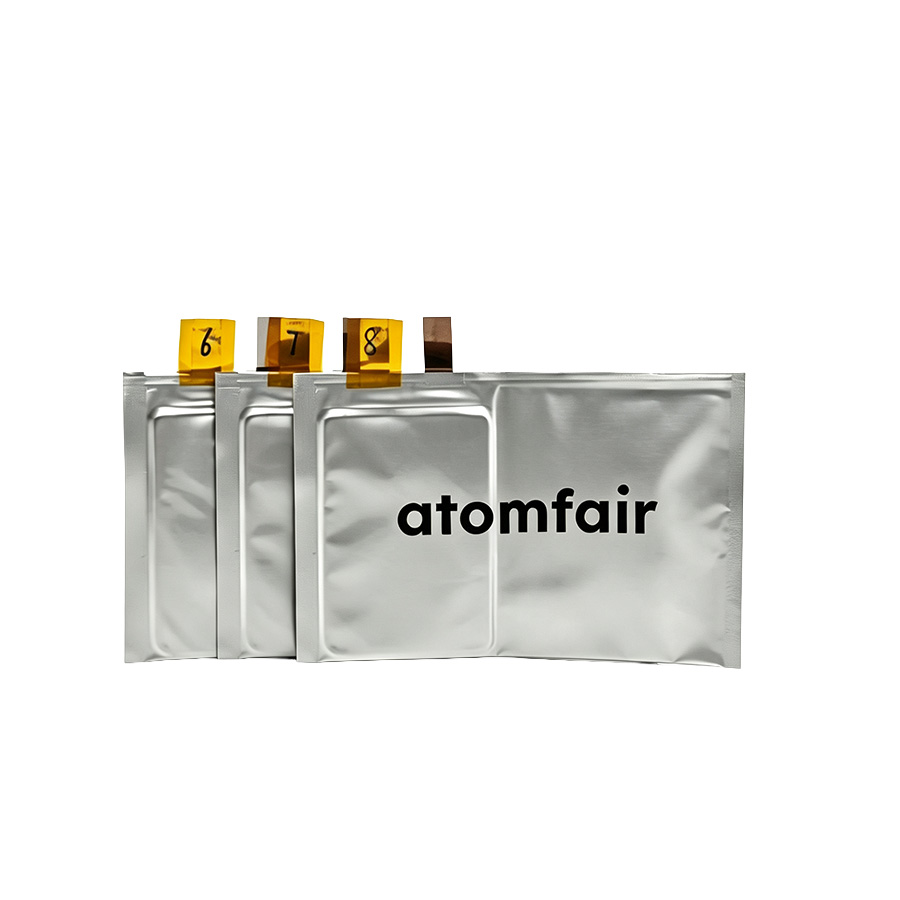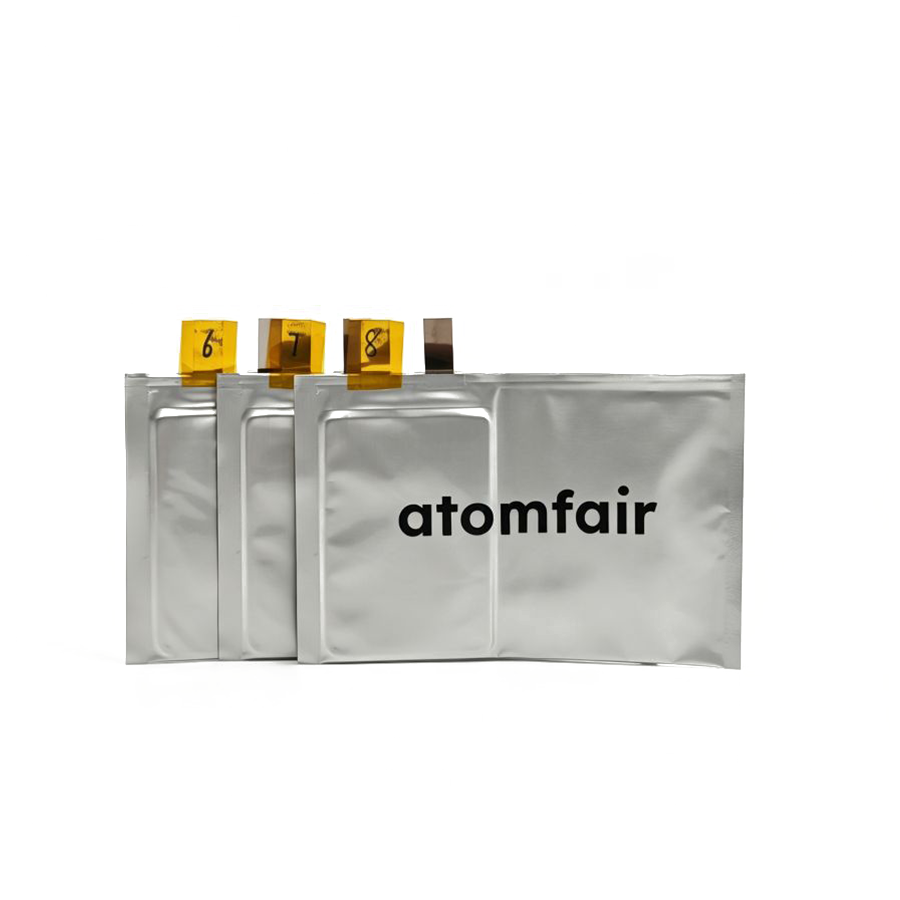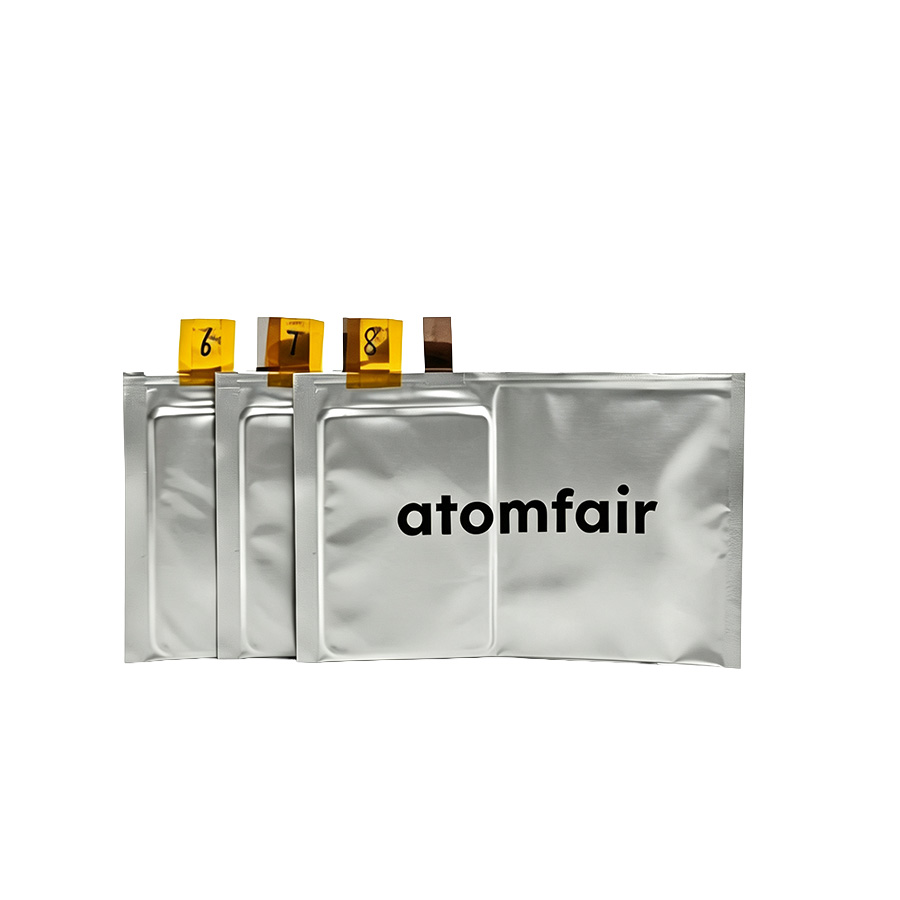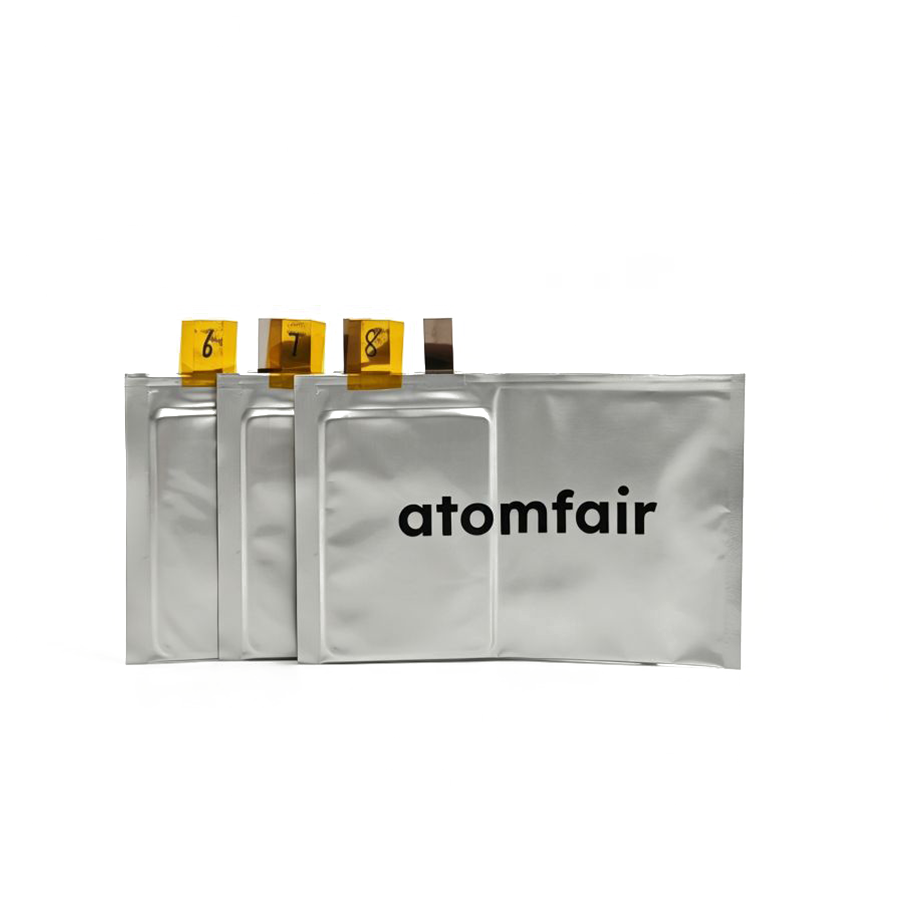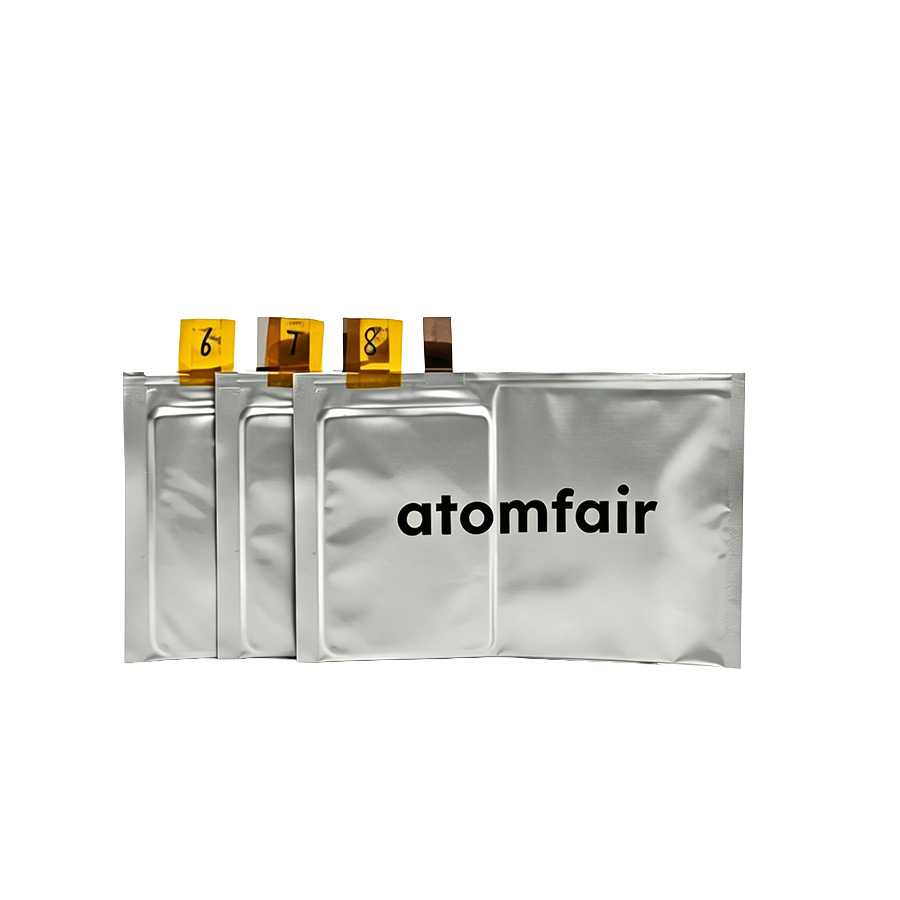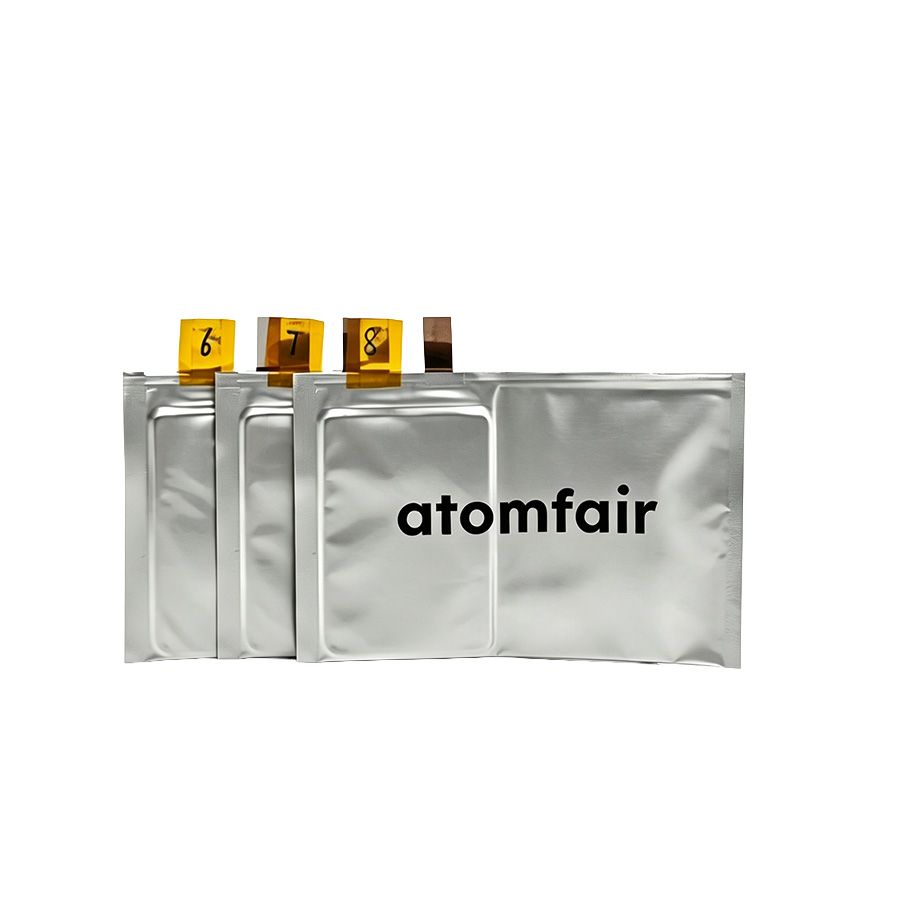
NFS Sodium-Ion Dry Pouch Cell (1 Ah, 15/16 Layers) – Hard Carbon AnodeProduct Type: Research-grade dry pouch cell
Research-grade laboratory product
|
||||||||||||||||||||||||||||||||||||||||||||||||||||||||||||||||
|
||||||||||||||||||||||||||||||||||||||||||||||||||||||||||||||||
How do the asymmetric cathode and anode coating areal densities affect electrolyte wetting and capacity balancing in this dry pouch cell?
The cathode has a coating areal density of 15.6 mg/cm², while the anode has only 5 mg/cm², creating a significant mass asymmetry. This means electrolyte filling must be optimized to ensure complete wetting of the thicker cathode layer; insufficient electrolyte can lead to underutilization of cathode capacity and cell imbalance. Researchers should calculate electrolyte volume based on combined electrode porosity and dry weights to avoid performance loss.
What electrolyte stability requirements are needed for the 2.0 V–4.5 V operating window of this NFS/HC pouch cell?
The 2.0 V–4.5 V voltage range demands an electrolyte that is reductively stable at 2.0 V vs. Na/Na⁺ and oxidatively stable at 4.5 V. Sodium-ion electrolytes such as NaPF₆ in carbonate solvents are often used, but oxidative stability at 4.5 V is a known challenge for NFS cathodes, so researchers should verify compatibility through electrochemical testing before long-term cycling.
What are the handling implications of the 12 µm PE + 2 µm ceramic separator in this dry pouch cell during assembly?
The separator is a 12 µm polyethylene base with a 2 µm ceramic coating (total 14 µm). The ceramic coating improves thermal stability and electrolyte wetting, but the thin PE layer is mechanically fragile. During dry pouch assembly, care must be taken to avoid punctures or creasing, and all steps should be performed in an inert glovebox to prevent contamination prior to electrolyte filling.
This 1 Ah NFS/HC dry pouch cell provides a research-grade platform for sodium-ion electrolyte and activation studies, with a high anode specific capacity of 295 mAh/g, though its unfilled format demands specialized handling and its low anode compaction density (0.9 g/cc) impacts volumetric energy density.
Positive
- Electrolyte-free dry pouch design: The cell is supplied without electrolyte, allowing researchers to control activation conditions, electrolyte composition, and cell finishing for tailored electrochemical evaluation.
- High anode specific capacity (295 mAh/g): The hard carbon anode provides a specific capacity of 295 mAh/g, enabling higher energy storage per unit mass in sodium-ion cell configurations.
Trade-offs
- Requires external electrolyte filling and assembly: As a dry pouch cell, it requires laboratory infrastructure such as an inert-atmosphere glovebox and electrolyte filling equipment, as well as expertise in cell sealing and activation.
- Low anode compaction density (0.9 g/cc): The hard carbon anode's low compaction density of 0.9 g/cc may limit volumetric energy density, requiring thicker electrode coatings or larger cell footprints to achieve target capacities.
Every advanced material, component, equipment, and instrument in our catalog is backed by rigorous testing. We maintain strict internal quality management frameworks and align with CE conformity metrics to deliver transparent, reproducible performance data via our public open-science repository.
To request raw batch performance data, submit formal vendor registration paperwork, or execute a fast-turnaround R&D manufacturing loop, contact us at inquiry@atomfair.com.
Item is dispatched under the Atomfair Shipping & Delivery Framework (Free worldwide shipping on orders over $59 USD excl. heavy equipment). Return is governed by the Atomfair Return & Refund Policy (7-day technical return window).