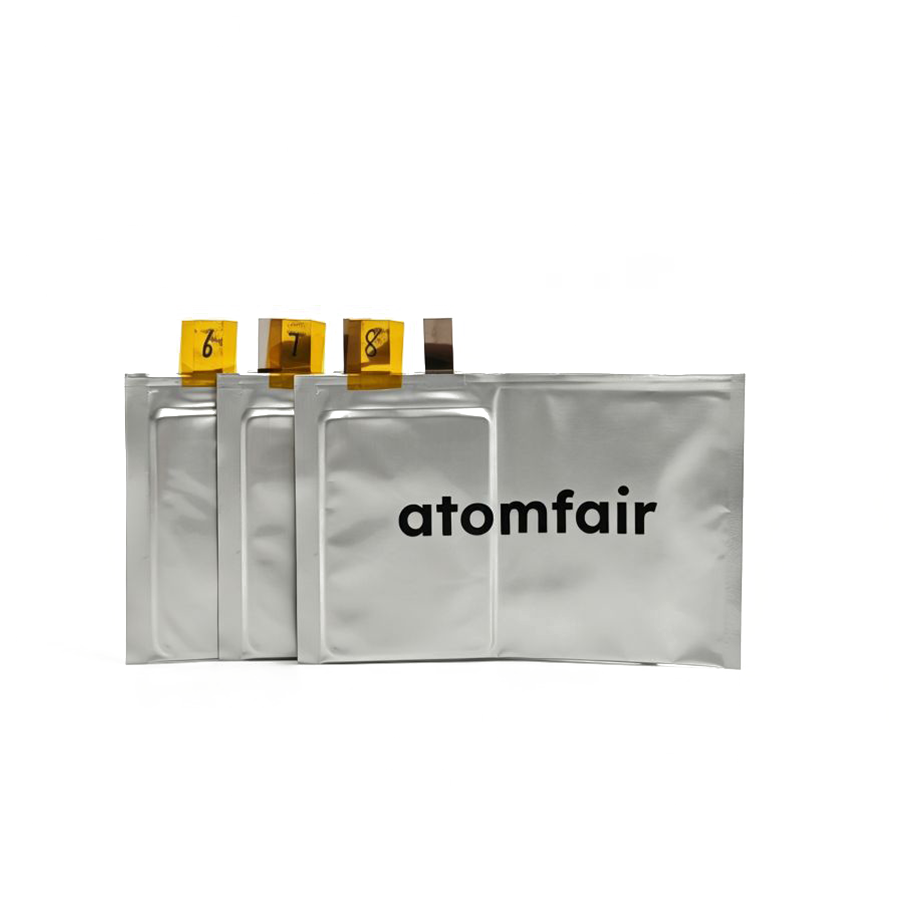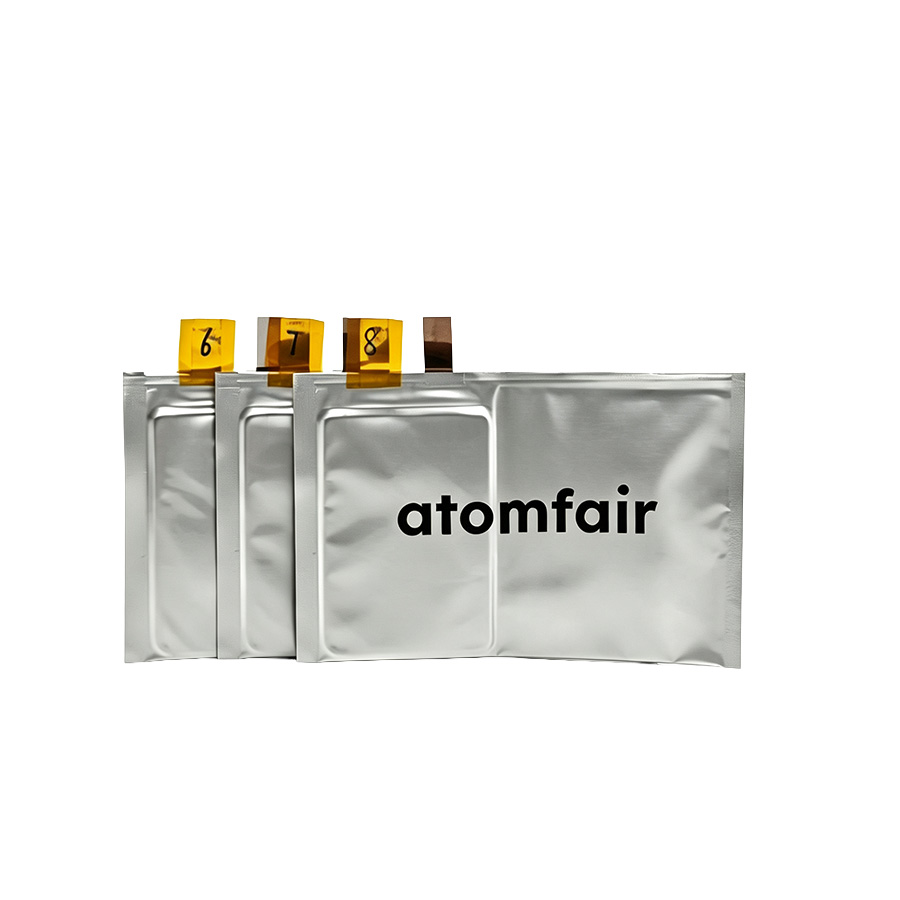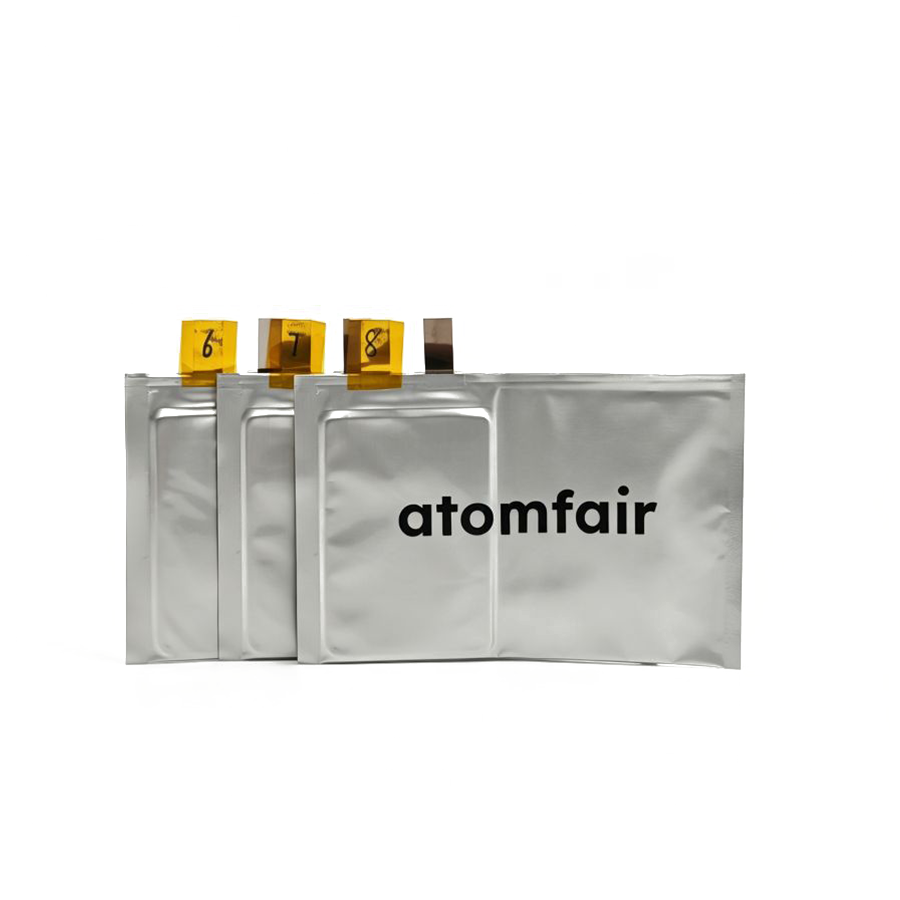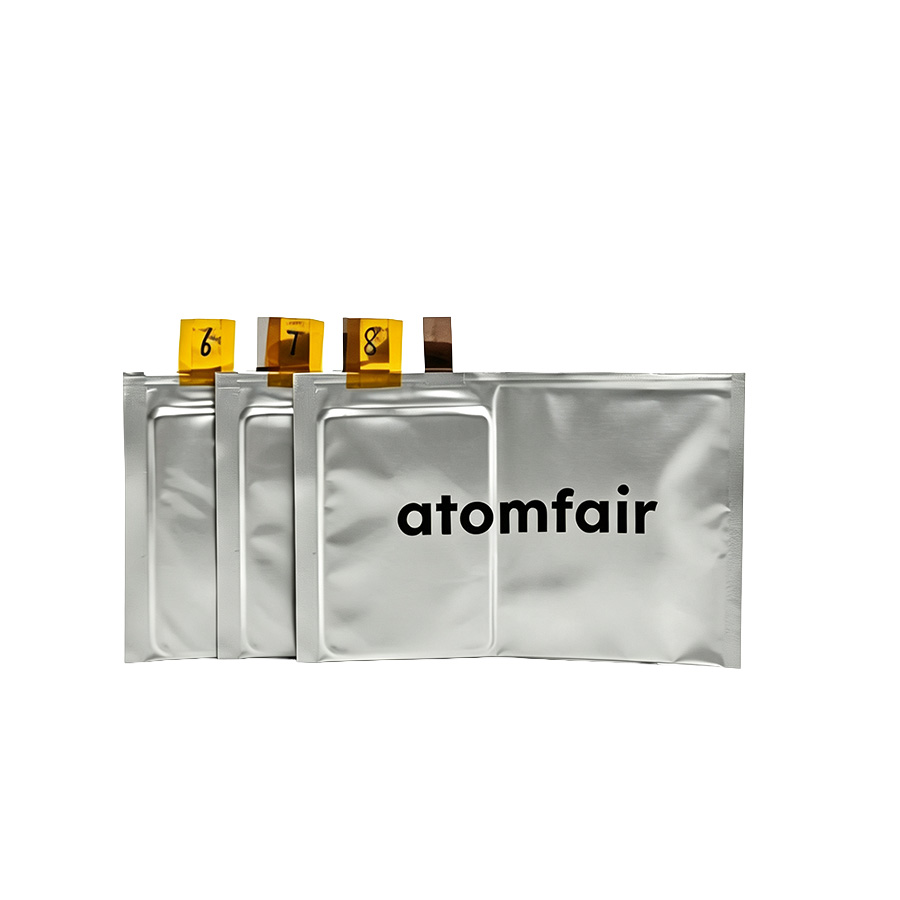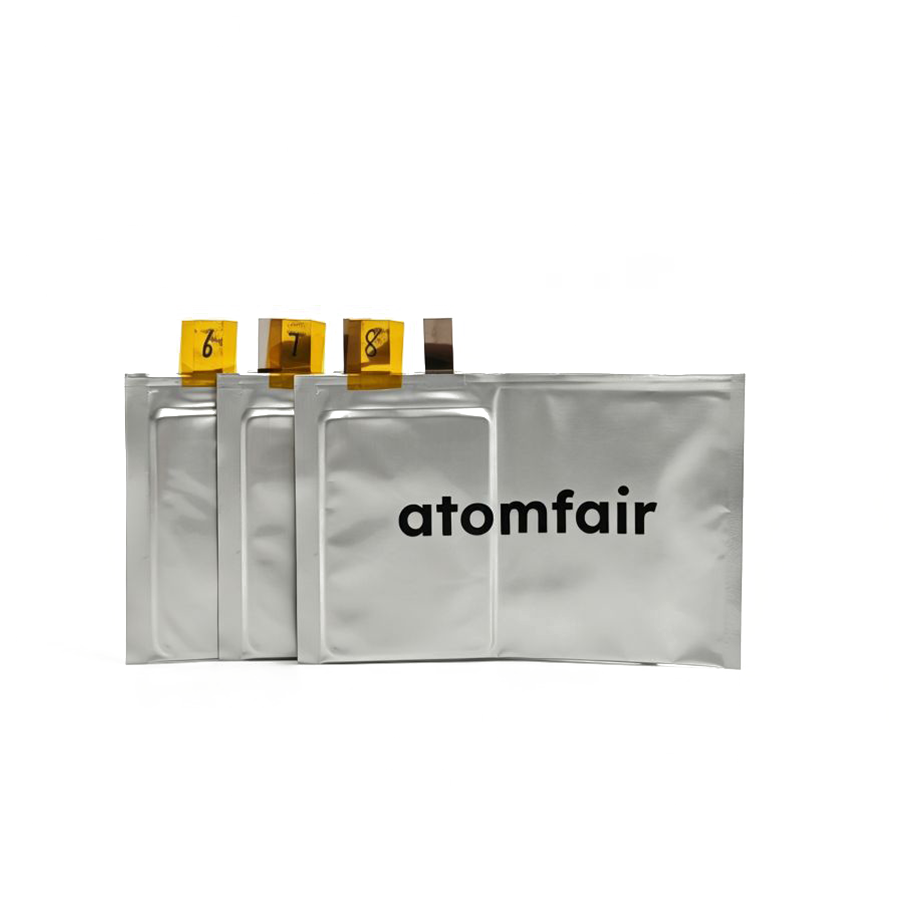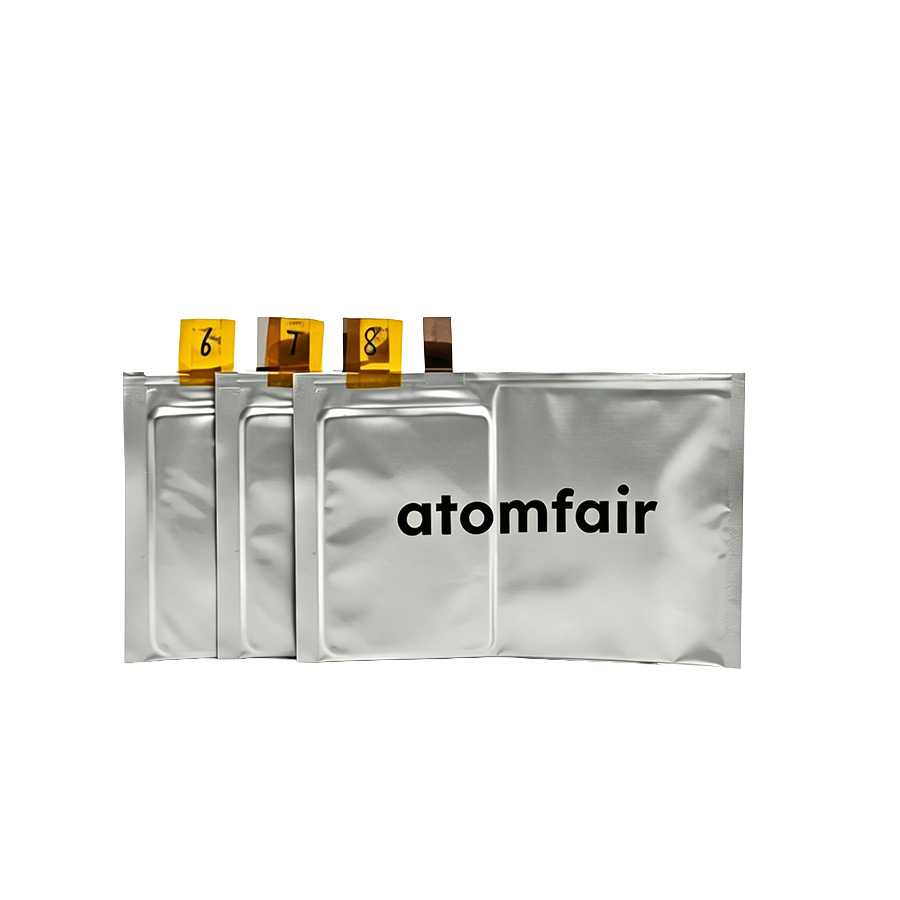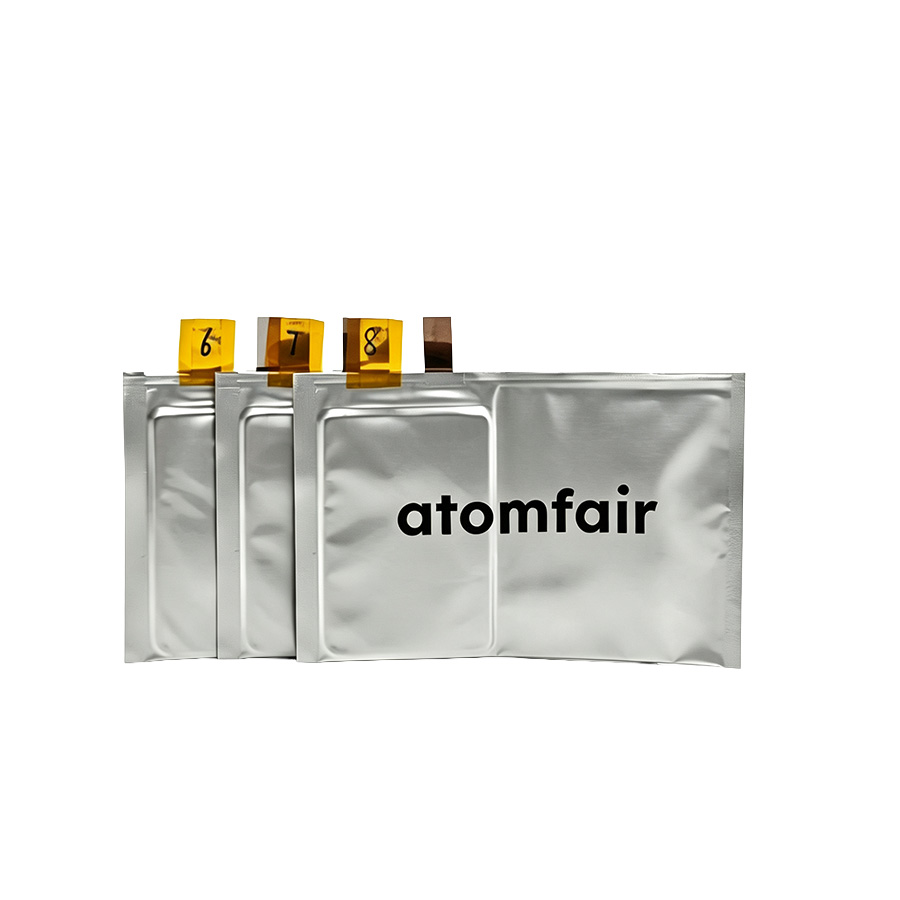
NFPP Sodium-Ion Dry Pouch Cell (1.1 Ah, 11/12 Layers) – Anode-Free, Al/C-3 Current CollectorProduct Type: Research-grade dry pouch cell
Research-grade laboratory product
|
||||||||||||||||||||||||||||||||||||||||||||||||||||||||
|
||||||||||||||||||||||||||||||||||||||||||||||||||||||||
This dry pouch cell is supplied as an electrolyte-free assembly that must be filled with a compatible sodium-ion electrolyte prior to electrical testing. The assembled cell must be operated within the specified voltage window of 2.5 V to 3.6 V to achieve the nominal capacity of 1.1 Ah.
- Electrolyte Filling: The cell requires filling with a compatible sodium-ion electrolyte before any activation or evaluation.
- Voltage Window Compliance: All electrical cycling must be conducted between 2.5 V and 3.6 V to prevent damage or capacity loss.
What are the rated capacity and operating voltage window of this NFPP sodium-ion dry pouch cell?
The Atomfair AF-BM-C-NP3A-11A0-4BF5 is specified as a 1.1 Ah research-grade dry pouch cell with a voltage window of 2.5 V to 3.6 V and an 11/12-layer stack. The cathode is NFPP at 95% active material with a stated specific capacity of 100 mAh/g, so final delivered capacity after electrolyte fill and activation will depend on researcher-controlled finishing conditions.
Can this dry pouch cell be used directly in electrochemical testing without adding electrolyte or activating it first?
No; this is an electrolyte-free dry pouch cell supplied in an unfilled format intended for laboratory sodium-ion assembly and activation studies. Researchers must control the electrolyte filling and cell finishing conditions before electrochemical evaluation, which makes it suitable for electrolyte or activation studies rather than ready-to-test cells.
What electrode and separator specifications should be considered when integrating this dry pouch cell into an evaluation stack?
The cathode footprint is 45.5 x 64 mm with an 18 mg/cm2 coating areal density, while the Al/C-3 anode architecture footprint is slightly larger at 46.5 x 65 mm; the separator is specified as 12 um PE + 2 um ceramic. These dimensional specs should be matched to the intended stack design and confirmed before quotation because this anode-free configuration uses Al/C-3 as the current-collector-based anode architecture.
This NFPP sodium-ion dry pouch cell with anode-free Al/C-3 architecture and 1.1 Ah nominal capacity is designed for laboratory assembly where researchers control electrolyte activation and cell finishing. The specified cathode loading (18 mg/cm2, 1.8 g/cc compaction) and 12+2 μm ceramic separator provide a reproducible platform for sodium-ion electrochemical evaluations.
Positive
- Anode-free architecture with Al/C-3 collector: This design eliminates conventional anode material, reducing mass and volume while leveraging a coated aluminum current collector for direct sodium plating/stripping, enabling higher energy density research.
- Precisely defined electrode parameters for reproducibility: Cathode coating areal density of 18 mg/cm2 and compaction density of 1.8 g/cc are specified, allowing researchers to achieve consistent cell builds and compare electrochemical results across experiments.
Trade-offs
- Electrolyte-free dry pouch requires in-house filling: The cell is shipped without electrolyte, requiring researchers to perform electrolyte filling, wetting, and activation, which introduces additional variables and requires appropriate glovebox infrastructure.
- Limited voltage window restricts cathode utilization: The 2.5 V – 3.6 V voltage window is narrower than full NFPP potential, potentially limiting capacity extraction and requiring electrolyte compatibility verification for the operating range.
Every advanced material, component, equipment, and instrument in our catalog is backed by rigorous testing. We maintain strict internal quality management frameworks and align with CE conformity metrics to deliver transparent, reproducible performance data via our public open-science repository.
To request raw batch performance data, submit formal vendor registration paperwork, or execute a fast-turnaround R&D manufacturing loop, contact us at inquiry@atomfair.com.
Item is dispatched under the Atomfair Shipping & Delivery Framework (Free worldwide shipping on orders over $59 USD excl. heavy equipment). Return is governed by the Atomfair Return & Refund Policy (7-day technical return window).