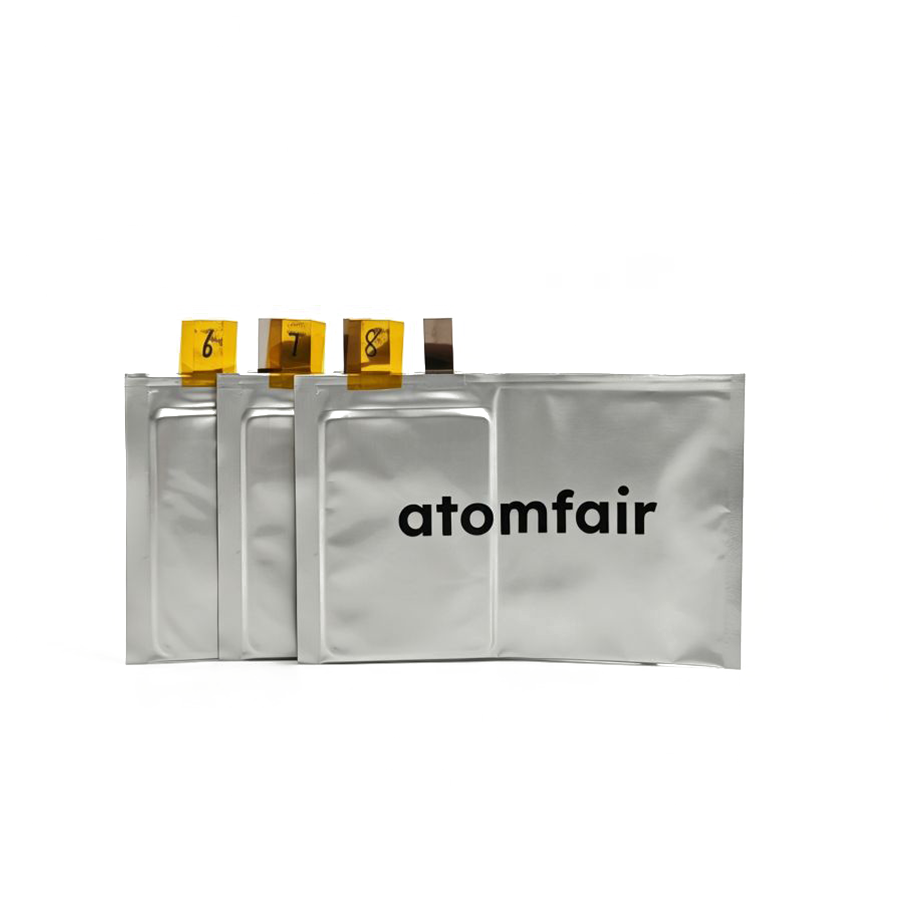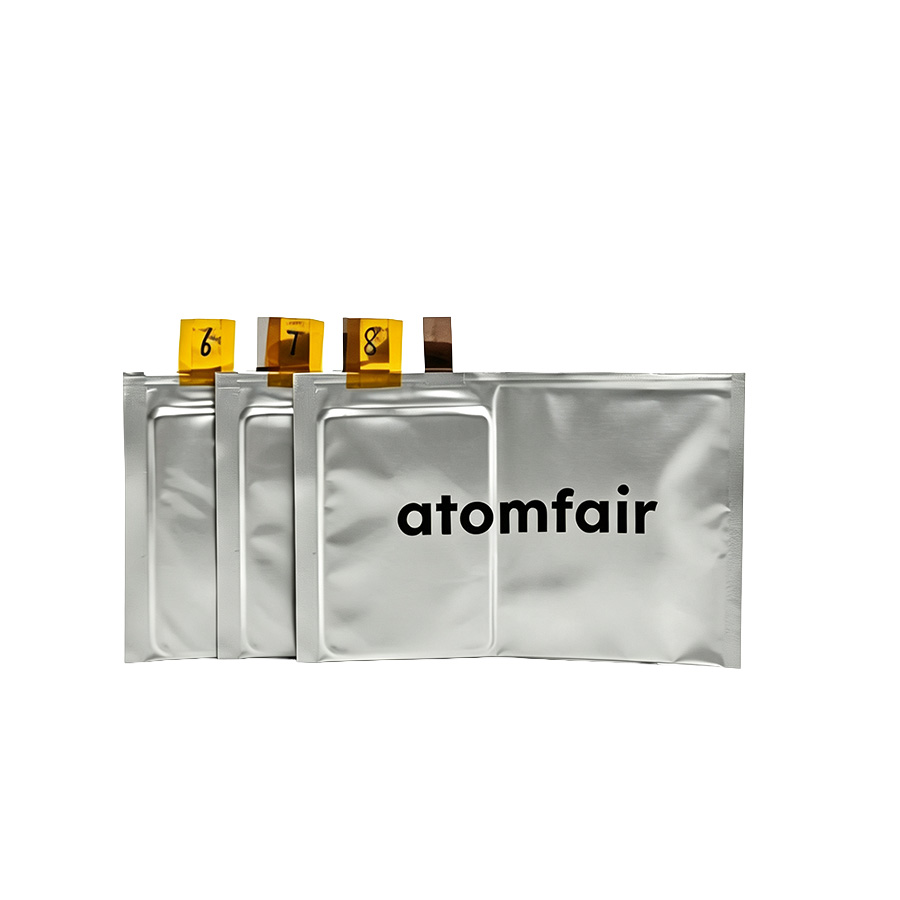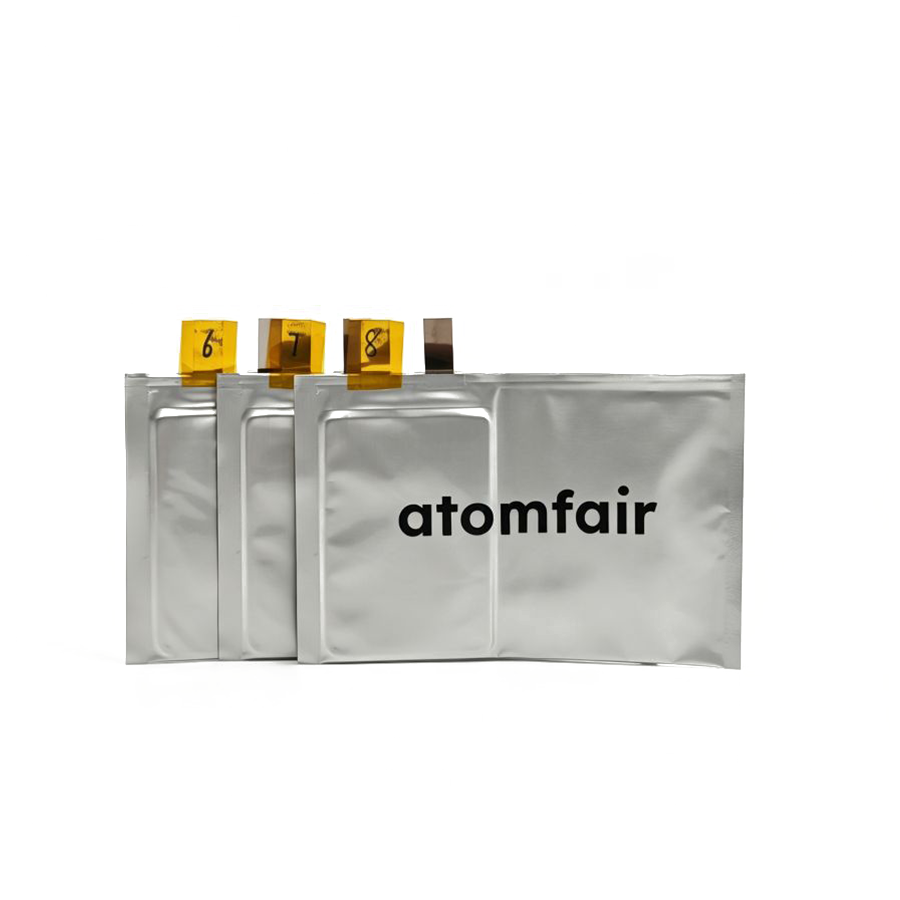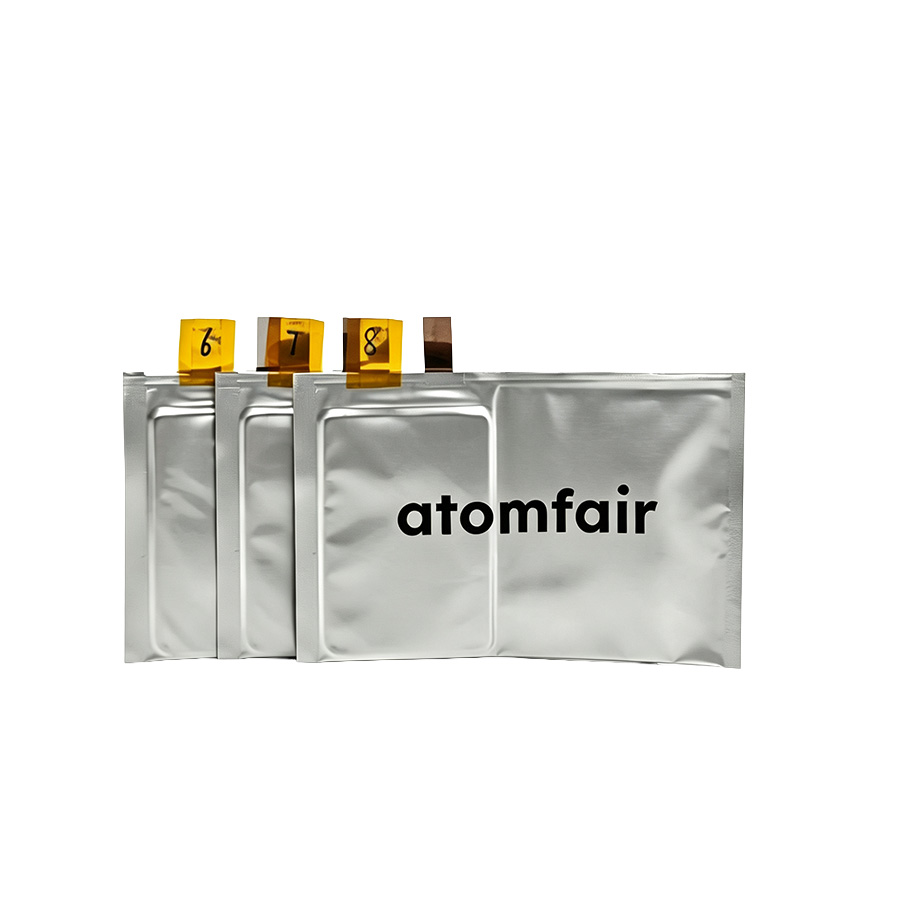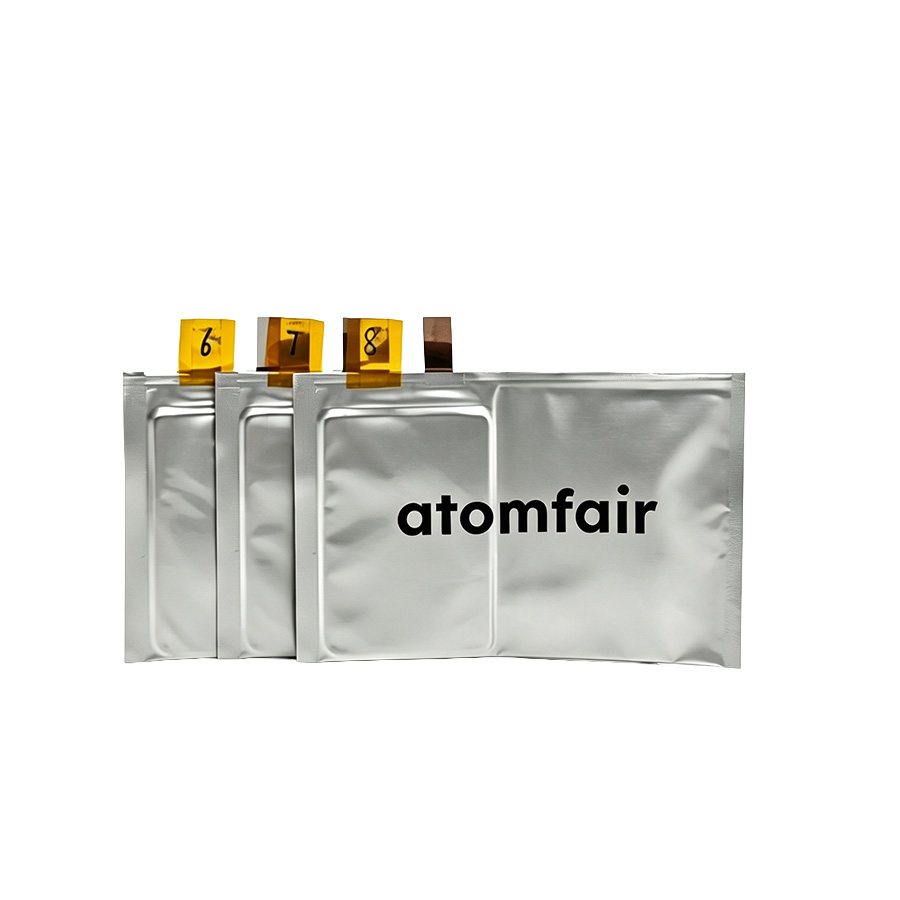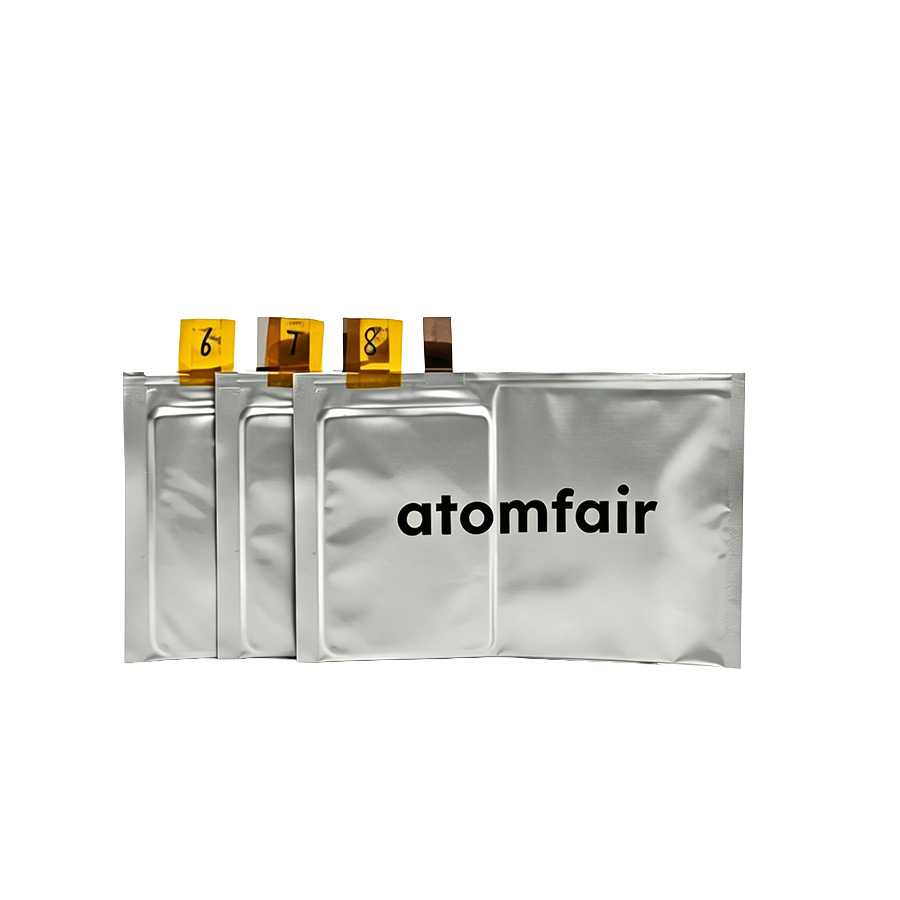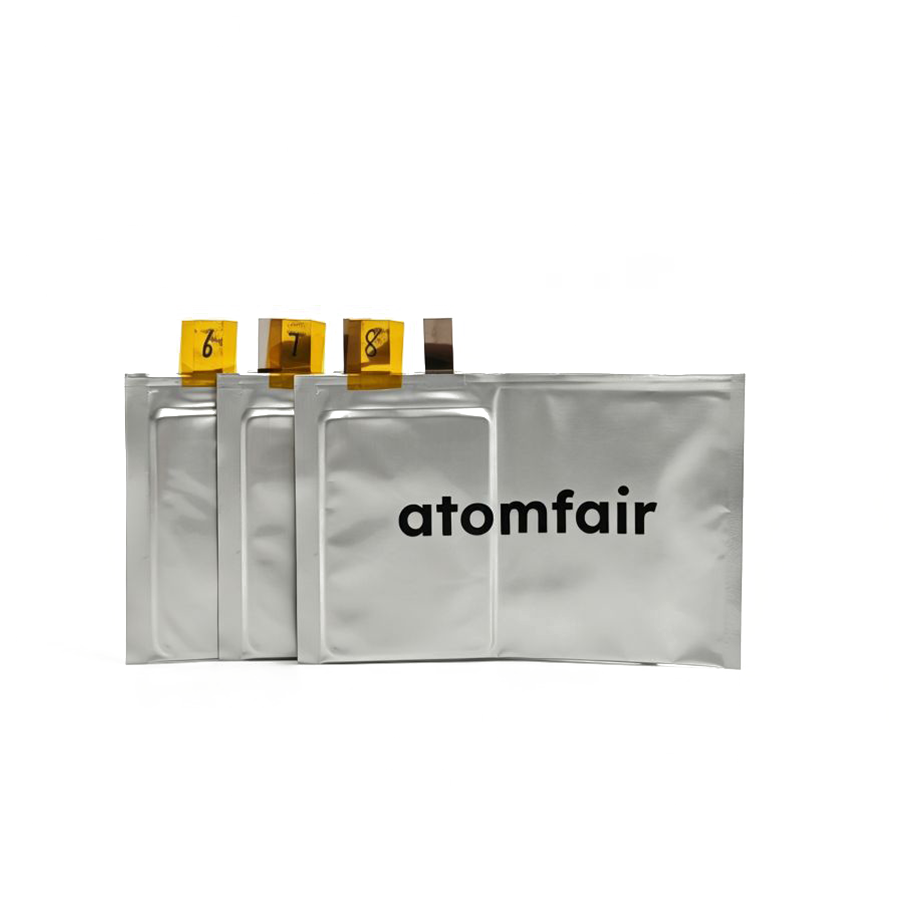
NFPP Sodium-Ion Dry Pouch Cell (1Ah) – Hard Carbon AnodeSODIUM (Na) ION TECHNOLOGY | 14/15 LAYERS
|
||||||||||||||||||||||||||||||||||||||||||||||||||
|
||||||||||||||||||||||||||||||||||||||||||||||||||
Related Products |
||||||||||||||||||||||||||||||||||||||||||||||||||
|
||||||||||||||||||||||||||||||||||||||||||||||||||
|
TAILORED SOLUTIONS FOR RESEARCH
Contact our engineering team for technical support or official institutional quotations.
EMAIL: inquiry@atomfair.com
|
||||||||||||||||||||||||||||||||||||||||||||||||||
|
Manufacturer: Atomfair LLC
Brand: ATOMFAIR®
|
||||||||||||||||||||||||||||||||||||||||||||||||||
Store the dry pouch cell in an inert argon atmosphere to prevent moisture and oxygen adsorption on the electrodes. Avoid short circuits by keeping the electrode tabs insulated and do not apply mechanical stress to the pouch.
- Atmosphere Requirement: The dry pouch cell must be stored in a hermetically sealed container under an inert gas such as argon to inhibit electrode degradation.
- Electrical Safety: Keep the positive and negative tabs separated and covered to prevent accidental short circuits that could generate heat or spark.
- Mechanical Integrity: Do not bend, puncture, or apply excessive pressure to the pouch, as this can damage the electrode stack and separator.
- Moisture Sensitivity: Exposure to ambient humidity can degrade the hard carbon anode and NFPP cathode, so only open the packaging inside a dry glovebox.
- Temperature Stability: Maintain the cell at room temperature (20–25°C) during storage to avoid thermally induced structural changes in the electrodes.
This procedure describes the safe filling and activation of the dry pouch cell with electrolyte in an inert atmosphere. Follow these steps to ensure proper wetting and sealing of the cell.
Required Equipment: Argon-filled glovebox with <0.1 ppm O₂ and H₂O, Syringe with blunt needle, Heat sealer for pouch cells
- Inspect the dry cell
Inspect the dry pouch cell for any punctures, tears, or defects before transferring it into the glovebox. - Transfer to glovebox
Transfer the cell through the antechamber into the argon-filled glovebox and allow it to equilibrate for at least 10 minutes. - Prepare the electrolyte
Draw the pre-determined volume of sodium-ion electrolyte into the syringe, ensuring no air bubbles are present. - Inject the electrolyte
Insert the needle into the fill port of the pouch cell and slowly inject the electrolyte to avoid overpressure. - Allow wetting
Allow the cell to rest for the specified wetting time (typically 30 minutes) to ensure full electrolyte penetration. - Seal the cell
Seal the pouch cell using the heat sealer at the manufacturer-recommended temperature and pressure. - Confirm seal integrity
Remove the sealed cell from the glovebox and visually inspect the seal for any leaks or contamination.
How do the default electrode design parameters of the 1AH NFPP hard carbon dry pouch cell affect its energy density and cycling performance, and can they be customized for specific research needs?
The cell's default areal density, NP ratio, and layer count are optimized to deliver the rated 1AH capacity with high energy density and improved charge/discharge kinetics from the hard carbon anode. Customization is possible; Atomfair requires contacting customer service before ordering to adjust these parameters for specific experimental targets.
What electrolyte types are compatible with this NFPP || hard carbon dry pouch cell, and what are the critical steps for integrating it into a sodium-ion battery test setup?
The dry core is delivered without electrolyte, allowing use of any compatible sodium-ion electrolyte (e.g., NaPF6 or NaClO4 in organic solvents). Integration requires filling the pouch in an inert atmosphere, sealing it, and then connecting to a standard cycler. The cathode and anode dimensions (60×80 mm and 63×84 mm) match common lab cell holders.
What are the safe handling and storage requirements for the 1AH NFPP hard carbon dry pouch cell before electrolyte filling?
Store the dry pouch cell in a cool, dry environment to maintain electrode stability. Avoid mechanical puncture, short circuits, and exposure to moisture. Since no electrolyte is present, there is no liquid hazard, but the dry electrodes are moisture-sensitive and should be handled in a dry room or glovebox.
This 1AH NFPP || Hard Carbon dry pouch cell offers a flexible platform for sodium-ion battery research, but requires electrolyte filling and uses default design parameters.
Positive
- High energy density: Optimized NFPP-Hard Carbon formulation delivers exceptional high-performance capabilities suitable for advanced battery R&D.
- Dry cell flexibility: Delivered without electrolyte, providing maximum flexibility for experimental filling and interface testing.
Trade-offs
- Electrolyte not included: The cell ships in a dry core configuration; electrolyte must be sourced and filled by the end user, adding a preparation step.
- Fixed default design parameters: The cell uses default areal density, load capacity, layers, and NP ratio; customization requires prior consultation with customer service.
Every advanced material, component, equipment, and instrument in our catalog is backed by rigorous testing. We maintain strict internal quality management frameworks and align with CE conformity metrics to deliver transparent, reproducible performance data via our public open-science repository.
To request raw batch performance data, submit formal vendor registration paperwork, or execute a fast-turnaround R&D manufacturing loop, contact us at inquiry@atomfair.com.
Item is dispatched under the Atomfair Shipping & Delivery Framework (Free worldwide shipping on orders over $59 USD excl. heavy equipment). Return is governed by the Atomfair Return & Refund Policy (7-day technical return window).