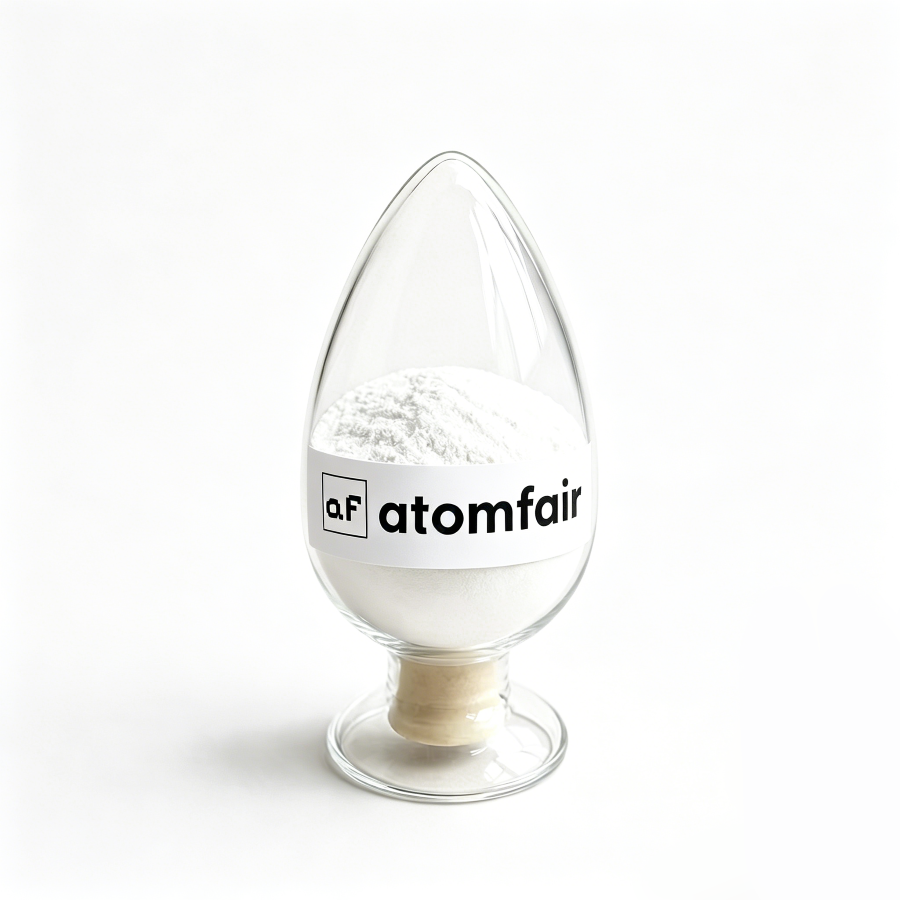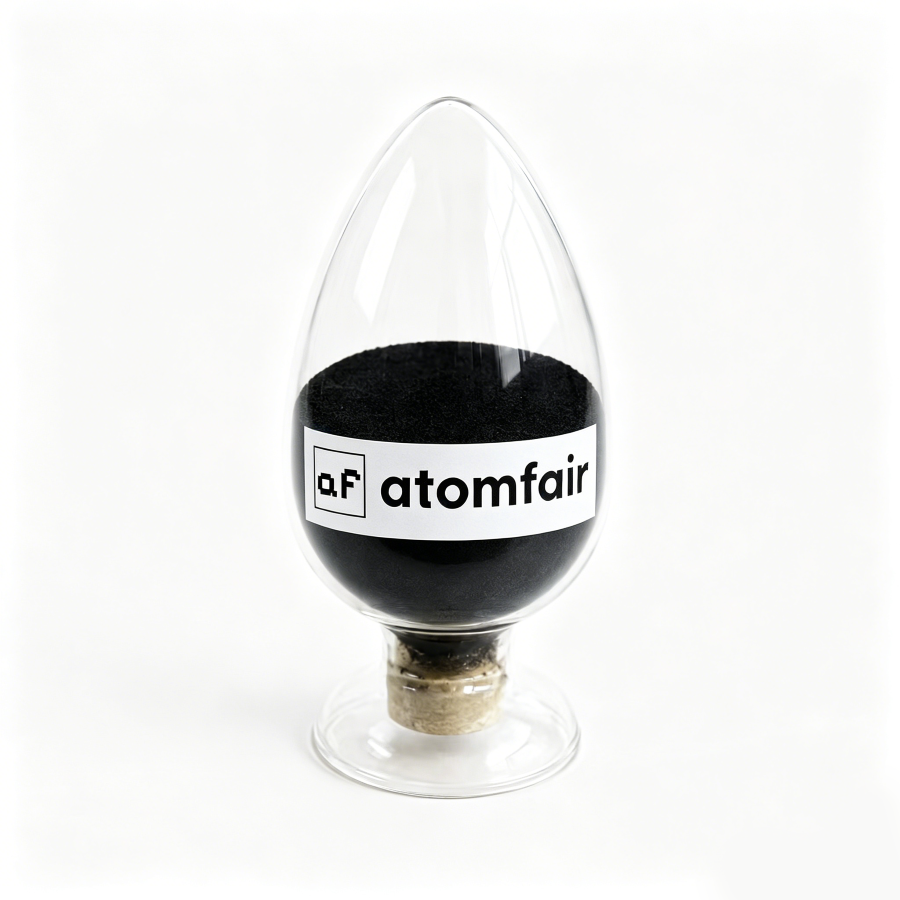
Nickel Iron Manganese Copper Hydroxide Precursor PowderCOMMERCIAL GRADE · PRODUCTION
|
|||||||||||||||||||||||||||
|
|||||||||||||||||||||||||||
|
TAILORED SOLUTIONS FOR RESEARCH
Contact our engineering team for technical support or official institutional quotations.
EMAIL: INQUIRY@ATOMFAIR.COM
|
|||||||||||||||||||||||||||
|
Manufacturer: PRODUCTION DIVISION · ADVANCED ENERGY STORAGE DIVISION
Brand: INDUSTRIAL TESTING HARDWARE
Specifications are representative and subject to change without notice. For the latest version and compliance certificates, contact official sales channel.
|
This transition metal hydroxide powder is designed for use as a baseline testing control in sodium-ion battery cathode synthesis. It is characterized by a specific particle size distribution, surface area, and moisture content.
- Processing Consistency Requirement: The material is engineered to minimize processing variables during calcination and electrolyte validation, ensuring reliable cell-to-cell performance.
How does the high BET surface area of 107.11 m²/g affect the handling and thermal processing of NFMC hydroxide precursor?
The high BET surface area of 107.11 m²/g provides enhanced reactivity for solid-state reactions, but it also increases susceptibility to moisture uptake, as confirmed by the 2000 ppm moisture content and pH 8.33. This necessitates strict anhydrous inert gas handling during storage and calcination to prevent premature oxidation and phase segregation before thermal validation.
Is the NFMC hydroxide precursor composition optimized for co-precipitation synthesis of sodium-ion cathode materials?
Yes, the targeted Ni-Fe-Mn-Cu ratios (Ni 22.61, Fe 33.05, Mn 33.43, Cu 10.91 mol%) are engineered for homogeneous co-precipitation and solid-state reactions, ensuring uniform chemical distribution across batches. The narrow particle size distribution (D50 5.246 µm) enables predictable crystalline contraction and excellent micro-sintering integration during calcination, making it suitable for advanced sodium-ion cathode R&D.
What are the critical handling and storage requirements for NFMC hydroxide precursor powder to maintain its integrity?
The powder must be stored in vacuum-sealed containers and handled exclusively within an anhydrous inert gas environment to prevent moisture-induced oxidation and phase degradation, as it is highly sensitive to ambient conditions. The measured moisture content is 2000 ppm at pH 8.33, and magnetic impurities are undetectable (0 ppb), but prolonged exposure to air will compromise its structural integrity and electrochemical performance.
This NFMC hydroxide precursor delivers a highly homogeneous Ni-Fe-Mn-Cu distribution and a tight particle size distribution (D50 5.246 µm) for reproducible sodium-ion cathode synthesis, but its elevated moisture content and strict inert-atmosphere handling requirements demand careful laboratory controls to prevent premature oxidation or degradation.
Positive
- Homogeneous multi-element distribution: The precursor features an uncompromised structural matrix with highly uniform chemical distribution of Ni-Fe-Mn-Cu across every batch, ensuring consistent cathode stoichiometry and cell-to-cell reproducibility.
- Optimized particle size and morphology: With a D50 of 5.246 µm and BET surface area of 107.11 m²/g, the powder enables predictable crystalline contraction and excellent micro-sintering integration during solid-state reactions and cell fabrication.
Trade-offs
- High moisture sensitivity and pH: Material contains 2000 ppm moisture with a pH of 8.33; it is highly sensitive to ambient humidity and requires vacuum-sealed storage and handling exclusively in anhydrous inert gas to prevent oxidation or phase degradation before thermal processing.
- Requires inert gas handling environment: Containers must remain tightly sealed or be opened only within an inert gas glovebox to avoid exposure to air, adding laboratory infrastructure and procedural overhead for routine material transfer and weighing.
Every advanced material, component, equipment, and instrument in our catalog is backed by rigorous testing. We maintain strict internal quality management frameworks and align with CE conformity metrics to deliver transparent, reproducible performance data via our public open-science repository.
To request raw batch performance data, submit formal vendor registration paperwork, or execute a fast-turnaround R&D manufacturing loop, contact us at inquiry@atomfair.com.
Item is dispatched under the Atomfair Shipping & Delivery Framework (Free worldwide shipping on orders over $59 USD excl. heavy equipment). Return is governed by the Atomfair Return & Refund Policy (7-day technical return window).