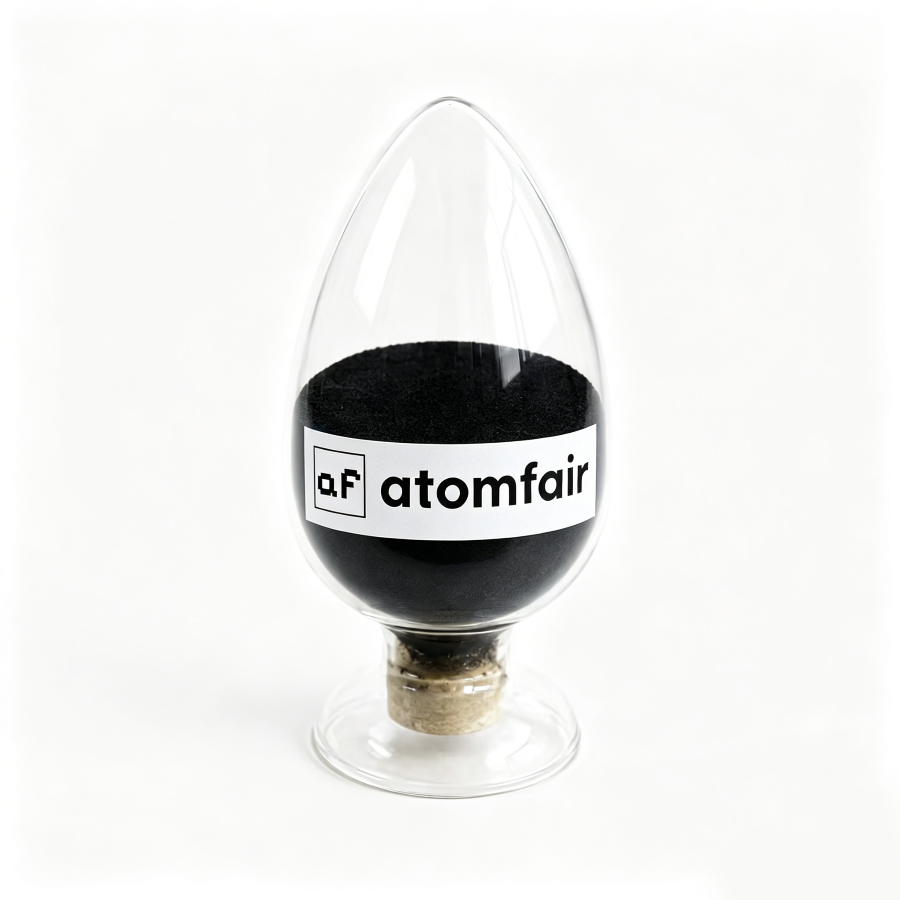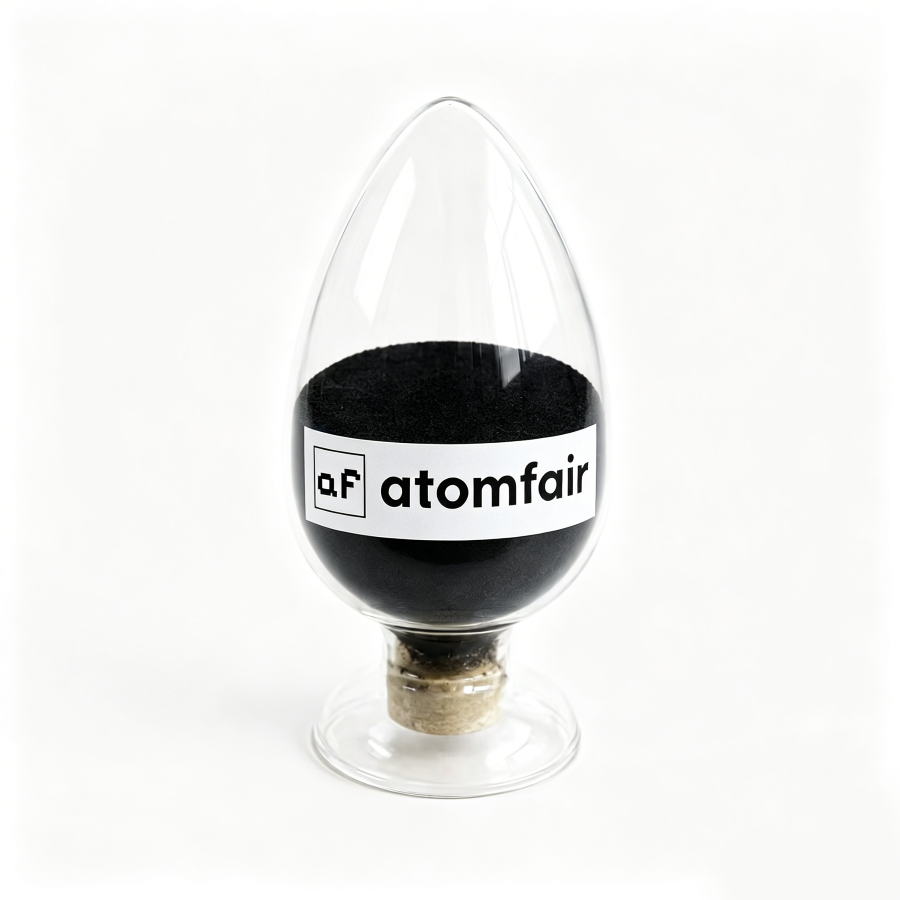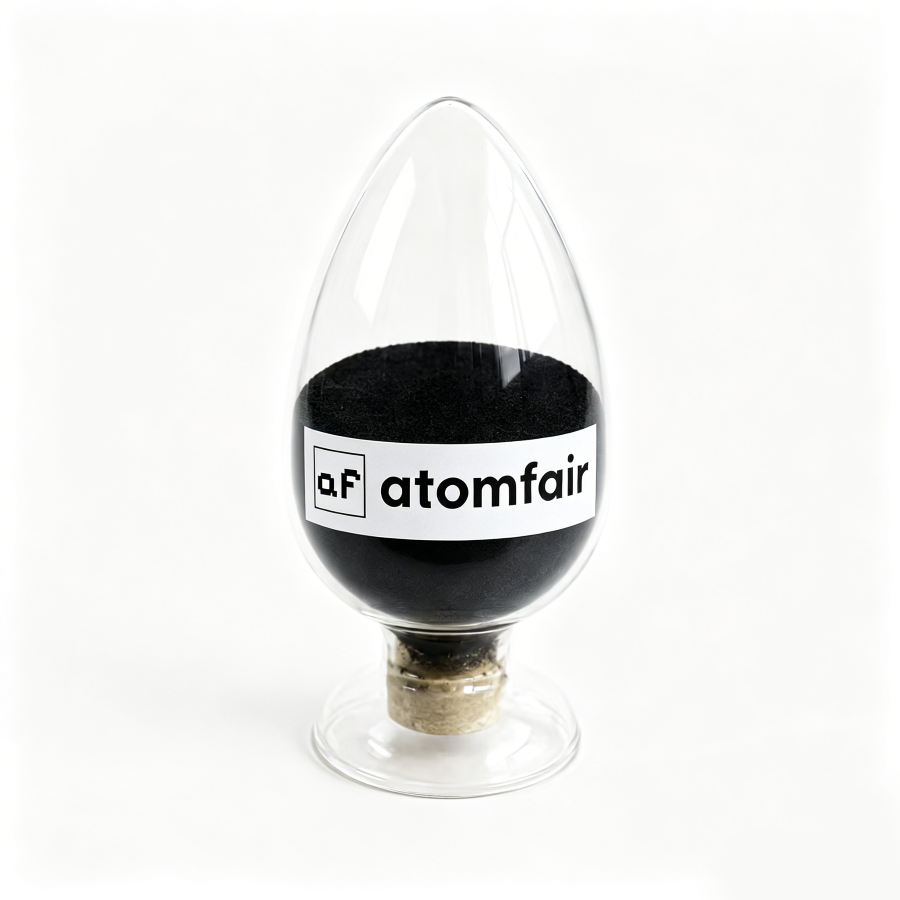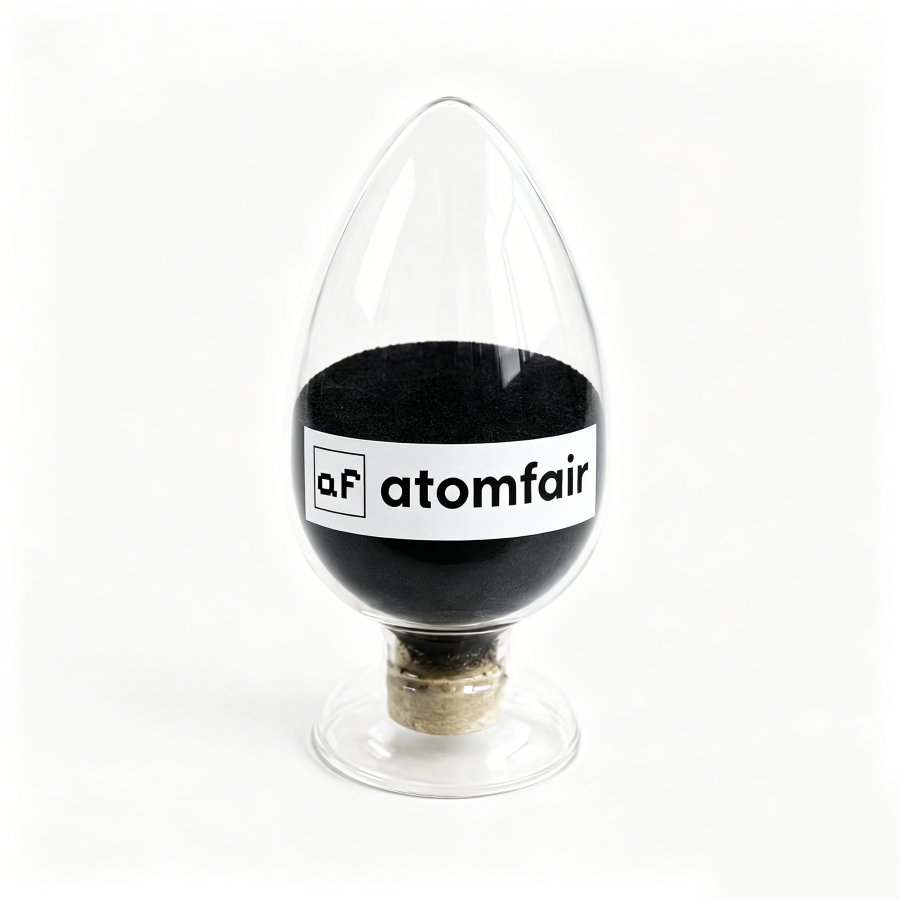
ATOMFAIR Lithium-rich Cobaltate Pre-lithiation AdditiveRESEARCH GRADE MATERIAL
|
|||||||||||||||||||||||||||||||||||||||||||||||||||||
|
|||||||||||||||||||||||||||||||||||||||||||||||||||||
|
TAILORED SOLUTIONS FOR RESEARCH
Contact our engineering team for technical support or official institutional quotations.
EMAIL: inquiry@atomfair.com
|
|||||||||||||||||||||||||||||||||||||||||||||||||||||
|
Manufacturer: Atomfair LLC
Brand: ATOMFAIR®
|
|||||||||||||||||||||||||||||||||||||||||||||||||||||
This material is moisture-sensitive and requires storage in an inert atmosphere to prevent alkali formation and capacity degradation. Handling must be performed in a dry-room or glovebox with <1 ppm H2O to maintain electrochemical performance.
- Moisture Sensitivity: Exposure to ambient moisture degrades the material by converting residual lithium oxides to LiOH and Li₂CO₃.
- Surface Alkali Control: Monitor LiOH and Li₂CO₃ levels as they influence slurry viscosity and electrode coating uniformity.
- Electrochemical Window: Restrict cycling to 2.5–4.3V vs Li/Li+ to avoid detrimental phase changes that reduce capacity retention.
- Storage Environment: Seal container under dry argon or nitrogen and store below 25°C to suppress hydrolysis and carbonate formation.
How does the electrochemical voltage window affect the first charge capacity and irreversible capacity loss of Li6CoO4 pre-lithiation additive?
Increasing the voltage window from 2.5–4.3V to 2.5–4.5V raises the first charge capacity from 884.42 mAh/g to 908.07 mAh/g while reducing irreversible capacity loss from 4.47% to 3.37%, both well within target standards (≥800 mAh/g and ≤10%, respectively). This indicates more efficient lithium extraction at the higher cutoff voltage.
What compatibility issues arise from the high residual alkali content (pH 10.9, LiOH 1.20%, Li₂CO₃ 0.60%) when integrating Li6CoO4 into cathode slurries with PVDF binders?
The high pH of 10.9 and surface residual alkali (LiOH 1.20%, Li₂CO₃ 0.60%) can dehydrofluorinate PVDF, causing slurry gelation and non-uniform electrode coating. Combined with a water content of 140 ppm, these factors require strict moisture control and potentially acid-scavenging additives to maintain processability.
What challenges does the particle size distribution (D50 11.1 μm, D90 28.9 μm) and single-crystal morphology of Li6CoO4 present during slurry mixing and electrode coating?
With a D50 of 11.1 μm and D90 of 28.9 μm, the powder is fine enough to risk agglomeration, demanding optimized dispersant selection and mixing protocols. The single-crystal morphology provides smooth flat surfaces, which can enhance packing density but may reduce adhesion if binder distribution is non-uniform. These parameters meet target standards (D50 10±2 μm, D90 ≤30 μm) to ensure consistent slurry rheology.
This lithium-rich cobaltate (Li6CoO4) sacrificial additive delivers exceptionally high first charge capacity (>880 mAh/g) for cathode pre-lithiation, but its high surface residual alkali content (1.2% LiOH, 0.6% Li2CO3) necessitates strict dry-room processing to avoid slurry gelation and side reactions.
Positive
- High first charge capacity for pre-lithiation: Demonstrates 884.42 mAh/g at 4.3V and 908.07 mAh/g at 4.5V (0.05C), significantly exceeding the target standard of ≥800 mAh/g, enabling effective compensation of initial lithium loss in full cells.
- Single-crystal morphology with controlled PSD: Dark green single-crystal powder with smooth, flat surfaces and a D50 of 11.1 μm (target 10±2 μm) ensures consistent electrochemical behavior and uniform electrode coating.
Trade-offs
- High surface residual alkali content: Surface residual LiOH (1.20%) and Li2CO3 (0.60%) can cause slurry gelation, coating defects, and parasitic side reactions if not processed under stringent dry-room conditions.
- Moisture-sensitive handling required: With measured water content of 140 ppm and pH 10.9, the powder is hygroscopic and basic, requiring inert or dry atmosphere storage and handling to prevent degradation and safety hazards.
Every advanced material, component, equipment, and instrument in our catalog is backed by rigorous testing. We maintain strict internal quality management frameworks and align with CE conformity metrics to deliver transparent, reproducible performance data via our public open-science repository.
To request raw batch performance data, submit formal vendor registration paperwork, or execute a fast-turnaround R&D manufacturing loop, contact us at inquiry@atomfair.com.
Item is dispatched under the Atomfair Shipping & Delivery Framework (Free worldwide shipping on orders over $59 USD excl. heavy equipment). Return is governed by the Atomfair Return & Refund Policy (7-day technical return window).