ATOMFAIR Lithium-rich Ferrate Pre-lithiation AdditiveRESEARCH GRADE MATERIAL
|
|||||||||||||||||||||||||||||||||||||||||||||||||
|
|||||||||||||||||||||||||||||||||||||||||||||||||
|
TAILORED SOLUTIONS FOR RESEARCH
Contact our engineering team for technical support or official institutional quotations.
EMAIL: inquiry@atomfair.com
|
|||||||||||||||||||||||||||||||||||||||||||||||||
|
Manufacturer: Atomfair LLC
Brand: ATOMFAIR®
|
|||||||||||||||||||||||||||||||||||||||||||||||||
This lithium-rich ferrate powder is highly sensitive to moisture and atmospheric CO2 due to residual surface alkali species. Storage under inert gas atmosphere (argon or nitrogen) with <1 ppm H2O and O2 is mandatory to prevent degradation and gassing.
- Moisture Sensitivity: Maintain water content below 160 ppm via hermetic sealing and inert atmosphere storage.
- Alkalinity Hazard: pH of 10.3 indicates strong alkalinity; use appropriate PPE and avoid skin or eye contact.
- Residual Alkali Reactivity: Surface LiOH and Li2CO3 may react with moisture to evolve gas; handle only in dry environments.
- Particle Stability: Sub-spherical microstructure may agglomerate under high humidity; store below 25°C in sealed containers.
- Electrochemical Compatibility: Use within the specified voltage window (2.5V–4.2V) to avoid irreversible reactions during cell cycling.
This procedure outlines the critical steps for safely incorporating LFO powder into battery cathode slurries. Strict inert atmosphere conditions are required throughout the process to avoid moisture and CO2 contamination.
Required Equipment: Argon-filled glovebox with <0.1 ppm H2O and O2, Anti-static weighing balance, Stainless steel spatula, Vacuum oven
- Inspect powder
Inspect the LFO powder for clumping, discoloration, or container damage before opening. - Transfer to glovebox
Transfer the sealed container into an argon-filled glovebox and allow it to equilibrate for 15 minutes. - Weigh additive
Weigh the required LFO mass using a clean, dry glass vial on an anti-static balance inside the glovebox. - Mix into slurry
Add the weighed LFO powder to the pre-dispersed cathode binder solution under continuous mechanical stirring. - Homogenize dispersion
Apply high-shear mixing for 30 minutes to ensure uniform distribution of the additive throughout the slurry. - Coat electrode
Cast the slurry onto aluminum current collector foil using a doctor blade or slot-die coater at controlled thickness. - Dry electrode
Dry the coated electrode at 80°C under vacuum for at least 12 hours to remove residual solvent and moisture.
Why does the LFO (Li5FeO4) pre-lithiation additive exhibit a first cycle efficiency of only 7.9% despite delivering a first discharge capacity of 776.9 mAh/g at 0.05C?
The extremely low first cycle efficiency of 7.9% is inherent to the lithium-rich ferrate chemistry, as LFO is designed to irreversibly release lithium during the first charge to compensate for anode losses. With a 0.05C reversible specific capacity of 748.6 mAh/g against a target standard of ≥710 mAh/g, the material provides a high capacity source of sacrificial lithium, making the low efficiency a functional trade-off rather than a defect.
How do the surface residual alkali levels (LiOH 0.43%, Li2CO3 0.26%) and pH of 10.3 in LFO powder affect slurry formulation with PVDF binders?
The elevated pH of 10.3 and combined surface residual alkali content of 0.69% (LiOH + Li2CO3) can promote dehydrofluorination of PVDF binders during slurry preparation, potentially leading to gelation or reduced adhesion. To mitigate this, solvent selection and mixing protocols should account for the alkaline surface chemistry, as the sub-spherical microstructure with D50 of 13.6 μm influences dispersion uniformity.
What handling precautions are necessary given the LFO (Li5FeO4) powder has a measured moisture content of 160 ppm and is sensitive to ambient exposure?
LFO powder with 160 ppm water content is moisture-sensitive and should be stored in airtight containers under dry atmosphere to prevent further hydration. The sub-spherical microstructure and particle size distribution (D10 4.3 μm, D90 27.5 μm) increase surface area, making it prone to uptake of atmospheric moisture and CO2, which can form additional LiOH and Li2CO3, altering the surface residual alkali balance and electrochemical performance.
This LFO pre-lithiation additive delivers a high reversible capacity of 748.6 mAh/g with sub-spherical particles, but its high pH (10.3) and 160 ppm moisture content necessitate strict dry processing conditions, while the low first-cycle efficiency (7.9%) confirms its intended sacrificial delithiation behavior.
Positive
- High reversible specific capacity: Achieves 748.6 mAh/g at 0.05C, exceeding the 710 mAh/g target standard, providing substantial lithium inventory for pre-lithiation.
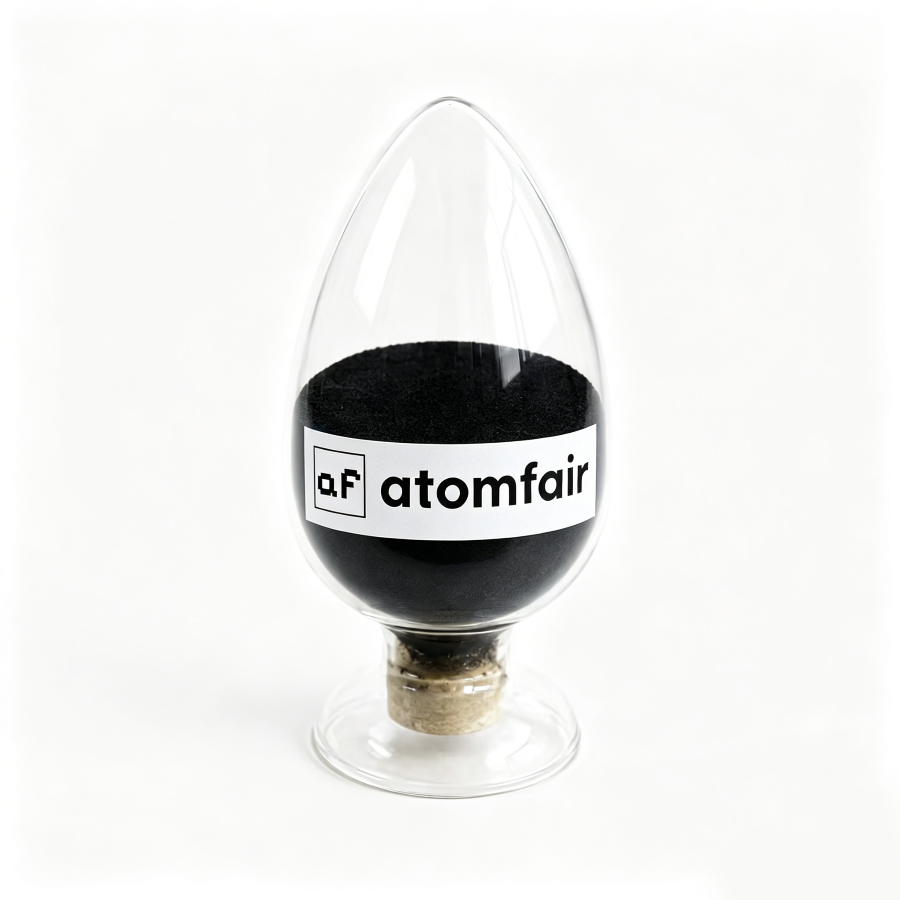
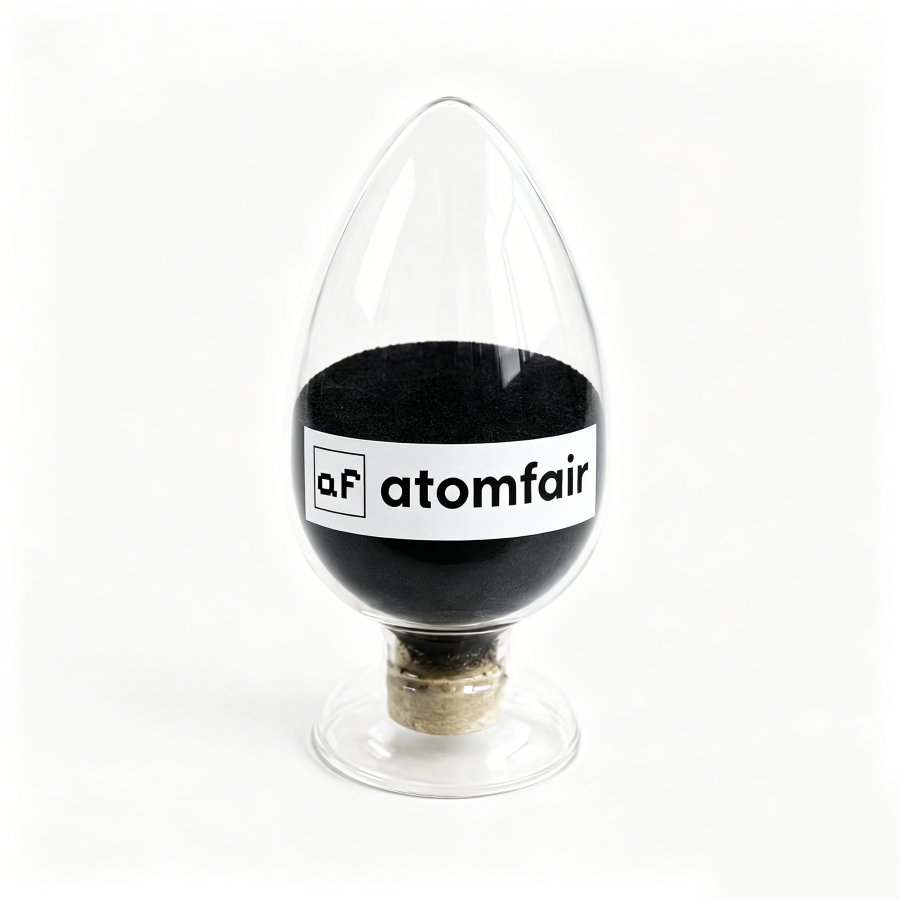
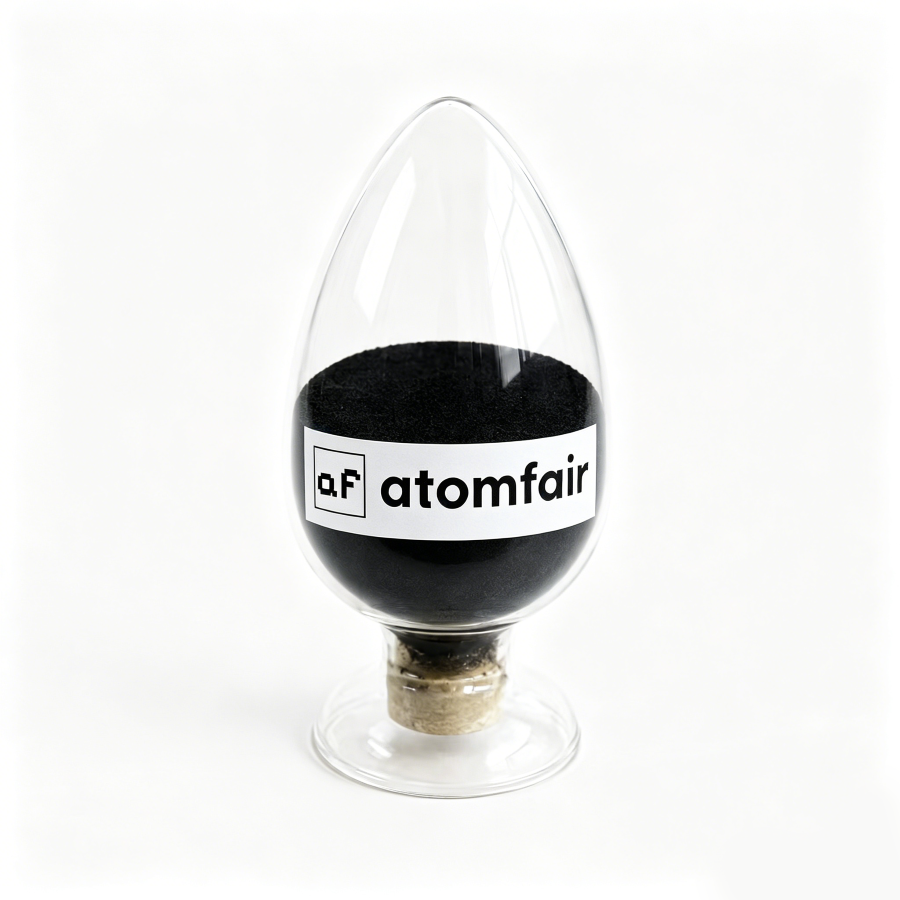
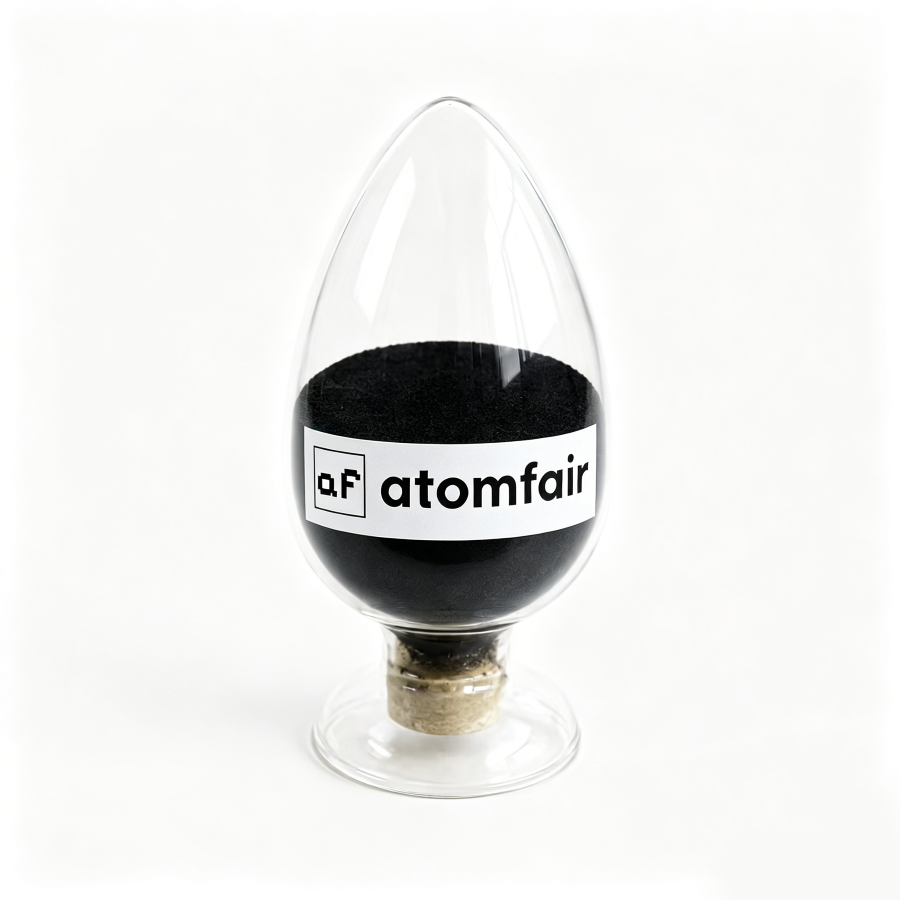
- Sub-spherical particle morphology: Black powder with sub-spherical microstructures promotes uniform slurry dispersion and consistent electrode coating.
Trade-offs
- High surface alkalinity: pH of 10.3 and residual LiOH (0.43%) and Li2CO3 (0.26%) require moisture-free handling to prevent degradation and electrolyte incompatibility.
- Low first-cycle efficiency: First cycle efficiency of 7.9% indicates most capacity is irreversibly consumed, which is by design for pre-lithiation but demands careful capacity matching.
Every advanced material, component, equipment, and instrument in our catalog is backed by rigorous testing. We maintain strict internal quality management frameworks and align with CE conformity metrics to deliver transparent, reproducible performance data via our public open-science repository.
To request raw batch performance data, submit formal vendor registration paperwork, or execute a fast-turnaround R&D manufacturing loop, contact us at inquiry@atomfair.com.
Item is dispatched under the Atomfair Shipping & Delivery Framework (Free worldwide shipping on orders over $59 USD excl. heavy equipment). Return is governed by the Atomfair Return & Refund Policy (7-day technical return window).