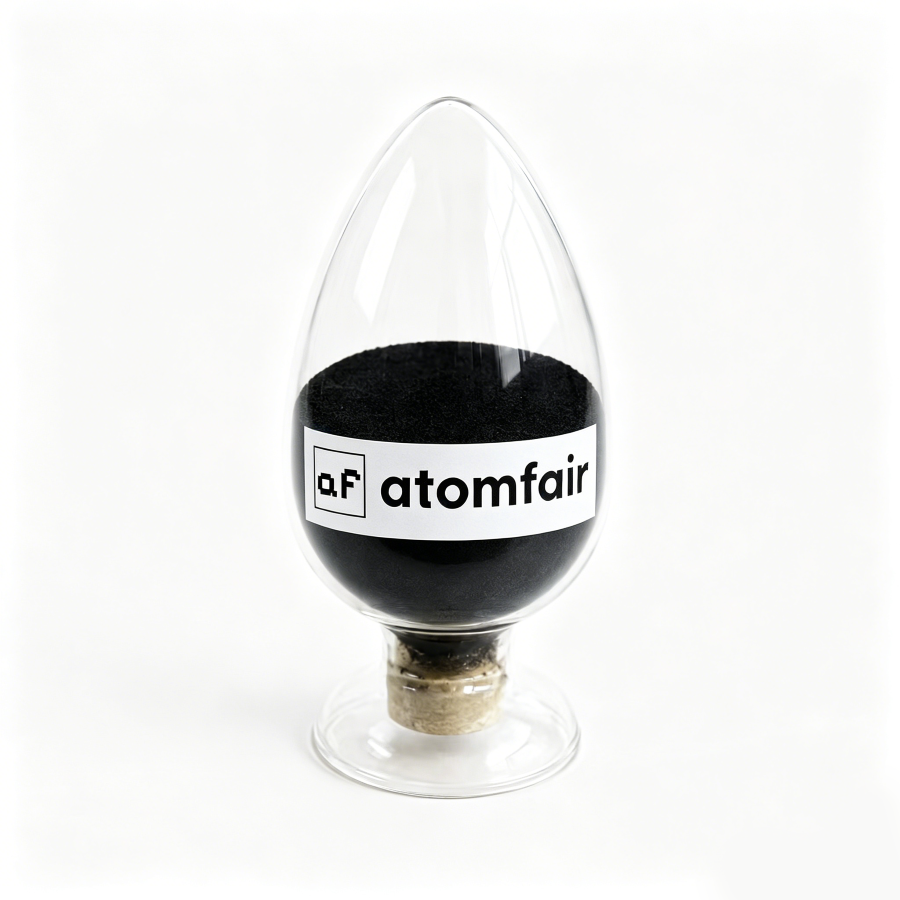
NCM95 Cathode Precursor 94.98% Ni Small Particle ATOMFAIR®

Price range: $280.00 through $500.00

Institutional Procurement & Supply Compliance: As a verified US supplier, Atomfair accepts formal institutional Purchase Orders (POs), contract billing schedules, and custom procurement loops for university and national laboratories, and corporate R&D departments globally.

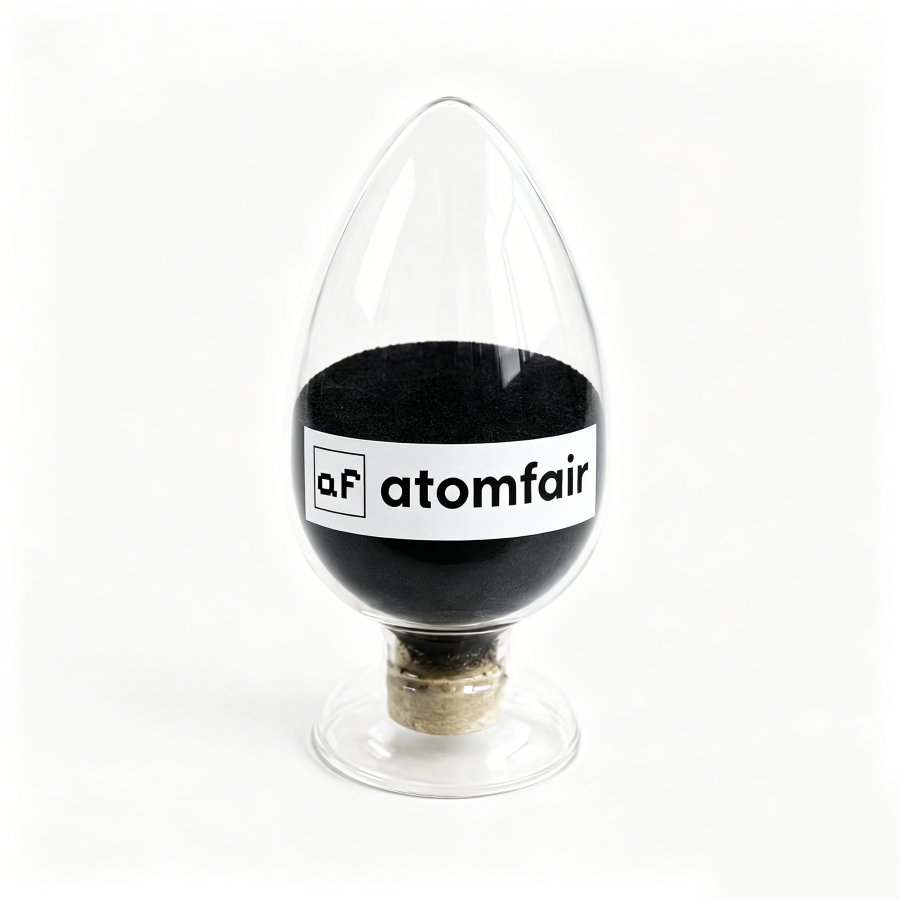
Research-grade NCM95 cathode precursor powder: Ni 94.98%, Co 4.02%, Mn 1.00%. Small particle. Tap density 1.90 g/cm³, BET 9.16 m²/g. In stock.

SKU: AF-BM-P-C950-NA00-200G
Category:
Tags: ,
Brands:

Description

NCM 95:4:1 Cathode Precursor Powder (Small Particle Size)

COMMERCIAL GRADE · PRODUCTION

Product Overview

High-energy-density battery packaging layouts and advanced solid-state prototyping lines demand fine bimodal aggregate matching, and this premium transition metal hydroxide matrix balances competitive high nickel ncm precursor active material price parameters with uncompromised lattice structure control. Incorporating a specialized advanced battery morphology core shell modification blueprint, this small-particle-graded powder serves as a high-fidelity sintering host to optimize grain boundary orientation networks during calcination workflows. It integrates cleanly alongside an inorganic solid electrolyte component matrix for all-solid-state secondary battery configurations. This ultra-high nickel material allows institutional research groups and corporate energy entities to systematically prevent nickel rich precursor moisture degradation pathways, preserving uncompromised particle density boundaries and high thermal stability parameters across automated industrial validation workflows.

Technical Specifications

ANALYTICAL MATERIAL PARAMETER TECHNICAL SPECIFICATION RATINGS
Physical Phase Morphological Form Controllable Morphology Spherical Hydroxide Pre-Matrix Powder (Single-Crystal Base)
BET Specific Surface Area (SSA) 9.16 m²/g Measured Base (Standard Control Requirement Window: 5.00 – 25.00 m²/g)
Volumetric Tapped Density (TD) 1.90 g/cm³ Measured Core (Standard Quality Requirement: ≥ 1.40 g/cm³)
Karl Fischer Internal Water Content 0.21 wt% Low Trace Volatiles (Standard Quality Requirement: < 0.50 wt%)
Stoichiometric Precursor Composition Nickel (Ni): 94.98 mol% | Cobalt (Co): 4.02 mol% | Manganese (Mn): 1.00 mol%
Median Particle Diameter (D50) 3.56 μm Fine Fraction (Standard Distribution Window: 2.00 – 5.00 μm)
Granulometric Size Distribution Span 0.85 Narrow Index (Standard Requirement Boundary Range: 0.60 – 1.00)
Trace Chemical Contamination Limits Sodium (Na) ≤ 150.00 ppm (Cap: < 200 ppm) | Sulfur (S) ≤ 1122.00 ppm (Cap: < 1500 ppm)
Alternative Catalog Items Explore our extended ternary chemical inventory for large-particle precursors, high-nickel NCM 811 options, ultra-pure lithium hydroxide/carbonate flux reagents, or multi-channel battery testers.

Key Features & Advantages

  • Ultra-High Ni95 Crystal Energy Cap: Formulated with a dominant 95 mol% nickel composition profile to thoroughly expand downstream calcined specific capacities to maximum benchmark levels.
  • Engineered Sub-Micron Monocrystalline Core: Concentrated sub-micron grain sizing (D50: 3.56 μm) paired with surface structural modification unlocks immaculate grain boundary packaging within advanced solid-state electrode fields.
  • Elite Particle Density Parameters: High tap density profile reaching 1.90 g/cm³ ensures superb slurry coating compaction thresholds during cell engineering development lines.

APPLICATION SCOPE: Solid-state battery cathode active matrix synthesis, small-particle ultra-high-nickel benchmarking, fast-charging cell validation, and microcrystalline morphologic layout tracking research.
PACKAGING LOGISTICS: Hermetically packaged under protective settings within airtight structural containers to prevent external contaminants and atmospheric cross-contamination. Supports customized institutional volume splits and scaling requirements.
OPERATIONAL COMPLIANCE NOTICE: High-nickel hydroxide matrices possess intense surface reactivity and affinity to room ambient humidity. To successfully solve how to prevent nickel rich precursor moisture degradation guidelines during mechanical sheet casting, keep all packaging completely sealed and operate exclusively within dry, anhydrous inert-gas glovebox platforms to suppress phase modification or moisture degradation before validation thermal processing. Conforms with strict RoHS compliant conditions.

TAILORED SOLUTIONS FOR RESEARCH
Contact our engineering team for technical support or official institutional quotations.
EMAIL: INQUIRY@ATOMFAIR.COM
Manufacturer: PRODUCTION DIVISION · ADVANCED ENERGY STORAGE DIVISION
Brand: INDUSTRIAL TESTING HARDWARE
Specifications are representative and subject to change without notice. For the latest version and compliance certificates, contact official sales channel.

This high-nickel ternary cathode precursor powder is highly moisture-sensitive and requires storage under an inert dry atmosphere to prevent hydration. Mechanical handling must minimize agitation to preserve the powder's morphological integrity and bulk properties.

  • Moisture Control: Store the powder in a sealed container under inert gas or in a dry room to avoid water absorption.
  • Handling Protocol: Minimize mechanical shock and vibration during transfer to prevent alteration of particle morphology and density.

How does the 3.56 μm D50 particle size of NCM95 precursor affect electrode slurry rheology and coating quality compared to larger particles?

The small 3.56 μm D50 particle size with a narrow span of 0.85 yields a high specific surface area of 9.16 m²/g, which can increase binder demand and slurry viscosity. However, the tap density of 1.90 g/cm³ (well above the 1.40 g/cm³ minimum) indicates dense particle packing, potentially offsetting rheological challenges and enabling uniform electrode coating for high-rate applications.

What are the moisture sensitivity limitations of this NCM95 precursor when used in solid-state or dry-room battery fabrication?

This precursor has a water content of 0.21 wt%, which is within the standard requirement of less than 0.50 wt%. For solid-state cathode processing requiring ultra-dry environments, this moisture level may still necessitate additional drying steps or glovebox handling to prevent lithium hydroxide formation and interfacial degradation.

How do trace sulfur and sodium contaminants in this NCM95 precursor impact long-term cycling stability and cell safety?

Sodium is controlled at 150 ppm (below 200 ppm limit) and sulfur at 1122 ppm (below 1500 ppm limit). Elevated sulfur can contribute to cathode-electrolyte side reactions and gas evolution during cycling, while sodium impurities may promote parasitic phase formation. These levels are standard for research-grade material but should be accounted for in degradation studies.

This small particle NCM95 precursor offers high nickel content and narrow particle size distribution for advanced cathode research, but requires dry handling and awareness of residual contaminant levels.

Positive

  • High Nickel Content for High Capacity: The 94.98 mol% nickel provides a high specific capacity ceiling, making it suitable for next-generation high-energy-density lithium-ion batteries.
  • Optimized Particle Size Distribution: The D50 of 3.56 μm with a narrow span of 0.85 ensures uniform electrode coating and enhanced rate capability in solid-state or liquid-electrolyte cells.

Trade-offs

  • Moisture Sensitivity During Handling: The powder has a measured water content of 0.21 wt% and requires storage in dry conditions (e.g., glovebox or dry room) to prevent further moisture uptake and degradation.
  • Trace Contaminant Levels Present: Sodium (150 ppm) and sulfur (1122 ppm) are within standard limits but may require additional purification or tolerating residual impurities for certain ultra-high-purity research applications.

Every advanced material, component, equipment, and instrument in our catalog is backed by rigorous testing. We maintain strict internal quality management frameworks and align with CE conformity metrics to deliver transparent, reproducible performance data via our public open-science repository.

To request raw batch performance data, submit formal vendor registration paperwork, or execute a fast-turnaround R&D manufacturing loop, contact us at inquiry@atomfair.com.

Item is dispatched under the Atomfair Shipping & Delivery Framework (Free worldwide shipping on orders over $59 USD). Return is governed by the Atomfair Return & Refund Policy (7-day technical return window).
Additional information

weight

200g, 1000g