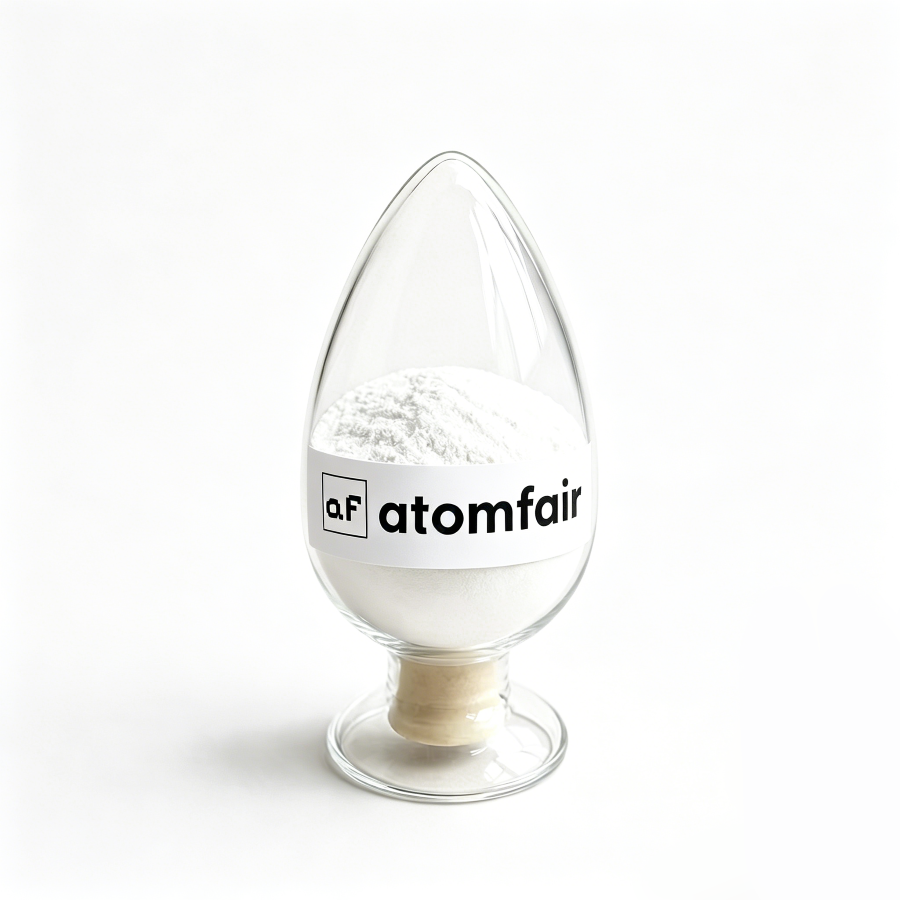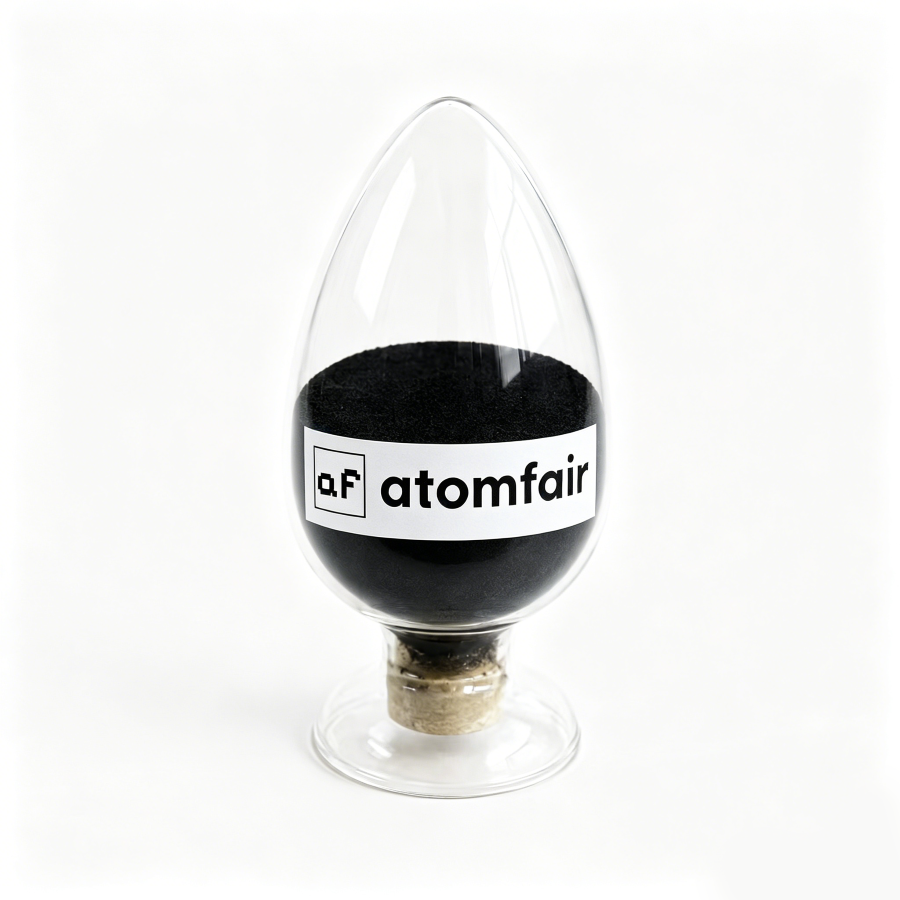
ATOMFAIR NCM (60:10:30) Small Particle Cathode PrecursorRESEARCH GRADE MATERIAL
|
|||||||||||||||||||||||||||||||||||||||||||||||
|
|||||||||||||||||||||||||||||||||||||||||||||||
The precursor powder exhibits sensitivity to moisture, with a maximum allowable water content of 0.50 wt%. Prolonged exposure to ambient humidity may cause water absorption leading to quality degradation.
- Moisture Sensitivity: Store the powder in a dry, inert atmosphere to maintain water content below the 0.50 wt% threshold.
How does the 3.40 μm D50 and 8.82 m²/g BET surface area of this small-particle NCM622 precursor affect the trade-off between rate capability and volumetric energy density in sintered cathodes?
The small 3.40 μm D50 and high 8.82 m²/g BET surface area enhance sintering activity and lithium-ion diffusion kinetics for superior rate performance, while the tap density of 1.82 g/cm³ (exceeding the 1.30 g/cm³ minimum) maintains high volumetric energy density. This balance is specifically optimized for high-rate power tool and EV applications as listed in the target configurations.
How does the 60.01 mol% nickel composition of this precursor affect its structural stability during high-voltage cycling compared to high-nickel NCM variants?
The 60.01 mol% nickel content reduces cation mixing and oxygen release at voltages above 4.5 V, while the 30.02 mol% manganese and 9.97 mol% cobalt stabilize the layered structure against transition metal dissolution. This medium-nickel formulation is explicitly designed for high-voltage prototyping validation as stated in the product overview.
What are the required handling precautions and storage conditions for this hydroxide precursor to maintain its specified water content and prevent agglomeration?
Store in an airtight container under inert atmosphere (argon or nitrogen) at ≤25°C to preserve the as-supplied 0.23 wt% water content below the 0.50 wt% limit. Use a glovebox or fume hood with N95 respirators and nitrile gloves to avoid inhalation of the 3.40 μm particles and to prevent moisture uptake that would degrade sintering performance.
This small-particle NCM622 hydroxide precursor offers a tap density of 1.82 g/cm³ (above the ≥1.30 g/cm³ requirement) and a narrow particle size distribution (D50 3.40 μm, span 0.70), enabling dense electrode packing and uniform sintering. However, trace contaminant levels of sodium (53 ppm) and sulfur (621 ppm) may necessitate additional purification for ultra-high-purity research, and the material requires subsequent lithiation and calcination to form the active cathode phase.
Positive
- High Tap Density and Low Moisture: Tap density of 1.82 g/cm³ (standard ≥1.30 g/cm³) and water content of 0.23 wt% (standard <0.50 wt%) support compact electrode fabrication and reduced moisture-related side reactions.
- Uniform Spherical Morphology with Tight PSD: D50 of 3.40 μm and span of 0.70 (standard window 0.60–1.30) with uniform spherical morphology improve slurry homogeneity, coating consistency, and sintering behavior for reproducible electrochemical performance.
Trade-offs
- Trace Contaminant Presence: Sodium at 53.00 ppm (standard <200 ppm) and sulfur at 621.00 ppm (standard <2000 ppm) are within limits but may interfere with electrochemical characterization or degrade performance in high-voltage, high-purity battery research contexts.
- Requires Lithiation and Calcination Steps: As a hydroxide precursor, this powder must be mixed with a lithium source and sintered to produce the active NCM622 cathode material, adding processing time, energy costs, and potential variability before electrochemical testing.
Every advanced material, component, equipment, and instrument in our catalog is backed by rigorous testing. We maintain strict internal quality management frameworks and align with CE conformity metrics to deliver transparent, reproducible performance data via our public open-science repository.
To request raw batch performance data, submit formal vendor registration paperwork, or execute a fast-turnaround R&D manufacturing loop, contact us at inquiry@atomfair.com.
Item is dispatched under the Atomfair Shipping & Delivery Framework (Free worldwide shipping on orders over $59 USD excl. heavy equipment). Return is governed by the Atomfair Return & Refund Policy (7-day technical return window).