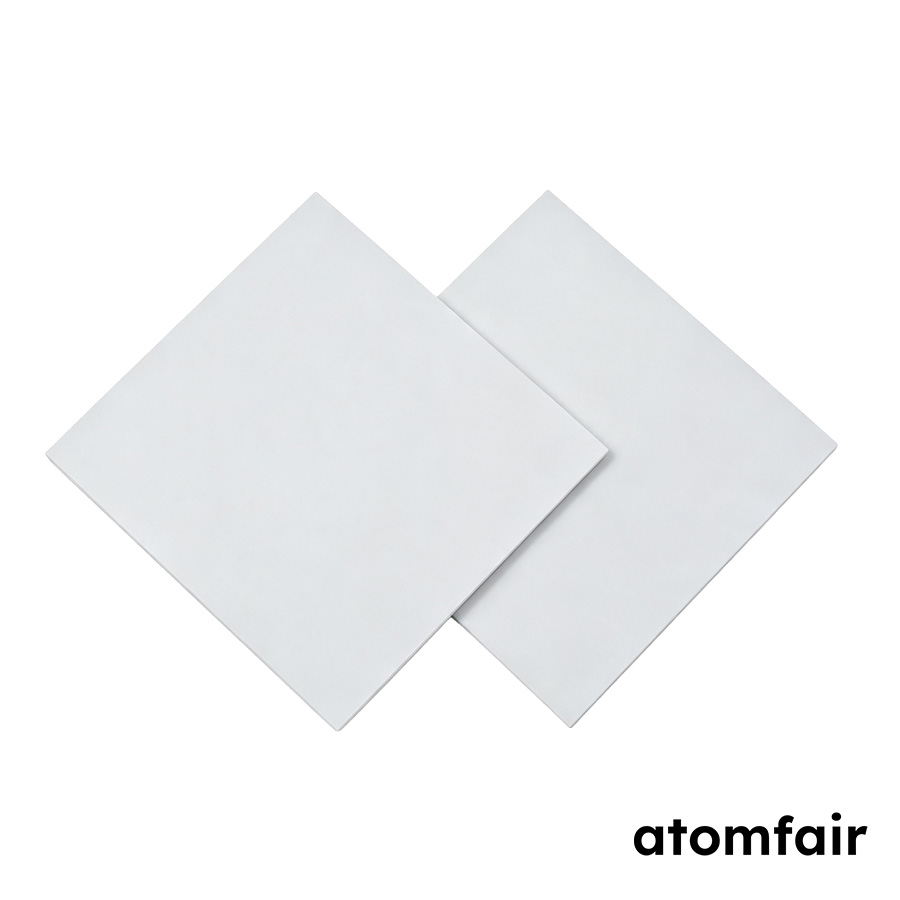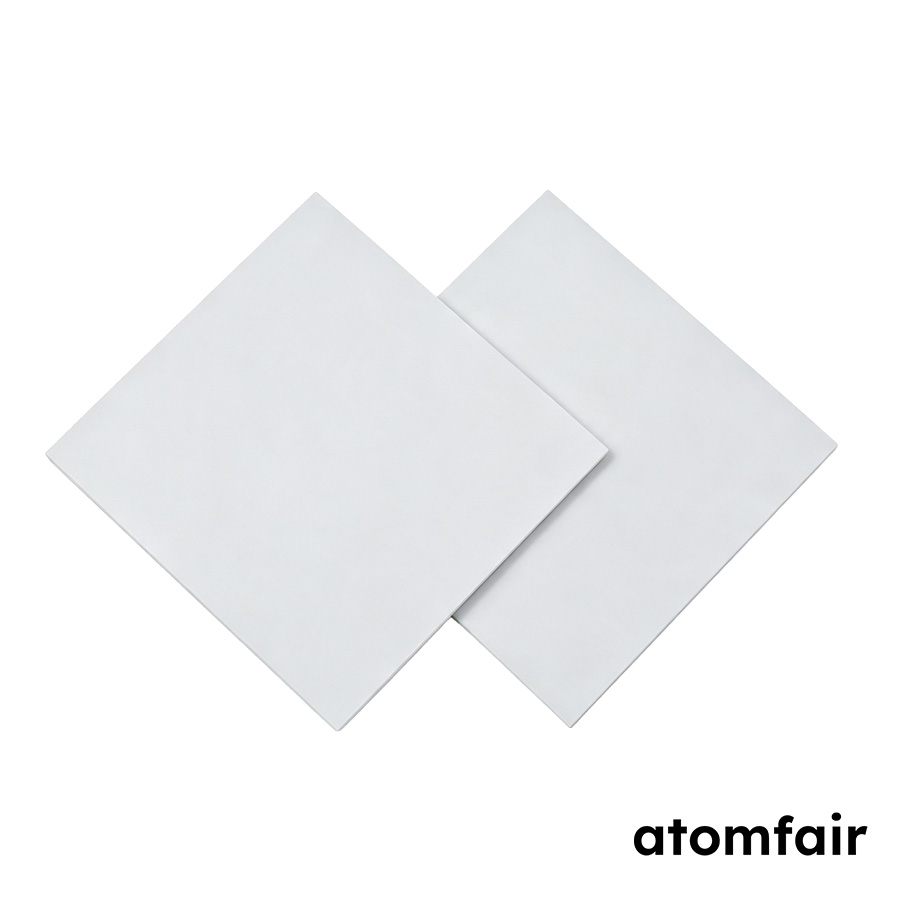
96% Alumina Ceramic Substrate, 40 mm x 40 mm x 3 mm, Pack of 50Product Type: Technical ceramic substrate
Research-grade laboratory product
|
|||||||||||||||||||||||||||||||||
|
|||||||||||||||||||||||||||||||||
|
LABORATORY PROCUREMENT SUPPORT
For model selection, accessory matching, platform compatibility or configuration confirmation, contact our technical sales team.
E-MAIL: inquiry@atomfair.com
|
|||||||||||||||||||||||||||||||||
|
Supplier: Atomfair
Brand: ATOMFAIR®
|
This substrate exhibits high hardness and brittleness, requiring careful handling to avoid chipping or cracking during processing. Its surface roughness of Ra 0.15–0.30 μm and high flexural strength >350 MPa impose specific constraints for subsequent coating or metallization steps.
- Brittle Fracture Risk: Avoid mechanical shock or point loading during cutting, drilling, or clamping to prevent edge chipping or catastrophic fracture.
- Surface Preparation Requirement: Confirm that the as-received surface roughness is compatible with the adhesion requirements of any applied thin film or metallization layer.
- Thermal Management Consideration: Account for the thermal conductivity >24 W/(m·K) when designing heat dissipation paths, as localized thermal gradients may induce mechanical stress.
- Electrical Breakdown Constraint: Ensure that the applied voltage does not exceed the breakdown voltage of ≥15 kV/mm under the intended operating temperature and humidity conditions.
These steps describe safe handling and surface preparation for 96% alumina ceramic substrates prior to coating or assembly. Proper technique minimizes fracture risk and ensures consistent surface quality for downstream processes.
Required Equipment: Cleanroom gloves, Isopropyl alcohol and lint-free wipes, Vacuum tweezer or soft-grip handling tool
- Inspect substrates for defects
Visually examine each substrate under good lighting for cracks, chips, or surface contamination before any processing step. - Clean the substrate surface
Wipe the substrate gently with a lint-free wipe moistened with isopropyl alcohol to remove particulate and organic residues. - Dry the substrate completely
Allow the cleaned substrate to air dry in a clean, particle-free environment for at least 5 minutes before further handling. - Transfer substrate using vacuum tweezer
Use a vacuum tweezer or soft-grip tool to lift and position the substrate, avoiding direct contact with the surface to prevent contamination. - Store substrates in a dry container
Place cleaned and dried substrates in a sealed, desiccated container to maintain surface quality until use.
What is the surface roughness and flexural strength of the 96% alumina ceramic substrate 40 mm x 40 mm x 3 mm?
The substrate has a surface roughness of Ra 0.15–0.30 µm and a flexural strength greater than 350 MPa. These specifications, combined with a Vickers hardness of 14 GPa and density of ≥3.70 g/cm³, indicate suitability for applications requiring mechanical durability and a smooth surface for thin-film deposition or bonding.
Can this 96% alumina substrate be used for high-voltage insulation applications?
Yes, it is suitable for high-voltage insulation, with a breakdown voltage of ≥15 kV/mm. The material also offers a low dielectric constant and low dielectric loss, along with a thermal conductivity >24 W/(m·K), making it appropriate for power electronics and insulating substrates where electrical isolation and heat dissipation are critical.
What handling or customization options are available for this 40 mm x 40 mm x 3 mm alumina substrate pack?
The product is supplied as a pack of 50 white dense ceramic substrates with standard surface finish. For specialized applications, options such as polishing, coating, metallization, or custom shaping must be confirmed with the supplier before ordering. Verify size tolerance, thickness, and material grade with the technical sales team to ensure compatibility with your process.
This 96% Al2O3 ceramic substrate in a 40 mm x 40 mm x 3 mm format (pack of 50) offers a high flexural strength (>350 MPa) and Vickers hardness (14 GPa) suited for mechanical support and insulation in high-temperature or corrosive laboratory environments, though its moderate thermal conductivity (~24 W/(m·K)) and unpolished surface roughness (Ra 0.15–0.30 μm) may require post-processing for precision thin-film or thermal management applications.
Positive
- High mechanical and electrical robustness: Flexural strength >350 MPa and electrical breakdown voltage ≥15 kV/mm provide reliable structural and insulating performance in demanding lab fixtures or substrate-based devices.
- Corrosion resistance and chemical stability: The 96% alumina composition offers good resistance to corrosive reagents and maintains stability under varied chemical environments, reducing degradation risk during processing or cleaning.
Trade-offs
- Moderate thermal conductivity for power dissipation: With thermal conductivity >24 W/(m·K), this substrate is less efficient than higher-purity alumina or beryllia alternatives for high-heat-flux applications, potentially limiting use in power electronics without additional heat spreading.
- Surface roughness requires post-processing for thin films: As-sintered surface roughness of Ra 0.15–0.30 μm may necessitate polishing or planarization for direct metallization or thin-film deposition, adding processing steps and cost.
Every advanced material, component, equipment, and instrument in our catalog is backed by rigorous testing. We maintain strict internal quality management frameworks and align with CE conformity metrics to deliver transparent, reproducible performance data via our public open-science repository.
To request raw batch performance data, submit formal vendor registration paperwork, or execute a fast-turnaround R&D manufacturing loop, contact us at inquiry@atomfair.com.
Item is dispatched under the Atomfair Shipping & Delivery Framework (Free worldwide shipping on orders over $59 USD excl. heavy equipment). Return is governed by the Atomfair Return & Refund Policy (7-day technical return window).