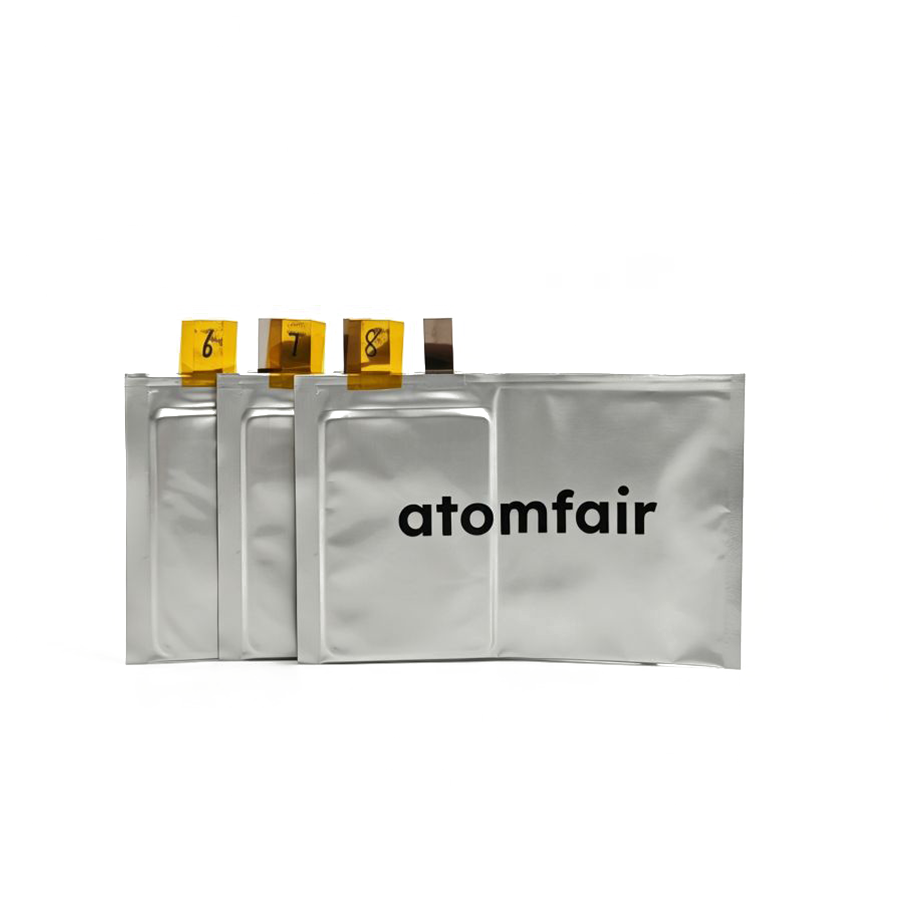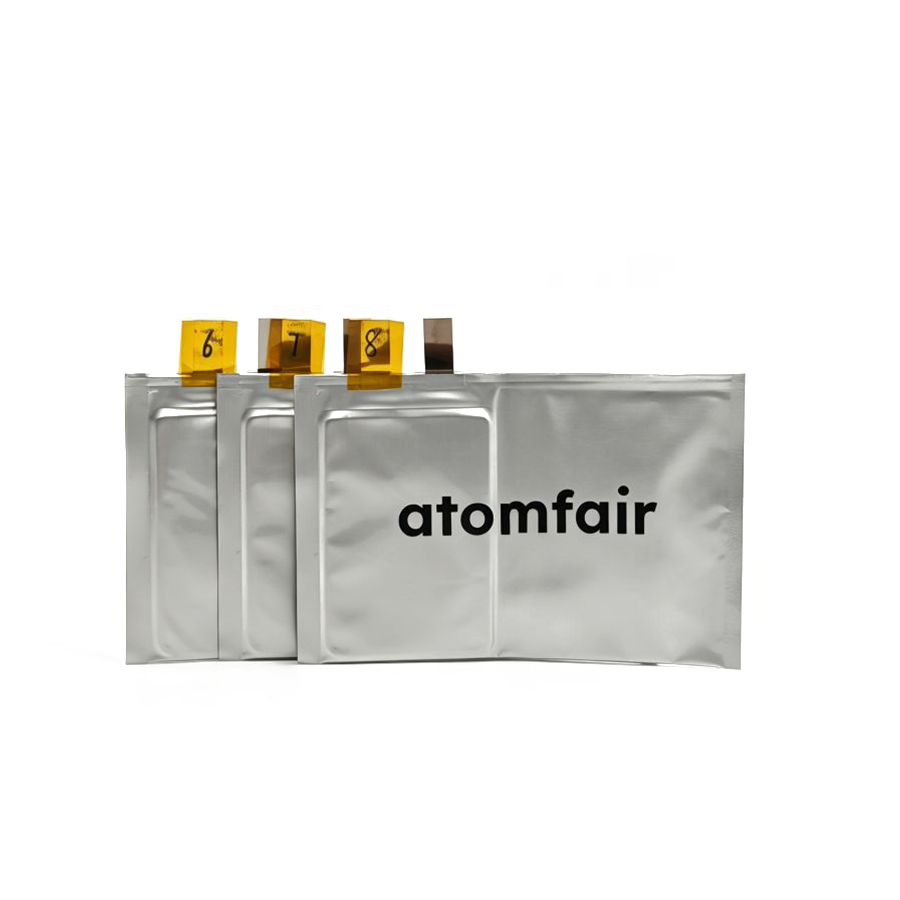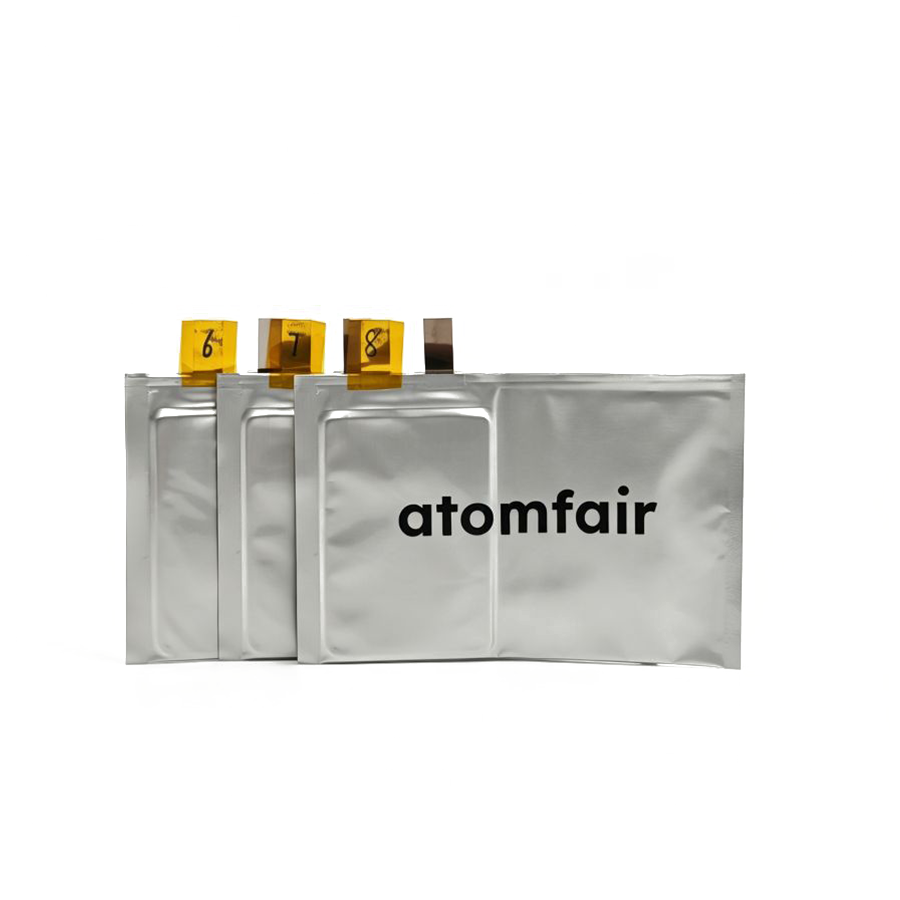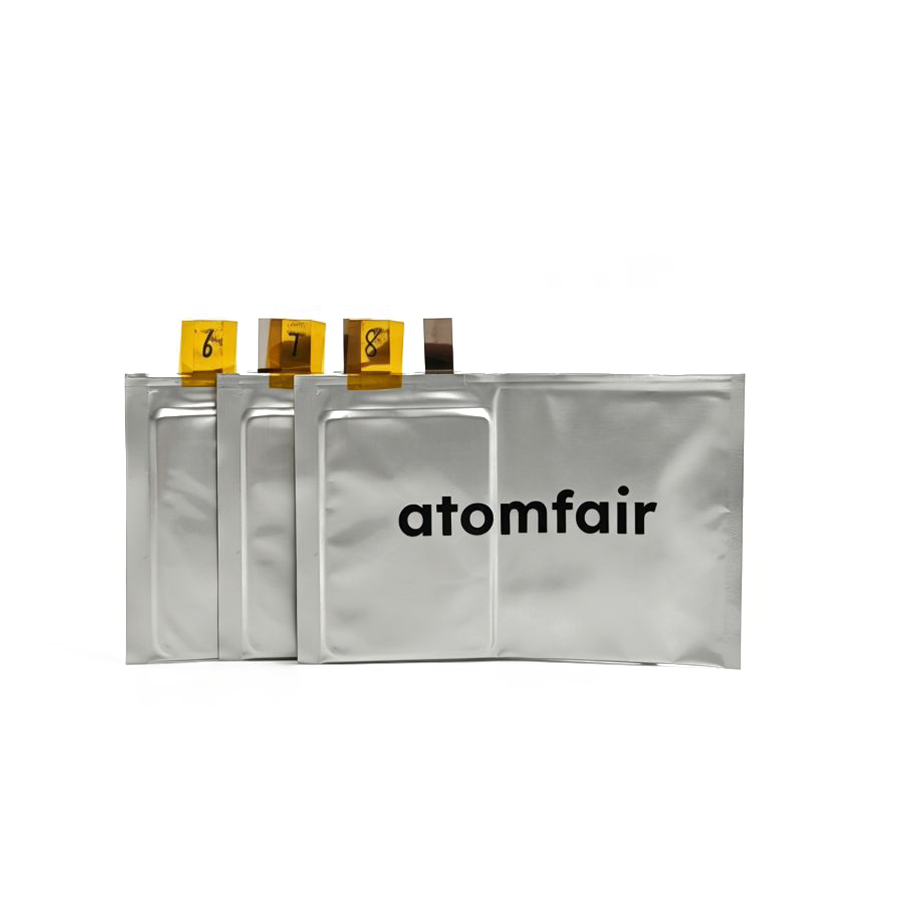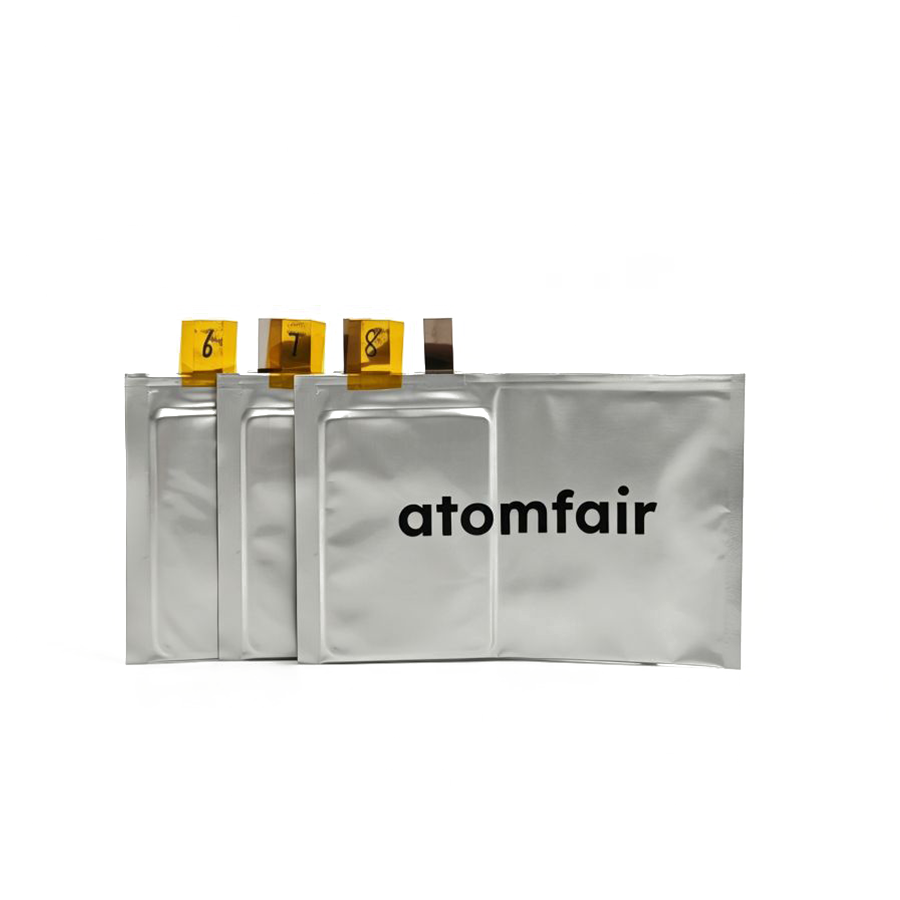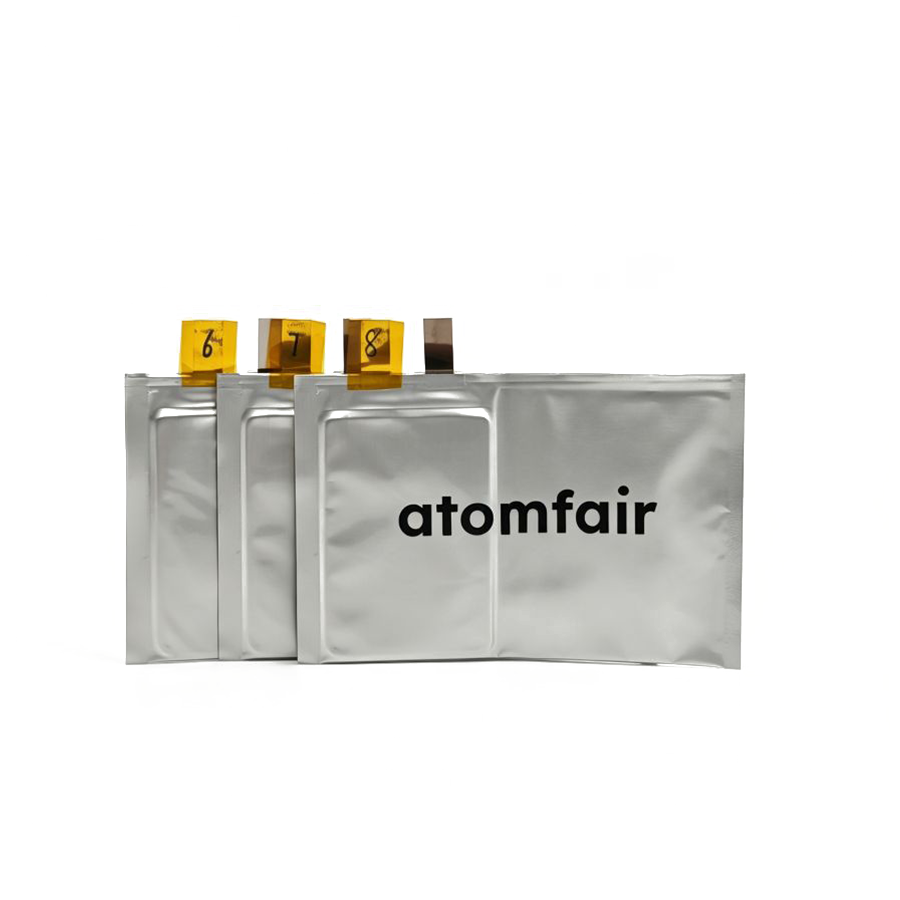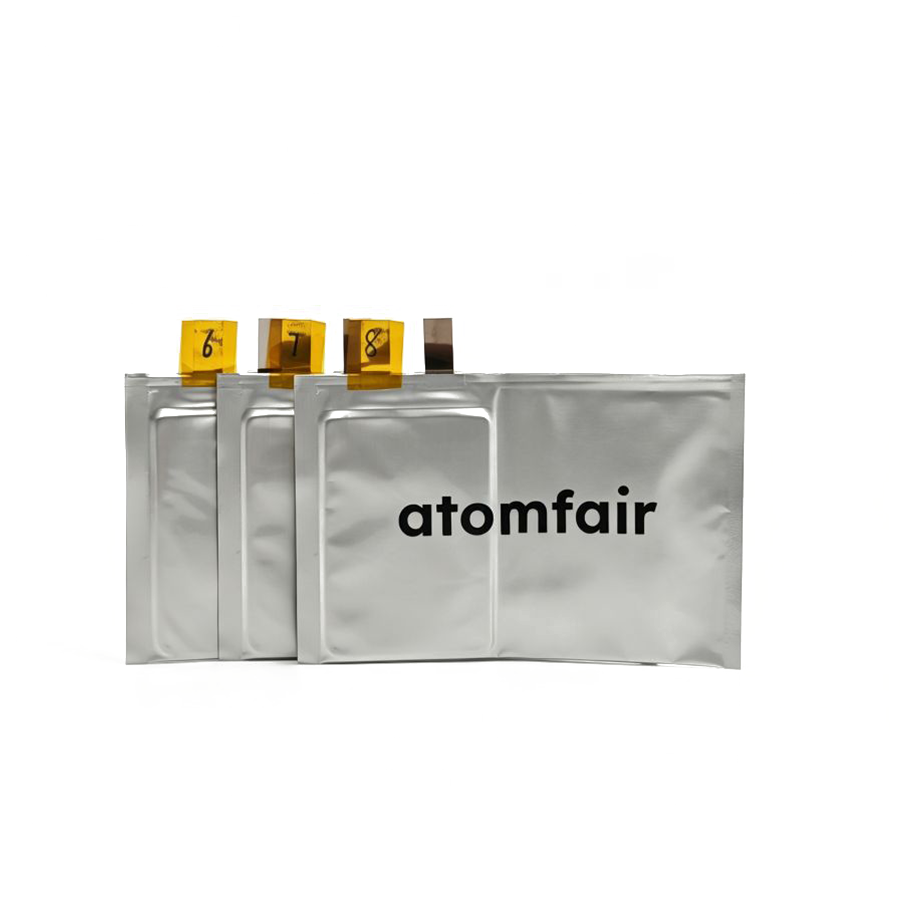
NCM811 Lithium Metal 5Ah Pouch CellRESEARCH GRADE MATERIAL
|
||||||||||||||||||||||||||||
|
||||||||||||||||||||||||||||
Related Products |
||||||||||||||||||||||||||||
|
||||||||||||||||||||||||||||
|
TAILORED SOLUTIONS FOR RESEARCH
Contact our engineering team for technical support or official institutional quotations.
EMAIL: inquiry@atomfair.com
|
||||||||||||||||||||||||||||
|
Manufacturer: Atomfair LLC
Brand: ATOMFAIR®
|
||||||||||||||||||||||||||||
The cell must be filled with electrolyte in an inert environment to prevent lithium metal reaction with moisture. Operate only within the specified voltage range of 2.5 to 4.3 volts to maintain safety.
- Electrolyte Integration: The dry cell requires user-defined electrolyte formulation and filling under controlled conditions.
- Voltage Limits: Operating voltage must be maintained between 2.5V and 4.3V to prevent overcharge or overdischarge damage.
- Cell Integrity: Inspect the pouch for any physical damage before handling to avoid short circuits or leakage.
This procedure describes the safe filling of the dry pouch cell with electrolyte and its initial conditioning. Work must be performed in an inert atmosphere glovebox to avoid contamination.
Required Equipment: Inert atmosphere glovebox, Syringe with needle, Vacuum sealer
- Inspect cell
Inspect the pouch cell for any physical damage or defects before proceeding. - Prepare glovebox
Transfer the cell into an inert atmosphere glovebox with low moisture and oxygen content. - Prepare electrolyte
Prepare the desired electrolyte composition in a separate container within the glovebox. - Fill cell
Inject the electrolyte into the dry pouch cell using a syringe through the designated filling port. - Seal cell
Vacuum seal the pouch immediately after filling to remove any trapped air. - Formation cycle
Perform an initial charge-discharge cycle to condition the cell for use.
What are the voltage limitations and stability considerations when cycling a dry pouch cell with NCM811 cathode and lithium metal anode?
The voltage range is specified as 2.5 V – 4.3 V and is customizable. Operating above 4.3 V may accelerate electrolyte decomposition and lithium dendrite growth, while lower cutoff voltages reduce capacity utilization. The dry pouch format allows researchers to optimize electrolyte formulations to mitigate these issues.
What electrolyte compatibility considerations are critical for the 5Ah NCM811 lithium metal pouch cell?
The cell is delivered as a dry pouch cell without electrolyte, requiring user-defined electrolyte formulation. Researchers have full experimental freedom to integrate custom liquid, polymer, or solid-state electrolytes, making it ideal for testing compatibility with high-voltage NCM811 cathodes and lithium metal anodes under controlled conditions.
What are the mandatory handling and storage conditions for the dry pouch lithium metal cell?
The cell must be handled exclusively in an inert atmosphere or dry room due to the reactive lithium metal anode. Storage should be in a controlled environment with low moisture and oxygen levels to prevent degradation. The flexible dry pouch format requires careful handling to avoid physical damage prior to electrolyte filling and cycling.
This dry pouch cell combines a high-nickel NCM811 cathode with a lithium metal anode for ultra-high energy density, but requires electrolyte addition and handling in inert atmosphere, making it ideal for custom electrolyte and advanced anode R&D.
Positive
- Ultra-high energy density pairing: NCM811 cathode with lithium metal anode enables remarkable specific energy and extended cycle potential for advanced energy storage studies.
- Dry cell custom electrolyte freedom: Unfilled pouch allows integration of user-defined liquid, polymer, or solid-state electrolytes, maximizing experimental flexibility.
Trade-offs
- Inert atmosphere handling required: Cell must be handled in an inert atmosphere or dry room to prevent lithium metal degradation and ensure safe operation.
- Electrolyte not included: Delivered without electrolyte; researchers must source and fill the cell, adding a preparation step before testing.
Every advanced material, component, equipment, and instrument in our catalog is backed by rigorous testing. We maintain strict internal quality management frameworks and align with CE conformity metrics to deliver transparent, reproducible performance data via our public open-science repository.
To request raw batch performance data, submit formal vendor registration paperwork, or execute a fast-turnaround R&D manufacturing loop, contact us at inquiry@atomfair.com.
Item is dispatched under the Atomfair Shipping & Delivery Framework (Free worldwide shipping on orders over $59 USD excl. heavy equipment). Return is governed by the Atomfair Return & Refund Policy (7-day technical return window).