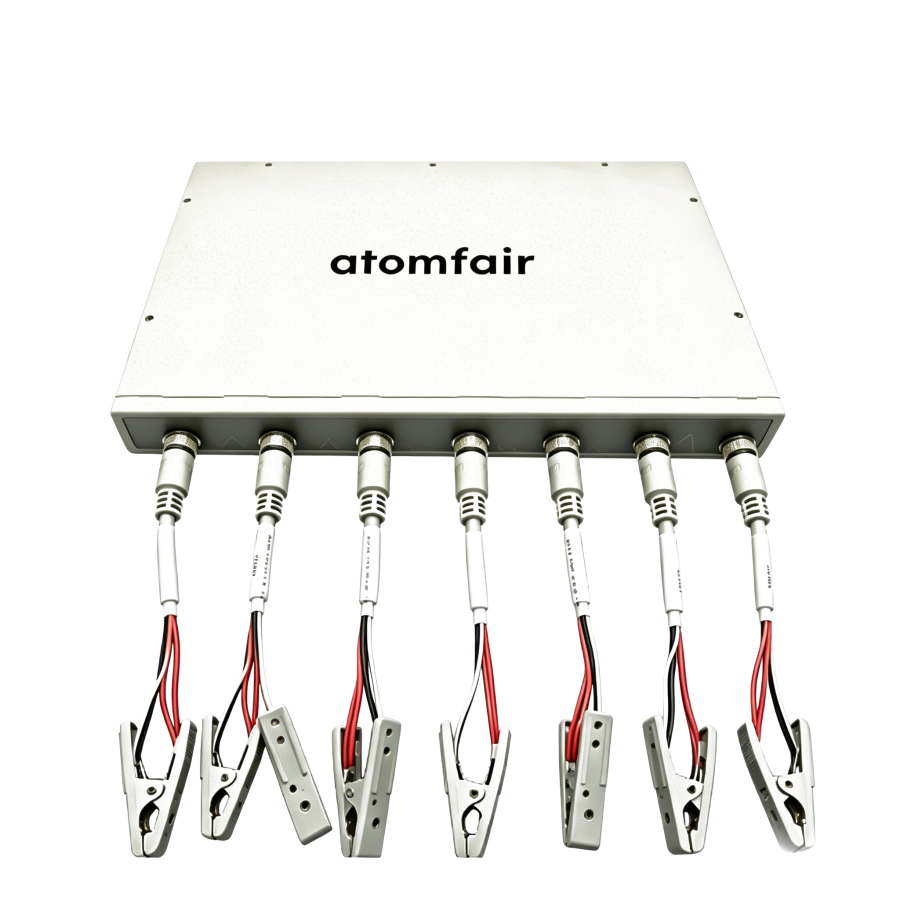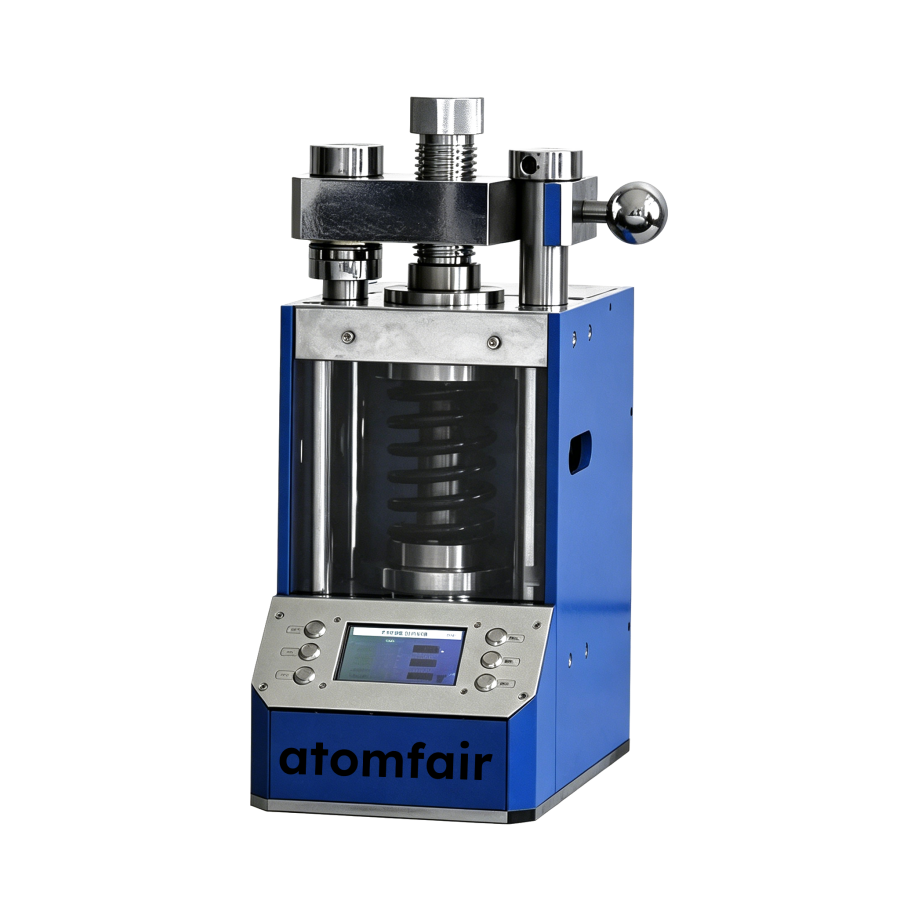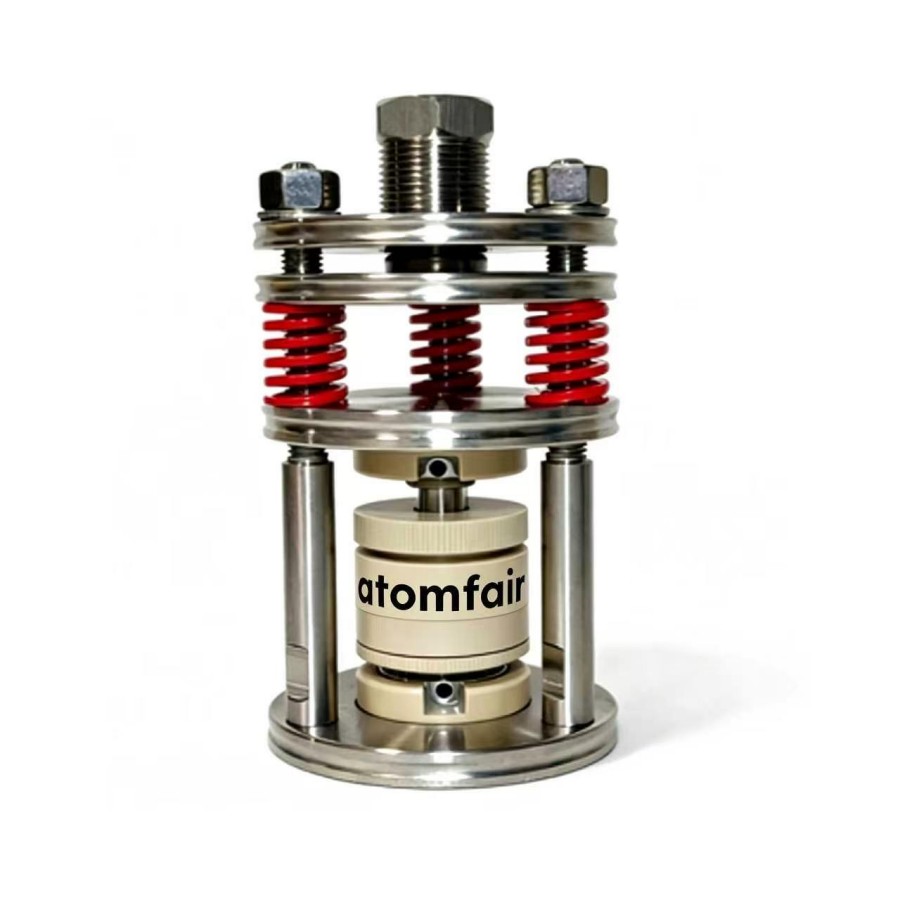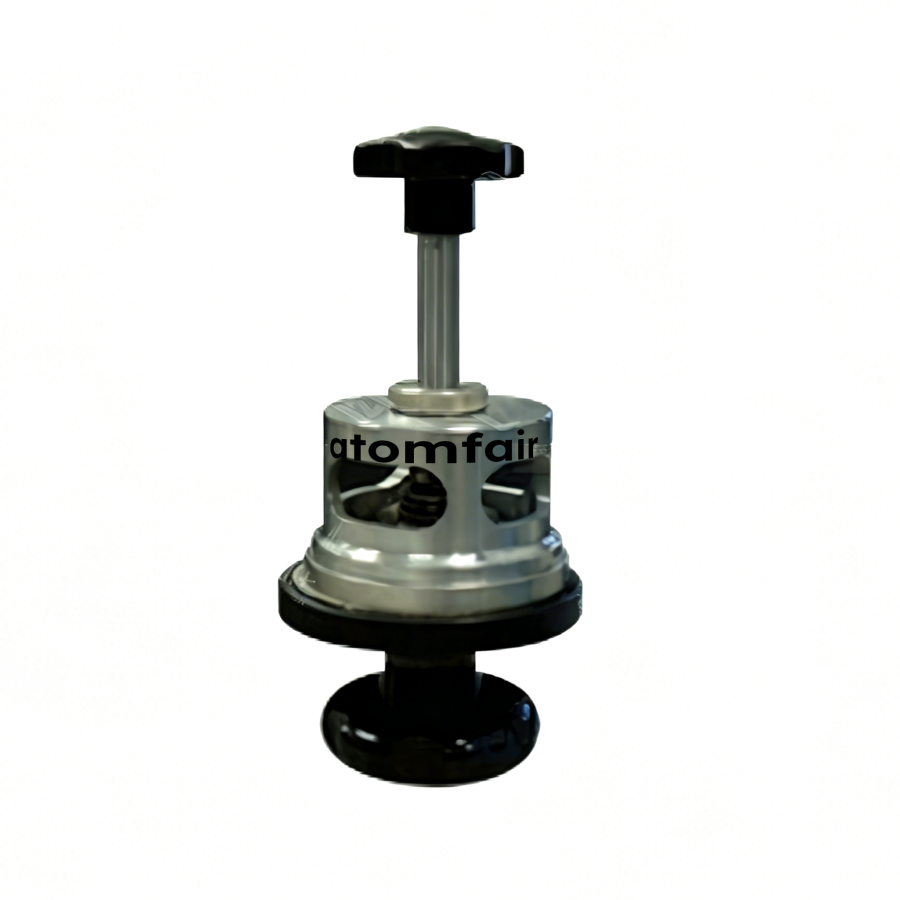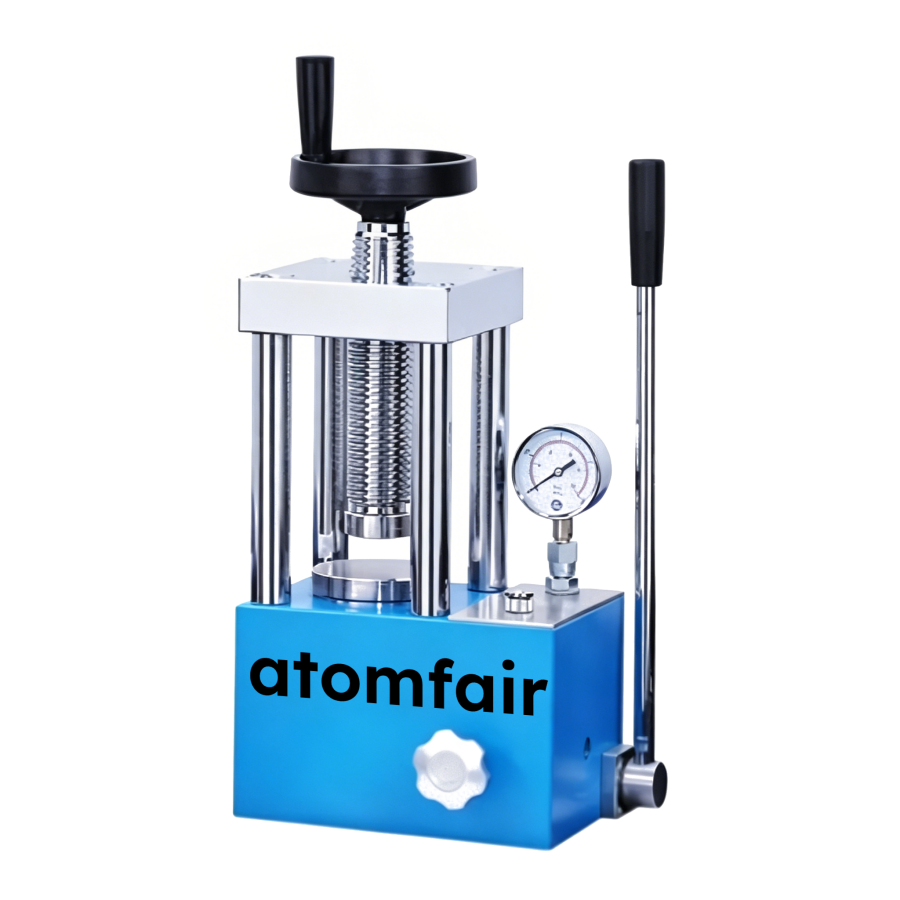
ATOMFAIR PTP-258 MANUAL POWDER PELLET PRESS (0-30 TON)MANUAL COMPACTION LAB GEAR
|
|||||||||||||||||||||||||
|
|||||||||||||||||||||||||
|
TAILORED SOLUTIONS FOR RESEARCH
Contact our engineering team for technical support or customized equipment quotations.
EMAIL: INQUIRY@ATOMFAIR.COM
|
|||||||||||||||||||||||||
|
Manufacturer: Atomfair LLC
Brand: ATOMFAIR
|
The PTP-258 press requires a stable laboratory table rated for at least 56 kg and must only be operated on flat, balanced surfaces. Never exceed the 30-ton compression limit to protect hydraulic seals and internal lines.
- Table Load Capacity: Verify that the laboratory benchtop can safely support the 56 kg frame weight before installation.
- Pressure Limit: Never force the pumping arm beyond the 30-ton metric threshold to avoid damaging hydraulic lines and seal tolerances.
- Surface Condition: Always operate the press on a flat, balanced, and stable surface to ensure uniform compression and prevent tipping.
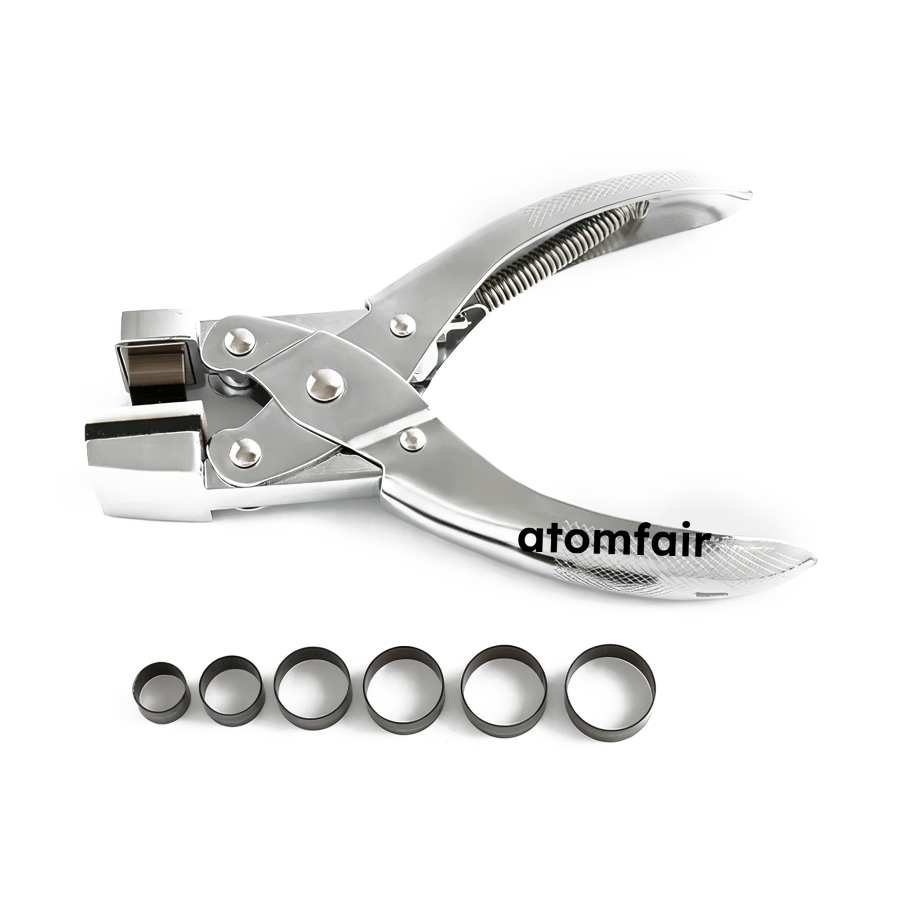
This manual hydraulic press compresses powder samples into uniform pellets for FTIR spectroscopy or similar analytical protocols. The following steps describe safe setup and operation of the PTP-258 to produce consistent pellets while preventing equipment damage.
Required Equipment: Manual pumping arm, Powder mold assembly
- Setup
Place the press on a flat, balanced laboratory table that can support at least 56 kg. - Install Mold
Install the compatible powder mold assembly into the press cavity, ensuring it is correctly aligned. - Load Powder
Fill the mold evenly with the sample powder and level the surface for uniform compression. - Apply Compression
Operate the manual pumping arm slowly to apply pressure up to the required tonnage, never exceeding 30 tons. - Release Pellet
Open the hydraulic release valve to relieve pressure, then carefully remove the pressed pellet from the mold.
What is the trade-off between the 30-ton maximum force and the 10 mm piston diameter for sample pellet uniformity in this manual press?
The 30-ton capacity provides high compression force, but the 10 mm piston diameter concentrates force over a small area, which can affect pellet uniformity for larger dies. The rigid four-pillar frame ensures parallel surfaces to prevent disk cracking, but the 40 mm stroke limits the thickness of the pellet assembly. The press is optimized for routine 10 mm infrared spectroscopy disc preparation, so using larger dies may require alternative tooling.
Can this manual press be used with powder mold assemblies larger than 92 mm × 160 mm internal clearance?
No, the internal column clearance is 92 mm × 160 mm, so mold assemblies must fit within that space. The press is designed for standard 10 mm piston infrared spectroscopy discs, and larger molds would exceed the clearance. For alternative tooling sizes, the catalog offers electric pellet presses, vacuum powder dies, or ultra-high tonnage hydraulic equipment.
What are the critical safety and infrastructure requirements for operating this manual press in a laboratory?
The laboratory table must safely sustain the 56 kg frame weight. The press must be placed on a flat, balanced surface to ensure safe operation. Do not force the manual pumping arm beyond the 30-ton metric threshold to protect internal hydraulic lines and seal tolerances. The press is unpowered, so no electrical dependencies are required, but manual operation demands proper handling to avoid overloading.
The Atomfair PTP-258 manual powder pellet press delivers a cost-effective 0-30 ton compression solution for routine 10mm infrared spectroscopy disc preparation, featuring a rigid four-pillar frame for uniform pellets and unpowered operation suitable for remote or glovebox use, though its 56 kg weight requires a sturdy bench and the 30-ton limit must not be exceeded.
Positive
- Rigid four-pillar frame for uniform compression: The four-pillar geometry eliminates structural deflection during extreme loading, guaranteeing parallel specimen surfaces and preventing disk cracking.
- Unpowered operation for flexible deployment: Removes electrical or pneumatic dependencies, enabling reliable use in remote field labs, gloveboxes, or standard benchtops without power infrastructure.
Trade-offs
- Heavy 56 kg bench load requirement: The 56 kg net weight demands a laboratory table that safely sustains the frame load, limiting placement options on standard or lightweight benches.
- 30-ton maximum force limit: The manual pumping arm must not exceed the 30-ton metric threshold to protect internal hydraulic lines and seal tolerances, restricting applications requiring higher tonnage.
Every advanced material, component, equipment, and instrument in our catalog is backed by rigorous testing. We maintain strict internal quality management frameworks and align with CE conformity metrics to deliver transparent, reproducible performance data via our public open-science repository.
To request raw batch performance data, submit formal vendor registration paperwork, or execute a fast-turnaround R&D manufacturing loop, contact us at inquiry@atomfair.com.
Item is dispatched under the Atomfair Shipping & Delivery Framework (Free worldwide shipping on orders over $59 USD excl. heavy equipment). Return is governed by the Atomfair Return & Refund Policy (7-day technical return window).