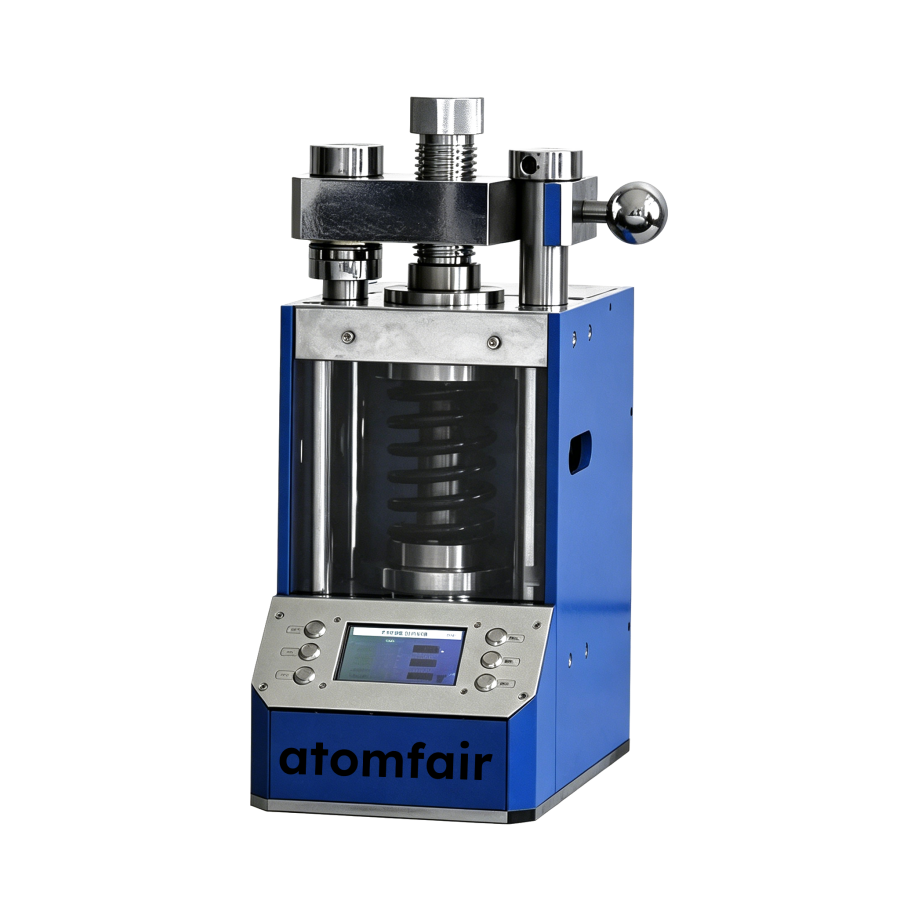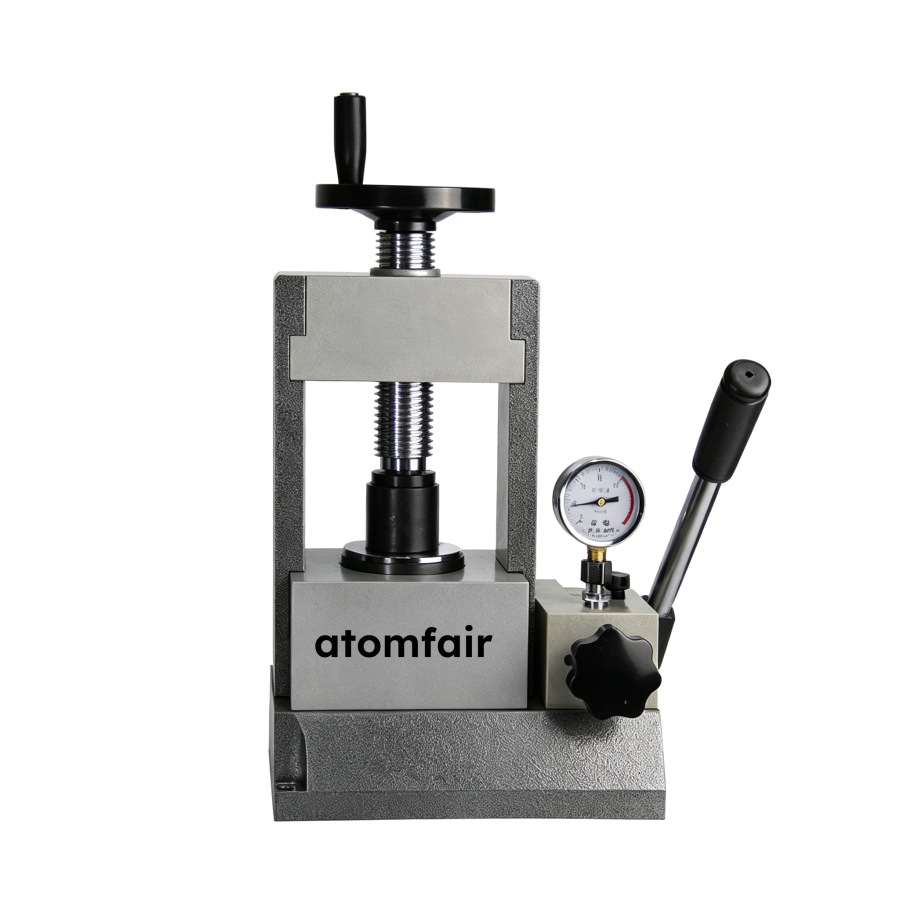
ATOMFAIR® PTP-837 POWDER TABLET PRESS (0−24 TON)RESEARCH GRADE MATERIAL
|
|||||||||||||||||||||||||||
|
|||||||||||||||||||||||||||
|
TAILORED SOLUTIONS FOR RESEARCH
If you’re interested, have any questions, or have specific customization requirements, please feel free to contact us.
EMAIL: inquiry@atomfair.com
|
|||||||||||||||||||||||||||
|
Manufacturer: Atomfair LLC
Brand: ATOMFAIR®
|
Store the press in a dry, vibration-free environment at room temperature to prevent corrosion and maintain mechanical alignment. Operate only within the 0-24 ton force range while monitoring overpressure indicators and clean piston shafts after each use to ensure accurate stroke tracking.
- Environmental Storage: Store in a climate-controlled area with minimal dust and stable temperature to avoid corrosion and alignment drift.
- Force Limit Compliance: Never exceed the 24-ton maximum force threshold; observe overpressure warning indicators continuously during operation.
- Post-Use Maintenance: Wipe internal piston shafts with cleanroom-grade wipes after each use to prevent debris accumulation that may affect stroke displacement accuracy.
- Operational Environment: Use only in a controlled laboratory setting with proper ventilation and safety equipment to contain powder dust and mechanical hazards.
Prepare the powder sample and compression die set, then load and pressurize the assembly to form a pellet. After compression, allow automatic piston retraction and clean the press for subsequent use.
Required Equipment: PTP-837 Powder Tablet Press, Compression die set, Cleanroom-grade wipes
- Inspect indicators
Inspect the press and overpressure warning indicators to confirm they are operational before loading any sample. - Load sample and die
Load the powder sample into the compression die set and position the assembly centrally on the press platen. - Apply force gradually
Apply force gradually using the press lever while monitoring the pressure gauge and warning indicators to stay within the 0-24 ton range. - Release and reset
After reaching the target pressure, release the force and allow the automatic piston return device to fully reset the piston. - Remove pellet and clean
Remove the compressed pellet from the die and wipe the internal piston shafts with a cleanroom-grade wipe to ensure accurate stroke tracking for subsequent cycles.
What trade-off exists between the 86 mm piston diameter and the 20 mm stroke when preparing thin KBr pellets for FTIR analysis?
The φ86 mm piston provides a large surface area for uniform pressure distribution, advantageous for consistent pellet transparency in FTIR spectroscopy. However, the 20 mm stroke limits the maximum achievable pellet thickness, meaning very thick samples may require multiple compression steps. These dimensions are specified in the technical data.
Is the PTP-837 press compatible with standard 13 mm diameter infrared pellet dies without additional adapters?
The PTP-837 is designed for infrared sample preparation and accepts custom die sets, but standard 13 mm dies are not explicitly listed in the specifications. The column spacing of 110 × 140 mm may accommodate such dies, but direct compatibility should be confirmed with the manufacturer. Custom die sets are available upon request.
What are the correct post-operation cleaning procedures to maintain piston accuracy on the PTP-837?
After each compression cycle, wipe the internal piston shafts with cleanroom-grade wipes to ensure proper stroke displacement tracking. Additionally, monitor the built-in overpressure safety indicators and never exceed the rated 24‑Ton maximum force to avoid mechanical strain.
The PTP-837 powder tablet press offers a controlled 0–24 ton force range with a side wall design that prevents frame deformation and an automatic piston return for faster cycles, but demands routine piston cleaning and strict force monitoring to ensure safe operation in research labs.
Positive
- Side wall design prevents frame deformation: The integrated side wall architecture distributes mechanical loads across two columns, suppressing metal deformation during high-pressure cycles and maintaining long-term alignment.
- Automatic piston return enhances throughput: An integrated automatic reset device reduces manual intervention between compression cycles, enabling faster pelletizing sequences for high-efficiency sample preparation.
Trade-offs
- Post-use piston cleaning required: Internal piston shafts must be wiped with cleanroom-grade wipes after each use to maintain stroke displacement tracking and prevent contamination.
- Mandatory force limit monitoring: Operators must adhere to the 24-ton maximum force threshold and rely on built-in warning indicators; exceeding the limit risks mechanical damage and voids safety protocols.
Every advanced material, component, equipment, and instrument in our catalog is backed by rigorous testing. We maintain strict internal quality management frameworks and align with CE conformity metrics to deliver transparent, reproducible performance data via our public open-science repository.
To request raw batch performance data, submit formal vendor registration paperwork, or execute a fast-turnaround R&D manufacturing loop, contact us at inquiry@atomfair.com.
Item is dispatched under the Atomfair Shipping & Delivery Framework (Free worldwide shipping on orders over $59 USD excl. heavy equipment). Return is governed by the Atomfair Return & Refund Policy (7-day technical return window).