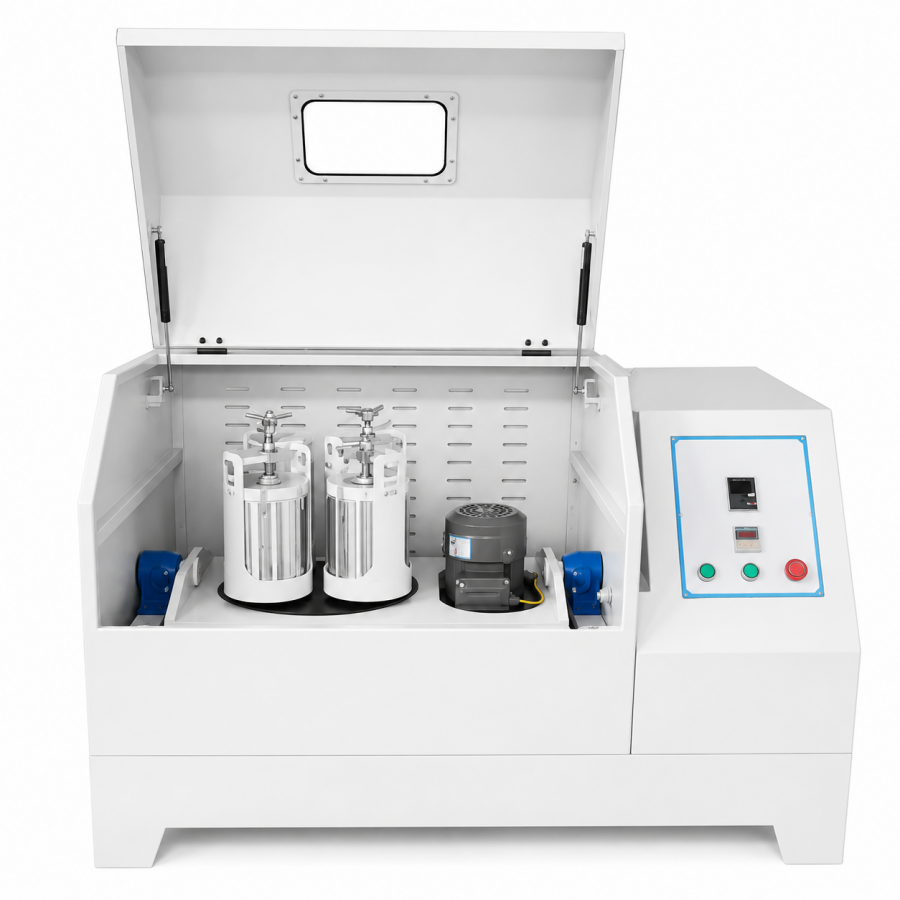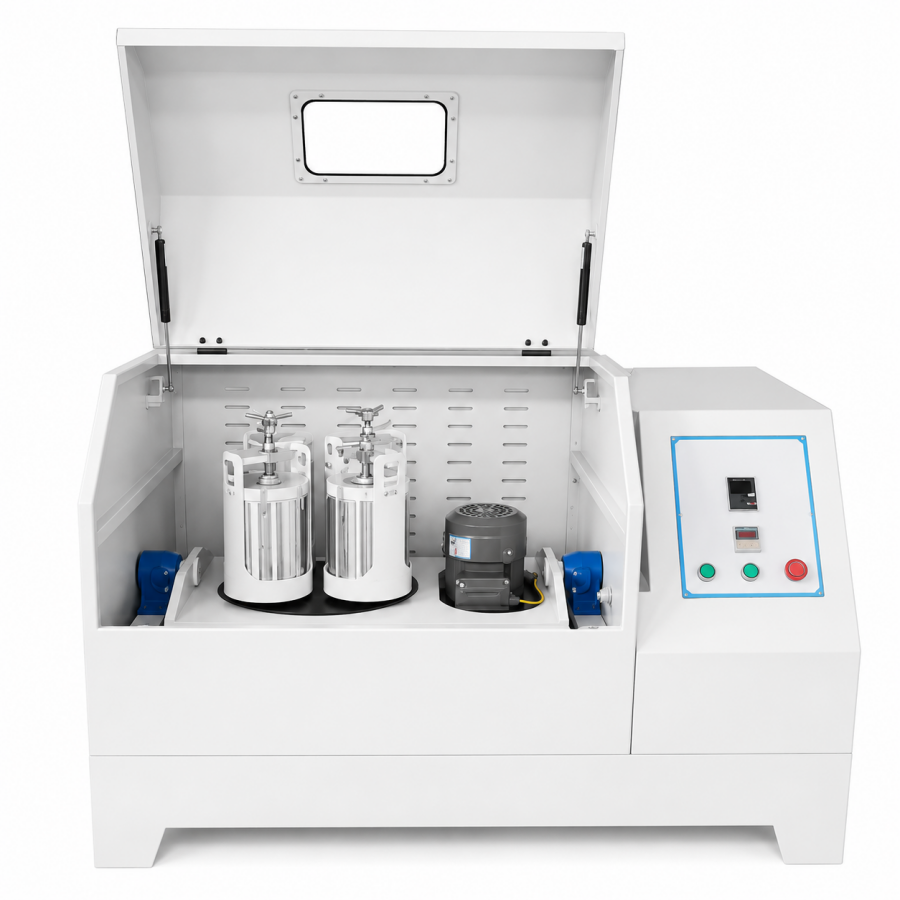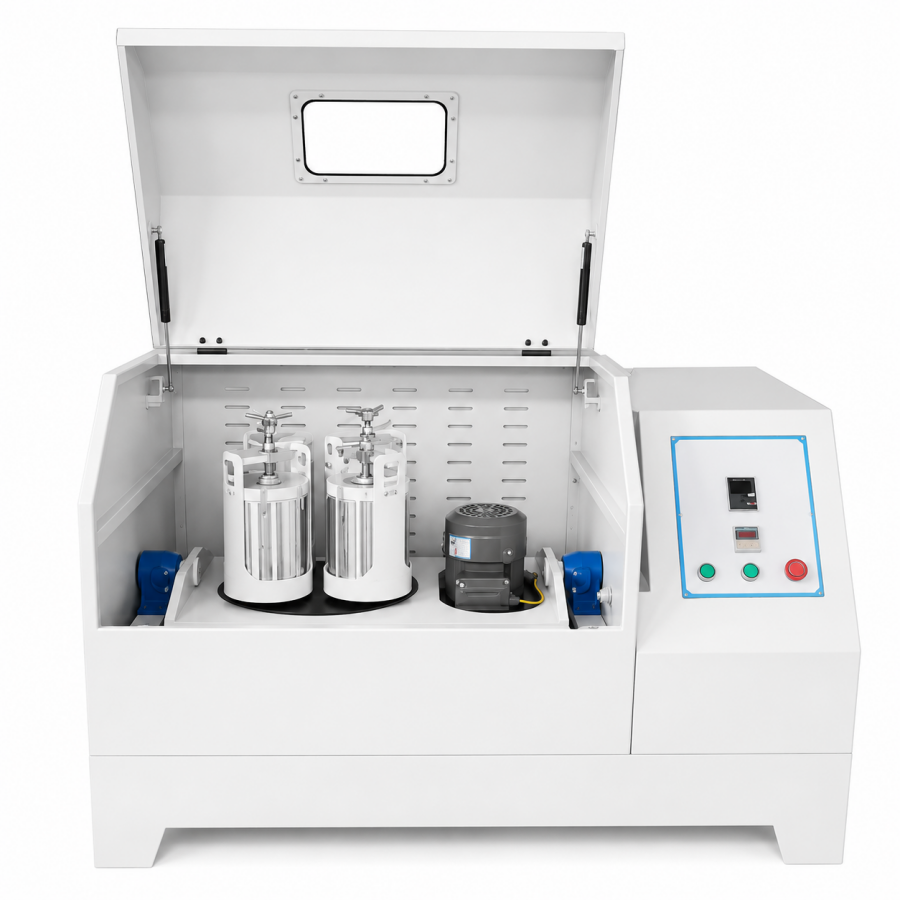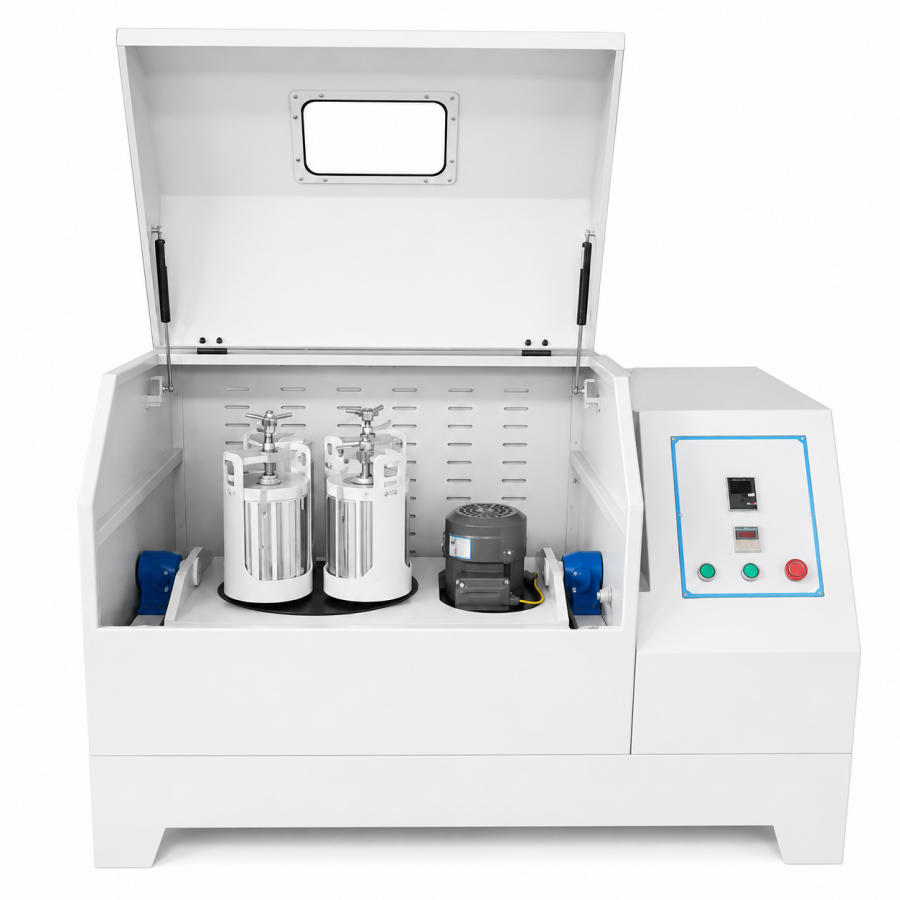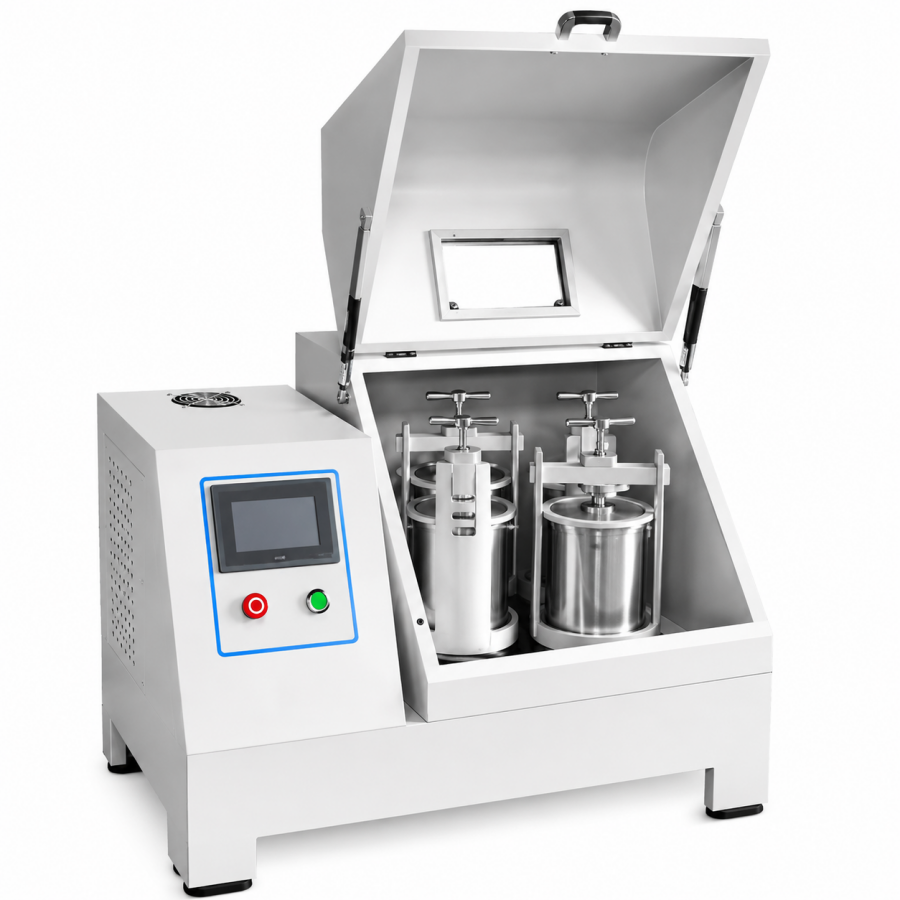
MPBM-(8-12)A Touchscreen Planetary Ball Mill 1.5kW PLC 580rpm Lab Grade

$2,377.00

Institutional Procurement & Supply Compliance: As a verified US supplier, Atomfair accepts formal institutional Purchase Orders (POs), contract billing schedules, and custom procurement loops for university and national laboratories, and corporate R&D departments globally.

MPBM-(8-12)A touchscreen planetary ball mill, 1.5kW, 0-580 rpm, PLC control. Program editing, data storage, real-time monitoring. Lab & production grade.

SKU: AFMSILDF802
Category: ,
Tags:
Brands:

Description

ATOMFAIR MPBM-(8-12)A TOUCHSCREEN PLANETARY BALL MILL PLC LAB GRADE

RESEARCH GRADE EQUIPMENT

Product Overview

Built upon traditional planetary ball mill architecture, this system integrates an advanced PLC touchscreen control system with capacitive touch sensitivity, delivering comprehensively upgraded operational performance for electronic ceramic magnetic material grinding and advanced powder processing. The intelligent control system supports programmable memory fault alarm monitoring with password protection, multi-program editing, storage and recall, real-time operation monitoring, and automatic fault alarming. The bidirectional rotation control with timing and power-off memory functions ensures precise and reproducible grinding protocols. This listing is priced for the main unit only—grinding jars and grinding balls are ordered separately. The MPBM series spans from 0.2 L miniature models to 200 L production units, covering research, pilot, and full-scale production across geology, mining, metallurgy, electronics, ceramics, chemicals, and advanced materials processing.

Standard Configuration List

Item Configuration Description
Main Grinding Unit 1 pc
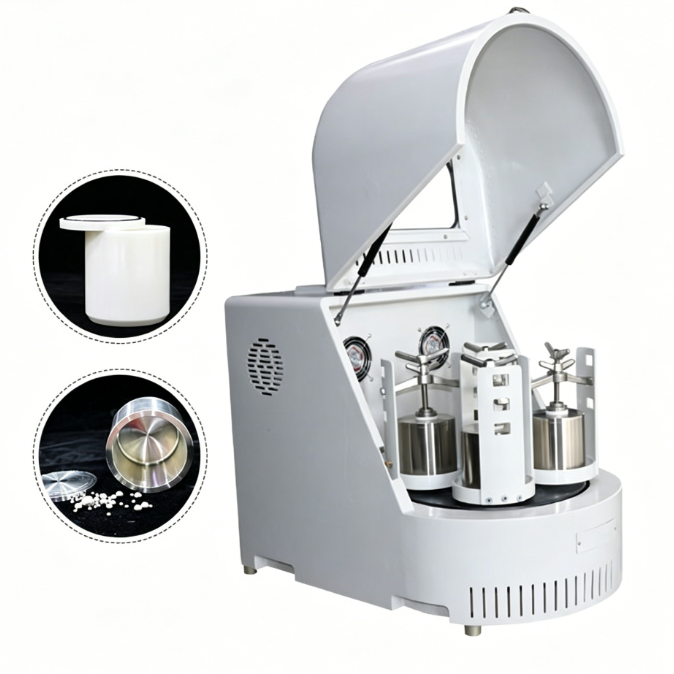
Grinding Jars (Order Separately) Available Materials: Al₂O₃ PU PTFE Ceramic SS Nylon
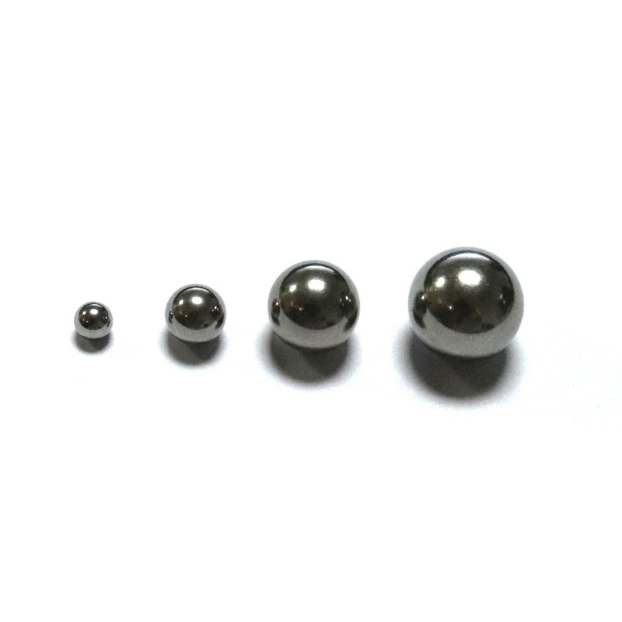
Grinding Balls (Order Separately) Available Materials: WC-Co Al₂O₃ PU-Fe Agate YSZ HCCI 304SS
Touchscreen Control System PLC Integrated Unit with Program Editing, Data Storage, Operation Monitoring, and Fault Alarm Functions

MPBM Series Full Model Specifications

No. MODEL TYPE ROTATION (rpm) JAR ID (mm) MOTOR REV DIA (mm) DIMENSIONS (mm) WEIGHT (kg)
1 MPBM-0.2 Mini 0–1160 50 90 W Φ111 420×260×310 25
2 MPBM-0.2S Mini Glovebox 0–1160 50 90 W Φ111 Host: 390×220×270
Control: 200×180×240
29
3 MPBM-0.4A Semi-Circular 0–870 80 250 W Φ140 530×300×360 34
4 MPBM-6 Standard 0–670 134 0.75 kW Φ234 760×470×580 100
5 MPBM-4A Semi-Circular 0–670 134 0.75 kW Φ234 760×470×600 85
6 MPBM-(8-12) Standard 0–580 162 1.5 kW Φ275 900×600×640 168
7 MPBM-(8-12)A Semi-Circular 0–580 162 1.5 kW Φ275 880×560×642 150
8 MPBM-16A Semi-Circular 0–510 182 3 kW Φ320 950×600×710 205
9 MPBM-20 Standard 0–430 222 4 kW Φ385 1200×790×930 392
10 MPBM-40 Standard 0–390 250 5.5 kW Φ430 1400×880×1070 656
11 MPBM-60 Standard 0–260 (1:1.5) 275 7.5 kW Φ490 1600×1070×1250 950
12 MPBM-100 Standard 0–240 (1:1.5) 326 11 kW Φ578 1750×1140×1330 1300
13 MPBM-200 Standard 0–215 460 22 kW Φ738 2670×1600×2804 2725

Key Features & Advantages

  • PLC Touchscreen Control with Program Management: The integrated capacitive touch PLC system supports password-protected access, multi-program editing with storage and recall capability, real-time operation monitoring, and automatic fault alarm for enhanced process security and reproducibility.
  • Bidirectional Rotation with Timing and Power-Off Memory: The control system supports forward and reverse rotation control, precise timing functions, and automatic memory retention of operational parameters after power interruption, ensuring consistent grinding protocols across experimental campaigns.
  • Comprehensive Model Range from 0.2L Mini to 200L Production Scale: Thirteen models spanning miniature glovebox-compatible units (MPBM-0.2S) through standard and semi-circular configurations to high-capacity production systems (MPBM-200) accommodate the complete spectrum from fundamental research to industrial production.
  • Multiple Jar and Ball Material Options for Contamination Control: Six grinding jar materials (Al₂O₃, PU, PTFE, Ceramic, SS, Nylon) and seven ball materials (WC-Co, Al₂O₃, PU-Fe, Agate, YSZ, HCCI, 304SS) enable contamination-free processing across diverse material systems from electronic ceramics to pharmaceutical compounds.

APPLICATION SCOPE: Widely used in geology, mining, metallurgy, electronics, building materials, ceramics, chemical engineering, light industry, pharmaceuticals, and environmental protection. Specifically suitable for electronic ceramics, structural ceramics, magnetic materials, lithium cobalt oxide, lithium manganese oxide, catalysts, phosphors, long-afterglow luminescent powders, rare-earth polishing powders, electronic glass powders, fuel cells, zinc oxide varistors, piezoelectric ceramics, nanomaterials, multilayer ceramic capacitors (MLCC), thermistors (PTC, NTC), dielectric ceramics, alumina ceramics, zirconia ceramics, zinc oxide powders, cobalt oxide powders, nickel-zinc ferrites, and manganese-zinc ferrites.
PACKAGING: This listing is priced for the MPBM-200 main unit only. The standard configuration includes 1 pc grinding host machine and the PLC touchscreen control system with program editing, data storage, operation monitoring, and fault alarm functions. Grinding jars (Al₂O₃, PU, PTFE, Ceramic, SS, Nylon) and grinding balls (WC-Co, Al₂O₃, PU-Fe, Agate, YSZ, 304SS) are ordered separately. The MPBM series is available from 0.2 L miniature models through 200 L production units. Installation guidance and operational training support are provided upon request.
IMPORTANT NOTICE: The listed price is for the main unit; grinding jars and balls must be ordered separately. Select jar and ball materials compatible with your target material to avoid cross-contamination. The PLC touchscreen control system should be operated according to the user manual to ensure proper program execution and equipment safety. For detailed installation, operation, and maintenance instructions, consult the user manual prior to first use. If you have specific requirements for other MPBM models or custom control system configurations, please contact us at inquiry@atomfair.com.
TAILORED SOLUTIONS FOR RESEARCH
Contact our engineering team for technical support or official quotations.
EMAIL: inquiry@atomfair.com
Manufacturer: Atomfair LLC
Brand: ATOMFAIR®

The mill must be operated on a stable surface due to its 150 kg mass and with an electrical supply matching the 1.5 kW rating to prevent hazards. Use only compatible grinding jars and balls as the main unit does not include them to avoid mechanical imbalance and damage.

  • Electrical Power Supply: Connect the mill to a dedicated power outlet with proper grounding to support the 1.5 kW continuous load.
  • Surface Stability: Place the mill on a level, vibration-absorbing surface that can support its 150 kg weight to prevent tipping during operation.
  • Grinding Jar Compatibility: Use only grinding jars and balls designed for the mill's clamping mechanism and speed range to avoid imbalance and mechanical failure.
  • Ventilation Clearance: Ensure adequate clearance around the mill for airflow to prevent overheating of the motor and control electronics.
  • Fault Monitoring: Monitor the real-time status display and heed any fault alarms to stop operation immediately when abnormal conditions occur.

Follow these steps to safely initialize and operate the ball mill for grinding tasks. Each step must be performed in the order given to ensure proper function and avoid equipment damage.

Required Equipment: Touch screen control interface

  1. Select rotation direction
    Select the desired rotation direction (forward or reverse) using the touch screen interface.
  2. Set grinding duration
    Set the grinding duration by inputting the desired time on the timer function of the control system.
  3. Verify equipment status
    Verify the equipment status on the process monitoring display to confirm no fault alarms are active before starting.
  4. Start milling operation
    Press the start button on the touch screen to begin the milling cycle.
  5. Stop and unload
    After the programmed cycle completes, allow the mill to come to a complete stop before opening the lid or removing grinding jars.

What is the trade-off between using the programmable touch screen control and a basic manual control in terms of reproducibility for multi-step milling processes?

The touch screen PLC system allows storage and recall of multiple programs, ensuring consistent parameter application across batches, whereas manual control risks variation. The power-off memory function further enhances reproducibility by preserving program state during interruptions, as stated in the product description.

Can the PBM-(8-12)A accommodate both dry and wet milling for battery material synthesis, and are there jar material constraints for acidic slurries?

Yes, the planetary ball mill is suitable for both dry and wet milling, as demonstrated by its application in producing lithium cobalt oxide and other battery materials. Grinding jars and balls must be ordered separately, and users must select chemically inert jar materials (e.g., zirconia or agate) for acidic or corrosive slurries to avoid contamination, though specific jar materials are not precluded by the mill design.

What are the safety requirements when operating the PBM-(8-12)A at high speed with heavy jars, considering its 150 kg net weight?

The mill weighs 150 kg and must be placed on a stable, vibration-dampening surface to ensure safe operation. The touch screen PLC includes a fault alarm system that alerts operators to anomalies, and the programmable controls allow forward/reverse rotation and timing functions to manage load dynamics, as specified in the product description.

This microcomputer-controlled planetary ball mill features a touch screen PLC interface with programmable operation, fault alarms, and process monitoring, making it suited for R&D in ceramics, battery materials, catalysts, and other advanced materials. The 1.5kW motor and 150kg construction deliver robust milling capacity, but users must budget separately for grinding jars and balls and plan for substantial benchtop or floor support.

Positive

  • Touch screen PLC with advanced control: Integrated touch screen PLC supports password setting, free programming, multi-program storage/call, process monitoring, and fault alarm, enabling intuitive operation and customization for demanding milling protocols.
  • Broad material applicability: Capable of processing electronic ceramics, structural ceramics, magnetic materials, lithium battery precursors, catalysts, fluorescent powders, nanomaterials, and many other products, making it a versatile tool for diverse R&D environments.

Trade-offs

  • Grinding jars and balls not included: The listed price covers only the main machine; grinding jars and grinding balls must be ordered separately, adding to initial procurement complexity and cost.
  • Substantial weight requires dedicated installation: With a net weight of 150 kg, the mill demands a robust, level support surface or floor mounting and may require additional handling equipment for safe positioning in the lab.

Every advanced material, component, equipment, and instrument in our catalog is backed by rigorous testing. We maintain strict internal quality management frameworks and align with CE conformity metrics to deliver transparent, reproducible performance data via our public open-science repository.

To request raw batch performance data, submit formal vendor registration paperwork, or execute a fast-turnaround R&D manufacturing loop, contact us at inquiry@atomfair.com.

Item is dispatched under the Atomfair Shipping & Delivery Framework (Free worldwide shipping on orders over $59 USD). Return is governed by the Atomfair Return & Refund Policy (7-day technical return window).
Additional information

Weight 150 kg
Dimensions 88 × 56 × 64.2 cm