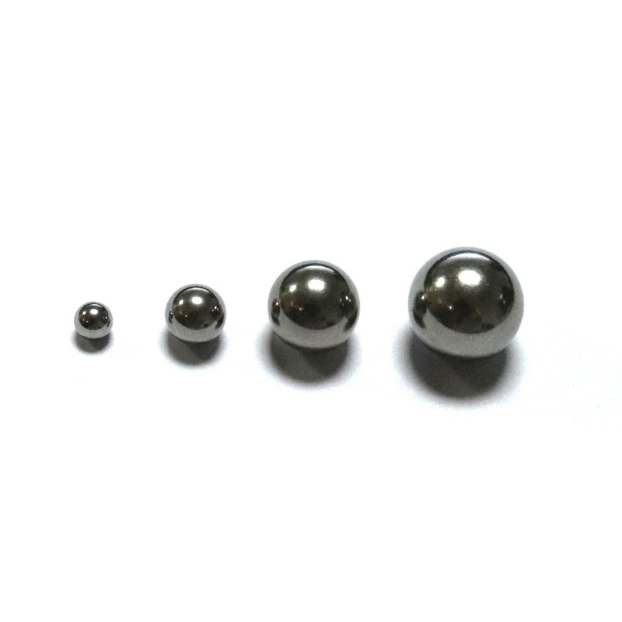
ATOMFAIR 304 STAINLESS STEEL GRINDING BALLS MIXED SIZE 1KG DENSITY 7.9RESEARCH GRADE MATERIAL
|
|||||||||||||||||||||||||||||||||||||||||||||||||||
|
|||||||||||||||||||||||||||||||||||||||||||||||||||
|
TAILORED SOLUTIONS FOR RESEARCH
Contact our engineering team for technical support or official quotations.
EMAIL: inquiry@atomfair.com
|
|||||||||||||||||||||||||||||||||||||||||||||||||||
|
Manufacturer: Atomfair LLC
Brand: ATOMFair®
|
|||||||||||||||||||||||||||||||||||||||||||||||||||
These grinding balls impose strict compatibility and environmental constraints to prevent contamination and equipment damage. Improper use in soft jars, corrosive media, or high-purity applications leads to material degradation and sample contamination.
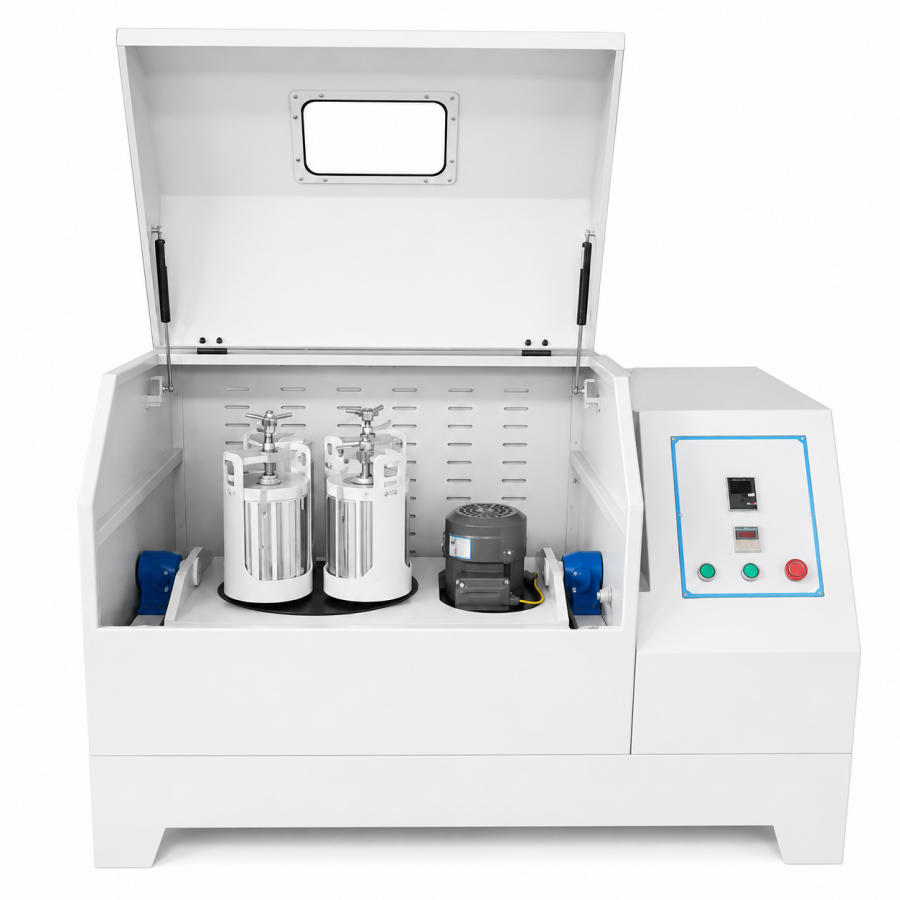
- Jar Compatibility: Stainless steel grinding balls must not be used in agate, nylon, PTFE, or PU jars as the metal balls will scratch and puncture the soft jar walls.
- Material Purity Restriction: The balls release iron, chromium, and nickel ions, making them unsuitable for lithium battery materials, MLCC ceramics, pharmaceuticals, and high-end pigments.
- Corrosion Sensitivity: Concentrated hydrochloric acid, nitric acid, strong alkalis, and hydrofluoric acid will corrode the ball surface, generating rust and metal contamination.
- Dry Grinding Limitation: Prolonged dry grinding causes friction heating, accelerating oxidation and blackening, which introduces iron dust contamination into the sample.
- Wear Monitoring: When ball surfaces show scratches, rust spots, or pitting, metal release increases dramatically, requiring immediate replacement.
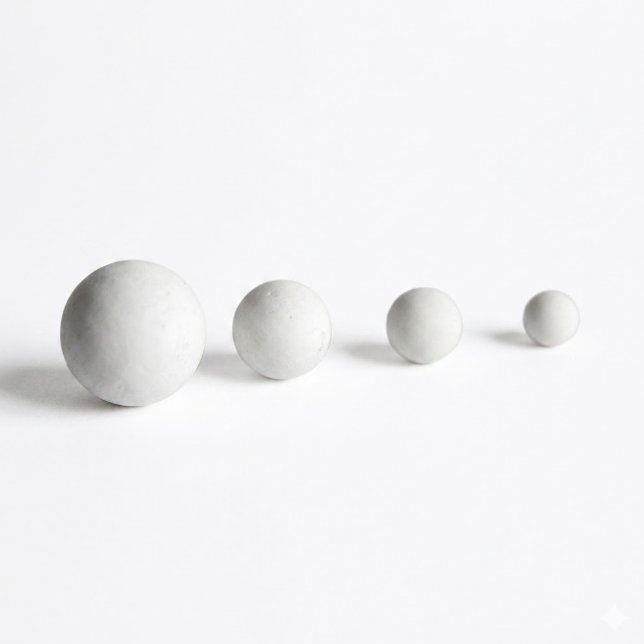
Why is the mixed-size ratio (4:2:1) of Φ15mm, Φ8mm, and Φ5mm balls more efficient than single-diameter media for grinding?
The mixed-size ratio maximizes grinding efficiency by combining large balls (Φ15mm) for primary impact force to break large particles, medium balls (Φ8mm) to further refine particles, and small balls (Φ5mm) to increase contact points for final fine grinding and homogenization. The product description states that multi-ball size ratio grinding delivers significantly higher efficiency than single-diameter media, with the specific mixing ratio of approximately 4:2:1 by quantity.
Can these 304 stainless steel grinding balls be used in agate, nylon, PTFE, or PU jar materials?
No, these balls are not suitable for use in agate, nylon, PTFE, or PU soft jars because the metal balls will scratch and puncture the soft jar bodies. The product description explicitly warns against this and recommends pairing with 304 stainless steel ball mill jars for homogeneous material matching that prevents jar wall wear.
What are the impurity release risks when using these balls for high-purity materials like lithium battery cathodes or pharmaceuticals?
These balls release Fe, Cr, and Ni metal ions during grinding due to moderate wear (wear rate ~10⁻⁵ g/h) and are strictly prohibited for high-purity materials. The product description states that they are forbidden for lithium battery cathode/anode materials, MLCC electronic ceramics, pharmaceuticals, high-end pigments, and geological detection samples because iron, chromium, and nickel impurities will completely compromise product quality and analytical data.
Atomfair 304 stainless steel grinding balls in mixed-size configuration (Φ15mm, Φ8mm, Φ5mm) with a 4:2:1 quantity ratio leverage high density (7.9 g/cm³) and multi-size impact to deliver significantly higher coarse grinding efficiency than single-diameter media, but exhibit moderate wear (≈10⁻⁵ g/h) with Fe/Cr/Ni impurity release, are restricted to hard jar materials, and are prohibited for high-purity, corrosive, or ultrafine nano-grinding applications.
Positive
- Optimized mixed-size ratio for efficiency: The 4:2:1 ratio of Φ15mm, Φ8mm, and Φ5mm balls provides primary impact, intermediate refinement, and fine homogenization, achieving significantly higher grinding efficiency than single-diameter media.
- High density for strong impact crushing: With a density of 7.9 g/cm³, exceeding zirconia and alumina, the balls deliver superior impact force for rapid coarse crushing of ores, minerals, and metal powders in short processing times.
Trade-offs
- High wear and metal impurity release: Moderate wear rate (~10⁻⁵ g/h) generates Fe, Cr, and Ni debris, making the balls unsuitable for high-purity materials such as lithium battery cathodes, MLCC ceramics, pharmaceuticals, and geological samples.
- Restricted jar and environmental compatibility: Prohibited in soft jars (agate, nylon, PTFE, PU) due to scratching/puncture risk; not resistant to concentrated strong acids, strong alkalis, or HF; and prone to oxidation and iron dust contamination during prolonged dry grinding.
Every advanced material, component, equipment, and instrument in our catalog is backed by rigorous testing. We maintain strict internal quality management frameworks and align with CE conformity metrics to deliver transparent, reproducible performance data via our public open-science repository.
To request raw batch performance data, submit formal vendor registration paperwork, or execute a fast-turnaround R&D manufacturing loop, contact us at inquiry@atomfair.com.
Item is dispatched under the Atomfair Shipping & Delivery Framework (Free worldwide shipping on orders over $59 USD excl. heavy equipment). Return is governed by the Atomfair Return & Refund Policy (7-day technical return window).