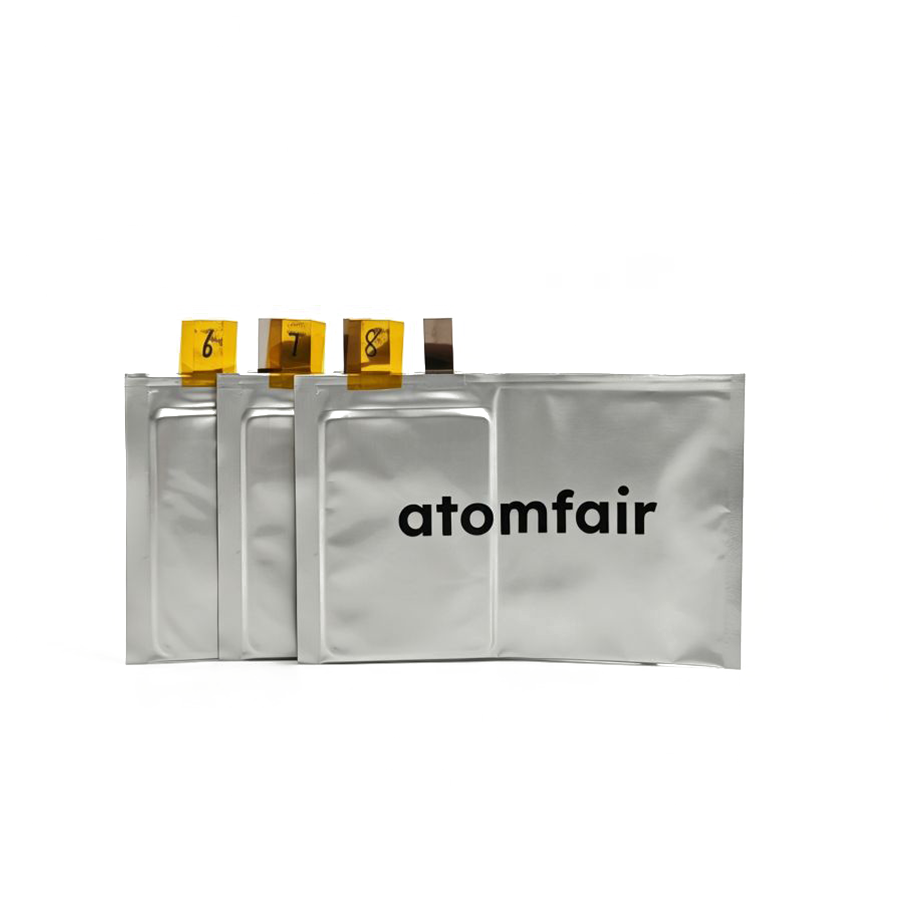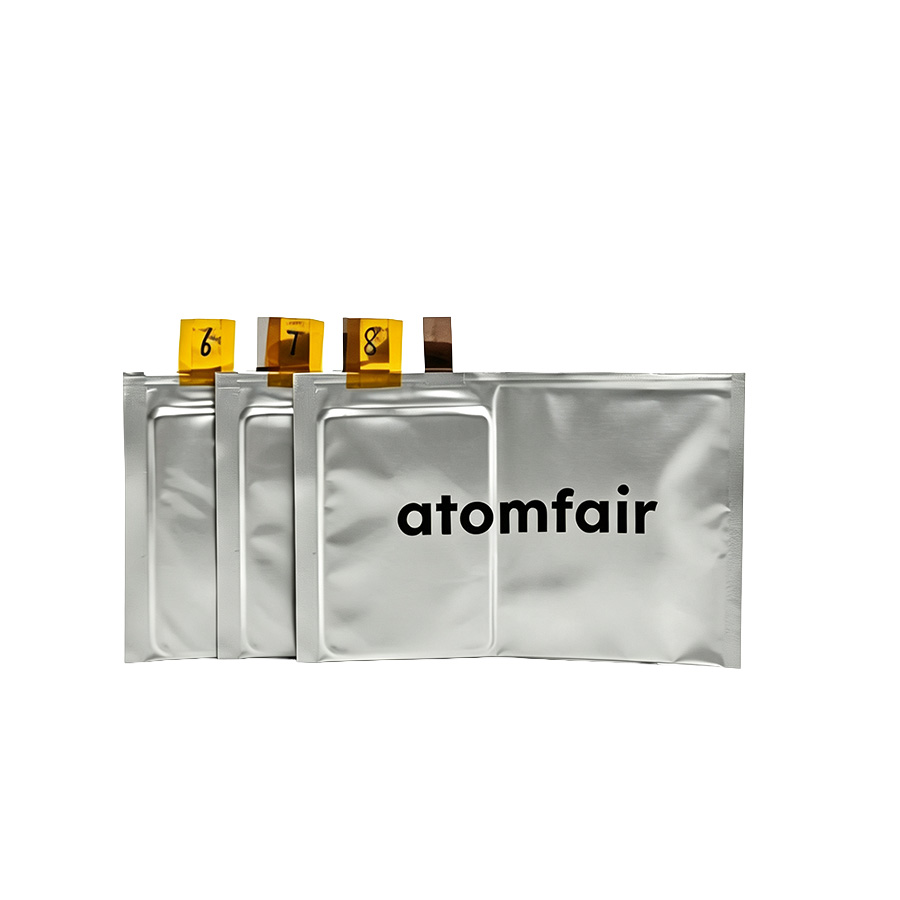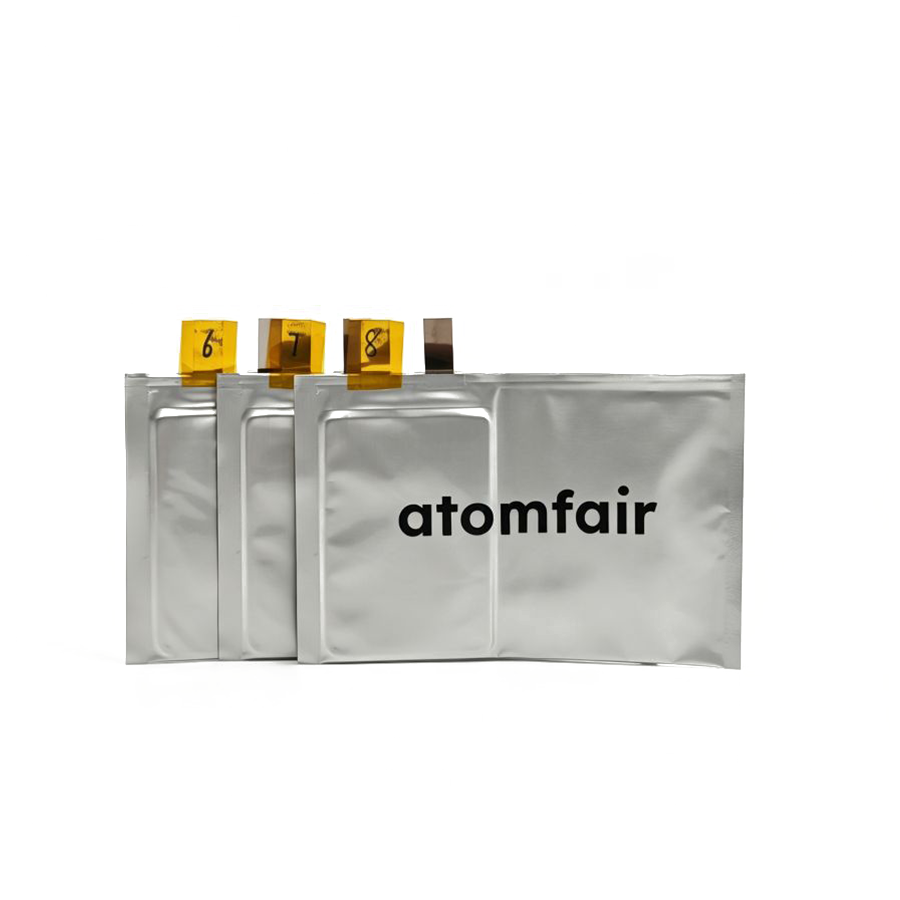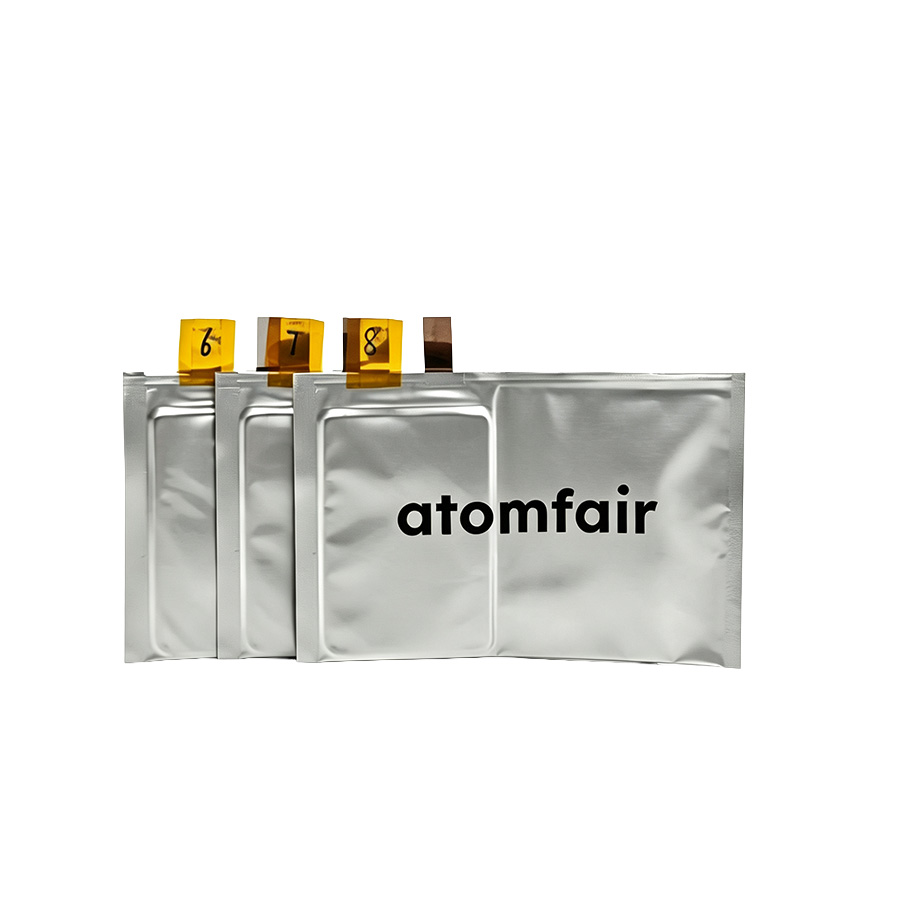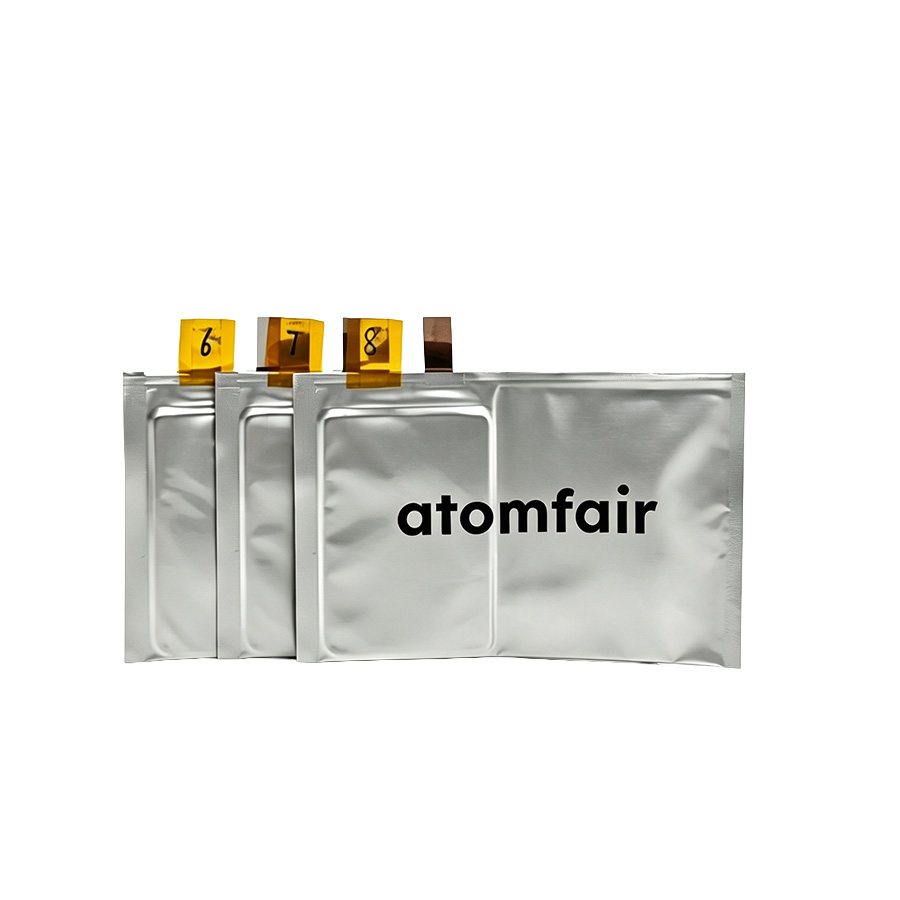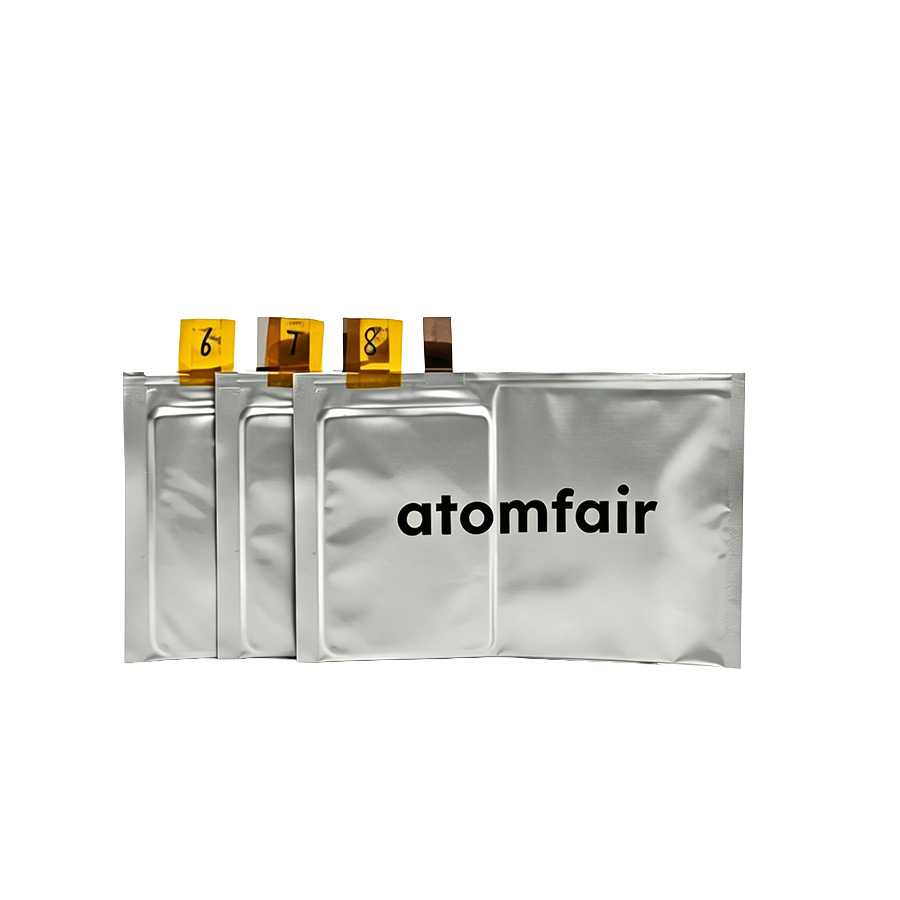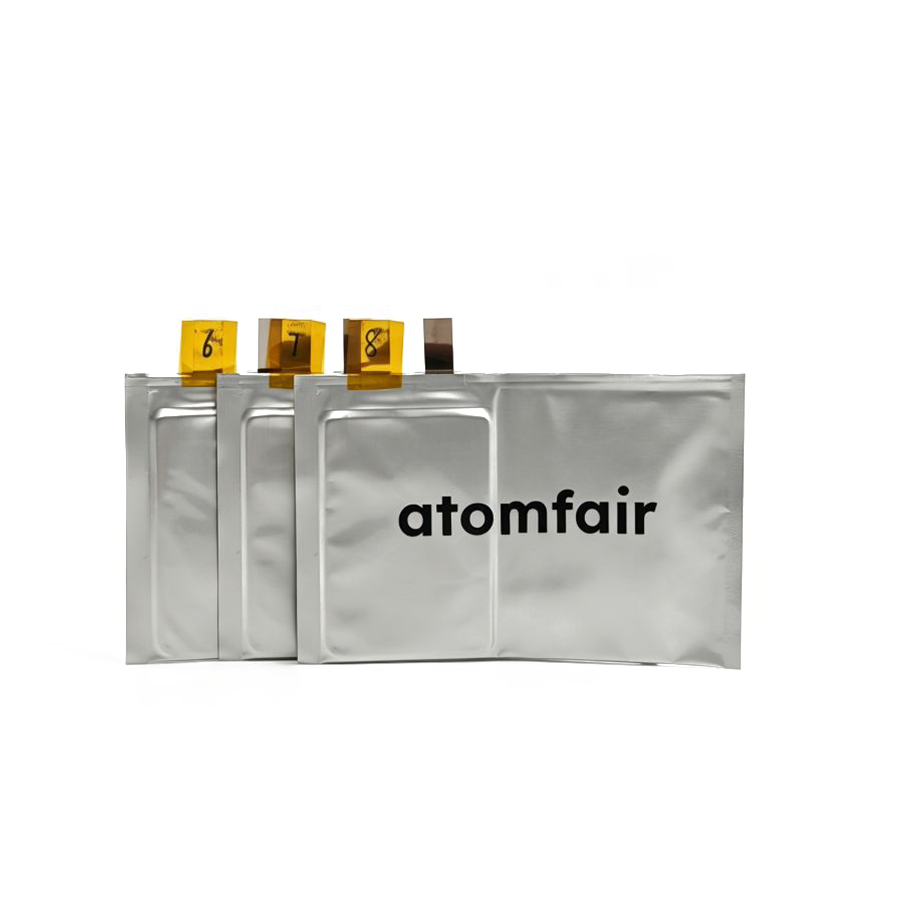
P2 NMO Sodium-Ion Dry Pouch Cell (1Ah) – Anode-Free |
||||||||||||||||||||||||||||
|
||||||||||||||||||||||||||||
Related Products |
||||||||||||||||||||||||||||
|
||||||||||||||||||||||||||||
|
TAILORED SOLUTIONS FOR RESEARCH
Contact our engineering team for technical support or official institutional quotations.
EMAIL: inquiry@atomfair.com
|
||||||||||||||||||||||||||||
|
Manufacturer: Atomfair LLC
Brand: ATOMFAIR®
|
||||||||||||||||||||||||||||
This anode-free sodium-ion pouch cell is moisture-sensitive with a residual moisture tolerance below 30 ppm. Storage and handling require an inert atmosphere or dry room conditions to maintain electrochemical performance and prevent degradation.
- Moisture Sensitivity: Residual moisture must be maintained below 30 ppm to prevent side reactions and degradation of the sodium plating/stripping interface.
- Atmosphere Control: Cell assembly, storage, and testing should be conducted under inert atmosphere (e.g., argon or nitrogen) or in a dry room with dew point below -40°C to avoid moisture contamination.
How does the anode-free design in the Atomfair 1Ah P2-type NMO cell impact its initial Coulombic efficiency and long-term cycling stability compared to conventional sodium-ion cells?
The anode-free design eliminates dedicated anode active material to maximize energy density, but its initial Coulombic efficiency and cycle life are critically dependent on the reversibility of sodium plating/stripping on the bare copper substrate (8–12 μm). The P2-type NMO cathode delivers a stable ~120 mAh/g reversible capacity with a ~3.6V plateau, enabling precise measurement of these dynamics. The batch-to-batch consistency of <4% ensures reliable screening of electrolyte additives and current collector coatings to mitigate capacity fade and dendrite growth.
What electrolyte formulations and current collector coatings are compatible with the Atomfair anode-free dry pouch cell for evaluating dendrite suppression?
The cell is specifically designed to screen a wide range of electrolyte additives and current collector coatings that influence sodium plating morphology and interface stability. The bare copper substrate allows direct testing of coating effects on dendrite onset and Coulombic efficiency. Because the cell has a residual moisture content below 30 ppm, all electrolytes and coatings must be introduced in a dry atmosphere to avoid water contamination that would alter the electrochemical behavior.
What are the recommended storage and handling conditions to preserve the performance of the Atomfair 1Ah anode-free dry pouch cell?
The cell must be stored in a dry, inert atmosphere such as an argon-filled glovebox to maintain its residual moisture content below 30 ppm and prevent performance degradation. The solvent-free dry-film process yields electrodes with minimal interface contamination, so exposure to ambient humidity can compromise the anode-free sodium plating behavior and accelerate capacity fade. Contact Atomfair support for tailored formation and cycling protocols specific to your electrolyte and coating system.
The Atomfair 1Ah P2-Type NMO Anode-Free Dry Pouch Cell provides a specialized platform for investigating anode-free sodium-ion battery dynamics, leveraging a dry-processed P2-type cathode on a bare copper substrate. Its low moisture content and solvent-free fabrication require controlled assembly environments, while the anode-free architecture introduces challenges in sodium plating efficiency and dendrite management.
Positive
- Anode-free innovation for sodium kinetics: The bare copper current collector substrate enables direct evaluation of sodium plating/stripping behavior and dendrite suppression strategies, a critical capability for advancing anode-free SIB research.
- Dry-process interface reliability: Solvent-free dry-film fabrication minimizes interface contamination and improves electrode-collector adhesion, reducing localized current density and enhancing test consistency.
Trade-offs
- Ultra-low moisture handling requirement: With residual moisture content below 30 ppm, assembly and testing must be conducted in a dry room or argon-filled glovebox to prevent performance degradation from water exposure.
- Anode-free capacity fade risk: The absence of a dedicated anode active material can lead to low Coulombic efficiency and rapid capacity fade due to unstable sodium plating/stripping, requiring careful electrolyte and current collector optimization.
Every advanced material, component, equipment, and instrument in our catalog is backed by rigorous testing. We maintain strict internal quality management frameworks and align with CE conformity metrics to deliver transparent, reproducible performance data via our public open-science repository.
To request raw batch performance data, submit formal vendor registration paperwork, or execute a fast-turnaround R&D manufacturing loop, contact us at inquiry@atomfair.com.
Item is dispatched under the Atomfair Shipping & Delivery Framework (Free worldwide shipping on orders over $59 USD excl. heavy equipment). Return is governed by the Atomfair Return & Refund Policy (7-day technical return window).