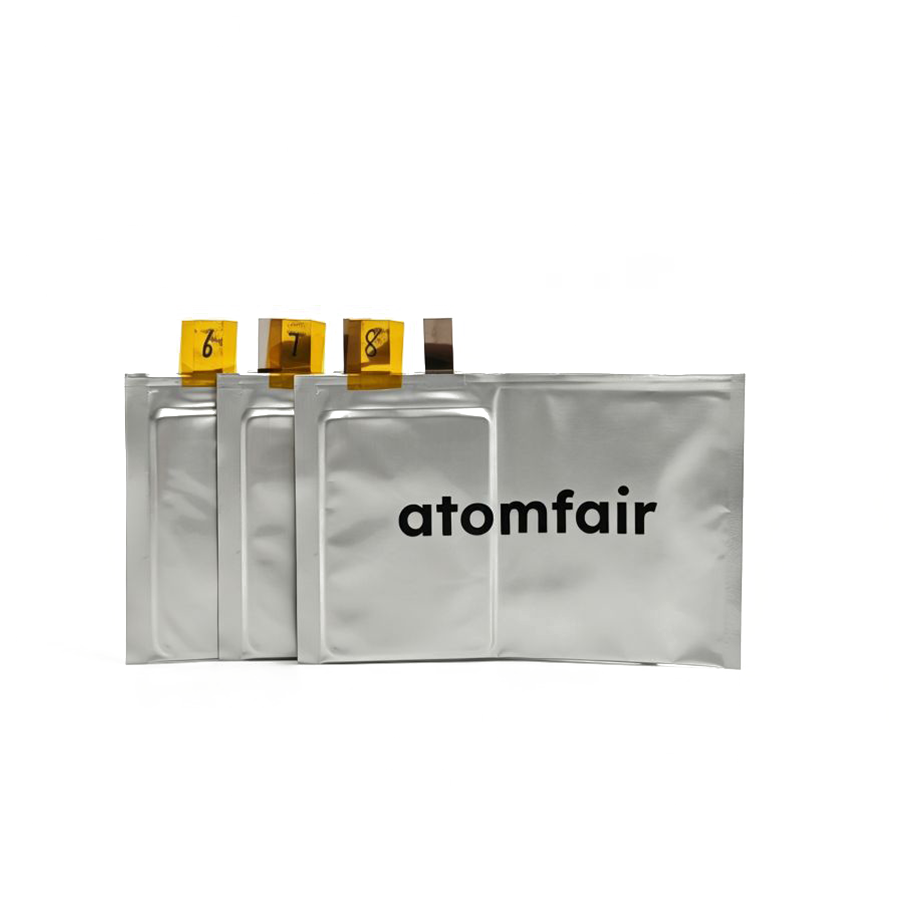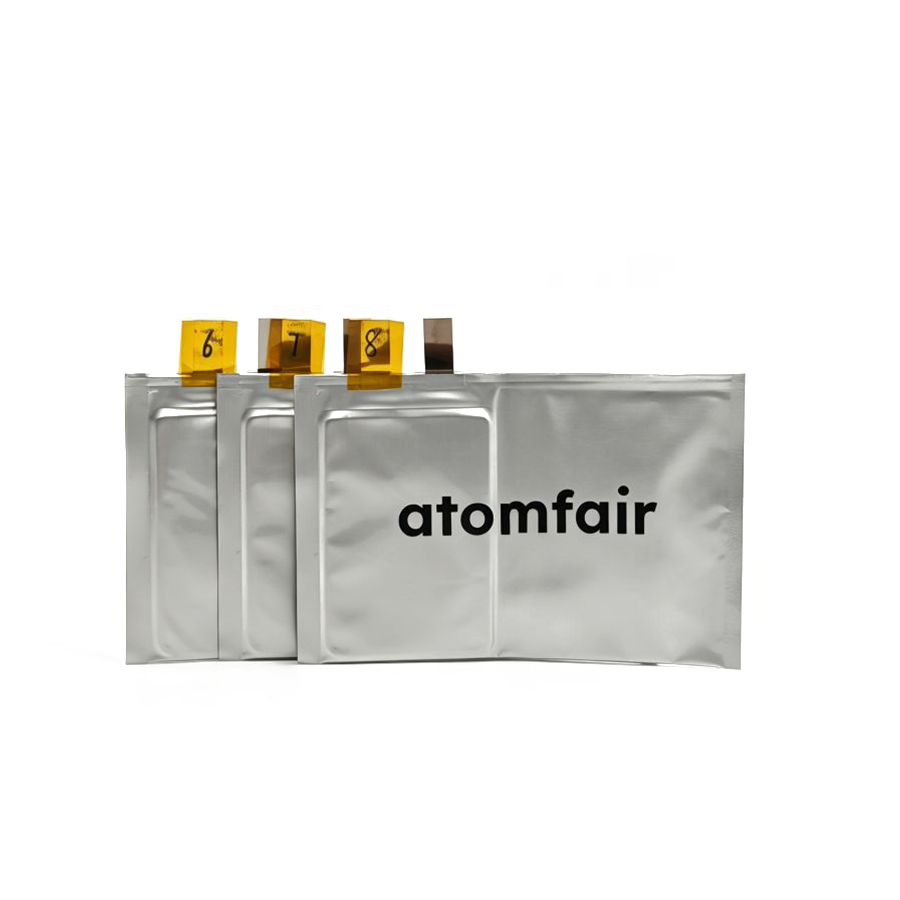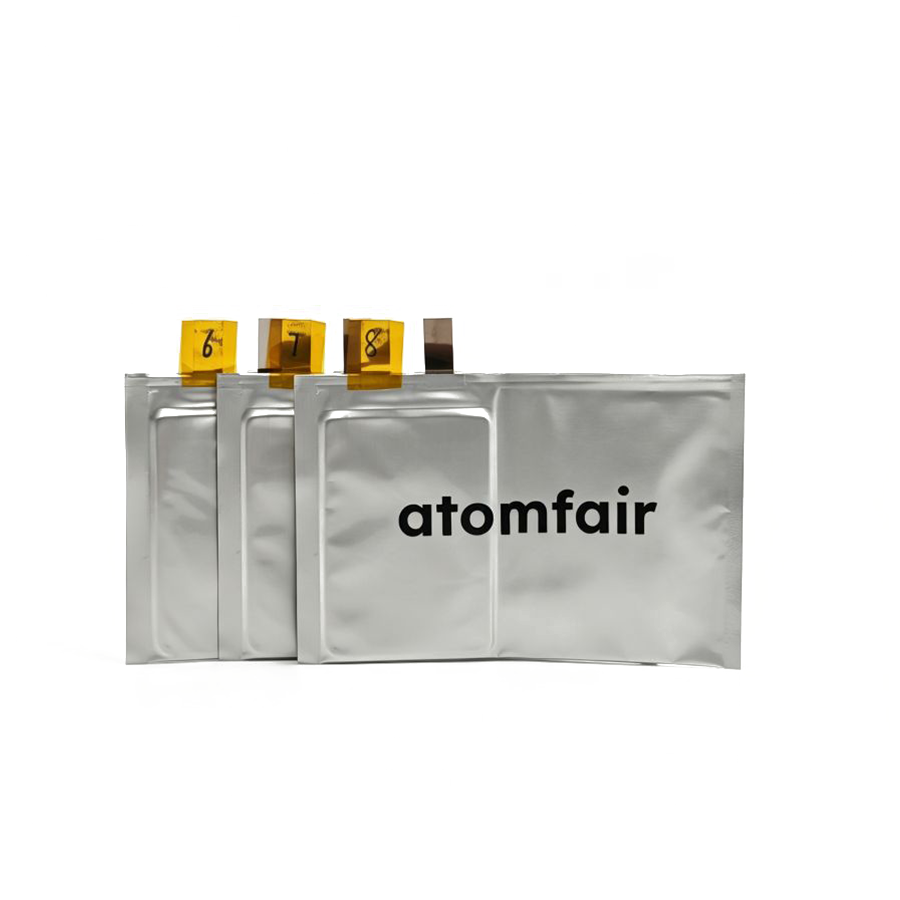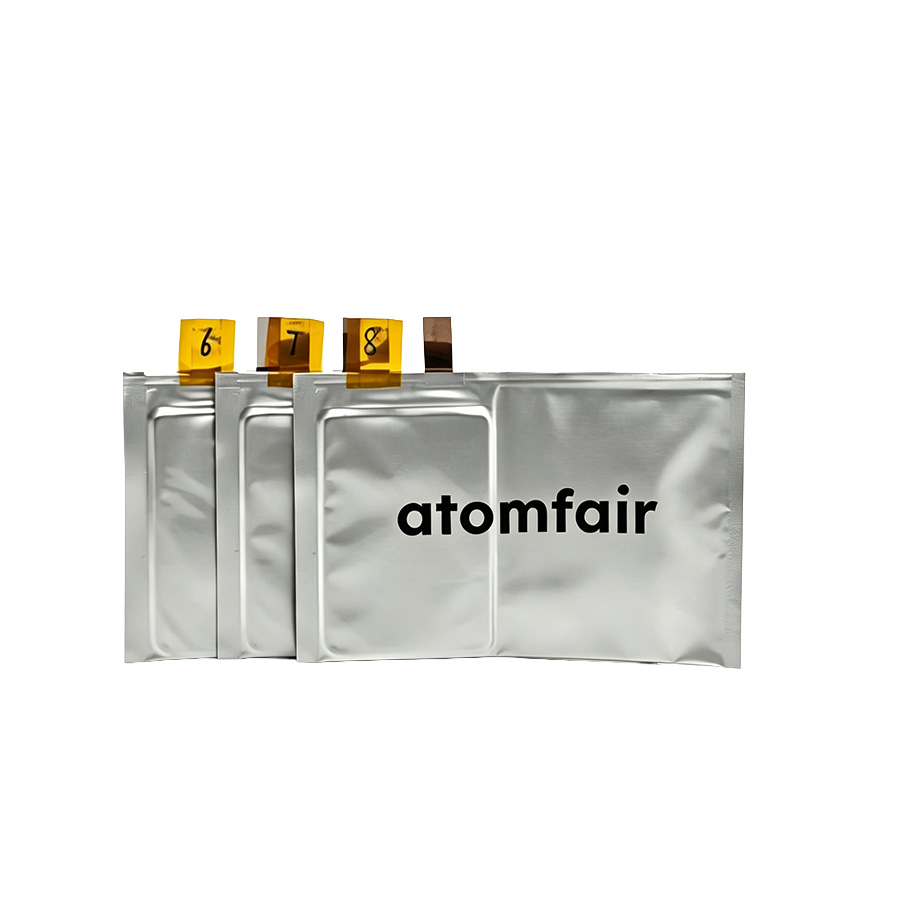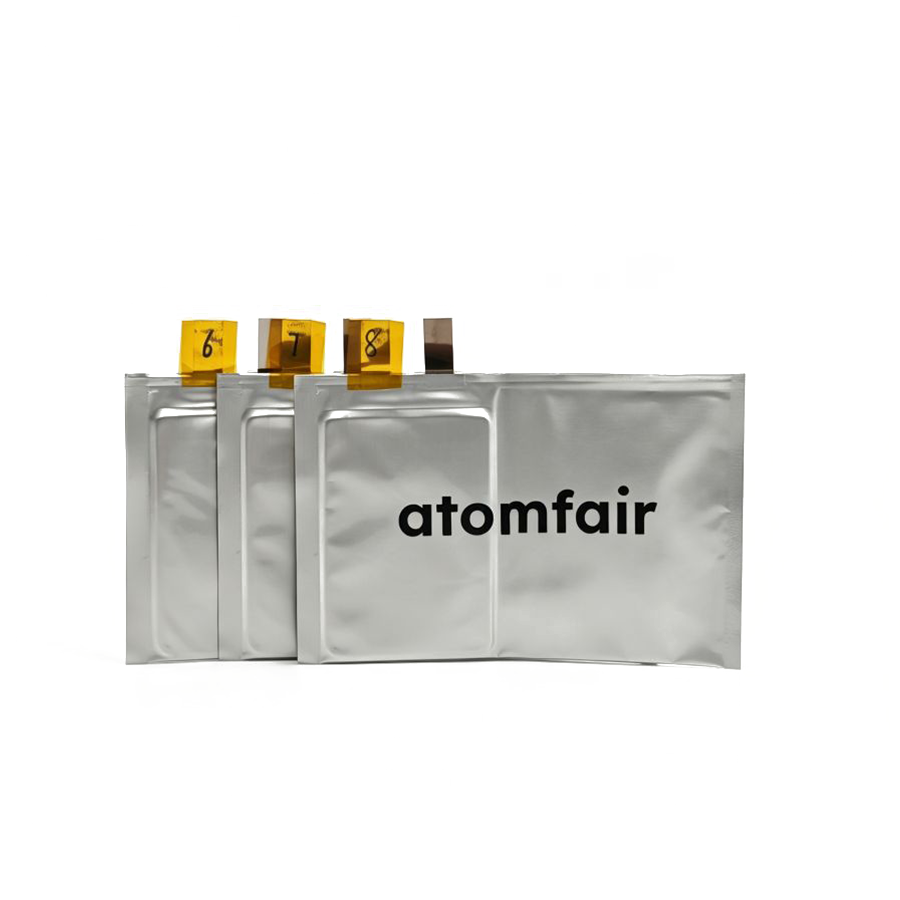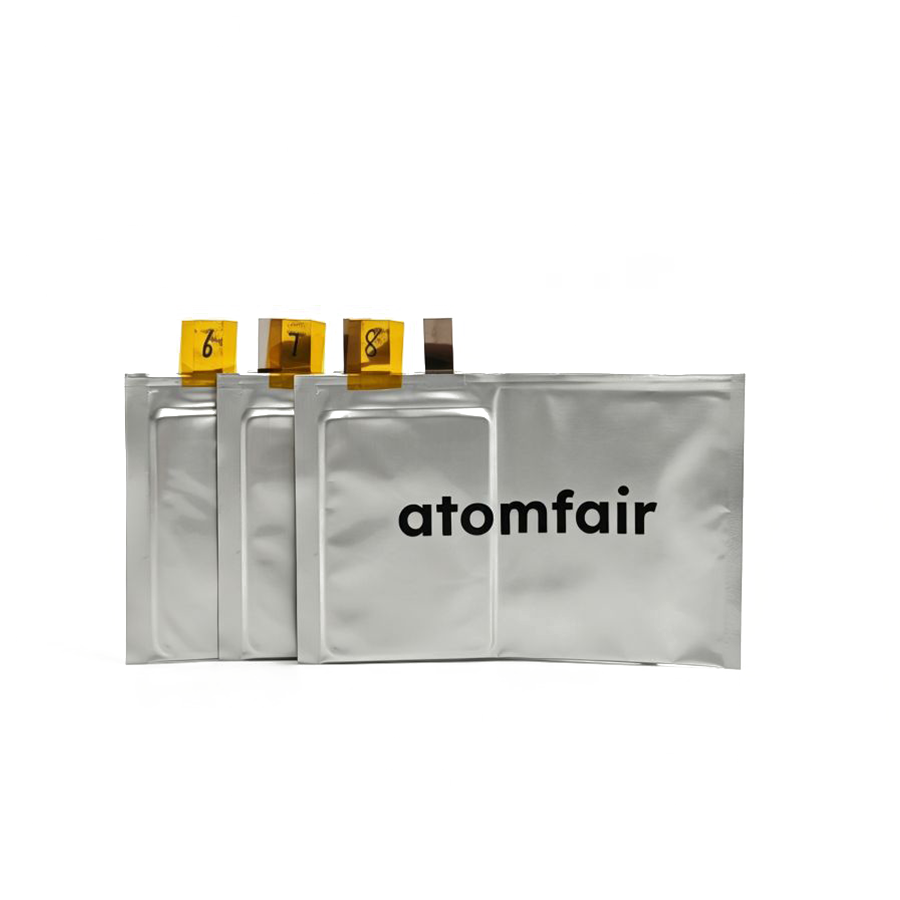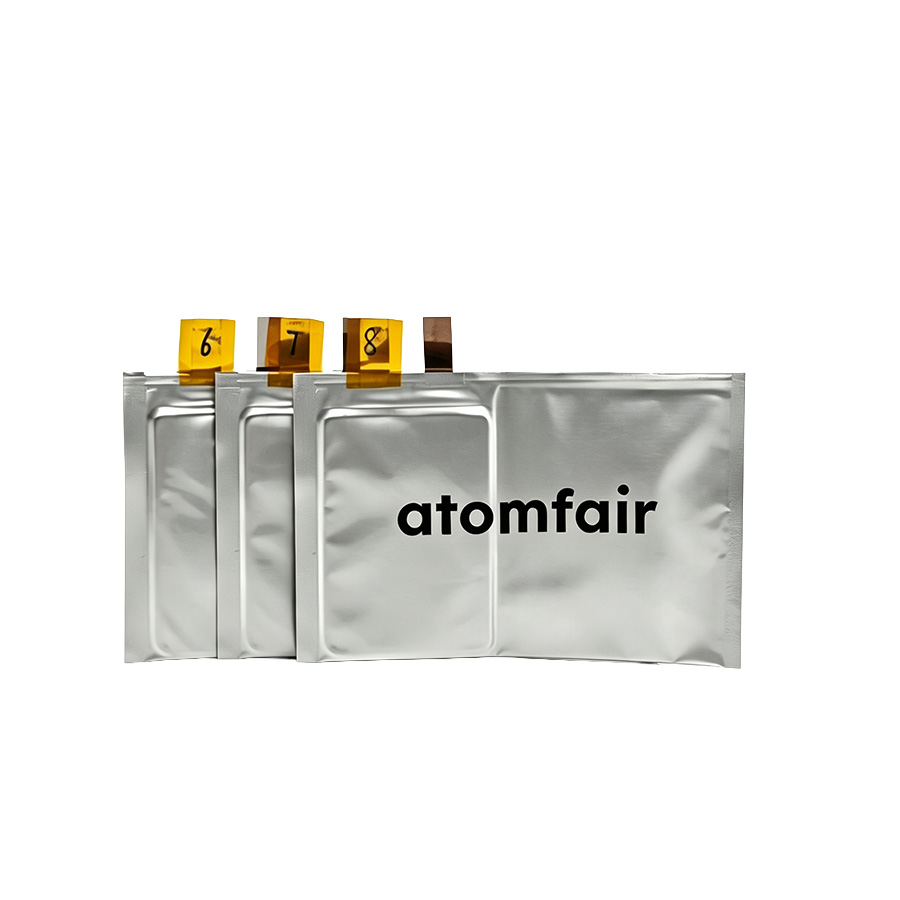
NCM811 Lithium-Ion Dry Pouch Cell (0.3 Ah, 1/2 Layers) – Li-Cu Composite AnodeProduct Type: Research-grade dry pouch cell
Research-grade laboratory product
|
||||||||||||||||||||||||||||||||||||||||||||||||||||||||||
|
||||||||||||||||||||||||||||||||||||||||||||||||||||||||||
This dry pouch cell must be stored in an inert atmosphere (argon or dry room, dew point below -40°C) to prevent moisture uptake and oxidation of the Li-Cu composite anode. Do not short-circuit, puncture, or expose the cell to temperatures above 60°C, as the dry core remains susceptible to mechanical and thermal damage.
- Inert Atmosphere Handling: All handling, electrolyte filling, and sealing must occur in an oxygen- and moisture-free environment to avoid degradation of the NCM811 cathode and Li-Cu anode.
- Voltage Window Limits: Electrical activation must be confined to the stated 3 V – 4.3 V range to prevent over-discharge or over-charge damage to the electrode stack.
- Mechanical Integrity: Do not bend, crease, or apply pressure to the pouch seal area or electrode tabs, as the 12 μm PE + 2 μm ceramic separator is fragile and puncture-prone.
- Electrolyte Compatibility: Only use lithium-ion electrolytes that are chemically compatible with NCM811 and lithium metal; confirm formulation before injection.
- Contamination Control: Avoid any contact between the dry electrode stack and metallic particles, dust, or lint that could cause internal short circuits.
This procedure details the safe and controlled activation of the dry pouch cell from its sealed dry state to an operational lithium-ion cell. All steps require an argon-filled glovebox with oxygen and moisture below 1 ppm and use of lab-grade electrolyte.
Required Equipment: Argon-filled glovebox (<1 ppm O₂, <1 ppm H₂O), Electrolyte injection syringe and needle, Vacuum heat sealer, Battery cycler with 3 V – 4.3 V voltage range
- Inspect
Inspect the dry pouch cell for any visible wrinkles, punctures, or misaligned tabs before transfer into the glovebox. - Transfer
Transfer the cell through the glovebox antechamber with sufficient purge cycles to avoid oxygen or moisture contamination. - Inject
Inject the pre-mixed lithium-ion electrolyte through the open seal edge of the pouch cell using a syringe, filling until the electrode stack is fully wetted. - Seal
Seal the pouch under vacuum using a heat sealer, ensuring no electrolyte residue remains in the seal area. - Rest
Allow the sealed cell to rest at storage temperature for at least 12 hours to achieve homogeneous electrolyte distribution. - Form
Apply a formation cycle consisting of a slow charge to 4.3 V and discharge to 3.0 V at a low C-rate (≤ C/10) to condition the electrode interfaces. - Verify
Verify the open circuit voltage and impedance of the formed cell to confirm no short circuits or excessive internal resistance.
What are the advantages of using an electrolyte-free dry pouch cell format for NCM811 research?
The dry format allows researchers to control electrolyte composition, filling protocol, and activation conditions, enabling systematic studies of electrolyte–electrode interactions. The cell comes with pre-specified electrode parameters (NCM811 cathode with 24 mg/cm2 areal density and 220 mAh/g specific capacity, Li-Cu composite anode with 20+6+20 µm thickness) to serve as a reproducible baseline.
What is the role of the 2 µm ceramic coating on the separator in this dry pouch cell?
The separator is a 12 µm polyethylene layer with a 2 µm ceramic coating. The ceramic coating improves thermal stability and wetting characteristics, which is important when the cell is activated with various electrolytes in research studies.
What voltage window is specified for this NCM811/Li-Cu dry pouch cell?
The specified voltage range is 3 V to 4.3 V, as stated in the product specifications.
This 0.3 Ah dry pouch cell with NCM811 cathode and Li-Cu composite anode provides a controlled platform for electrolyte activation studies and electrode performance evaluation, but requires laboratory cell finishing and operates within a 3–4.3 V window.
Positive
- Dry pouch format enables user-controlled electrolyte filling: The unfilled design allows researchers to introduce custom electrolytes and control activation conditions, supporting electrolyte screening and dry-core electrochemical evaluation.
- Well-characterized electrode parameters for benchmarking: Specified cathode specific capacity (220 mAh/g), areal density (24 mg/cm2), and compaction density (3.4 g/cc) provide reference values for direct comparison in electrode configuration studies.
Trade-offs
- Requires electrolyte filling and cell finishing: As a dry pouch cell, it is not ready for electrical testing; users must have laboratory infrastructure for electrolyte injection, sealing, and formation cycling.
- Limited capacity and voltage window constrain test scope: The 0.3 Ah nominal capacity and 3–4.3 V operating range may not accommodate high-energy or wide-voltage electrochemical experiments without cell stacking or series configuration.
Every advanced material, component, equipment, and instrument in our catalog is backed by rigorous testing. We maintain strict internal quality management frameworks and align with CE conformity metrics to deliver transparent, reproducible performance data via our public open-science repository.
To request raw batch performance data, submit formal vendor registration paperwork, or execute a fast-turnaround R&D manufacturing loop, contact us at inquiry@atomfair.com.
Item is dispatched under the Atomfair Shipping & Delivery Framework (Free worldwide shipping on orders over $59 USD excl. heavy equipment). Return is governed by the Atomfair Return & Refund Policy (7-day technical return window).