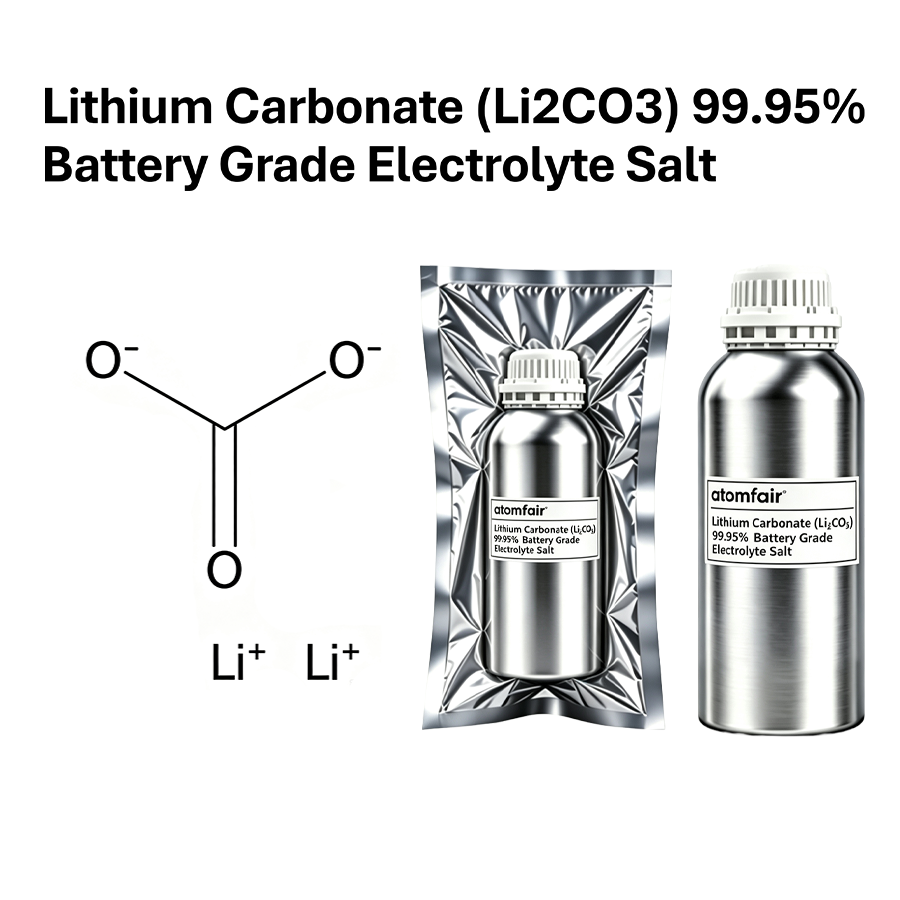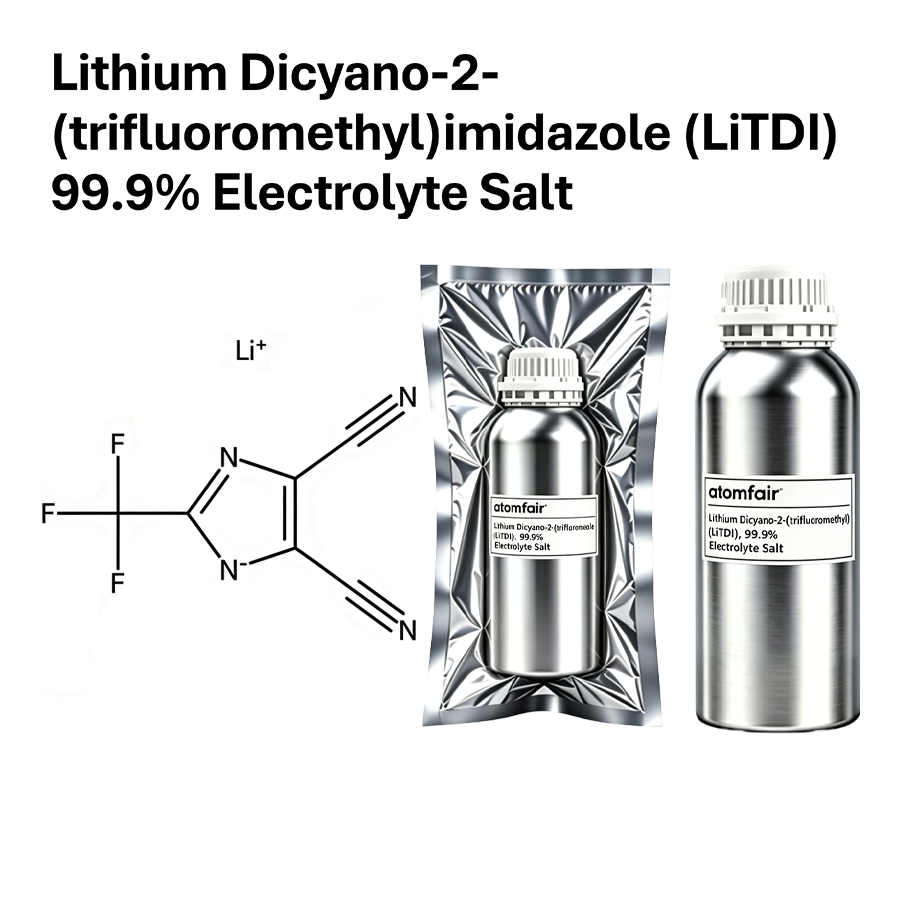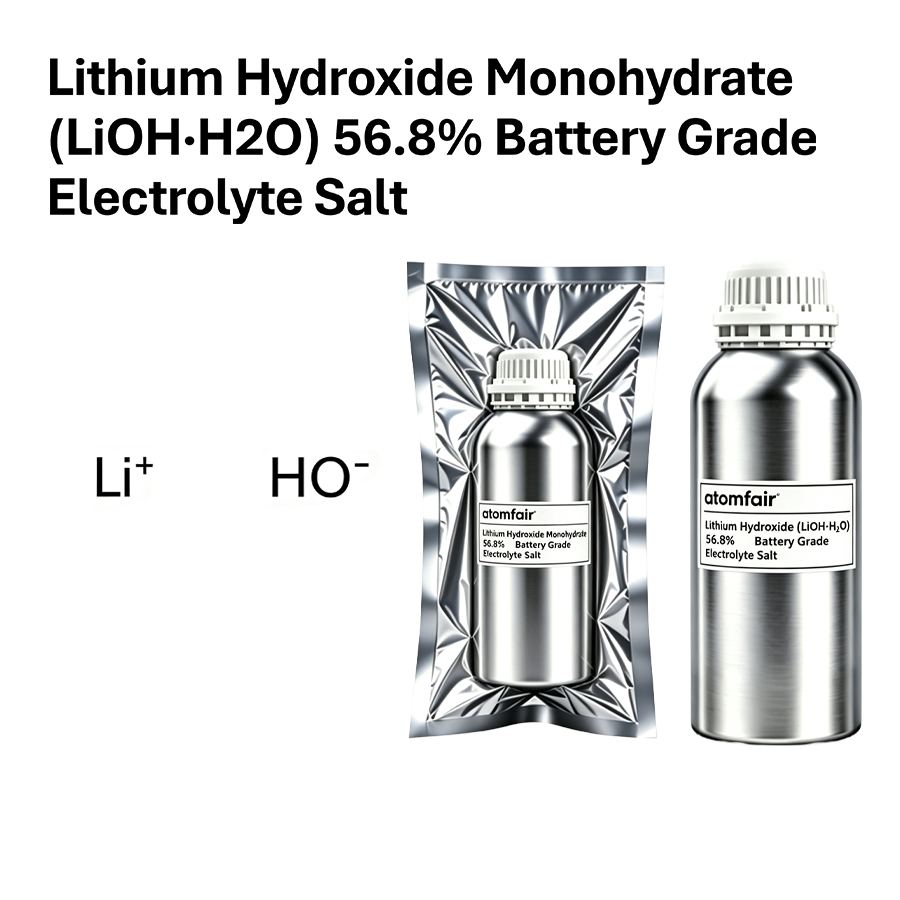
Lithium Hydroxide Monohydrate 56.8% Battery Grade |
||||||||||||||||||
| Chemical Name: Lithium Hydroxide Monohydrate CAS Number: 1310-66-3 Grade: Battery Grade Brand: ATOMFAIR® |
||||||||||||||||||
Product IntroductionLithium Hydroxide Monohydrate 56.8% Battery Grade is a key lithium source for nickel-rich cathode precursor synthesis and other battery-material routes. This page should sound like a feedstock and precursor page rather than a salt comparison page. In real use, LiOH·H2O is chosen when the project needs a strong lithium source for cathode manufacturing, pH adjustment, or route development in battery materials. |
||||||||||||||||||
Key Features
|
||||||||||||||||||
Specification
|
||||||||||||||||||
Application Areas
|
||||||||||||||||||
Handling and ProcurementDry handling: Handle as a moisture-sensitive, alkaline lithium source and keep it sealed. Procurement details: Confirm the precursor route, documentation, and package size before ordering. Research-use notice: This material is intended for laboratory research and development. Final compatibility should be verified with the selected solvent, concentration, electrode, separator, and cell format.
|
||||||||||||||||||
Related Products |
||||||||||||||||||
|
TAILORED SOLUTIONS FOR RESEARCH
Contact our engineering team for technical support or official institutional quotations.
|
||||||||||||||||||
| Manufacturer: Atomfair LLC | Brand: ATOMFAIR® |
Store hermetically sealed under dry inert atmosphere to prevent moisture absorption and carbonation. Use appropriate personal protective equipment when handling due to corrosive alkaline nature.
- Environmental Storage Constraints: Maintain container sealed and stored in a cool, dry location with inert gas purging to preserve battery-grade moisture specification.
- Safety Handling Precautions: Wear chemical-resistant gloves, safety goggles, and protective clothing to avoid skin and eye contact with the corrosive powder.
- Degradation Risk: Prevent prolonged exposure to atmospheric carbon dioxide and moisture to avoid conversion to lithium carbonate and loss of purity.
This procedure covers receiving, weighing, and transferring the material under controlled conditions. Follow these steps to maintain material integrity and operator safety.
Required Equipment: Inert atmosphere glovebox, Chemical-resistant gloves and safety goggles, Clean, dry spatula
- Container Inspection
Inspect outer packaging for damage or moisture ingress before transferring to glovebox antechamber. - Glovebox Transfer
Place the sealed container inside the glovebox antechamber and purge with dry argon or nitrogen three times. - Weighing
Open container only inside glovebox and weigh the required amount using a clean, dry spatula onto a pre-dried weighing dish. - Resealing
Reseal the container immediately after use to minimize headspace exposure to reactive gases.
What are the advantages of using LiOH·H2O over anhydrous LiOH in NMC cathode precursor synthesis?
LiOH·H2O provides a precise and stable hydration phase (LiOH·H2O) that ensures uniform crystalline dispersion, which is critical for reproducible NMC precursor stoichiometry. The battery-grade moisture metrics in this product are specifically monitored to maintain consistent electrochemical performance during cathode synthesis, whereas anhydrous LiOH introduces variable hydration upon exposure to ambient humidity.
What are the critical atmosphere control requirements when integrating LiOH·H2O into a dry room for lithium battery electrolyte preparation?
This alkaline lithium monohydrate material must be maintained under strict atmosphere-controlled configurations to mitigate trace environmental contamination. For electrolyte preparation, even minor moisture or CO2 exposure can lead to carbonate formation, altering electrolyte purity and battery performance; therefore, handling should occur in inert-gas gloveboxes or low-humidity dry rooms.
What storage conditions are required to prevent degradation of battery-grade LiOH·H2O?
The product must be stored under strict atmosphere-controlled configurations to prevent contamination by moisture and CO2, as it is a highly alkaline material. Sealed, moisture-proof containers in a cool, dry environment are essential; the white crystalline powder form can degrade if exposed to ambient air, compromising its battery-grade moisture metrics and crystalline integrity.
This battery-grade lithium hydroxide monohydrate provides a stable monohydrate crystal structure and controlled moisture metrics suitable for lithium battery research, but requires strict atmosphere-controlled storage to prevent environmental contamination and careful handling due to its alkaline corrosivity.
Positive
- Precise hydration phase stability: The stable LiOH·H₂O crystal structuring ensures consistent stoichiometry under standard analytical controls, providing reliable performance in electrochemical evaluations.
- Battery-grade moisture control: Monitored under stringent battery-grade moisture metrics, this material is tailored for specialized electrochemical evaluations where low and controlled moisture content is critical.
Trade-offs
- Strict atmospheric handling required: The alkaline lithium monohydrate material must be maintained under strict atmosphere-controlled configurations to mitigate trace environmental contamination, increasing infrastructure and handling complexity.
- Alkaline corrosivity demands care: As an alkaline compound, proper personal protective equipment and dedicated handling procedures are necessary to avoid chemical burns and ensure laboratory safety.
Every advanced material, component, equipment, and instrument in our catalog is backed by rigorous testing. We maintain strict internal quality management frameworks and align with CE conformity metrics to deliver transparent, reproducible performance data via our public open-science repository.
To request raw batch performance data, submit formal vendor registration paperwork, or execute a fast-turnaround R&D manufacturing loop, contact us at inquiry@atomfair.com.
Item is dispatched under the Atomfair Shipping & Delivery Framework (Free worldwide shipping on orders over $59 USD excl. heavy equipment). Return is governed by the Atomfair Return & Refund Policy (7-day technical return window).