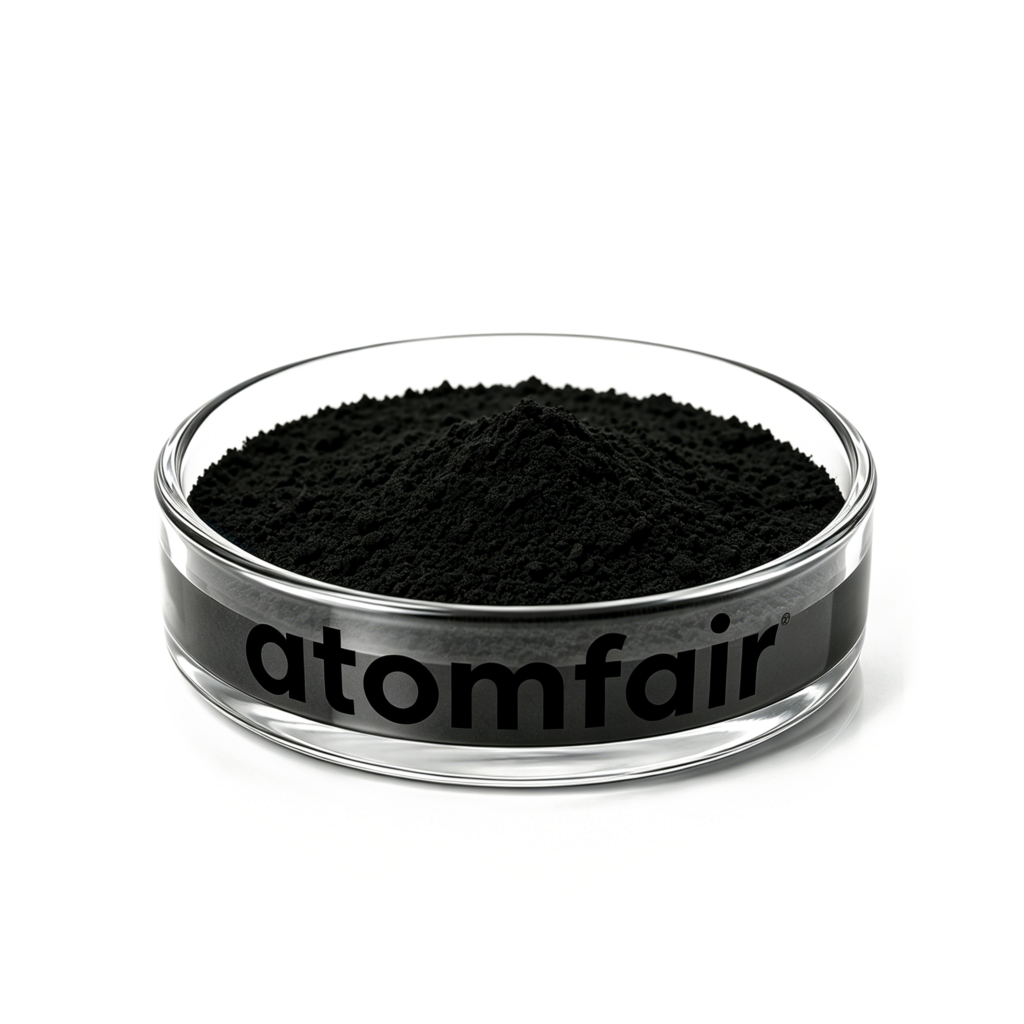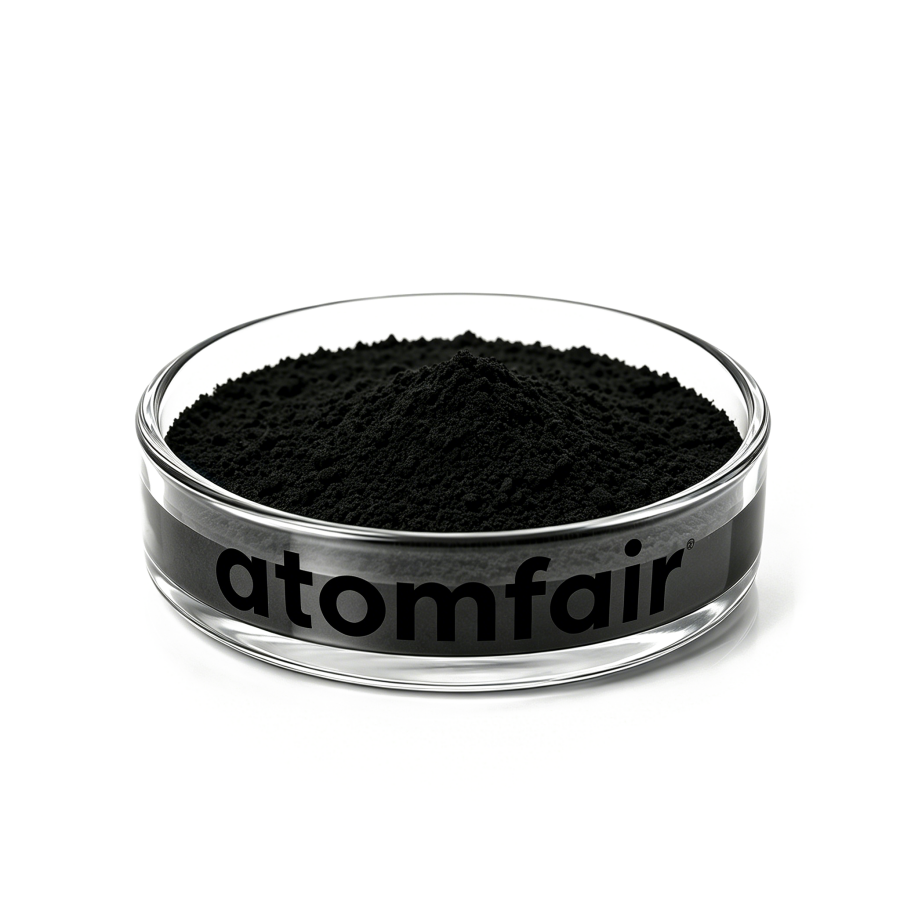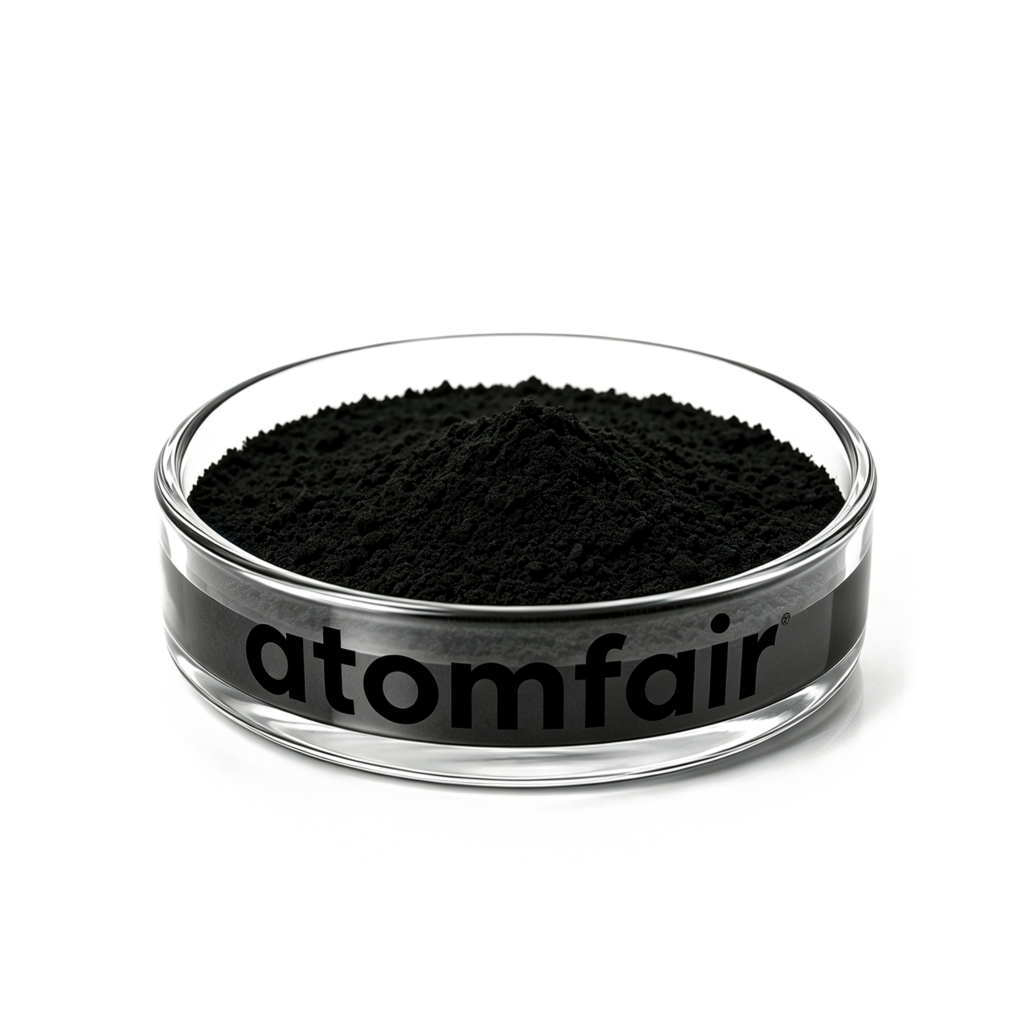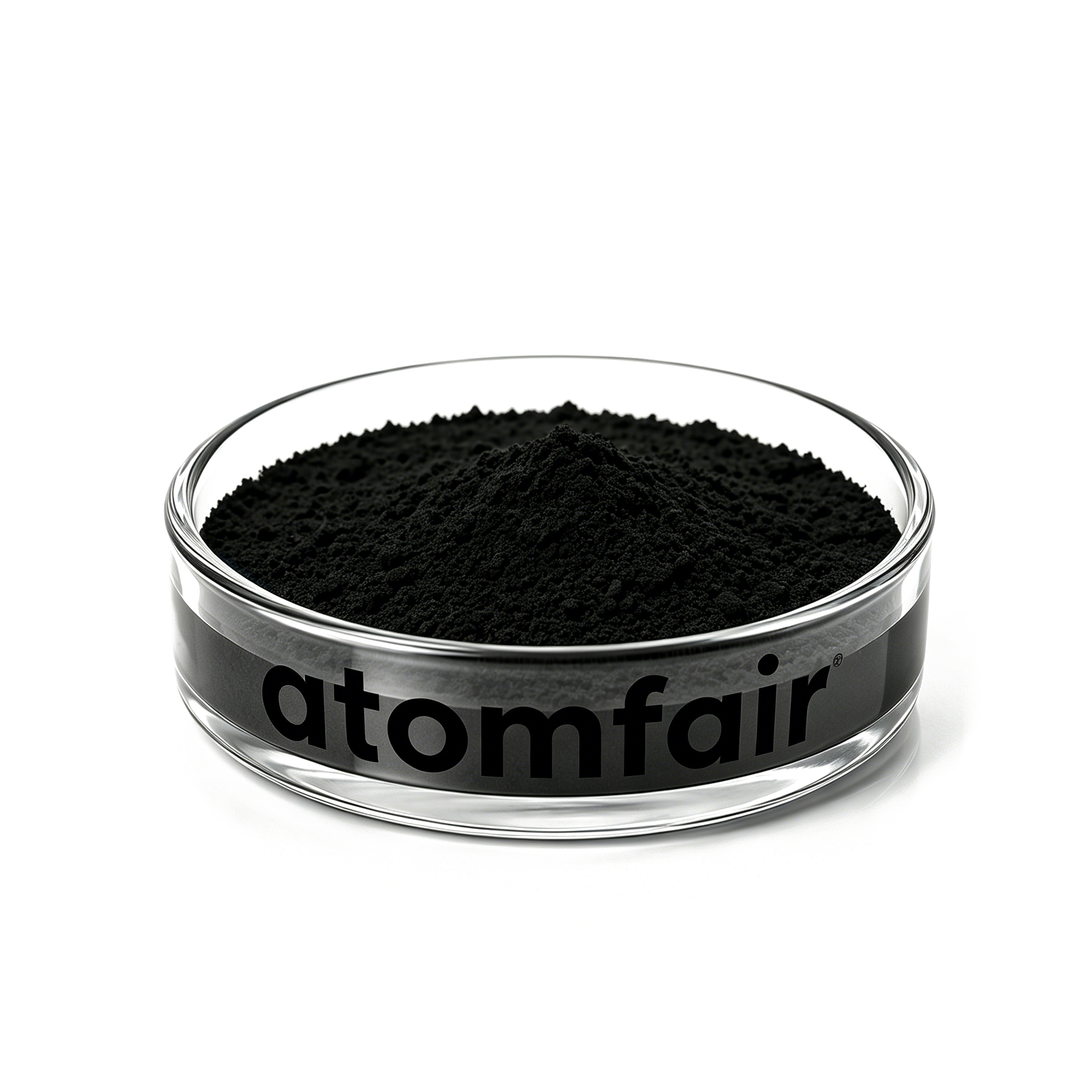
ATOMFAIR® EC600-JD HIGH-PERFORMANCE CONDUCTIVE CARBON BLACKRESEARCH GRADE MATERIAL | ULTRA-HIGH SURFACE AREA
|
|||||||||||||||||||||||||||||||||||||||
|
|||||||||||||||||||||||||||||||||||||||
|
TAILORED SOLUTIONS FOR RESEARCH
Contact our engineering team if you are interested, have questions, or need custom solutions.
EMAIL: inquiry@atomfair.com
|
|||||||||||||||||||||||||||||||||||||||
|
Manufacturer: Atomfair LLC
Brand: ATOMFAIR®
|
|||||||||||||||||||||||||||||||||||||||
This carbon black requires dry storage to maintain its low moisture specification and prevent agglomeration. Appropriate dust control and grounding protocols are necessary during handling to ensure safety and material integrity.
- Moisture Sensitivity: Store in a sealed container with desiccant within a humidity-controlled environment to prevent moisture adsorption.
- Dust and Static Management: Use local exhaust ventilation, anti-static grounding, and personal protective equipment to minimize inhalation and electrostatic risks.
Given its ultra-high BET surface area of 1270 m²/g, how does the EC600‑JD compare to conventional carbon blacks in terms of dispersion difficulty and agglomerate formation during slurry preparation?
The ultra-high BET surface area of 1270 m²/g significantly increases interparticle attraction, making EC600‑JD more prone to agglomeration than conventional carbon blacks, often requiring high-shear mixing or dispersing aids. However, its unique morphological structure delivers equivalent conductivity at only 1/6 the dosage of standard conductive blacks, partially offsetting the dispersion challenge through lower total solids loading. The DBP absorption of 480‑510 cm³/100g confirms the highly branched morphology that influences slurry rheology and wetting behavior.
Does the alkaline pH of 9.0‑10.5 measured for EC600‑JD restrict its compatibility with acidic electrolytes or pH‑sensitive binders in battery R&D formulations?
The pH of 9.0‑10.5 (aqueous dispersion at 25 °C) indicates basic surface chemistry that can catalyze degradation of acidic electrolytes such as LiPF6 or accelerate hydrolysis of pH‑sensitive binders like PVDF, necessitating formulation adjustments to maintain long‑term stability. Despite this, battery R&D is explicitly cited as a key application, meaning the material can be used with appropriate buffer systems or electrolyte additives. The ash content ≤0.1%, moisture ≤0.5%, and volatile content ≤1.0% further support controlled chemical purity for such sensitive environments.
What storage and handling precautions are required for EC600‑JD to preserve its low moisture specification and mitigate dust hazards given its 20 nm particle size and 100‑120 kg/m³ bulk density?
With a D50 of ~20 nm and bulk density of only 100‑120 kg/m³, EC600‑JD generates easily airborne dust, mandating handling in a fume hood with appropriate respiratory protection and antistatic measures. The specified moisture content ≤0.5% demands storage in a sealed container under dry conditions to prevent performance degradation, especially in battery or catalysis applications where trace water can cause electrolyte side reactions. The low volatile content (≤1.0% at 950 °C) indicates minimal outgassing during thermal processing, further supporting controlled storage protocols.
This conductive carbon black provides equivalent conductivity at one-sixth the loading of standard grades, enabled by its ultra-high BET surface area of 1270 m²/g and low-ash, high-purity morphology. Its alkaline aqueous dispersion (pH 9–10.5) and fine, low-bulk-density powder require careful dispersion protocol design and dust-control measures in research settings.
Positive
- Ultra-efficient conductivity at low dosage: Unique morphology and 1270 m²/g BET surface area enable equivalent conductivity at 1/6 the loading of conventional carbon blacks, reducing material cost and electrode mass in battery, catalysis, and polymer applications.
- Consistent batch-to-batch performance: Rigorously controlled manufacturing ensures stable specifications (ash ≤0.1%, moisture ≤0.5%, grit ≤30 mg/kg), meeting high-precision R&D demands for reproducibility.
Trade-offs
- Alkaline pH requires formulation care: Aqueous dispersions exhibit a pH of 9.0–10.5, which may necessitate pH adjustment or buffer selection when integrating with acidic electrolytes, polymer matrices, or sensitive catalytic systems.
- Fine powder and low bulk density demand handling precautions: Particle size of ~20 nm and bulk density of 100–120 kg/m³ generate easily airborne dust; adequate fume extraction, antistatic measures, and dispersion equipment are required to ensure operator safety and uniform mixing.
Every advanced material, component, equipment, and instrument in our catalog is backed by rigorous testing. We maintain strict internal quality management frameworks and align with CE conformity metrics to deliver transparent, reproducible performance data via our public open-science repository.
To request raw batch performance data, submit formal vendor registration paperwork, or execute a fast-turnaround R&D manufacturing loop, contact us at inquiry@atomfair.com.
Item is dispatched under the Atomfair Shipping & Delivery Framework (Free worldwide shipping on orders over $59 USD excl. heavy equipment). Return is governed by the Atomfair Return & Refund Policy (7-day technical return window).