COPPER FOAM ACID ALKALI RESISTANT 100PPI HIGH POROSITY THERMAL EMIADVANCED POROUS METAL MATERIAL
|
|||||||||||||||||||||||||||||||||||||||||||||||||||
|
|||||||||||||||||||||||||||||||||||||||||||||||||||
|
TAILORED SOLUTIONS FOR RESEARCH
Contact our engineering team for technical support or official quotations.
EMAIL: inquiry@atomfair.com
|
|||||||||||||||||||||||||||||||||||||||||||||||||||
|
Manufacturer: Atomfair LLC
Brand: ATOMFAIR®
|
How does the high through-hole porosity (≥98%) of this copper foam affect its mechanical strength for structural applications?
The copper foam has a through-hole rate of ≥98% and porosity of 60–80%, with mechanical strength ≥2.5 MPa and tensile strength of 5–18 KPa. This high porosity enables excellent fluid permeability and a heat transfer coefficient >6 W/(m²·K), but it reduces load-bearing capacity compared to solid copper, making it more suitable for thermal, EMI, and filtration applications than for primary structural roles.
What are the key parameters for using this copper foam as a battery electrode substrate?
This copper foam is acid and alkali resistant, with 100 PPI pore density, 0.1–10 mm pore size, and 3 mm thickness. Its high through-hole porosity (≥98%) ensures uniform electrolyte distribution, while the bulk density >0.1 g/cm³ provides sufficient electrical conductivity for current collection, making it suitable for battery electrode materials as listed in the applications.
What customization options and dimensional tolerances are available for this copper foam?
Customization is available for thickness (0.5–80 mm, tolerance ±0.05–1.0 mm), length/width (70–500 mm, tolerance ±0.5 mm), areal density (280–3000 g/m², tolerance ±30–200 g/m²), and pore density (5–130 PPI). For specific requirements, contact the engineering team at inquiry@atomfair.com. The standard product dimensions are 200 mm × 300 mm × 3 mm.
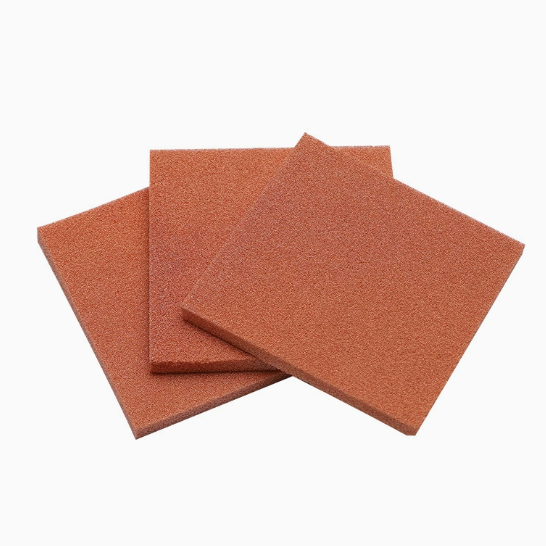
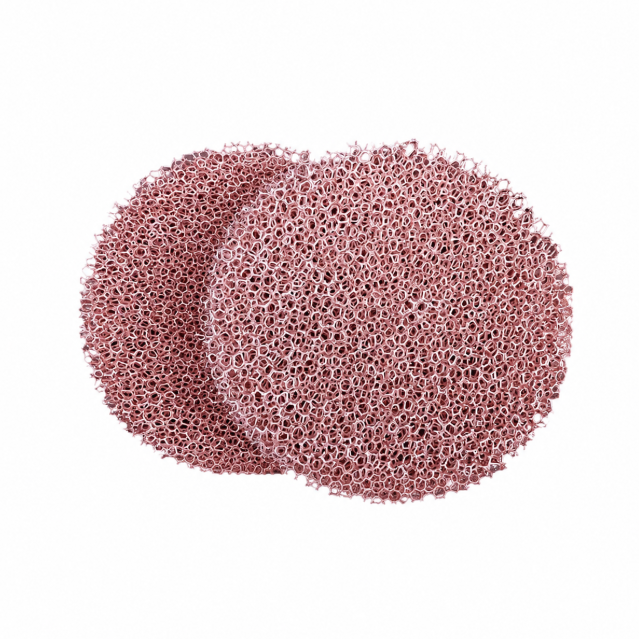
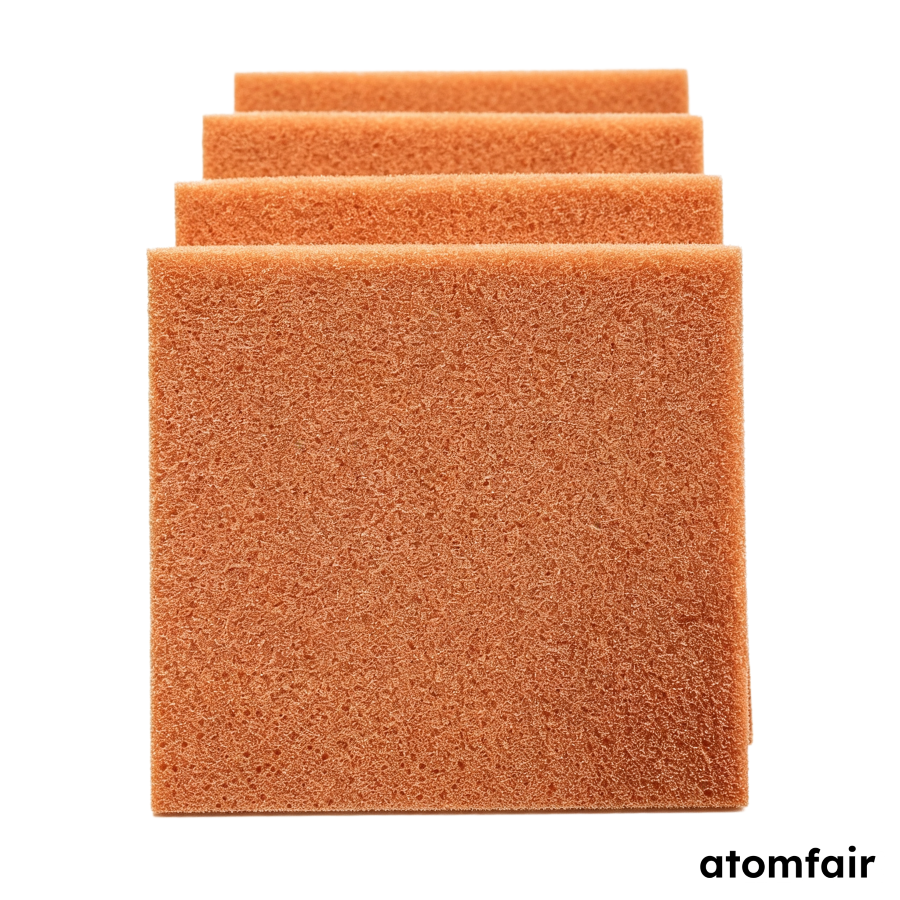
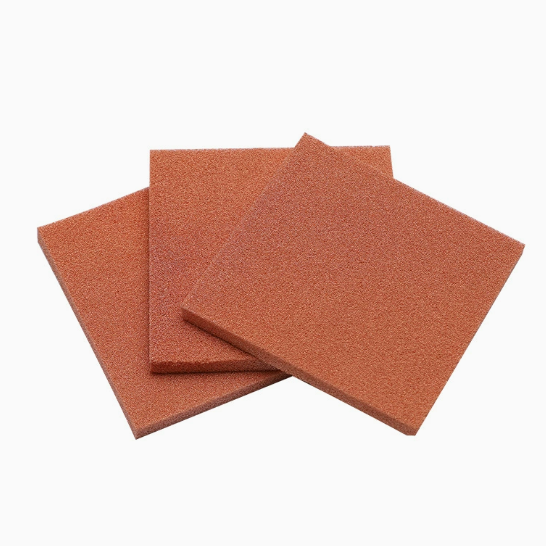
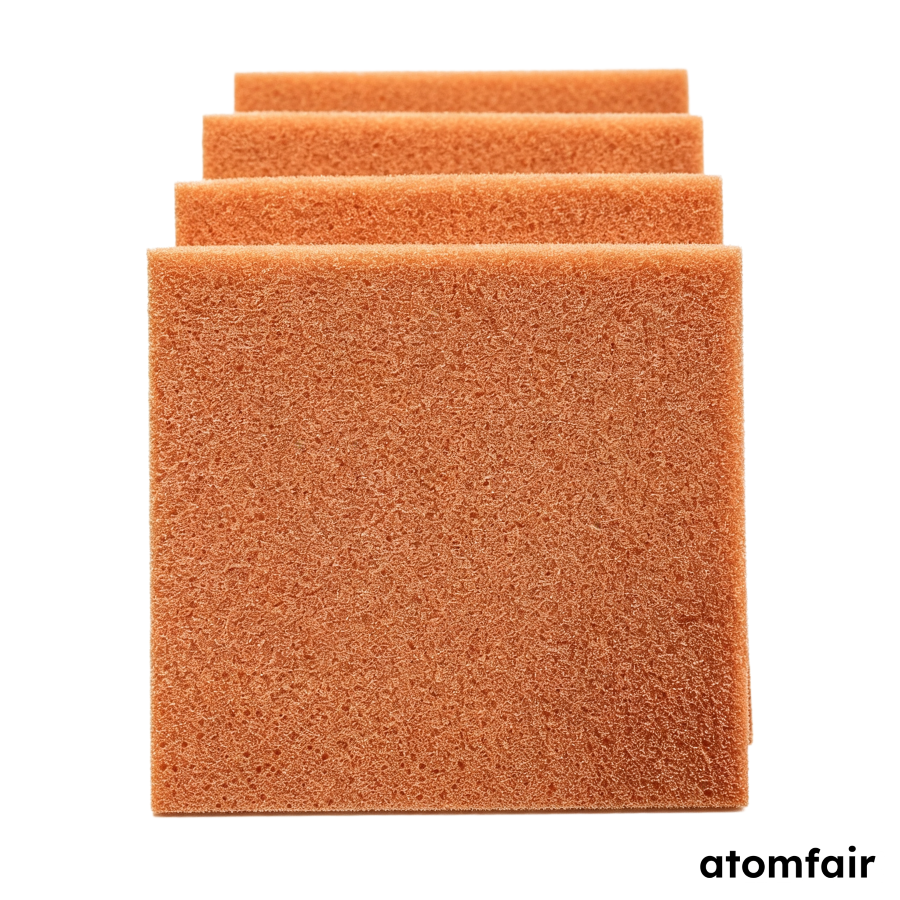
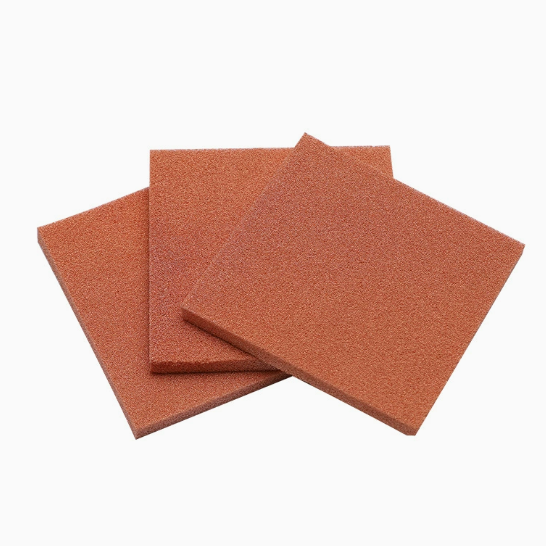
This Atomfair 100 PPI copper foam sheet is supplied as a 200 mm × 300 mm × 3 mm open-cell porous structure with a ≥98% through-hole rate, acid/alkali resistance, and a reported heat transfer coefficient above 6 W/(m²·K), making it relevant for thermal dissipation, EMI shielding, filtration, and battery electrode research while requiring care due to its limited tensile strength.
Positive
- High through-porosity open-cell structure: With a through-hole rate of ≥98%, 100 PPI pore density, and 0.1–10 mm pore size, the material provides interconnected porosity suited for filtration, catalyst carrier, battery electrode, and EMI/thermal applications.
- Acid/alkali-resistant thermal medium: Rated acid resistant and alkali resistant with a heat transfer coefficient of >6 W/(m²·K), the foam can be considered for heat dissipation and electromagnetic shielding environments where chemical exposure is a factor.
Trade-offs
- Low tensile strength limits load-bearing use: Tensile strength is only 5–18 KPa while mechanical strength is rated ≥2.5 MPa, so the foam should not be treated as a structural member and mechanical attachment designs must account for its limited tear resistance.
- Pore density tolerance affects reproducibility: The pore count tolerance is ±5–10 PPI around the nominal 100 PPI value, so applications requiring precise pore uniformity should verify batch-specific characteristics before finalizing filtration or electrode designs.
Every advanced material, component, equipment, and instrument in our catalog is backed by rigorous testing. We maintain strict internal quality management frameworks and align with CE conformity metrics to deliver transparent, reproducible performance data via our public open-science repository.
To request raw batch performance data, submit formal vendor registration paperwork, or execute a fast-turnaround R&D manufacturing loop, contact us at inquiry@atomfair.com.
Item is dispatched under the Atomfair Shipping & Delivery Framework (Free worldwide shipping on orders over $59 USD excl. heavy equipment). Return is governed by the Atomfair Return & Refund Policy (7-day technical return window).