|
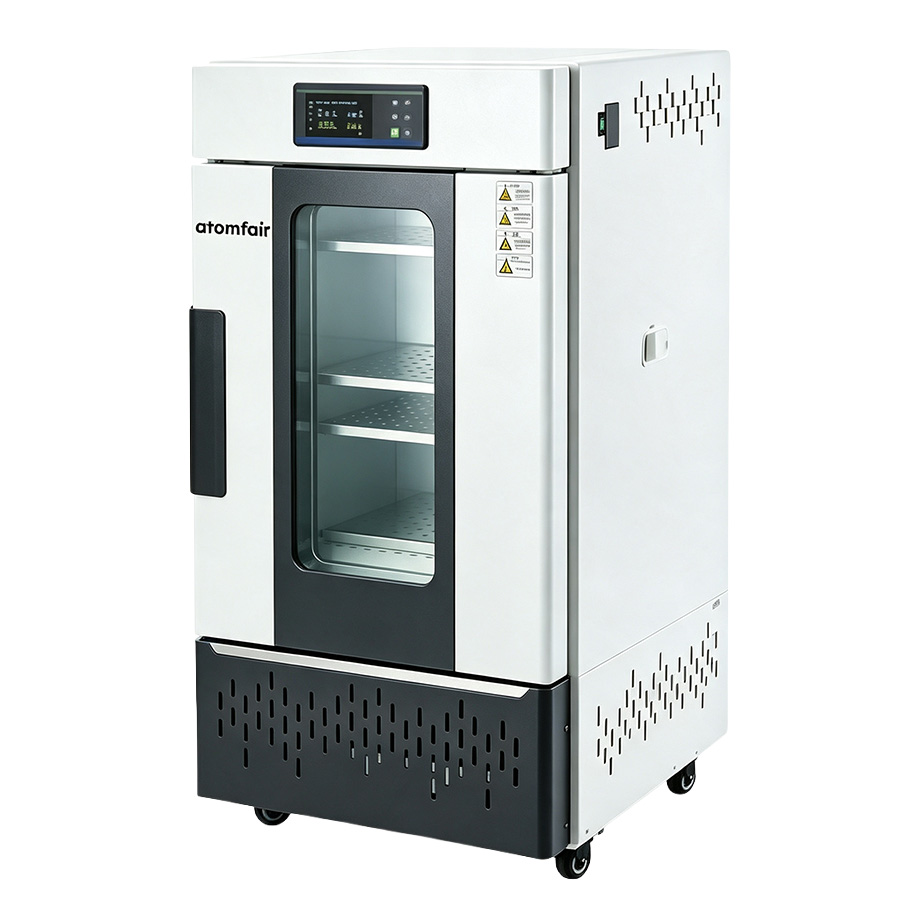
Precision Constant Temperature Incubator, 42 L, Stainless-Steel Interior
Research-grade laboratory product
|
|||||||||||||||||||||||||||||||||||||||||||||
|
|||||||||||||||||||||||||||||||||||||||||||||
|
LABORATORY PROCUREMENT SUPPORT
For model selection, accessory matching, installation-space review, power-supply confirmation or configuration support, contact our technical sales team.
E-MAIL: inquiry@atomfair.com
|
|||||||||||||||||||||||||||||||||||||||||||||
|
Supplier: Atomfair
Brand: ATOMFAIR®
|
The incubator requires unobstructed airflow around the cabinet and a clear exhaust vent to maintain temperature stability and prevent overheating. The unit must be kept upright during transport and positioned on a level surface with adequate clearance for ventilation.
- Airflow and Exhaust: Keep the top exhaust vent clear and avoid blocking the cabinet airflow path to maintain natural convection and temperature uniformity.
- Installation Clearance: Check the liner type, shelving, and installation space before placing the unit to ensure the external dimensions of 435 x 515 x 665 mm fit the workspace.
- Transport and Handling: Keep the unit upright during unloading and positioning to prevent internal damage.
- Temperature Control: The incubator operates from RT+5 to 100°C with a fluctuation of ±0.5°C; ensure stable ambient conditions to avoid deviation.
- Safety Features: The controller includes over-temperature alarm and deviation correction; configure these before unattended operation.
This procedure describes the initial placement, power connection, temperature setting, and sample loading for the 42 L incubator. Follow these steps to ensure stable operation and avoid damage to the unit or samples.
Required Equipment:
- Inspect Unit
Inspect the unit for damage and confirm the liner type and shelf configuration are as ordered. - Position Incubator
Position the incubator on a level, stable surface with the top exhaust vent and rear panel unobstructed. - Connect Power
Connect the power cord to a grounded AC220V 50Hz outlet and switch on the main power. - Set Temperature
Set the target temperature using the PID controller's setpoint adjustment and enable the over-temperature alarm function. - Stabilize Chamber
Allow the chamber to stabilize at the set temperature before loading samples. - Load Samples
Load samples onto the adjustable shelves, ensuring they do not block the airflow or contact the chamber walls. - Set Timer (Optional)
Optionally set the timer for timed operation within the 0 to 9999 minute range.
How does the natural convection design affect temperature uniformity and recovery after door openings?
Natural convection provides stable temperature distribution for standard incubation tasks, but recovery after door openings is slower compared to forced-air systems. The PID controller supports quicker recovery by enabling more stable setpoint tracking, as stated in the product features. Temperature fluctuation is specified as ±0.5°C, and the controller includes self-tuning and deviation correction to maintain uniformity.
Can this incubator be integrated with external monitoring or data logging systems?
Yes, the incubator supports optional RS485/232 interface and communication software, as well as USB data storage and an embedded printer. These accessories enable remote monitoring, data logging, and record-keeping, but they are not included with the base unit and must be ordered separately.
What safety features are included to protect samples in the event of temperature deviation?
The incubator includes an over-temperature alarm that alerts operators when abnormal conditions occur, along with deviation correction and self-tuning functions. The timer range of 0 to 9999 minutes allows timed experiments. These features improve operating safety and sample protection, as detailed in the performance features section.
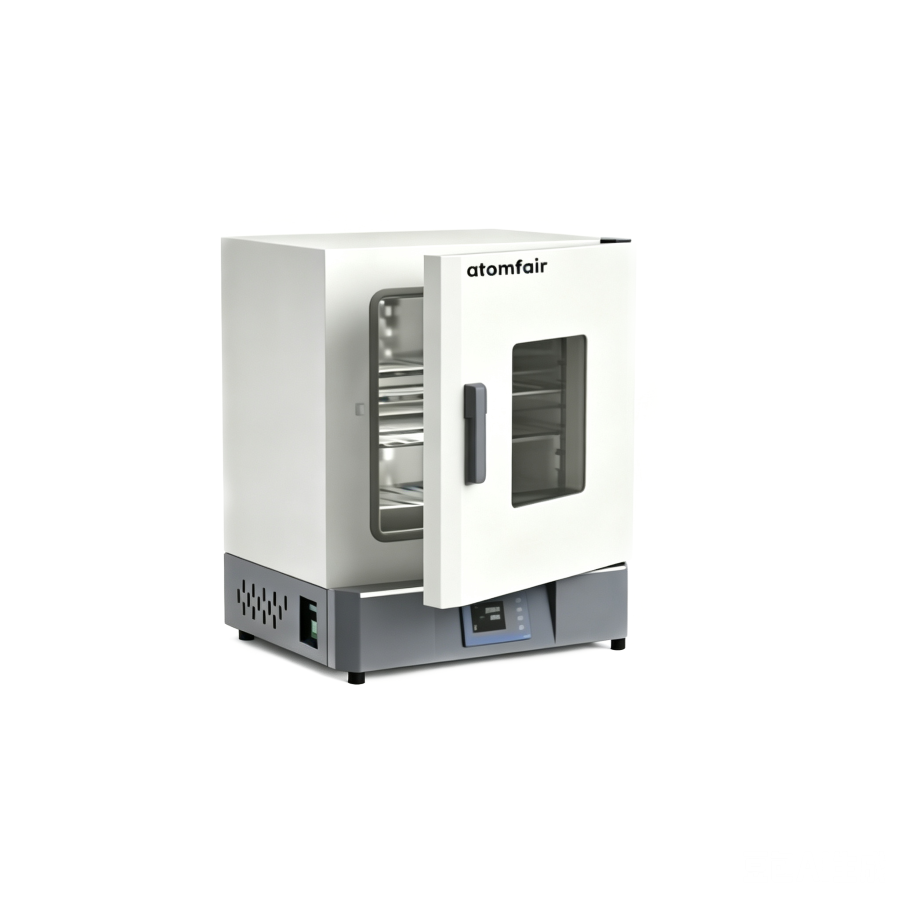
The 42 L Precision Constant Temperature Incubator (AF-LE-E-HNCI-0042-36B1) uses natural convection and a PID controller with self-tuning to maintain ±0.5 °C fluctuation from RT+5 to 100 °C, suitable for routine bacterial culture and fermentation. The thickened stainless-steel liner and powder-coated shell offer corrosion resistance and durability, but the 400 W input and AC220V 50 Hz power requirement limit deployment to facilities with that specific electrical infrastructure.
Positive
- PID self-tuning and over-temperature alarm: The smart digital PID controller includes self-tuning, deviation correction, and an over-temperature alarm, enabling stable setpoint recovery after door openings and protecting samples during unattended operation.
- Thickened stainless-steel liner: The BS version features a thickened stainless-steel inner chamber that resists corrosion from biological spills and supports repeated cleaning without degradation, extending service life in routine culture work.
Trade-offs
- AC220V 50 Hz power requirement: The incubator is specified for AC220V 50 Hz supply only, which may require a step-down transformer or frequency converter in laboratories with 60 Hz or 110 V mains, adding infrastructure cost and complexity.
- Natural convection limits uniformity at high load: Natural convection provides stable temperature distribution for standard loads, but may exhibit larger gradients or slower equilibration when the chamber is densely packed or used near the upper temperature limit of 100 °C.
Every advanced material, component, equipment, and instrument in our catalog is backed by rigorous testing. We maintain strict internal quality management frameworks and align with CE conformity metrics to deliver transparent, reproducible performance data via our public open-science repository.
To request raw batch performance data, submit formal vendor registration paperwork, or execute a fast-turnaround R&D manufacturing loop, contact us at inquiry@atomfair.com.
Item is dispatched under the Atomfair Shipping & Delivery Framework (Free worldwide shipping on orders over $59 USD excl. heavy equipment). Return is governed by the Atomfair Return & Refund Policy (7-day technical return window).