ATOMFAIR® SCT315 BATTERY SHORT-CIRCUIT TESTERRESEARCH GRADE MATERIAL
|
|||||||||||||||||||||||||||||||||||||||||||||
|
|||||||||||||||||||||||||||||||||||||||||||||
|
TAILORED SOLUTIONS FOR RESEARCH
Contact our engineering team for technical support or official institutional quotations.
EMAIL: inquiry@atomfair.com
|
|||||||||||||||||||||||||||||||||||||||||||||
|
Manufacturer: Atomfair LLC
Brand: ATOMFAIR®
|
|||||||||||||||||||||||||||||||||||||||||||||
The Atomfair SCT315 short-circuit tester must be operated within ambient temperature 0°C–40°C and relative humidity 20%–70% to ensure measurement accuracy and prevent internal condensation. The device provides isolation voltage up to ±1000V with a built-in 20kΩ discharge resistor for safe dissipation of stored charge after testing.
- Operating Temperature: The device must be used within an ambient temperature range of 0°C to 40°C.
- Operating Humidity: The device must be used within a relative humidity range of 20% to 70%.
- Power Supply Requirement: The device requires a stable AC 220V, 50Hz power supply for proper operation.
- Discharge Safety: The built-in 20kΩ discharge resistor ensures safe dissipation of stored charge after each test.
- Isolation Voltage: The tester is electrically floating with isolation voltage of ±1000V, requiring appropriate grounding precautions.
This procedure outlines the steps to safely perform a short-circuit test on a battery cell using the Atomfair SCT315 tester. The operator must ensure all connections are secure and the device is set to the correct voltage before initiating the test.
Required Equipment: Atomfair SCT315 Battery Short-Circuit Tester
- Set Parameters
Set the test voltage, delay time, and test time using the built-in parameter storage groups. - Connect Battery Cell
Connect the battery cell to the test terminals on the front or rear panel. - Initiate Test
Initiate the test using the manual wiring test function on the device. - Monitor Alarms
Monitor the audible and visual alarms for out-of-limit conditions during the test. - Allow Discharge
Allow the built-in discharge resistor to dissipate stored charge after the test completes. - Read Result
Read the displayed insulation resistance or leakage current value from the front panel. - Disconnect Cell
Disconnect the battery cell from the test terminals after confirming the discharge is complete.
How does the SCT315's insulation resistance measurement accuracy differ between resistive and capacitive loads, and what trade-off should be considered?
For resistive loads, the accuracy is ±2% of measured plus 5 digits from 2.000M to 200.0MΩ, and ±5% from 200M to 4000MΩ. For capacitive loads, accuracy degrades to ±5% from 2.000M to 200.0MΩ and ±10% from 200M to 4000MΩ. To maintain reliable results for capacitive devices, use the built-in delay judgment (0.1s–999.9s) to allow settling before measurement.
Can the SCT315 accurately test the insulation resistance of high-capacitance supercapacitors or battery cells with very low internal resistance without risk of damage?
Yes, the SCT315 is designed for capacitive loads and includes a delay judgment function (0.1s–999.9s) to accommodate capacitance settling. Its floating output and ±1000V isolation voltage protect the instrument, but for high-capacitance devices with insulation resistance above 200MΩ, accuracy falls to ±10% for capacitive measurements, so results should be interpreted with that tolerance.
What safety and infrastructure requirements must be met when using the SCT315 for short-circuit testing of battery cells at output voltages above 100V?
The SCT315 has a built-in auto discharge module with a 20kΩ resistor to safely discharge the device under test after each cycle, which is critical above 100V. The unit requires a 220V AC, 50Hz power supply and operates only in 0℃–40℃, 20%–70%RH environments. Although isolation voltage is ±1000V, proper personal protective equipment and safe wiring practices are mandatory.
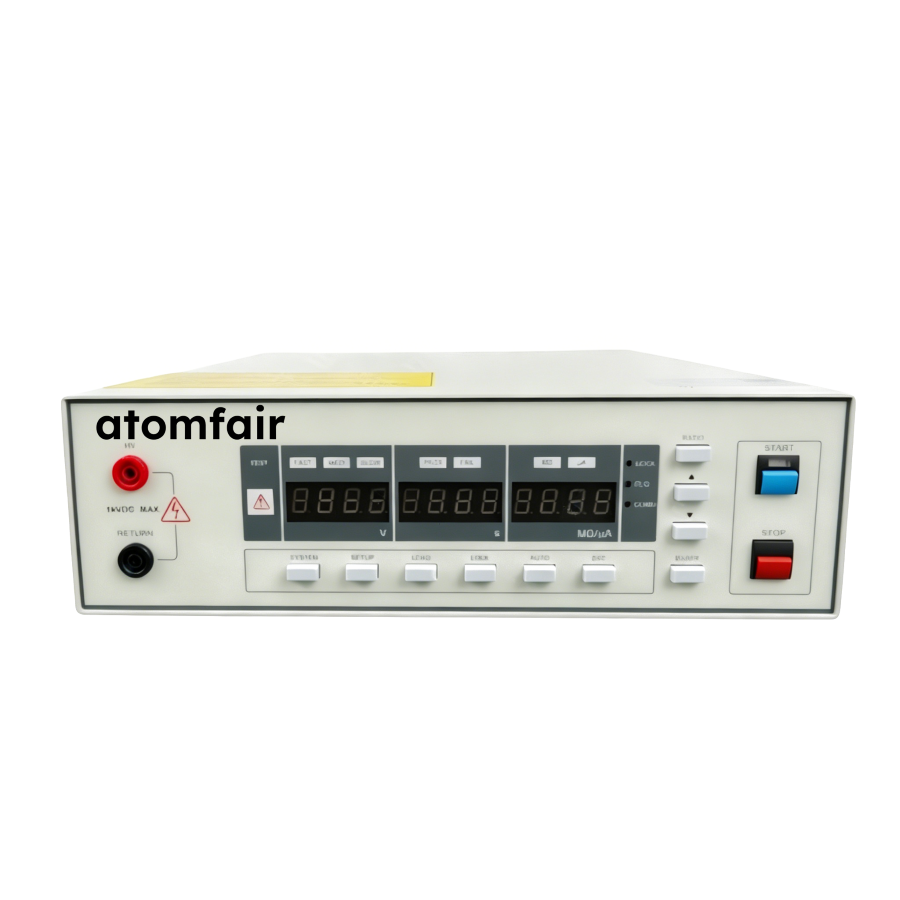
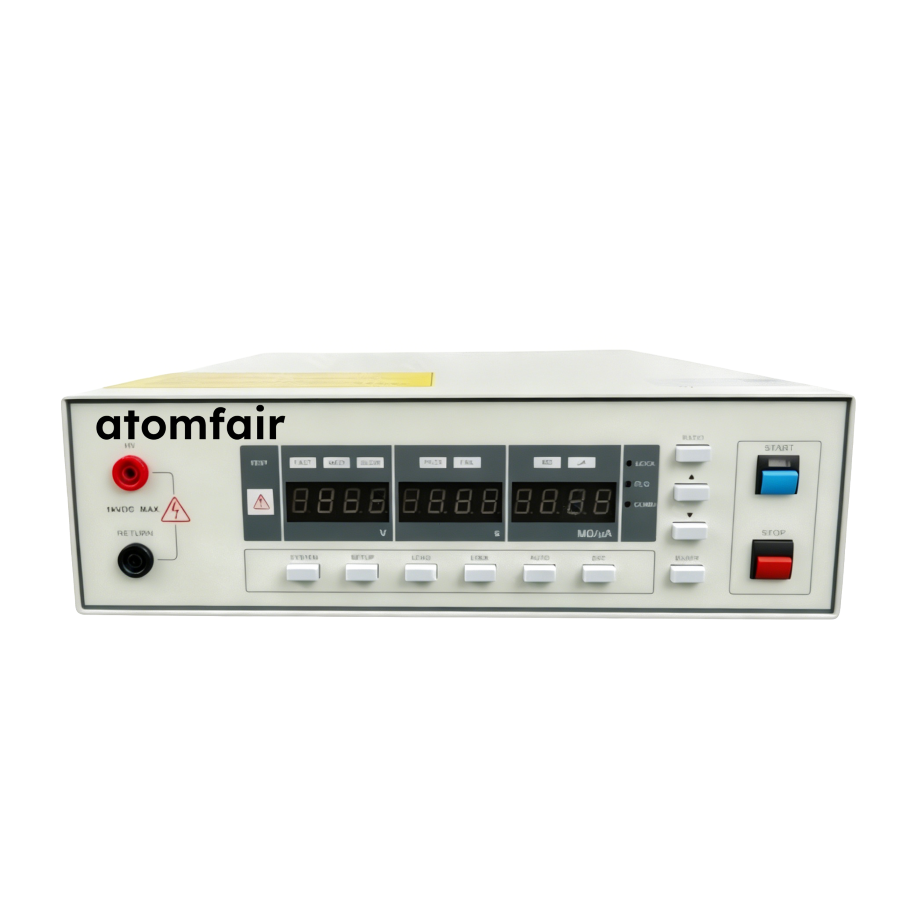
The Atomfair SCT315 is a compact short-circuit tester for battery cells and capacitive loads, offering adjustable 25-1000V output, built-in discharge, and automation interfaces, but with limited output current and reduced accuracy for capacitive insulation measurements.
Positive
- Wide adjustable voltage and resistance range: Output voltage adjustable from 25V to 1000V in 1V steps with insulation resistance measurement up to 4000 MΩ, enabling flexible testing across various cell chemistries and voltages.
- Built-in discharge and automation integration: Includes a 20 kΩ discharge resistor for safe post-test discharge and supports RS232 and PLC interfaces, facilitating automated test sequences and remote operation in production lines.
Trade-offs
- Reduced accuracy for capacitive loads: Insulation resistance measurement accuracy degrades significantly for capacitive loads—up to ±10% for readings above 200 MΩ—compared to resistive measurements at ±5%.
- Low maximum output current and narrow operating range: Maximum output current is only 1 mA, limiting high-speed testing of large-capacitance cells, and the operating environment is restricted to 0–40 °C and 20–70% RH.
Every advanced material, component, equipment, and instrument in our catalog is backed by rigorous testing. We maintain strict internal quality management frameworks and align with CE conformity metrics to deliver transparent, reproducible performance data via our public open-science repository.
To request raw batch performance data, submit formal vendor registration paperwork, or execute a fast-turnaround R&D manufacturing loop, contact us at inquiry@atomfair.com.
Item is dispatched under the Atomfair Shipping & Delivery Framework (Free worldwide shipping on orders over $59 USD excl. heavy equipment). Return is governed by the Atomfair Return & Refund Policy (7-day technical return window).