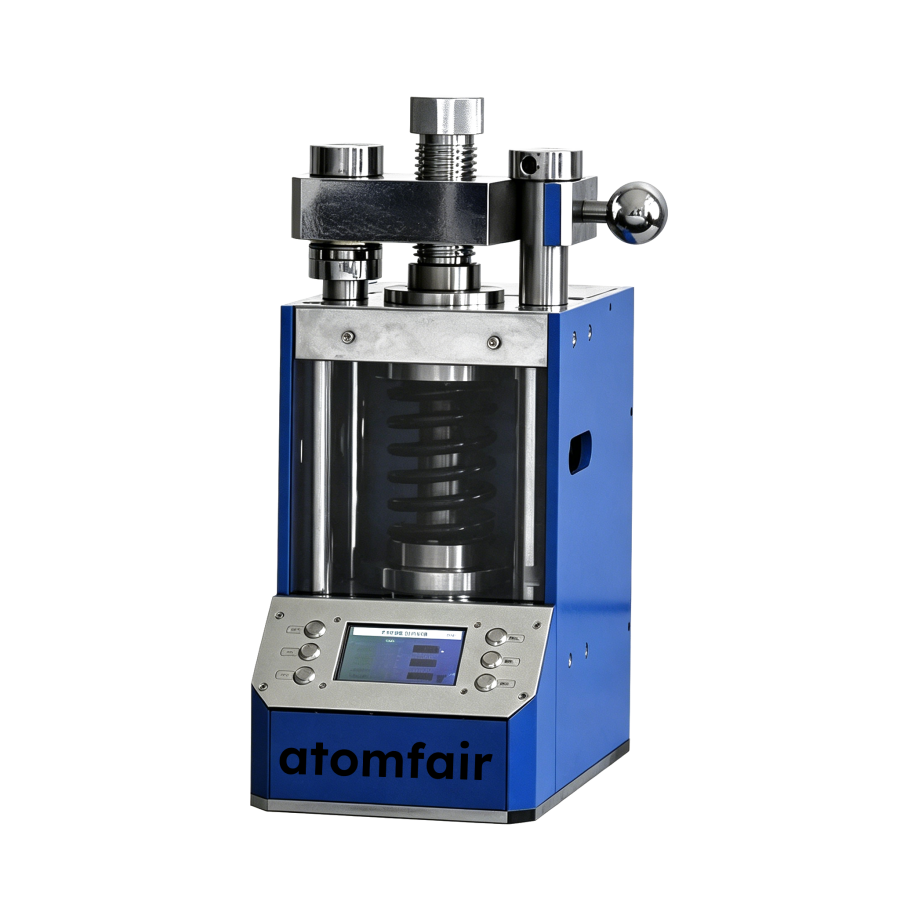
AFP-749 Automatic Fluorescence Pellet Press (0 – 60 Ton)HEAVY-DUTY INDUSTRIAL HARDWARE
|
|||||||||||||||||||||||||||
|
|||||||||||||||||||||||||||
|
TAILORED SOLUTIONS FOR PRODUCTION
Contact our engineering team for technical support or official commercial quotations.
EMAIL: INQUIRY@ATOMFAIR.COM
|
|||||||||||||||||||||||||||
|
Manufacturer: PRODUCTION DIVISION · ADVANCED ENERGY STORAGE DIVISION
Brand: INDUSTRIAL TESTING HARDWARE
Specifications are representative and subject to change without notice. For the latest version and compliance certificates, contact official sales channel.
|
The press must be operated within its rated mechanical and hydraulic limits to prevent equipment damage and personal injury. Only trained personnel should handle the 180 kg unit, and all operational checks must follow the manufacturer's schedule.
- Benching Load Capacity: The laboratory benching must support the 180 kg equipment weight safely.
- Load Limit: The continuous load limit must not exceed 60 metric tons to preserve hydraulic line tolerances and sealing components.
- Hydraulic Oil Maintenance: Internal hydraulic oil levels must be checked per the standard scheduling guides.
- Operating Surface: All processing operations must be executed on flat, horizontal testing tables.
This procedure ensures safe and reliable operation of the automated press for high-quality sample disk preparation. Follow each step sequentially to avoid mechanical stress or sample defects.
Required Equipment: 40 mm boric acid die mold module, Digital LCD control interface
- Verify Benching Support
Verify that the laboratory benching can support the 180 kg equipment weight before installation. - Check Hydraulic Oil
Check the internal hydraulic oil levels according to the maintenance schedule. - Position the Press
Position the press on a flat, horizontal testing table for safe operation. - Set Dwell Duration
Set the desired dwell duration (0-999.59 seconds) using the digital LCD interface. - Load Die Module
Load the sample material into the 40 mm boric acid die mold module. - Initiate Compression Sequence
Activate the compression sequence to begin slow press intensification and continuous stabilization. - Complete Venting Cycle
Allow the automatic system venting to complete before opening the press.
What is the maximum pressure capacity and compression sequence of the AFP-749 automatic fluorescence pellet press?
The AFP-749 delivers a maximum continuous load of 60 tons metric, with an adjustable range from 0 to 60 tons. Its compression sequence follows a slow press intensification phase, transitions to a continuous stabilization dwell, and concludes with automatic system venting, ensuring high-density, flat sample disks without surface cracking.
What die mold tooling is included with the AFP-749, and how does it prevent cross-contamination in XRF sample preparation?
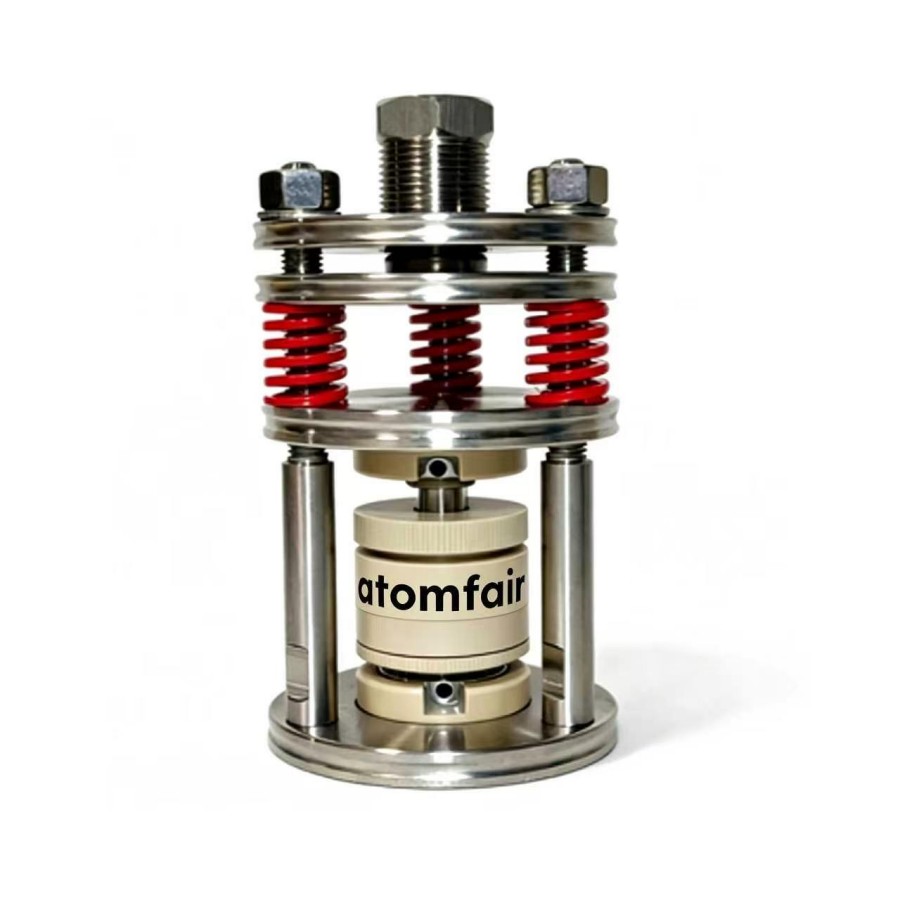
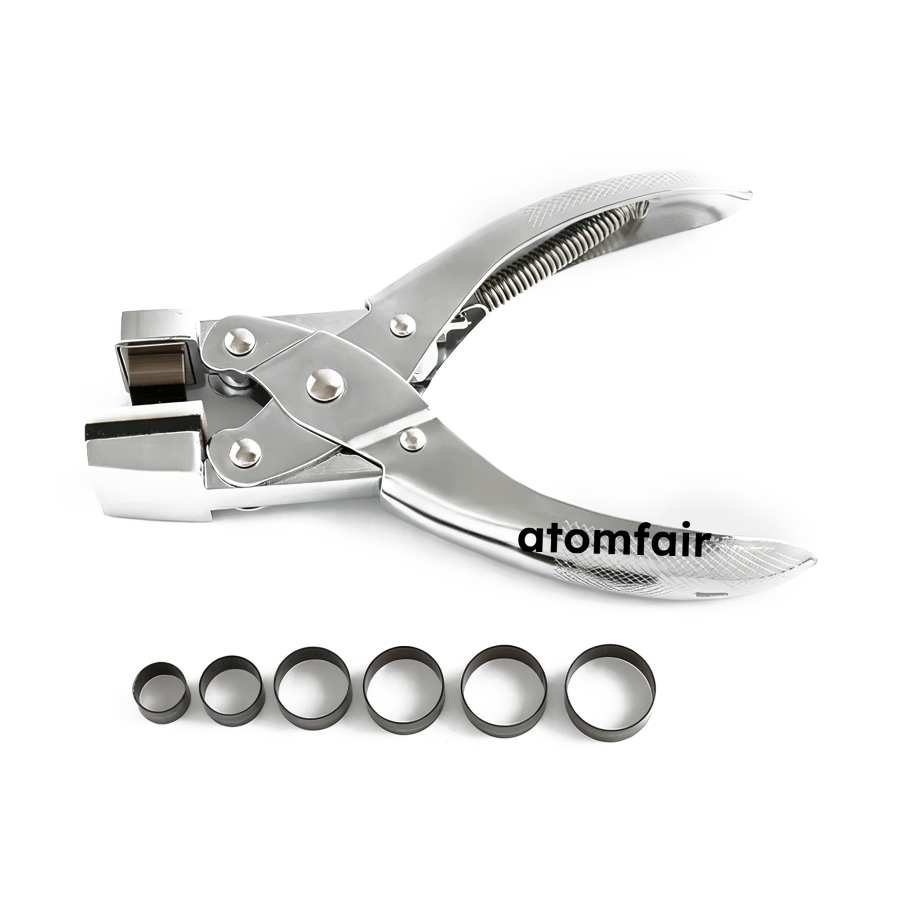
The AFP-749 includes a standard Φ 40 mm boric acid die mold module ring assembly. This modular tooling blocks raw material cross-contamination faults during compression, ensuring clean elemental verification data under continuous XRF or XRD analysis.
What are the infrastructure and handling requirements for installing the AFP-749 in a laboratory?
The AFP-749 weighs 180 kg and has a footprint of 300 mm × 520 mm × 580 mm, requiring a flat, horizontal benching surface capable of supporting this load. Operators must not exceed the 60-ton continuous metric load limit to preserve hydraulic line tolerances and sealing components, and hydraulic oil levels must be checked per standard scheduling guides.
The AFP-749 automatic fluorescence pellet press is a heavy-duty 60-ton hydraulic system designed for XRF sample preparation of high-hardness minerals and ceramics. Its adjustable dwell timer and 40 mm boric acid die mold enable reproducible, contamination-free pellets, but the 180 kg frame requires robust benching and the 60-ton load limit must be strictly observed to protect hydraulic integrity.
Positive
- 60-ton capacity for hard materials: Optimized to compress high-hardness minerals, geological cores, metal alloys, and ceramics that require extreme force for consolidation.
- Adjustable dwell duration up to 999.59 s: Precise digital control over delay timers ensures tight powder compaction without surface cracking or edge crumbling.
Trade-offs
- Heavy 180 kg weight requires robust benching: The 180 kg solid steel frame demands laboratory benching capable of supporting the load safely to avoid structural risk.
- 60-ton load limit must not be exceeded: Continuous operation beyond the rated 60-ton metric limit can compromise hydraulic line tolerances and system sealing components.
Every advanced material, component, equipment, and instrument in our catalog is backed by rigorous testing. We maintain strict internal quality management frameworks and align with CE conformity metrics to deliver transparent, reproducible performance data via our public open-science repository.
To request raw batch performance data, submit formal vendor registration paperwork, or execute a fast-turnaround R&D manufacturing loop, contact us at inquiry@atomfair.com.
Item is dispatched under the Atomfair Shipping & Delivery Framework (Free worldwide shipping on orders over $59 USD excl. heavy equipment). Return is governed by the Atomfair Return & Refund Policy (7-day technical return window).