ATM-PCBT-AL6061 POUCH CELL BATTERY TEST FIXTURE (6061 ALUMINUM ALLOY VERSION)RESEARCH GRADE EQUIPMENT
|
||
|
|
|
||||||||||||||||||||||||||||||||||||||||
|
TAILORED SOLUTIONS FOR RESEARCH
Contact our engineering team for technical support or official institutional quotations.
EMAIL: inquiry@atomfair.com
|
||||||||||||||||||||||||||||||||||||||||
|
Manufacturer: Atomfair LLC
Brand: ATOMFAIR®
|
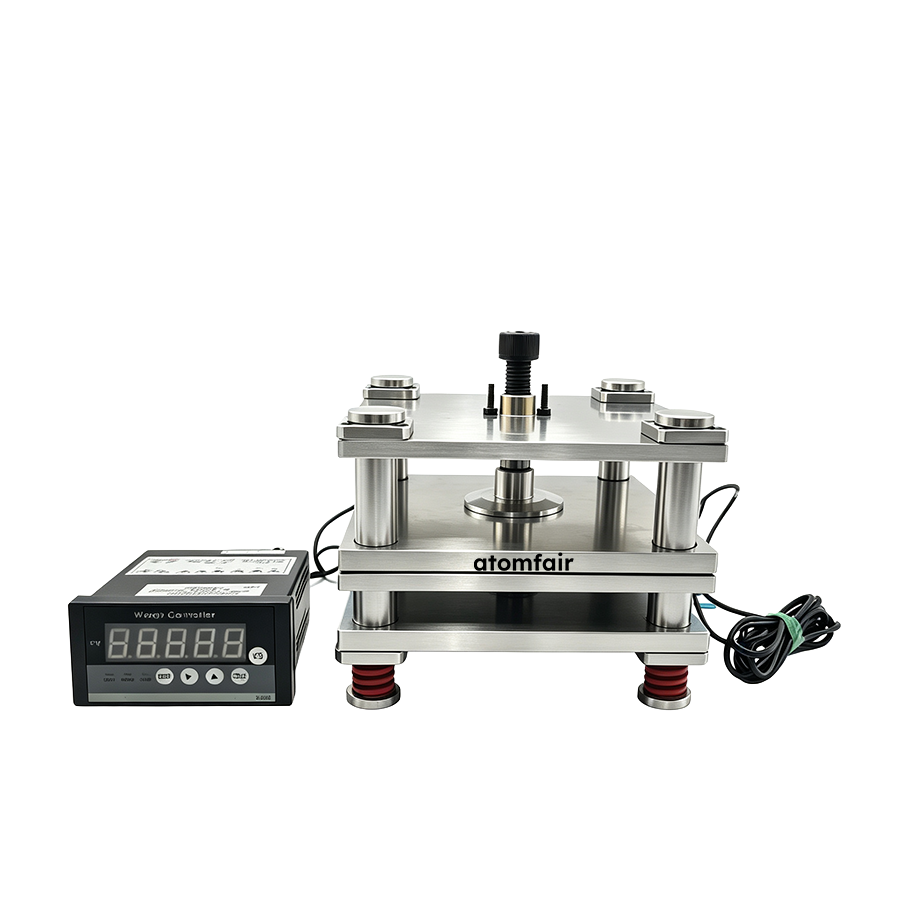
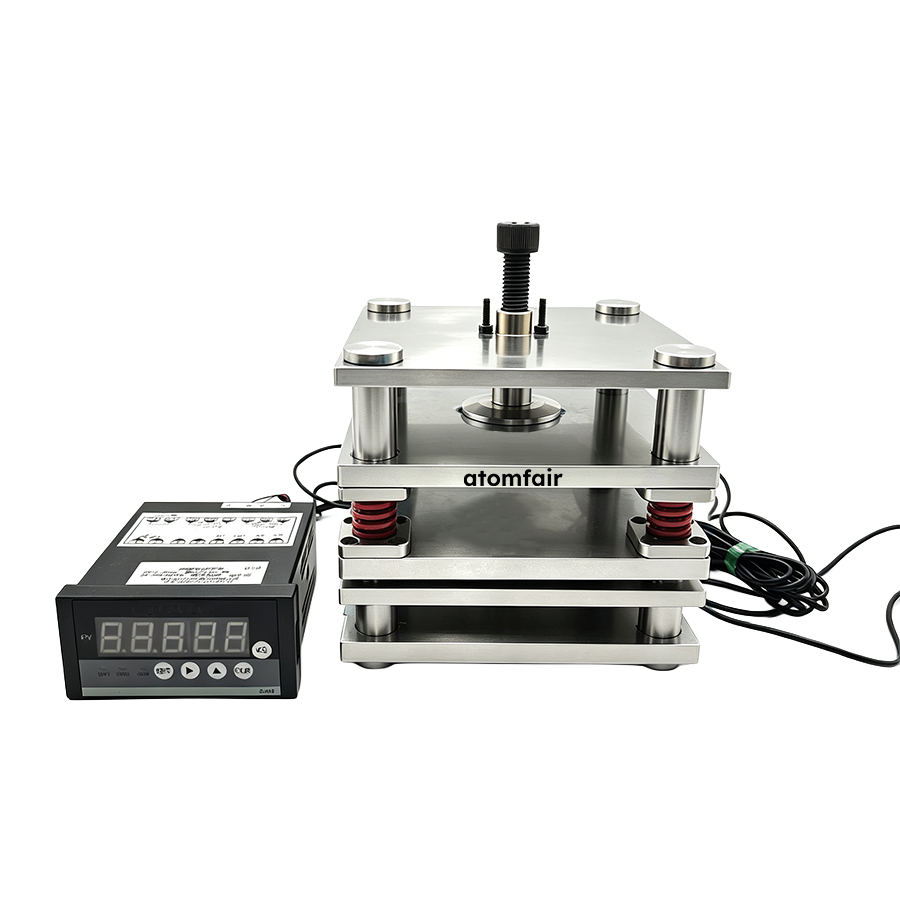
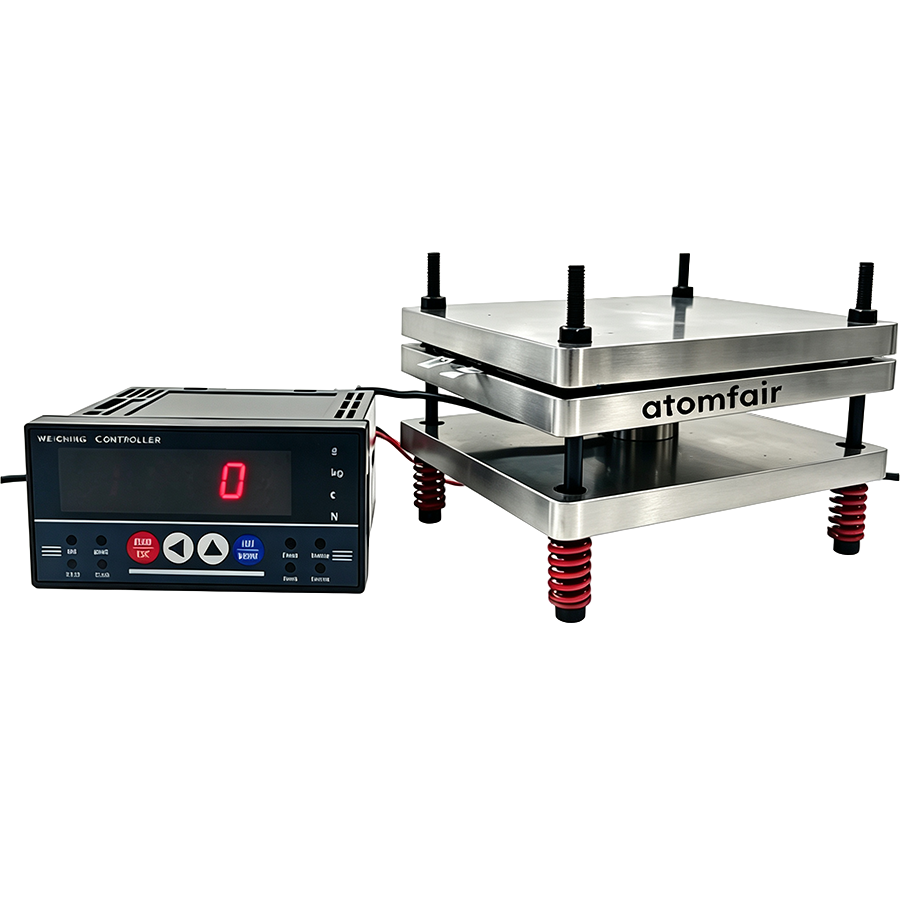
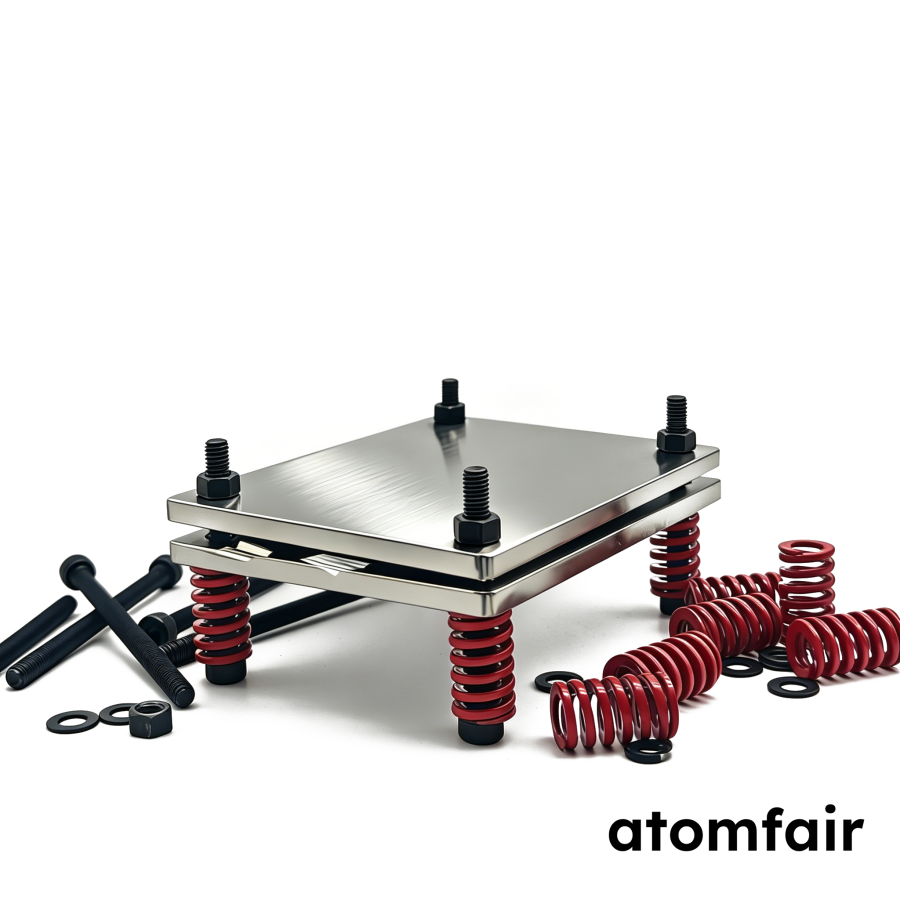
This fixture is designed for cycle testing of pouch cells up to 2 cm thick, requiring a 30 mm clearance between cell and fixture edges. The anodized aluminum surface provides electrical insulation and basic resistance to electrolyte vapor, but direct contact with liquid electrolyte is not advised.
- Sizing constraint: Cell dimensions must be exactly 30 mm less than the fixture dimensions in both length and width to ensure proper clamping clearance.
- Pressure constraint: Standard working pressure is 250 kg, with a maximum of 350 kg for fixtures of suitable size and material.
- Electrolyte compatibility: The anodized 6061 aluminum provides basic protection against electrolyte vapor; direct liquid contact requires alternative materials such as 316 stainless steel or engineering plastics.
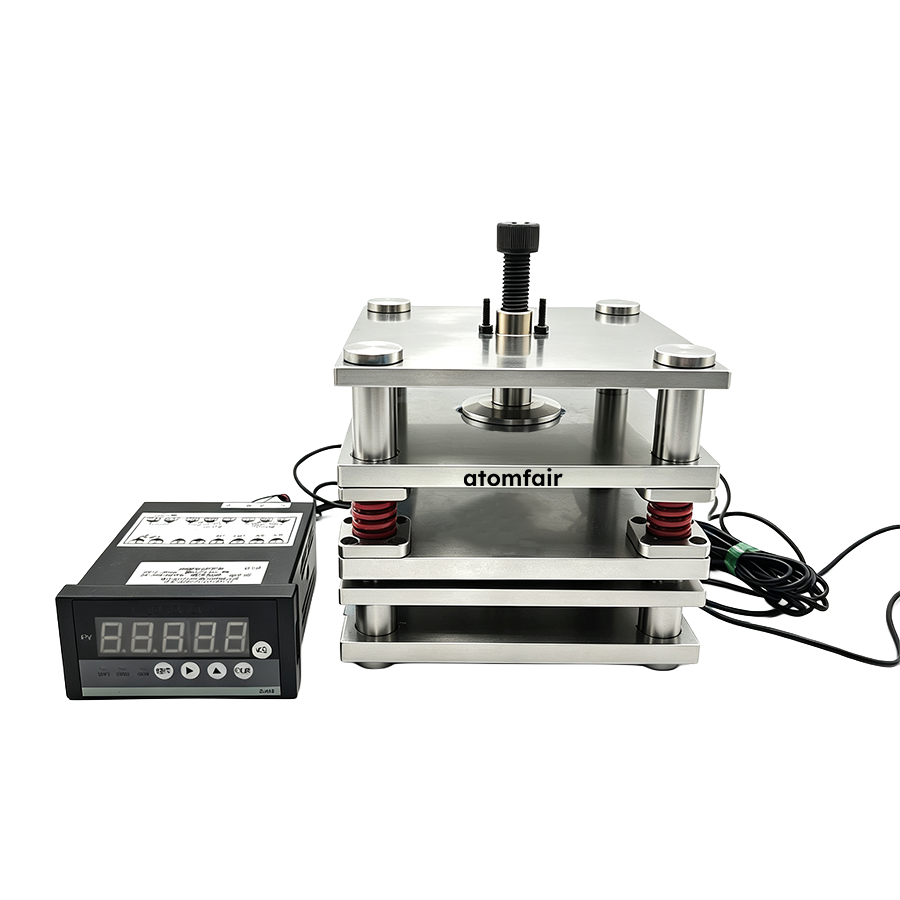
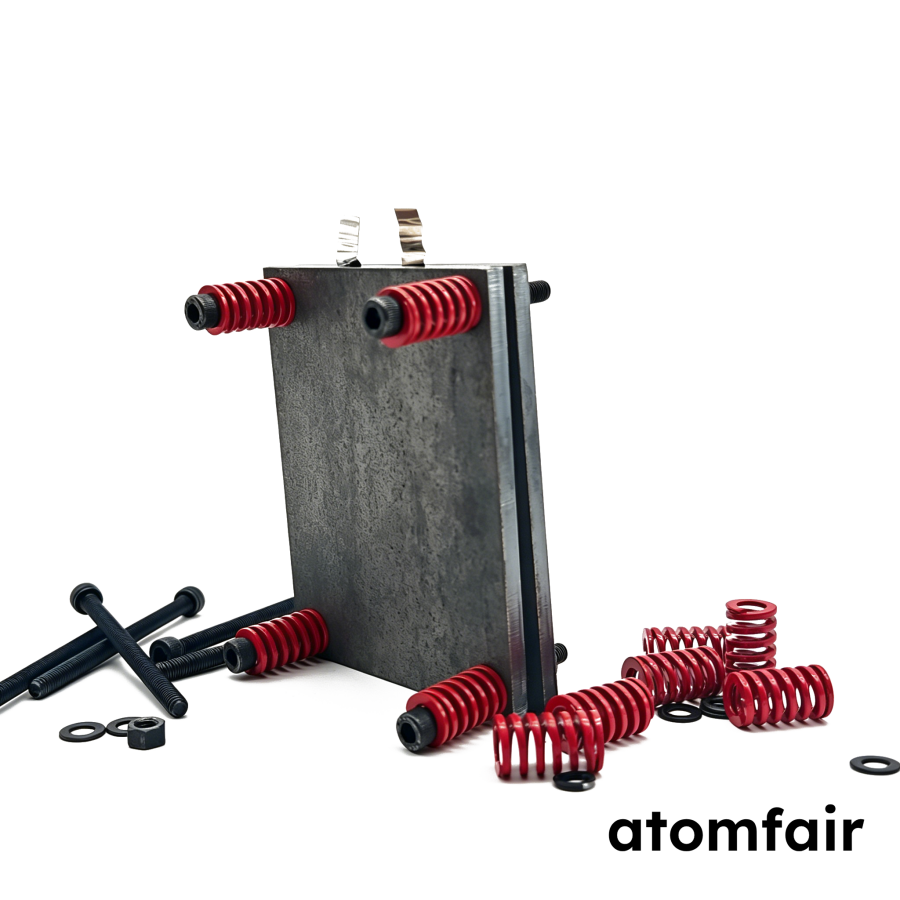
- Clamping mechanism: The 4-corner screw system with die spring buffer applies consistent pressure; ensure screws are tightened evenly to avoid uneven load.
What is the maximum working pressure achievable with the 6061 aluminum alloy pouch cell test fixture, and how does it vary with fixture size?
The standard working pressure is 250 kg, but it can be customized up to 350 kg depending on the fixture size. According to the fixture size table, sizes up to 100×130 mm are limited to 250 kg, while larger sizes (120×160 mm and above) support up to 350 kg. The top-level high-load version (10×150×180 mm) also has a maximum of 350 kg, as 6061 alloy's maximum load capacity is 350 kg.
What are the maximum and minimum pouch cell dimensions that can be accommodated by the ATM-PCBT-AL6061 fixture?
The fixture can accommodate pouch cell thicknesses from 0.1 to 2 cm, and the cell length and width are determined by subtracting 30 mm from the chosen fixture size. For example, the smallest fixture (8×78×105 mm) accommodates cells up to 10×48×75 mm, while the largest (10×150×180 mm) can hold cells up to 23×120×150 mm. The fixture size can be customized based on the cell dimensions.
What surface treatment does the 6061 aluminum alloy fixture have to protect against electrolyte corrosion, and is it electrically insulating?
The fixture is constructed from 6061-T6 aluminum alloy with an advanced anodizing surface treatment that enhances electrical insulation properties and provides dependable protection against basic electrolyte vapor corrosion. The anodized coating makes the fixture insulating, which is important for safe battery cycle testing. However, for more aggressive electrolyte resistance, alternative materials like 316 stainless steel or PEEK are available.
The ATM-PCBT-AL6061 pouch cell test fixture offers a cost-effective, lightweight solution for standard battery cycle testing with 6061-T6 aluminum construction, anodized insulation, and adjustable clamping for 0.1-2 cm cells, but has limited electrolyte corrosion resistance and pressure scalability that require careful application matching.
Positive
- Lightweight anodized aluminum design: The 6061-T6 aluminum alloy with anodized surface treatment provides excellent machinability, easy handling, electrical insulation, and mild electrolyte vapor corrosion protection for routine lab use.
- Versatile size and pressure options: Seven fixture sizes from 78×105 mm to 150×180 mm accommodate cell lengths/widths from 48×75 mm to 120×150 mm. Standard 250 kg working pressure is upgradeable to 350 kg on select larger sizes, enabling flexible test setups.
Trade-offs
- Moderate electrolyte resistance limitation: 6061 aluminum with anodizing offers only mild protection against electrolyte vapor; it is not recommended for conditions involving direct electrolyte leakage or immersion, which may cause corrosion.
- Pressure scalability linked to fixture size: The 250 kg standard working pressure is shared across all sizes, but the 350 kg maximum is only achievable on the two largest fixture sizes (120×160 mm and 150×180 mm), restricting high-pressure testing for smaller cells.
Every advanced material, component, equipment, and instrument in our catalog is backed by rigorous testing. We maintain strict internal quality management frameworks and align with CE conformity metrics to deliver transparent, reproducible performance data via our public open-science repository.
To request raw batch performance data, submit formal vendor registration paperwork, or execute a fast-turnaround R&D manufacturing loop, contact us at inquiry@atomfair.com.
Item is dispatched under the Atomfair Shipping & Delivery Framework (Free worldwide shipping on orders over $59 USD excl. heavy equipment). Return is governed by the Atomfair Return & Refund Policy (7-day technical return window).